Date
Author
Юрий Жигалкин; Владимир Дубинский
Source

Preserved copy
Translated material
Barack Obama: moment of insight
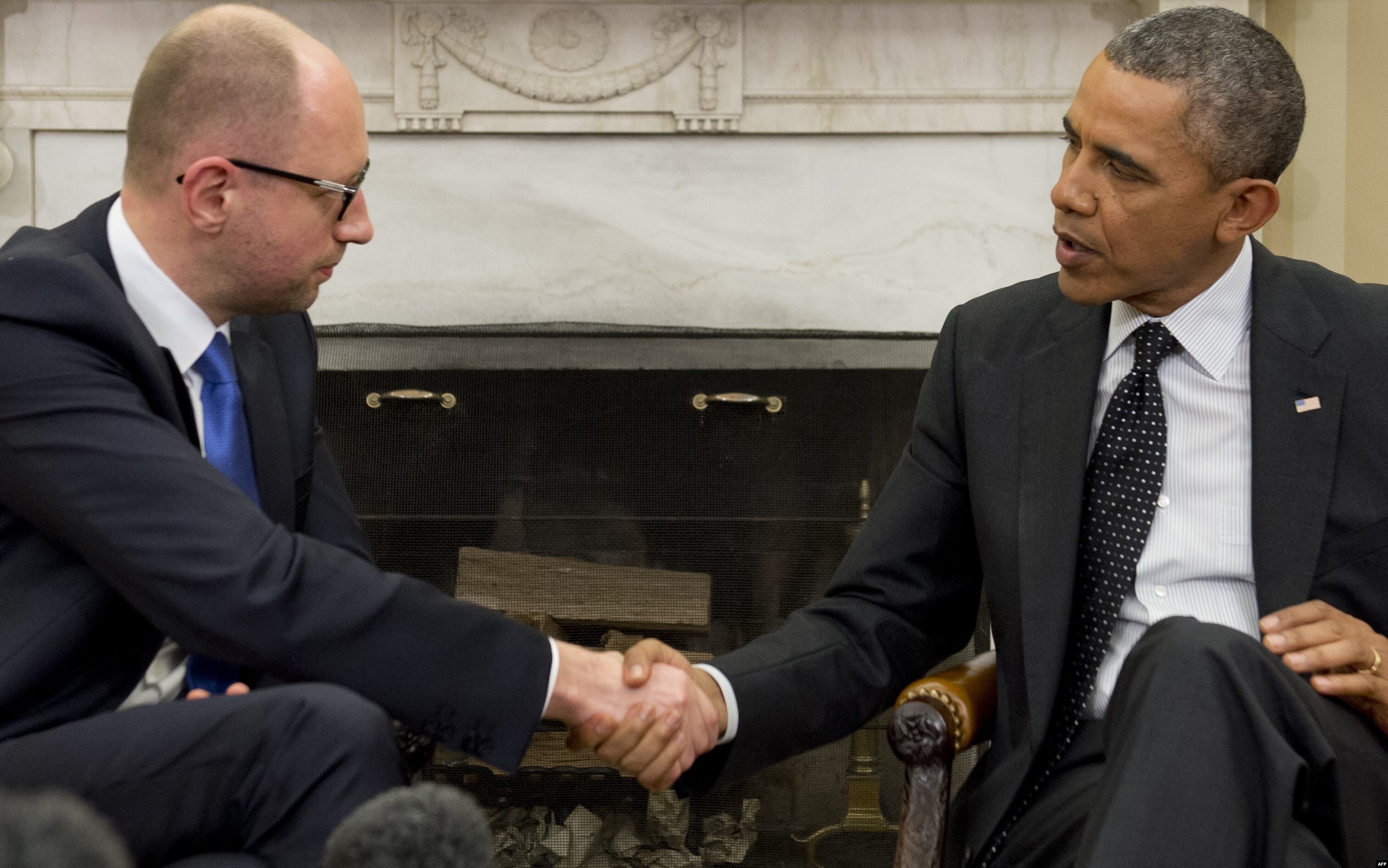
The program "Today in America" is attended by the former US Ambassador to the Soviet Union Jack Matlock , American publicist David Satter , historian, professor at the University of Arizona Mark von Hagen , teacher of the University of California Vladimir Paperny , managing director of the American financial company HWA Gregori Grushko .
Yuri Zhigalkin : In the last days, in the sixth year of his presidency, Barack Obama for the first time resorted to demonstrative decisive foreign policy actions. On March 16, the president introduced by his decree sanctions against several Russian, Ukrainian and Crimean functionaries involved in the split of Ukraine. On March 18, the US President ordered the expulsion of Syrian diplomatic missions from the country, representing the current Syrian authorities, a new presidential decree appeared on March 20, according to which Russian functionaries and so -called oligarchs that are already close to Vladimir Putin are becoming objects of American sanctions. Syrian sanctions followed the news that Syria hopelessly tearing off the schedule of destruction of its chemical arsenal, sabotting an agreement reached six months ago through the mediation of Vladimir Putin. The second series of anti -Russian sanctions was published after the actual accession of Crimea to Russia. Does all this mean that President Obama passes in his foreign policy from the bet on the word and the power of belief to the rate on the force of coercion?
According to political scientists, the decision of the Obama Presidential Administration on the temporary closure of Syrian diplomatic missions is not a symbolic gesture, but indicates the real tightening of the US policy in relation to the regime of Bashar Assad.
Andrew Tabler, senior researcher at the Washington Institute for the Study of the Problems of the Middle East : this is the answer to the absolute reluctance shown by Bashar Assad to look for a political decision of the conflict at the negotiation table. This decision also has a practical aspect: by removing Syrian diplomats from the country, the United States deprives them of the opportunity to collect intelligence information here. And there is evidence that among the employees of the Syrian embassy in Washington were intelligence agents. Now in Syria it will be more difficult to monitor what is being done in Washington.
Edward Turzansky, Philadelphia Institute of Foreign Policy: the US approach to Syria is changing and may be tightened. This, in particular, confirms reports that the United States begins to provide real 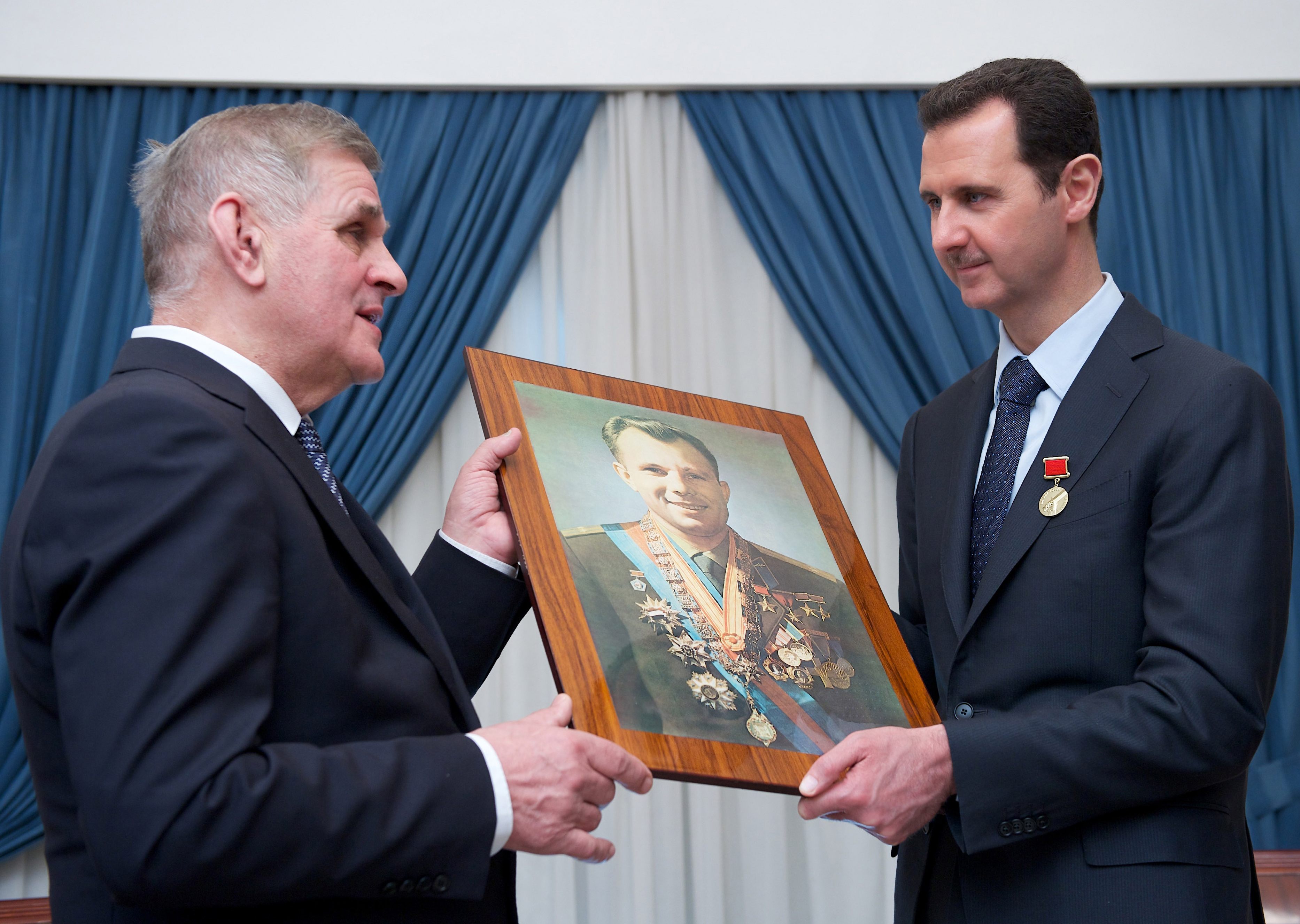
Vladimir Dubinsky: - Delays with the removal of chemical weapons, it seems, are a thoughtful tactical course of Bashar al -Assad. After all, the Geneva negotiations on Syria, which are held with the participation of the United States and Russia and are designed to reduce the Syria government and the opposition at the negotiation table, did not lead to anything ...
James Filips, Heritage Foundation: Geneva negotiations are in a coma. To revive them, you need to exert a very strong military pressure on the Syrian regime, as well as provide much more assistance to the forces of the opposition.
Vladimir Dubinsky: - In this case, it is possible to say that President Obama made a mistake in August last year, refusing to strike at Syrian objects?
Andrew Tabler: The US decision not to punish Bashar al -Assad’s regime in response to the use of chemical weapons, of course, gave the courage of Russia and gave her the opportunity to act more aggressively in the region of the Middle East and Eastern Europe. This decision also untied the hands of the Syrian regime, which continues to destroy its own citizens. The connection between the US decision does not strike at Syria and what Russia is doing in Ukraine, and the regime of Bashar al -Assad in his country is undeniable.
Vladimir Dubinsky: - Obviously, President Obama in the future needs to avoid situations like the one that arose as a result of his hesitation on the issue of military operation in Syria?
Edward Turzansky: If you announce that you are ready to take some action, then you need to be prepared for these actions and reinforce your words with deed. In the case of Syria, the Obama administration spent such a red line, then changed it, and then her actions generally became incomprehensible to anyone. Nowadays, decisive steps from the United States in response to Russia's actions in Ukraine would be sent the right signal not only to US opponents, but also to its allies.
Yuri Zhigalkin: The rejection of Crimea from Ukraine, which turned out to be unexpected, as they say, even for American intelligence, according to the leading American funds of information, most sadly confirmed the correctness of the critics of the foreign policy of President Obama. The bet on the word, not actions, attempts to lead, in the words of President Obama, "from behind the spin" allies inspired the courage and the temptation to the adventure and Assad and Putin. Is it possible to say today that the world needs an active American foreign policy, that if Washington be more decisive, the situation in Syria and Ukraine could have developed differently?
David Satter, publicist: naturally, because America is the most important power in the world and the most important democratic country. Therefore, it automatically has a huge impact. When the president refuses this, he weakens not only America, but the whole democratic world. Because after all, there are many countries that want to undermine democratic institutions.
Yuri Zhigalkin: - It is easy to imagine that in the eyes of many Russians this will sound as a call to Washington to take the role of a world policeman.
Vladimir Paperny, Culturologist, University of California: I do not quite agree with David in this. Because just in contrast with the previous administration, with the Bush administration, its more activist position, the position of literally the gendarme led to the fact that the prestige of the United States in many countries practically fell, in any case, in all countries of the East. The war with terrorism, begun with Cheney and Bush, rather increased the attractiveness of terrorism than reduced.
David Satter: It is very difficult to realize. Naturally, we do not know and cannot say what would happen if there was no such war. We know that with
In a world where there is instability, where there is a threat of terrorism, the main democratic country should still show leadershipPretty insignificant exceptions to America escaped new terrorist acts on its territory. We also know that some progress was achieved in the destruction of terrorist groups. I think everything that the Obama administration did was partly a reaction to the relative activism of President Bush. But still, if we abstract a little of these two presidents, I think we will be forced to agree that in a world where there is instability, where there is a threat of terrorism, the main democratic country should still show leadership. It is better if this leadership is informed and moderate, but still.
Yuri Zhigalkin: - You correct our interlocutor: not a gendarme, but a leader?
David Satter: I would say so.
Yuri Zhigalkin: - Vladimir, we will meet in the United States as a leader?
Vladimir Paperny: I agree with David: the role of a leader for America is necessary. Leader without the role of the gendarme. Because some measures to combat terrorism under Bush were reasonable and reasonable, and the invasion of Iraq, it seems to me, had nothing to do with this and brought America more harm than benefit.
Yuri Zhigalkin: It is curious that the annexation of part of the territory of the large European state, whose safety was guaranteed twenty years ago, did not cause complete unanimity in the American establishment - regarding the need to protect the victim of aggression. Former 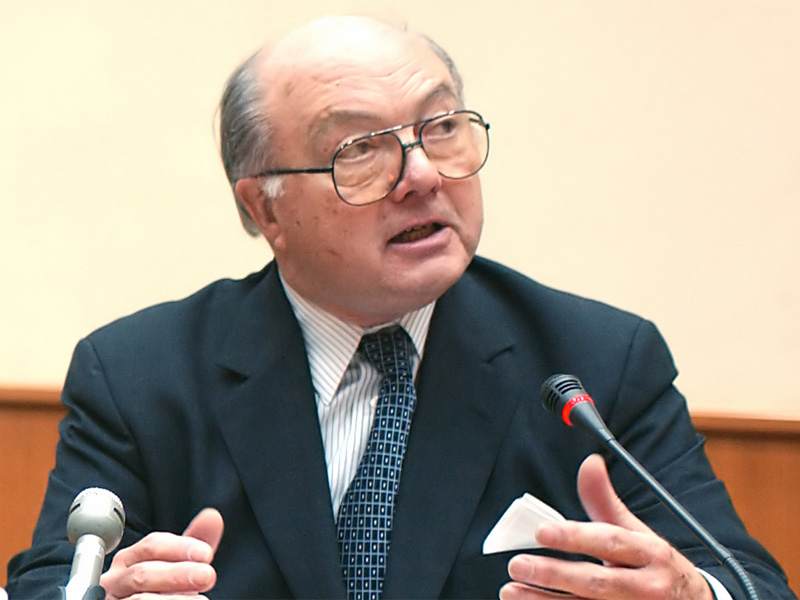
Jack Matlock, a former US Ambassador to the USSR: I do not think that this appeal is a recognition of reality. In addition, what results will the introduction of sanctions give, except for strengthening Putin’s position within the country?
Yuri Zhigalkin: - What would you answer those citizens of some Eastern European countries who are afraid that they can become the next victims of Vladimir Putin?
Jack Matlock: I do not think that Putin threatens them, and those countries that are NATO members are under the reliable protection of NATO.
Yuri Zhigalkin: - In this case, what makes you think that Russia will be satisfied with Crimea?
Jack Matlock: I’m not sure of this, but I think that the idea of expanding NATO at the expense of Ukraine, the idea against which most Ukrainians oppose, has become the most important prerequisite for current events. I don’t know what people expect now, but we will not get a nuclear war.
Yuri Zhigalkin: -Well, if Putin, say, will still decide to move troops to Eastern Ukraine?
Honestly, we would be happy if Ukraine remained part of the peaceful Soviet UnionJack Matlock: I don't think he intends to do it. But even if this happens, what from this? What of this? Honestly, we would be happy if Ukraine remained part of the peaceful Soviet Union. And we told them about it. If you remember, Bush then called on to follow the Gorbachevsky Union Treaty. Ukraine cannot be called a single state, I personally do not support some actions of Russia, but I would not want us to intervene in this crisis. This is not Putin's peace.
Yuri Zhigalkin: - Vladimir Paperny, how do you like this point of view of Matlock’s ambassador?
Vladimir Paperny: This point of view is quite common in the United States. Steven Cohen said the same recently. I do not agree with this point of view, the meaning of which is that Putin's aggressiveness is provoked by the aggressiveness of the West. It seems to me that Putin’s aggressiveness is a natural continuation of the Russian attitude that has always existed. And especially in this sense, it is interesting to see what happened in 1914 right before the outbreak of World War I.
Yuri Zhigalkin: - Yes, it is known that before the start of World War I, Russia was blinded by the idea of capturing Constantinople, coupled with Bosphorus and Dardanella. Do the United States need to make the necessary efforts to stop Moscow today, David Satter?
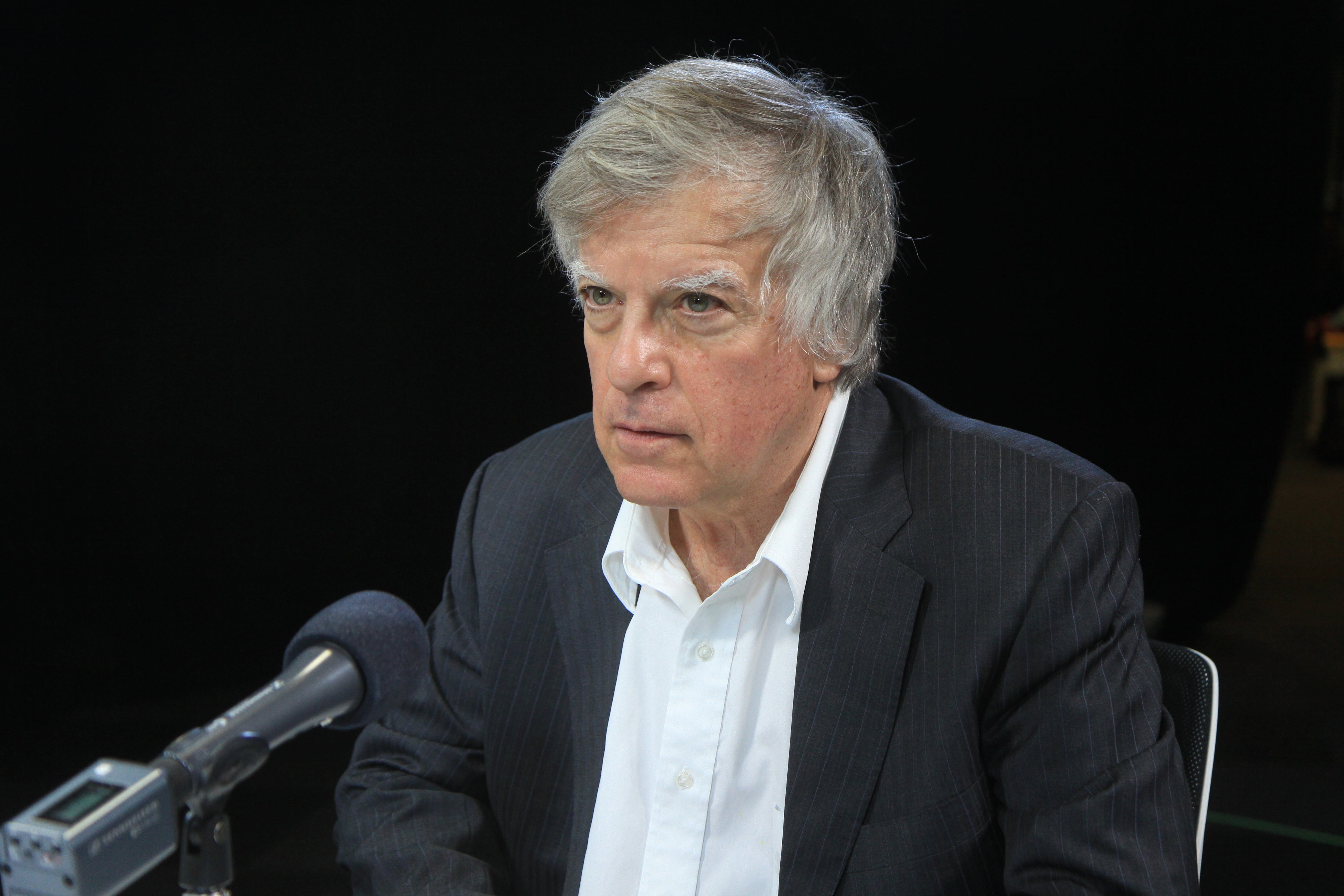
Yuri Zhigalkin: - It would seem, obvious truths, all the more, sorry for the word, the call sounds wildly to pacify the attacker. How do you explain this?
David Satter: I think this is still not a prevailing opinion. Most of the Americans have enough common sense, so as not to share such views and not express them. I think any person who has real life experience understands: to encourage aggression means to have big problems in the future. Jack Matlock has the right to his opinion, but I completely disagree with this.
Yuri Zhigalkin: -Vladimir Paperny, what do you think, and it will not happen that some in Russia will perceive such statements by Matlock and people from this series as approval of their position, as a confirmation that Russia acts correctly?
Vladimir Paperny: Official Russian propaganda willingly quotes such words. I saw quoting Stephen Cohen, who wrote about the same thing. Voluntarily or involuntarily, of course, they pour water on the mill of official Russian propaganda. Perhaps subconsciously, these experts related to Russian archives, with the opportunity to come to Moscow, do not want to quarrel with the Russian authorities, on which their personal career depends to such an extent.
Yuri Zhigalkin: - Question to the American historian Mark von Hagen. Do you think such commentators together with Vladimir Putin live in the categories of the Cold War?
Mark von Hagen, historian: I believe that Pipe, as, perhaps, our former ambassador, is also imperial thinking, and they understand Putin as an imperial player. They evaluate his actions as normal state behavior. On the other hand, Ukraine is only twenty years old as an independent state, and, according to Putin, this is not a real sovereign state, but some kind of toy, something like that.
Yuri Zhigalkin: During the last days, President Obama presented, perhaps, the largest foreign policy surprise of his presidency. Within only four days - from Sunday to Thursday - he brought a threat, in the reality of which, apparently, few believed. If on Monday, after the first portion of sanctions, the Russian blogosphere was overwhelmed with mischievous comments, then on Thursday the voice of the Russian Minister of Foreign Affairs who accused the United States of introducing illegal and unauthorized by the UN Security Council.
- Gregory Grushko, you once worked in Russia and Ukraine. Do you think that the Russian minister and his chief have very serious reasons for a very serious anxiety?
Gregori Grushko, managing director of the American financial company HWA: The text of the document on sanctions makes it clear that they are not only to people whose names are mentioned in the list, but also to the companies that they control, and to the companies with which they have certain connections, and to members of their families. I think that under certain conditions, under certain actions, these sanctions can be very painful.
Yuri Zhigalkin: - During our preliminary conversation, you said that now bankers and accountants rejoice in several countries. Why?
Gregori Grushko: Because those places where you could keep money before, hoping for their complete safety, are no more safe, an example - Switzerland, Liechtenstein. Therefore, you need to either return all these assets to Russia, or bring them to some completely different territories that the sanctions will not affect, not European and not American ones.
Yuri Zhigalkin: -Such parody countries, like Nauru or any other offshore, remain effective refuge in this situation?
Gregory Grushko: I don’t know about Nauru, but I think such territories as Panama or Uruguay can be quite effective.
Yuri Zhigalkin: -Still, how effective are these sanctions in real life? After all, only now it becomes clear that they cause not only purely personal inconvenience for those against whom they are directly directed?
Gregory Grushko: That's right. Firstly, there are already indirect reactions. For example, Standard & Poor's reduced its forecast for Russia to “negative”. This means that
The sanctions will cause a serious blow to the Russian economy, primarily on its financial sectorInterest rates for Russian companies occupying currency in international markets will grow. This is happening right now. Есть, конечно, еще более болезненные санкции, которые могут быть введены в любой момент и которые начнут действовать очень быстро. Например, запрет американским компаниям на сотрудничество с российскими госкомпаниями, с теми же “Газпромом” и “Роснефтью”, запрет американским коммерческим банкам и их заграничным подразделениям выдавать кредиты российским госкомпаниям, приказ закрыть корреспондентские счета российским банкам. Запретить американским страховым компаниям страховать и перестраховывать российские госкомпании. Это нанесет серьезный удар по российской экономике, в первую очередь, по ее финансовому сектору.
Юрий Жигалкин: – Стали ли мы свидетелями внешнеполитического разворота президента Обамы, его готовности действовать более решительно?
Марк фон Хаген: У меня есть такое ощущение, потому что Обама начинает говорить совместно с европейцами. Достижение этого единства европейских союзников прерывалось на какое-то время, европейцы были готовы ждать дипломатических шагов, надеялись, наверное, что Путин дальше не пойдет. Но, по-моему, они тоже поняли, что тут мы имеем дело с неким угрожающим моментом.
Юрий Жигалкин: – То есть для президента Обамы наступил своего рода картеровский момент прозрения? Как вторжение Советского Союза в Афганистан открыло глаза Картеру, президенту эпохи "разрядки", так вторжение на Украину открывает глаза Обаме, президенту эпохи "перезагрузки"?
Марк фон Хаген: Да, это хорошая аналогия. Я думаю, что Европа и Америка должны как-то ответить Путину, и твердо ответить. Я не хочу войны, я надеюсь, что и Путин понимает, что Россия уже потерпела и в Афганистане и в Чечне достаточно поражений, достаточно было жертв, чтобы теперь призывать российских мальчиков бороться с украинцами, стрелять в украинцев.
Юрий Жигалкин: – Дэвид Саттер, можем ли мы сейчас сказать, что в действительности в этой ситуации, как ни странно, Барак Обама действует серьезнее, чем можно было ожидать лишь несколько дней назад?
Дэвид Саттер: Трудно сказать, чего мы ожидали. Я бы сказал, что Обама начинает действовать довольно решительно. Есть много вещей, что еще можно сделать. Важен здесь прецедент. Поэтому российское руководство сейчас должно снова рассматривать ситуацию. Каждый из этих людей думает, что он должен иметь запасные резервы на Западе, и сейчас возможность просто бежать из России начинает закрываться – это очень важно психологически. Естественно, можно сделать гораздо больше. Но я думаю, что это все-таки шаг в правильном направлении.
Юрий Жигалкин: – Если эти люди, в том числе ближайшее окружение Владимира Путина, руководители парламента, стали объектом этих санкций, то они останутся ущемленными до тех пор, пока Крым остается аннексированным Россией?
Дэвид Саттер: Мы имеем разные прецеденты. Поправка Джексона-Вэника по поводу еврейской эмиграции существовала много лет после того, как ситуация изменилась и евреи получили возможность свободно уезжать из России. Тогда был закон, сейчас просто президентский указ. Все-таки, я думаю, санкции будут отменены только после изменений в поведении русского правительства.
Юрий Жигалкин: – Владимир Паперный, как будет развиваться ситуация: Россию ждут новые санкции или Запад смирится с тем, что происходит, и Путин возьмет свое?
Владимир Паперный: Я думаю, что это пиррова победа. Путин явно чувствует себя героем, и в глазах большинства россиян он – герой. Но эта победа обернется большим экономическим спадом, и уровень жизни почти всех жителей России снизится.
Юрий Жигалкин: – Дэвид, чем может обернуться этот кризис?
Дэвид Саттер: Я думаю, начинается развитие событий, которые, для Путина будут иметь очень серьезные последствия. Россия не может жить без сотрудничества с Западом. Русская экономическая ситуация уже серьезна, и она будет ухудшаться, потому что инвестиций сейчас не будет, западные инвесторы просто будут бояться инвестировать в России. Русские олигархи, бизнесмены будут стараться всеми способами экспортировать свой капитал, который впоследствии не будет доступен для инвестиций в России. Русская экономика требует больших инвестиций сейчас. Где найти такие средства, где найти нужный уровень технологий, если не от Запада?
Юрий Жигалкин: А вот прогноз историка Марка фон Хагена:
Марк фон Хаген: Я считаю, что иметь процветающую, демократическую, свободную Украину – это хорошо для России. Это плохо для Путина, но это хорошо для свободной России, это хорошо для демократической России. Украина не может жить с таким соседом, который не признает ее существование. Я надеюсь, что какие-то разумные люди убедят Путина: он должен изменить политику, чтобы мир не пришел к печальному и трагическому результату.