
Translated material
The trace of the Crimean wave
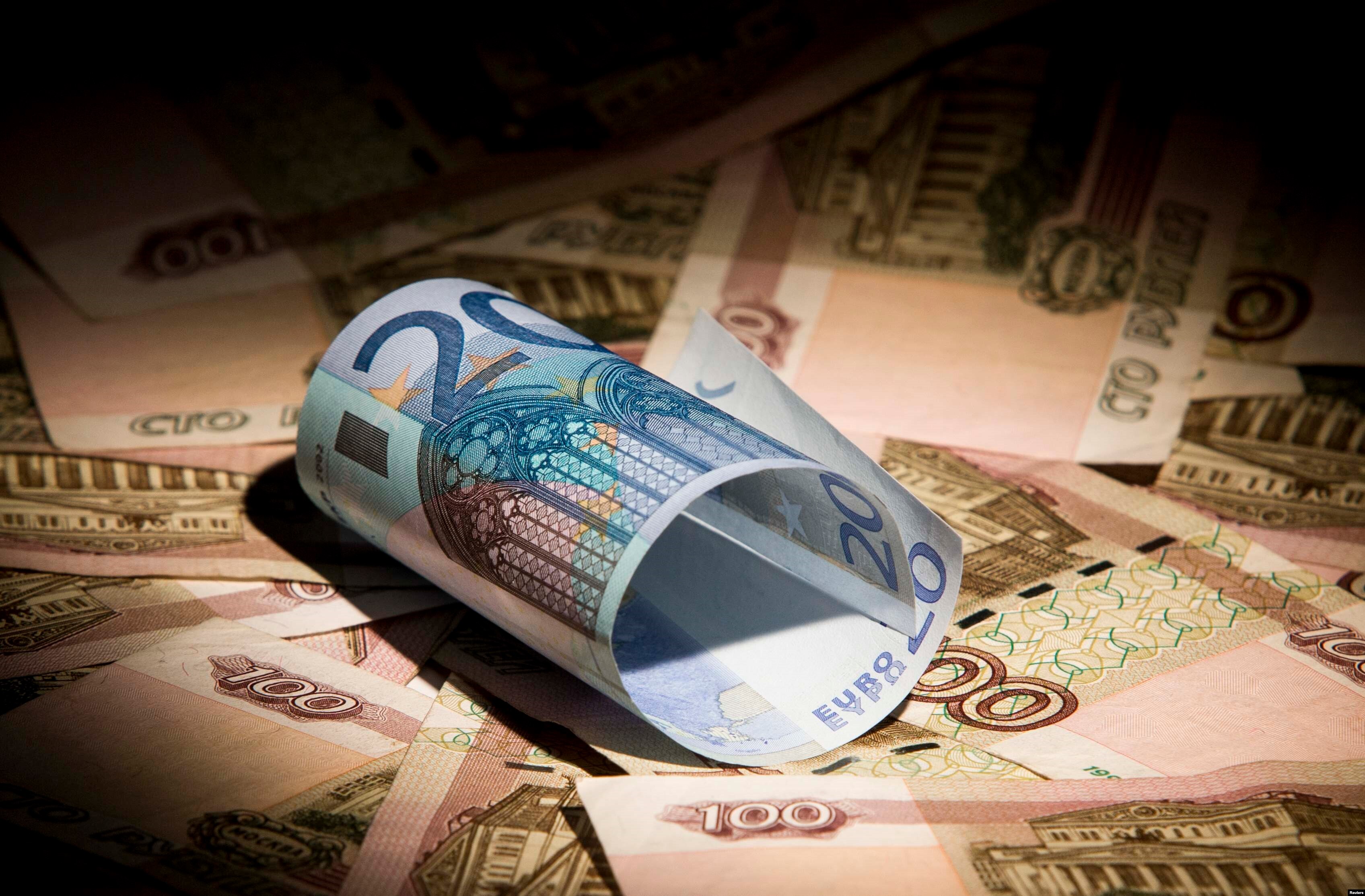
Negative factors for the Russian economy were manifested in the outflow of capital. Crimea only accelerated it
The international reaction to the accession of Crimea to Russia sharply accelerated the outflow of capital from the country. According to forecasts, only in the first quarter it will exceed the volume for the entire last year. The confrontation between Russia and the West does not give reason to believe that this outflow will soon slow down.The net outflow of capital from Russia in January and February amounted to approximately $ 35 billion, the Minister of Economic Development Alexei Ulyukaev said last Tuesday. That is - until the last events in the Crimea. For comparison: for the entire last year, the outflow amounted to almost $ 63 billion.
Over the past three weeks, it has accelerated sharply and now, according to expert forecasts, by the end of March it can noticeably block the entire last year.
The Russian population is not invested in the stock market. But absolutely everyone is looking at the ruble to the dollar!To the new Russian factor - Crimean - added last week and a very powerful external factor. The Central Bank of the United States, the Federal Reserve System (Fed), not only repeated on Wednesday, that he intends to gradually end by the end of the year the program of financial stimulation of the American economy, which was begun in the fall, due to its clearly accelerated growth.
Recall that after last May May, the Fed The Federal Security Championship first announced only the intention to start the curtailing of this program soon, the recent influx of foreign capital to the markets of developing countries quickly replaced its outflow. This ultimately led to a harsh-by 15-25%-the devaluation of national currencies of these countries -such as India or Turkey, Indonesia or Brazil, Argentina or South Africa. To a large extent, this also affected Russia. And when at the beginning of 2014 the Fed began the phased folding of the financial incentive program ($ 10 billion per month from the previous volumes of $ 85 billion), the fall of these currencies sharply accelerated.
Now, the Fed openly announced that literally in a matter of months, at the end of the program, that is, in the first half of 2015, she intends to start increasing her basic interest rates. The publication of such plans only accelerates the overcoming of capital from developing countries to Western financial markets, including in the United States, as the effectiveness of investments in them is increased.
But this is not all, even if we talk only about external factors, notes Kirill Tremasov, the chief economist of Nomos Bank in Moscow .
Kirill Tremasas:
- The events around Ukraine are not at the best moment for the Russian economy. The fact is that this year one of the basic topics in the global economy is a general decrease in investors' interest in developing countries. This is mainly due to the slowdown in the growth of the Chinese economy. Everyone looks at China, see the conjuncture deterioration there, and against this background they reduce investments in other developing countries, expecting that the developing world will feel all the negative consequences of China's “cooling”.
At the beginning of the year, we generally saw panic moods on Emerging Markets - however, then they managed to extinguish them. It is clear that against such a background, any new destabilization factors in these countries only worsen the attitude of investors to them, as happened in the situation with the Ukrainian crisis.
The federal authorities will not be easy to explain to the regions that were in a difficult financial situation, why the assistance is provided not to them, but to the new subject of the FederationIn early March, the Central Bank of Russia, trying to restrain the collapse of the ruble against the backdrop of events in the Crimea , not only made record interventions in the foreign exchange market, but also sharply, almost one and a half times, raised its basic interest rate, which is the main guideline for the current value of borrowed money in the Russian economy.
Natalia Orlova , chief economist of Alfa Bank:
- Of course, an increase in the interest rate is a certain factor inhibiting the outflow of capital. We already have a very large volume - about 70 billion dollars - came out in the first quarter. On the other hand, the companies, it is possible, accumulated a certain financial “airbag”, and it is quite possible that with such an outflow of the capital that has already occurred, they will feel relatively comfortable in expectations of the next payments on external debt.
Therefore, in principle, I do not think that we can say that the outflow of capital of $ 70 billion will remain for the nearest quarters. This, of course, would be too much! And, I think, a certain slowdown in this outflow should be expected.
70 billion dollars per quarter, if such estimates are confirmed, by 10% will exceed the outflow of capital from Russia for the entire last year.
Whether he will slow down somehow in the coming months, depending not only on the further development of events in Ukraine, and, therefore, the possibilities of large-scale foreign sanctions in relation to entire sectors of the Russian economy, but also its internal dynamics.
Kirill Tremasas :
- All this will appear primarily in the fall of investments. In January, they decreased by 7% per year, it is very serious. In February, as the Minister of Economic Development of Ulyukaev had just stated, the fall amounted to 3.5%. That is, this is not about the slowdown in growth, but about the reduction of investment demand, the fall as a whole in investment activity in the country's economy. But this is data only for February, that is, until the last Ukrainian events. In the spring months, I think we will see an even more depressing dynamics of investment.
Natalia Orlova:
- Of course, this creates not the most favorable background ... The statistics that have just emerged clearly shows that the most vulnerable part of all these factors is the investment environment, and investments are falling.
In February, however, they were higher than the expectations of the growth rate of domestic consumption. Therefore, in general, we believe that we can count on a certain growth in GDP this year. Perhaps it will be about 1%... Of course, March statistics will become indicative when we see what the immediate effect had an increase in the interest rate on the economy. Although, in my opinion, the influence of this factor will be quite gradual and is unlikely to manifest itself in its entirety.
May God forbid the recession in the basic script, that is, to stay at least at the level of last yearThe reduction of internal investments, that is, the investments of companies and enterprises in the development and expansion of their business, is one of the key factors in the growth of any economy, and the Russian is no exception. And its negative influence last year was partly compensated by consumer demand. In 2014, this factor may not work.
Kirill Tremasas:
- The fall in investment has become one of the key factors in the slowdown of the Russian economy last year. Although, in general, she still retained the positive growth rate, due to the positive dynamics of demand from the population. Last year, consumer demand continued to grow, although he slowed somewhat.
This year, the slowdown in consumer demand growth will be even more obvious, since the increase in salaries ceased. They grow only in the budget sector, and in the private - on the contrary, there was a tendency to reduce them. Therefore, the growth rate of total income of the population slows down, in some sectors of the economy they are completely reduced.
Plus to everything - the devaluation of the ruble. This is a psychologically the main factor for the population by which people judge whether there is a crisis in the country or not. The same collapse of shares or bonds that took place did not particularly worry them - the Russian population has little invested in the stock market. But absolutely everyone is looking at the ruble to the dollar! ..
Since May last year, when in the United States the Central Bank for the first time announced plans to turn the program of financial incentives for the economy, the Russian ruble rate to the dollar decreased by the end of December by about 6%. Its fall in the first three months of this year is almost twice as large ...
Kirill Tremasas:
- The fall of the ruble to the dollar, which has been 11%since the beginning of the year, is, of course, a very serious psychological factor. The population sees that crisis phenomena in the economy are growing in the country. And this is even more discouraged by the desire to spend money. That is, in this situation, the “savings” model will prevail in consumer behavior.
In a word, consumer demand this year, I think, will slow down even more than in the past, when, for example, retail sales grew by about 4%. This year, probably, it will be within 2-2.5%, and according to an optimistic scenario.
So, the outflow of capital from Russia in the first two months blocked half the volume for the entire last year. By mid -March, the ruble lost more than 10% of its cost to the dollar and the euro. Against this background, the Central Bank sharply increases the basic interest rate, which increases the cost by Russian companies and enterprises of new bank loans.
In such conditions - even if we assume that there will be at least further exacerbation in the confrontation with the West - will Russia be able to avoid a recession, on the verge of which the national economy was before all recent events in Ukraine?
Alexey Devyatov , chief economist of the Uralsib Capital investment company:
- Of course, an indirect effect, and tangible, will appear due to the outflow of capital. 35 billion dollars in just two months is a lot, and such a factor will exert considerable pressure on the Russian economy. But in general, it is necessary to understand that investors will treat Russia as a country of higher risks, which is why, accordingly, the cost of new borrowings will also increase for us.
The central bank really raised the key rate quite significantly. Moreover, at a meeting on March 14, the Central Bank said that this increased rate will remain in force for at least several months.
All these factors, of course, create new risks for the economy. Nevertheless, I still do not think that the economy will fall into the recession this year, taking into account all these factors. Perhaps we will see very small growth rates - around 1%.
But so far, two of the main factors of economic growth - internal investments and consumer demand - are more likely to demonstrate negative dynamics ... even despite the experts unexpected for experts, to accelerate the growth rate of consumption in February.
Kirill Tremasas:
- The totality of these factors - the decline in investment demand and the slowdown of consumer demand - in my opinion, will lead to the fact that the economy will be on the verge of a recession. Although from the part of government officials there are still statements that it can grow by 2-3%, but, it seems to me, these are completely inadequate forecasts.
In the basic scenario, I think God forbid to avoid recession, that is, to remain at least at the level of last year. If the tension around Ukraine, and in general, the situation in developing markets will continue to deteriorate, then I think we can see the negative growth rates of GDP this year - for the first time since 2009.
It is hardly worth counting on the influx of foreign capital in the Crimean economy. It will have to be restored, apparently, by Russian effortsFinally, another aspect. The growth rate of the total loan of companies and enterprises - another factor in the general growth of the economy - remain in Russia at a very high level. In January and February, according to the Central Bank,-16-17% for last year’s indicators, which, at first glance, is poorly corresponded at the general rate of economic growth. What is the reason, in your opinion?
Kirill Tremasas:
- The total portfolio of loans of Russian banks to the corporate sector last year increased by 12.7%. However, in real terms, growth was significantly lower. Partly manifested the dynamics of the currency course. Indeed, in this loan portfolio there are about one third - these are loans in currency.
The ruble fell last year, at the beginning of this year the fall intensified even more. Therefore, there was a revaluation in the rubles of that part of the loan portfolio, which is expressed in the currency. Hence the acceleration of the total growth of the loan portfolio “on paper”.
Natalia Orlova:
-The real growth rates of the loan portfolio of Russian banks to enterprises, if they are abstracted by fluctuations in the exchange rate, probably remained in the interval of 10-13%. In principle, this indicator is nominally comparable to the general growth rate of GDP: after all, we have very low economic growth rates in real terms, a little more than 1% per year, and inflation last year amounted to 6.5%.
Therefore, nominally, the volume of the Russian economy in rubles increased by about 8%, and the nominal volume of loan growth more or less corresponds to the nominal growth of the economy.
After the ratification of the agreement on the accession of Crimea and Sevastopol, the Russian parliament to these regions fully extend the financial obligations of Russia in relation to the subjects of the Federation. The total deficit of their budgets in 2014 is estimated at 55 billion rubles, the Minister of Finance of Russia Anton Siluanov said last Wednesday.
In Russia now - 85 regions, of which 74 are subsidized. At the same time, Crimea in terms of the so -called own budgetary security will be included in the group of the largest recipients of direct subsidies from the Russian budget.
Karen Vartapetov , Deputy Director of the Public Finance direction of the Standard & Poor's International rating agency, Moscow:
- We made the primary grades by looking at the level of budgetary security of Crimea. In other words, budget revenues for the past year per capita. At least, on the basis of this indicator, the volume of the necessary financial support of the region in Russia is calculated.
According to 2013, the level of budgetary security of Crimea approximately corresponds to the level of the North Caucasian republics-such as North Ossetia or Kabardino-Balkaria-until they provide financial assistance from the federal budget.
And since we know the average level to which the Caucasian republics on budgetary provision are “brought”, this is about 30 thousand rubles, then, according to our estimates, about 40 billion rubles will need about 40 billion rubles in the year of the Crimean Republic in order to reach the level of its budgetary security to the average level of subsidized Russian subjects of the Federation.
This is a minimum assessment, it includes, say, an increase in the salaries of state employees, teachers, doctors, and so on. But this amount does not take into account raising pensions! Both in Ukraine and in Russia, they are funded from the Pension Fund, and not directly from the budget.
If you accept your expert estimate of 40 billion rubles, that is, almost 1.1 billion dollars at the current rate, in which case Crimea becomes the third in terms of direct subsidies by the region for Russia. More in the Russian budget of 2014 is planned only for Yakutia - almost 51 billion rubles and Dagestan - 43 billion ...
Karen Vartaputov:
- In fact, the third, yes. But we need to clarify: if the Crimea leaves the entire income tax, then, probably, the total amount of financial assistance he needs will be less.
In general, in its current state, Crimea, according to our estimates, is an approximately the average subsidized region for Russia - about the same level, say that the North Caucasus, Tuva, Buryatia. That is, in terms of the average level of salaries, pensions or GDP per capita, it approximately corresponds to these Russian regions.
All sovereign ratings of Russia in one way or another will be attached to the expected deterioration of the general economic situation in the countryNevertheless, if we compare the average indicators for Crimea with some average economic indicators in the regions of Russia as a whole, then the difference is more than noticeable, says Vasily Astrov, a researcher at the Eastern European Eastern Economic Institute in Vienna:
Vasily Astrov:
- First of all, we recall that, for example, the average annual income of Russians at least three times exceeds similar Ukrainian indicators. The more difference turns out - economically - between the Crimea and the average regions of Russia in such indicators. And Crimea’s own income covers the regional budget by only 35%.
It is worth remembering that there are a lot of not only ordinary pensioners, but also retired military who use various benefits in Crimea. Therefore, in general-due to the necessary large subsidies from Moscow-Crimea in economic terms will become even a more dependent region than before.
But after all, such an option is not excluded that Crimea-at least for some time-will allow you to leave in the local treasury all the taxes that will collect in it without transferring anything to the federal budget ...
Vasily Astrov:
-Yes, it is likely that Crimea will be exempted from any tax obligations for several years. However, I am by no means sure that this will contribute to attracting foreign investments here, in any case, from Western countries. I also do not exclude that the governments of these countries will exert a certain pressure on their entrepreneurs.
In addition, if Russia's relations with Western countries continue to deteriorate, risks for business will grow even more. Indeed, in this case, it is possible that Russia can apply its sanctions against foreign investors working in the country.
So, in general, it is hardly possible to count on an IT on the influx of foreign capital in the Crimean economy. It will have to be restored, apparently, by Russian efforts. Moreover, a new deterioration in the investment climate can affect not only Crimea, but the entire economy of Russia. Crimea will not be a certain exception.
There are almost 2 million inhabitants in Crimea, of which 560 thousand are pensioners, another 200 thousand people are employees of the budget sphere. That is, more than a third of the entire population of the peninsula, 38% of its total number, directly depend on the state payments, whether it is a treasury or a pension fund.
If we keep in mind such a structure, what other regions in Russia Crimea resembles a greater extent?
Karen Vartaputov :
– Я бы сказал, что по демографической своей структуре Крым похож на так называемые “русские” субъекты средней полосы России – скажем, Ивановскую или Костромскую области... То есть относительно бедные регионы с большой долей пенсионеров и занятых в бюджетной сфере. В принципе, Крым вполне можно с ними сравнивать.
As for future payments from the Russian Pension Fund, after all, Crimea, for its part, will replenish it, and it is difficult to evaluate the balance of these calculations. Yes, we can say: since the average level of pensions in the Crimea below the Central Russian -Russian is approximately twice, according to the statistics of the Russian and Ukrainian, then bringing the average Crimean pension to the average Russian will require about 10 billion rubles just direct expenses. Но в какой степени они будут покрываться крымскими взносами в Пенсионный фонд, пока сказать трудно…
У нас уже очень большой объем оттока капитала – около 70 млрд долларов в первом кварталеВ условиях, когда по тем или иным причинам стране или отдельному ее региону не хватает денег для оплаты всех текущих счетов, они, как правило, обращаются к заимствованиям на долговых рынках. Тем более, когда уже накопленный такой долг совсем невелик – как у России, например, где он по итогам 2013 года едва превысил 12% объема ВВП. Для сравнения, только средний уровень госдолга среди стран еврозоны сегодня – 92%, в США – более 100% ВВП, а в Японии – около 200%.
Однако реальные условия, ныне сложившиеся на долговых рынках, к таким новым заимствованиям – и Россией, и ее отдельными регионами – отнюдь не располагают.
Карен Вартапетов:
– Действительно, учитывая низкий уровень долга России, наращивать его можно. Более того, страна традиционно недовыполняет программу заимствований, потому что бюджет исполняется лучше, чем прогнозируется – по разным причинам.
Вместе с тем, мы наблюдаем ухудшение условий на финансовых рынках для российских заемщиков. Россия в этом году пока не размещала своих облигаций, но мы видим, что и регионы, например, не разместили ни одного займа. Более того, все переносят свои планы заимствований на второе полугодие из-за большой неопределенности на рынках.
Если говорить о проблемах поиска источника средств для Крыма, то, в сравнении с общим объемом федерального бюджета, а также накопленных финансовых резервов, я имею в виду Резервный фонд и Фонд национального благосостояния, помощь Крыму невелика, нужно признать. И России вполне по силам эту помощь оказать.
Но здесь возникает такой важный вопрос, как политические приоритеты. По нашим оценкам, исполнение региональных российских бюджетов резко ухудшилось в 2013 году из-за ухудшения экономической ситуации и роста расходов в связи с выполнением указов президента. В России появилось примерно 15 регионов, в которых ситуация резко ухудшилась, уже накопленный ими долг приближается к 100% их собственных текущих доходов, а это – законодательный максимум.
Вы могли бы назвать хотя бы некоторые из регионов этой группы?
Карен Вартапетов:
– Мордовская республика, Вологодская область, Костромская область, Псковская, Саратовская область, Рязанская, Смоленская… Это те регионы, у которых долг уже приближается к 90-100%, а расходы на погашение и текущее обслуживание этого долга каждый год превышают 20% регионального бюджета. То есть ситуация крайне неустойчивая: каждый год они должны привлекать все новые займы лишь для погашения уже существующих. При этом исполнение их бюджетов оставляет желать лучшего.
Так вот этим регионам доступ на рынок капитала фактически уже закрыт. И они могут рассчитывать разве что на помощь федерального бюджета. А теперь сравним: по нашим расчетам, чтобы помочь этим регионам в 2014 году, необходима сумма, сопоставимая как раз с объемами помощи Крыму. И федеральным властям будет непросто объяснить своим регионам, которые оказались в сложной финансовой ситуации, почему помощь предоставляется не им, а новому субъекту Федерации.
В этом году одна из базовых тем в глобальной экономике – общее снижение интереса инвесторов к развивающимся странам. Связано это, главным образом, с замедлением роста КитаяОстрота проблемы отчасти нивелируется тем обстоятельством, что в 2014 году российским регионам не нужно будет производить особенно крупных выплат по уже накопленным долгам, они предстоят позже, отмечает аналитик долгового рынка из инвестиционно-финансового дома “Капиталъ” Владимир Харченко:
Vladimir Kharchenko:
– Если говорить о муниципальных займах или субфедеральных, то эта проблема возникнет, скорее, в 2016-2017 годах. Именно на эти годы придется достаточно много выплат. И, скорее всего, эмитентам уже стоит задуматься над тем, как выгодно рефинансировать долг. Пока такая проблема остро не стоит, и возможности привлечь новые займы для них, я полагаю, все же откроются.
Более того, если иметь в виду долговые обязательства по тем же субфедеральным займам, то эти финансовые инструменты широко представлены в ломбардном списке Банка России, как предмет залога под кредиты, поэтому интерес к ним в любом случае будет высоким.
Вопрос в том, что их эмитенты, скорее всего, столкнутся с более высокими ставками на долговом рынке, когда будут размещать такие бумаги. Но спрос на них так или иначе сохранится, даже если ставки в перспективе будут расти и дальше, а не снижаться.
Долговой рынок для российских заемщиков и рынок банковских кредитов в России для компаний и предприятий – как они будут взаимосвязаны в нынешнем году?
Kirill Tremasas:
– Условия привлечения рыночного финансирования в этом году существенно ухудшились. Скажем, на внутреннем долговом рынке России в январе-феврале, да и в марте эта тенденция продолжается, практически не было первичных размещений – лишь 2-3 таких эмиссии от банков. Из крупных компаний… ну, разве что “Роснефть” разместила свои рублевые облигации. Других привлечений капиталов с долгового рынка просто не было.
Поэтому компании и идут в банки за деньгами, которые они не могут получить на финансовых рынках. Отчасти с этим, кстати, связан и рост общего кредитного портфеля банков. Но я бы не говорил о том, что в стране заметно растет кредит, что должно оказывать поддержку экономике.
На минувшей неделе сразу два из трех ведущих международных рейтинговых агентств – Standard&Poor's и Fitch – объявили об ухудшении ими прежних прогнозов по суверенным рейтингам России – со “стабильного” до “негативного”. При этом сами рейтинги, определяющие в итоге стоимость новых заимствований для страны на долговых рынках, пока сохранены на прежних уровнях.
Alexey Devyatov:
– Пересмотр суверенных рейтингов, хотя и возможен, но не думаю, что он окажется значительным, если он вообще будет. Рейтинговые агентства будут исходить, во-первых, из возможных санкций в отношении России, санкции эти будут, по всей видимости, все-таки точечными, а во-вторых, из негативных факторов, таких как отток капитала, которые будут оказывать влияние на экономику.
И здесь все суверенные рейтинги России так или иначе будут привязаны к ожидаемому ухудшению общей экономической ситуации в стране. Полагаю, оно не окажется катастрофическим, хотя мы явно увидим более низкие темпы роста. Но в целом я не думаю, что пересмотр рейтингов, если это произойдет, будет значительным.
В сообщениях обоих агентств отмечается, что ухудшение прогнозов по российским суверенным рейтингам отражает потенциальные последствия введения в отношении России международных экономических санкций…