Date
Author
Шекспировский сезон Алексея Бартошевича
Source

Preserved copy
Translated material
Anniversary and not very
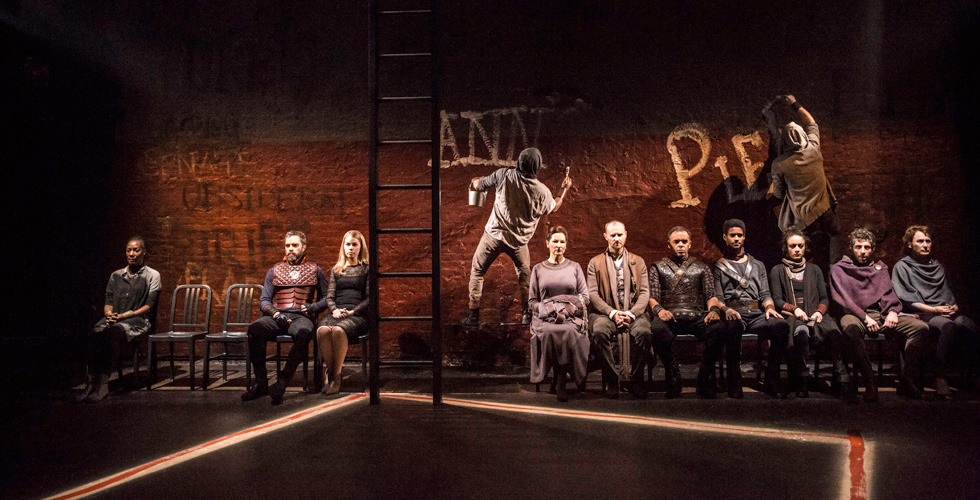
The anniversary of the bard is in full swing. Shakespearean premieres replace one another. Four newborn Hamlet appeared in Moscow alone. By the number of Hamlets set in the capital, we have already overtaken London. In 1930, three Hamlets went there at once, which the theater historians write about as a miracle, unheard of meticulous and not repeated in subsequent times. And how many Danish princes are wandering around the stage of our province! Is it only Hamlet? The number of, for example, the new productions of Romeo and Juliet simply go beyond all reasonable limits. At the same time, the Russians, as usual, take a number, and not the skill, it would not be very fair: among the total mass, serious or even wonderful work (for example, Othello, Yuri Butusov in Satyricono or Hamlet | Robert Lepa and Evgeny Mironov in the Theater of Nations).
 © Mikhail Gutherman / Kommersant "Othello" Yuri Butusov in "Satyricon"
Of course, the Soviet habit of "Danish performances" has not gone away, it unsolvedly settled in the subconscious of domestic culture. But even if it is better to “make popularly” the anniversary of Shakespeare or Chekhov than any anniversary of the great October or the anniversary of even greater Stalin there. The abundance of Shakespearean performances will not harm anyone, even if two -thirds of them suddenly turn out to be a nonsense of the dog. Unless the audience, overfed by the classic, will begin to disgust him, and theaters, tired of excess on their scenes of the creations of the Stratford Swan, will begin to relax diligently from him and temporarily forget about its existence. So, by the way, happened to Chekhov. After the noisy celebration of his date, he almost disappeared from the stage for two or three years, and only now the theaters begin to return to him. So, probably, it will now be with Shakespeare.
The round Shakespearean dates in Russia have its own history, which mirrored the Russian fate, now and then becoming a fate. 50 years ago, April 23, 1964, the classic was to celebrate his 400th anniversary (all over the world he safely celebrated him). Theaters throughout the Union began to prepare Shakespearean productions in advance. But, in trouble, about six months before the anniversary, in the fall of 1963, Nikita Sergeyevich made another meeting with the intelligentsia. At first he kept speech in the written one, but then, as it happened, he moved to improvisations and soon reached the repertoire of theaters. Khrushchev reproached theaters that instead of modern plays about the labor exploits of the working class and collective farm peasantry, they prefer to put the classics: “No matter how you come to the Moscow Art Theater, there all the Scottish queen lead to the scaffold. Why do you need this Maria Stuart? Take it off, remove it from the posters. The old man Shakespeare will not be offended by us! " It goes without saying that none of the leading comrades dared to tell the first secretary that Maria Stuart wrote no Shakespeare, but even Schiller. And most likely they themselves did not know. And - this is the funniest - the authorities began to throw out of the repertoire plans of the theaters of the player of the play by William of our Shakespeare. As a result, when quite on the eve of the anniversary they realized, seeing how they were preparing for the celebration in all countries, it became too late. The anniversary meeting with long and boring reports was hastily arranged at the Bolshoi Theater, which was no different from all other official interpreters. There were almost no new performances on the scenes. There was no time to set them.
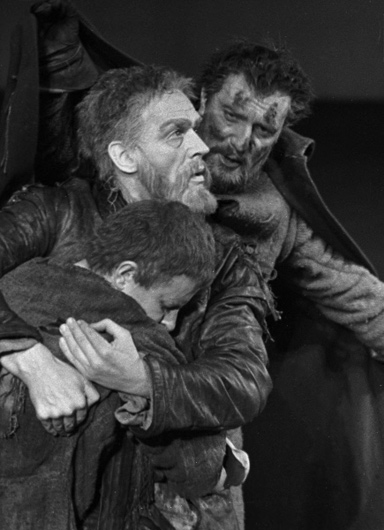 © RIA "Novosti" "King Lear". Royal Shakespearean Theater on tour in Leningrad, 1964
This time, such misunderstandings, it seems, is not expected. Nowadays, state -owned people who manage the culture, in all likelihood, are able to distinguish Shakespeare from Schiller. Which, without a doubt, indicates that over the past fifty years, we, with a “good enlightenment, pulling more borders”, significantly approached the civilized world.
The proof of the latter can serve as a built in the cinemas of almost all major cities of Russia (Moscow, St. Petersburg, Kazan, Krasnoyarsk, Yekaterinburg, etc.) Shakespearean theater festival. More precisely, this is a demonstration of the films directly in the auditorium during the performance (and technically excellent) Shakespearean (and not only) performances of English theaters. By the way, fresh, “with the heat of the heat”: the premiere of one of them, “Coriolan” at the Donmar Theater, took place only two months ago, and some still go in London and Stratford. The bow of the British Council and other English and Russian organizers of the unique festival.
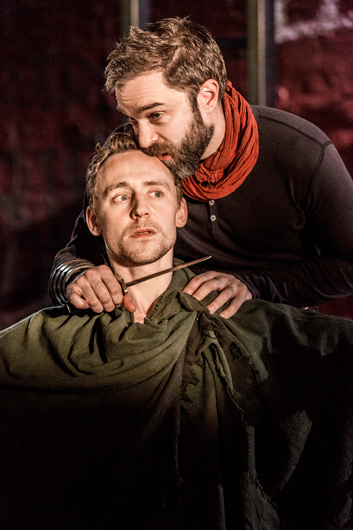 © Shakespeare's theater festival "Coriolan"
The best among shown, without a doubt, is the production of the Royal National Theater . First of all, amazing in psychological sophistication “Othello”, set by the current leader of the theater, Nicholas Hitner, with Adrian Lester in the title role. The Moscow public remembers Lester on the performance of the Cheek Theater by Jowl “How do you like it”, which we have shown ten years ago. Lester played there Rosalind: no one in my memory played the most captivating woman of Shakespeare's comedy better than this black Briton. Then Peter Brooke called him to the role of Hamlet in the Parisian “Buff du Nor”: this was one of the most humanly deep readings of the tragedy that I had to see (recently calculated - in my lifetime I saw fifty -nine “Hamlets”!). And now - "Othello." I strongly recommend that everyone see the performance - while it is still listed in the repertoire of cinemas.
 © Shakespeare's theater festival "Othello" Nicholas Hitner
I would add to the list of the highest points of the Shakespearean festival (Richard II at the Royal Shakespearean Theater, Hamlet at the National Theater, Coriolain at the Donmar London Theater), two more of those who have included in the program of the National Theater, this time not Shakespearean: “Frankenstein” with a beloved public Bendic. Cumberbatch and the musical "Battle Horse" , touching in content and impeccable in theatrical technique. In a word, rush to see!
However, the purpose of these notes, I assure you, is not at all advertising.
The program of the Shakespearean year - perhaps, at the suggestion of the British council, five productions of the Globus Theater are included. I saw these performances, and - for one and a half decades - many other performances of this theater in London. And he made up a rather clear idea of his tasks and the artistic level - alas, not too enthusiastic.
At the end of the century before last, the British thought about whether the famous Globe should be resurrected from non -existence, the theater, for which “Hamlet”, “Othello”, “King Lear”, “Macbeth”, “Boule”, on which the first great tragic of England Richard Berman and Shakespeare himself were written. For many years there was talk that it would be nice to restore the national treasure, but everyone did not find that money, or then enthusiasts. Until the well -known, but not very famous film actor Sam Wonemaker, who decided to give the rest of his life and all his money for the implementation of a noble, but expensive plan, came from the states. Knowing that it is in vain to count on public funds, he turned to the public. The project was created under the guidance of the best historians-schools. They tried to restore the Shakespearean theater with all possible archaeological accuracy. The construction forest was brought from the very places where it was taken then, in 1599. The straw, which was covered with the roof of the gallery, was dried and pressed according to ancient recipes. Galuses were pulled out for the fence for the fence by the master who was a distant descendant of Richard Berbage himself: a typical English story.
 © Shakespeare's Globe "Henry V" on the stage "Globe"
They decided to build a “globe” not quite where he stood at Shakespeare, but a hundred meters to the side, so that the theater building closes the line of the Thames embankment, the so -called Queen's Walk - “royal walk”. The theater was planned to make a part of a whole cultural center with a museum, lobby, souvenir shops, a hall for conferences.
Everyone could invest in a construction site. The names of those who made major donations were placed on the walls of the theater. Everyone who introduced10 pounds received a registered brick somewhere in the foundation. (It is comforting to think that my brick lies there, underground, at the base of the Shakespearean theater.) Money was collected for a long time with the world along the thread. As a result, the main amount was given by one millionaire-philanthropist.
Sam Wonemaker did not live to seek his dream, which was the main meaning of his life. He died in 1993, four years before the day when the queen solemnly opened the Globe. Since then, the theater has been scored in crowds of tourists - and not only in the tourist season.
In my lifetime, I saw fifty -nine "Hamlets".
When you enter this theater, you each time covering you a dizzying sense of magic and harmony. According to the degree of perfection, the space of the “globe”, even if it is just its newspaper copy, can only be compared with the theater in the epidavra or with the Palladiev “Theater Olympico”.
Stay as much as you can, go up to the galleries, look at the hall and stage from different points of view, at different angles, study the ornaments decorating the scene, the zodiac signs drawn on the “sky” - a canopy over the stage, just like that, all this was with Shakespeare. Wait in the stalls - where the noisy crowd of Elizabetans was crowded. If you love the theater, you will save in your soul for a long time, this is an experience of introduction to the great moments of theatrical history.
But, I ask you, do not rush to the presentations of the current Globe, even if you come to London and you will have free time! Honestly, you will lose it.
As soon as the actors go on this scene, hypnosis of the fantastic space disappears, the miracle disappears. A spectacle does not belong to the Renaissance theater system, nor a serious modern theater, unfolds on the stage of the Shakespearean theater. What is especially amazing is the complete and intentional absence of any directing, except for the same principle: you leave the left, and you are from the right backstage. Do not even look for a hint of the directorial reading of Shakespearean plays or any distinct interpretation of the characters and fate of Shakespearean heroes. Actors take turns clearly pronouncing the text - and no more. They will say: with Shakespeare, there was also no directing in the modern sense of the word. But we cannot turn into people of the 16th century.
 © Shakespeare's Globe "Twelfth Night"
You can reconstruct the architecture of the old theater, but not its art: for this it would be necessary to resurrect the actors of the Shakespearean troupe “servants of the Lord Camerger”, the Elizabethan audience, the Elizabethan London and Elizabethan England. It is clear that this is pure utopia. At times, the actors of the current Globe are eagerly trying to portray Elizabethians, but falsity and provincial tunes inevitably come out of these attempts. Most often, they just play who is more than the same, as God puts on the soul. Some are better, the others are worse, but the performances cannot make up of this. Even the famous actors, sometimes going to these stage, resort to long -proven techniques, and simply - to the old stamps, designed in previous roles. So, Stephen Fry, playing Malvolio (“Twelfth Night” - one of the “Globe” performances shown at the festival), just repeats what he did in the series “Jivs and Woster”: the same semi -navigable melancholic physiognomy, the same slow -down plastic lemuria, the same sluggish irony. But there is no trace of the previous brilliance, as there is no funny and bitter story of the ridiculous butler countess Olivia. Apparently, this was simply not required of the actors of the Globe.
Similar examples can be gained as much as you like. So, one of the most beautiful scenes of “Henry V” - a deep and take the story of the death of Falstaf - on the stage of the “Globe” played as a farce, moreover, episode.
I would not write about it at all - you never know in Britain or we have not the highest flight theaters. But the Globe will soon come to Russia, and I considered it my indispensable duty to warn the most honorable audience that awaits it.
However, who knows: maybe I'm wrong around? The Russian public will judge us.
For my taste, it would be better to bring here one high -class performance of the National Theater (for example, “King Lear”, which has just been set by the talented Sam Mendes) than a whole brood of mediocre creations of the Globe. The main, and most likely - the only meaning of which is that they go in this captivity. But the theater, alas, cannot, like a snail, carry its house on your back.