
Translated material
Similarities and differences
In many ways, for this reason, the state, once erased by history from the face of the earth, usually no longer arise again. Possible independence, say, Scotland, cannot be called an exception, since Scotland all four centuries since it became part of the United Kingdom, remained in its place and stored its national identity. But there are no places where the national self-awareness of the Austro-Hungarian or Ocman empires would not exist, and the models by which they could be assembled from pieces were lost forever. The mentioned empires, a common distinguishing feature of which was the inextricability and adjacency of the parts, after their breakdown, no one tried to fold back-on the contrary, this breakdown in a sense continues, it is enough to cast a glance at the Balkans or the Middle East. Here it is impossible to say that sound reason prevailed, rather the progressive movement of history. Purely theoretically, it is a pity, because this deprives us of a sample for comparison with famous events of today. But coincidences and parallels arise where you are least waiting for them.
On the eve of World War II, Germany was not, strictly speaking, the former empire, although until the first had some overseas possessions. Its main territory consisted almost exclusively of German -speaking lands. But along its eastern border, a strip ran largely inhabited by the same ethnic group, and this is its similarity with today's Russia. The invasion of such a territory promised to be relatively painless, and the consent of the population to occupation was largely guaranteed. And another reservation before continuing the parallel. Comparisons of anyone with Hitler (as well as hanging the label of fascism or Nazism) in modern journalistic discourse have long lost all content and usually appear as curses. This does not mean that they are a priori meaningless. Sometimes, as Sigmund Freud noted, a cigar is just a cigar. But a meaningful comparison requires that we react to the actors as rational agents, otherwise any analysis loses its meaning and returns to the smallest common denominator of the swearing.
As for Adolf Hitler at the beginning of his operation to expand the territory of the Reich, the hypothesis of the rational agent does not cause special doubts. The Sudetsk region in the then Czechoslovakia was mainly inhabited by the Germans, and many of them quite welcomed joining the new state. The fact that this was one of the most economically developed areas of Czechoslovakia, which, in turn, was one of the leading industrial powers in Europe, is also very important here. In other words, she did not threaten the burden for Germany - on the contrary, a clear help. All these calculations, it would seem, are crashed about the inevitability of predictable consequences. Although by the time of the annexation, Germany generally rebelled from the ruins of post-war devastation and achieved large economic successes, it technically, due to overwhelming external debt, stood on the verge of bankruptcy, and the inevitable international isolation would accelerate the process. But we have an advantage of reverse vision: we know that the annexation was the first and logical point of the plan of the conquest of Europe, which, among other things, was also a way to avoid bankruptcy.
It is most convenient to proceed with the implementation of such a plan, the discussion of which is not provided here in full economic all -equipped. If you now switch to the current Russian operation in relation to Crimea, not only the resemblance to the annexation of the Sudet, already marked by many observers, but also significant differences, is striking. First of all, if the Sudeters easily joined the adjacent Germany, Crimea is an exclus and does not have a land message with Russia. It is non-self-placed and greatly depends on mainland subsidies, its resort-tourist economy is predictably collapsed as a result of the annexation. Putin's Russia will have to take Crimea for full contentment. The hypothesis of a rational agent tells the only and disappointing possible benefit from Crimea: as a bridgehead for subsequent military operations.
The list of differences increases greatly with a broader view of the situation. Hitler had a competent assistant, Minister of Economics Hyalmar Minships: although he was resigned on the eve of direct preparation for the war, but after he contributed to the restoration of the country's industrial power. There is no figure of a similar scale in the immediate environment of Vladimir Putin; Moreover, people who understand something in the economy, apparently, have lost any access to the leaders of the authorities. If Germany stopped international norms at the peak of its economic power, Russia, if I correctly evaluate its motives, has entered this path during the period of growing crisis and stagnation, to overcome which Western sanctions, not even the most effective, will not help.
In other words, in the case of Putin, the hypothesis of a rational agent is already divided into the first and easily distinguishable thresholds. Alas, even within the predictable limits, she does not promise anything good to either the neighbors of Russia, or to herself.
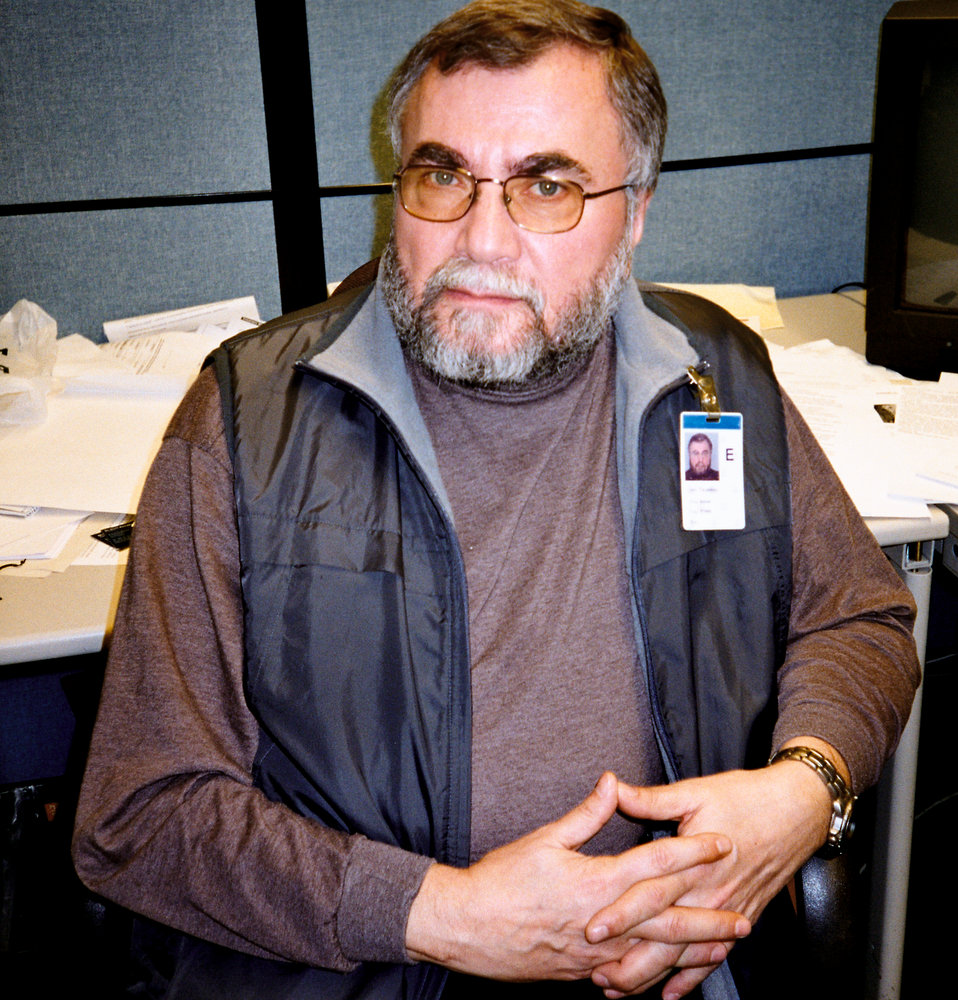
Alexey Tsvetkov-New York Political Commentator, Poet and Publicist
Opinions expressed under the heading "Law" may not reflect the point of view of the editorial office