
Translated material
What to do when there is no hope?
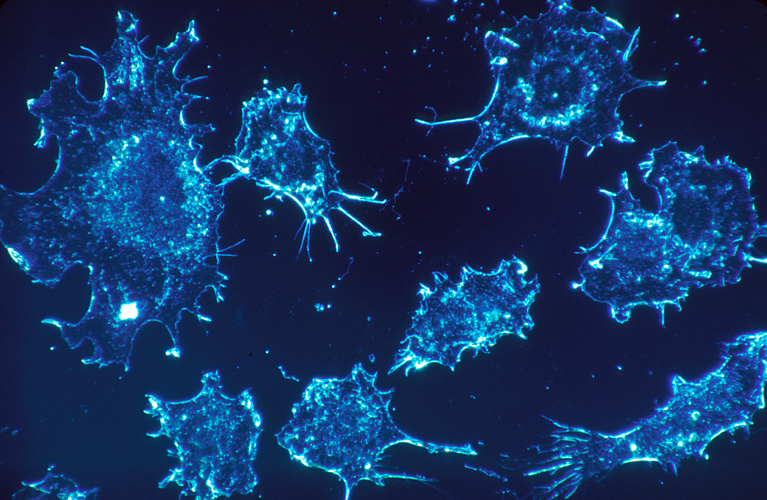
To get cancer in Russia is very scary. This is the end of everything. So many people think about the problems of cancer patients in the news about their suicides . Most prefers not to think about a frightening diagnosis and possible consequences at all: "God forbid." Therefore, facing a disease in real life, a person, as a rule, flows into a stupor and does not always come out of it.
Cancer, even in the terminal stage, is very difficult, but this is not the end at all. What is palliative medicine and how can you help families with a hopeless cancer patient, says Nyuta Federmeser, president of the Hospice of the Hospice of Vera and the daughter of Vera Millionshchikova, the chief physician and the creator of the first Moscow hospice.
We know very little about how people go, and therefore, often, getting into such a situation, we behave incorrectly. I believe that the model “you can’t lie better than truth” is the model by which you need to act in any situation. You always have to be sincere and do not lie - neither yourself nor others. The first and most important thing that can be done for a cancerous patient and his family is to tell the truth about the diagnosis and the possible future.
Let's try to simplify, consider the situation of simple loss. There is no loss of a loved one from cancer in the conditions of Russian reality, and, for example, a case when your child fails to enter the institute. We are now talking about a normal, prosperous, socially adequate family - “intelligent”. You can, a little thickening the colors, say that when a child does not enter the institute in such a family, this is a tragedy. The most unpleasant thing is that this child is not explained by the main thing: when he fails the exams, it will feel more trampled by shit during the year or more. Nobody tells him about it. They say to him about the fact that “you will not learn, you will not have money, there will be no work, what you will do, walking the streets”, but no one will explain that he will be sickening to meet with friends and classmates, every time his mother and dad, and if you fall in love, then admit that he did not act.
This is a long prelude, but I want to draw the conclusion: because a person does not know the truth, he behaves incorrectly. And because we hide the truth from him, pitying him, tell him a half -truth or a completely different truth, we very spoil his life. This happens in any life situation. If you can not enter the institute, you must imagine the consequences. If you sign some collective letter, you must know the consequences. If you get sick, you should know all the consequences and clearly - the choice that you have. A person should know possible options, because only this knowledge allows him to properly plan his life. Each person will have absolutely his own life after this truth, and the decision in a critical situation about whether to continue to be treated, how and where, can be adequate only when you know the whole truth.
For healthy people, palliative medicine is fear, and for families of cancer patients, this is help.
Unfortunately, in our country, doctors think that what they know is completely not necessary to inform the patient, and at the same time make a lot of stupid blunders. If the situation is serious, they say: "Come with your wife." The person is not a fool if he was told to come with his wife, then he does not have pneumonia. Doctors continue not to tell the truth, even when the patient passed chemotherapy, bald, was irradiated, sat in line with other suffering-with ascite, with yellow skin-and even lost one of the neighbors in the ward. He already knows “lost” not as euphemism, but as the fact that the neighbor died. And we continue to hide the truth from him - we doom the patients to perverted information and that he will keep his grief inside and will not be able to throw out. If a doctor is lying to him, he will lie to a relative, and a relative will lie in response to him, and now we will all lie to each other, and around us there will be lace, lace, lace of this lies, and we will never reveal anyone.
How much we see in the hospice of families who agreed to severe treatment and left millions in this treatment. And these people for all-by material situation, by psychotype, by relations-if they knew their diagnosis at once, then their situation and life in recent years, months, and some weeks would have developed differently.
Palliative medicine is the last medicine that a person faces in this life if he does not die under the wheels of a car. But, you see, a person still dies. It is much better if in the last moments of life they come to the rescue of modern medicine, including palliative, which is aimed at pain relief and reducing unpleasant symptoms of the disease.
In the UK recently conducted a survey of associations that arise in people with the word "hospice". In the first sample of the respondents, people from the street participated in the second - relatives of patients who are now helping the hospice. Accidentally interviewed people who came across cancer called the word “gratitude”, those who did not encounter, said “fear”. People who at that moment were under the care of a hospice said about the same thing: “My mother has been in the hospice for a week. This is very difficult, but without them I could not cope. ” For healthy people, palliative medicine is fear, and for families of cancer patients, this is help. But let's not confuse “fear” with “death”, because palliative medicine is needed not only for those who have entered the period of “active dying”, palliative medicine is wider and more. “Palliative” comes from the Latin word Pallum - “cloak”. Palliative assistance is not only medical assistance, it is psychological, spiritual, legal, social support, family support as a whole. She, like a raincoat, covers and protects from head to toe.
Remaining more painfully than leaving.
Therefore, “palliative medicine” is not equal to the “quick end”, this is a very long period. I’ll tell you more: for many families, palliative medicine and hospice are a beginning, this is what can significantly change your life. In the summer, in the summer lay a man who said a few words about his life on the camera - he talked about how they met his wife, said that if he had a second life, he would like to meet her and live another one. When he left, his daughter came for his things, we said that we have such a wonderful video, ”they showed her, she burst into tears:“ I can’t show her mother, it will be very difficult for her. ” After some time, she returned for this record, and then called and said: “You know, my mother is terribly grateful, they lived together for almost 60 years, and he never told her that.” The record made by the volunteer in the hospice was the beginning for her.
Palliative help reveals the infinity of our love for each other. Any parting, the simplest parting-someone goes on vacation, the husband goes to work in the morning-this is a small concentration of love. When we swear and a person leaves the house, you will still look from somewhere and say: “So far!” He goes on vacation, you think: “Lord, train, plane ...” - be sure to hug, kiss, say good to each other. Farewell forever, before a very distant meeting, which will not take place here, is the quintessence of love. In a sense, the death of a non-construction is a blessing, because it gives you time to at least say something. But the most important thing is to make a person to keep up, to score, and hobble. In consolation, we can say that when death comes suddenly to the family, not from cancer, but from, the Lord, the Lord, the car accident, people have no chance to say goodbye - there will be neither a day nor the hours that can still be spent together.
The girl Nastya has died now. We all knew that it was going to this. Her mom and dad and I became big friends. When it became clear that Nastya remained, I went to their ward. We are always trying to find something good in the situation-I say: “Look, it does not hurt. She has such a good, calm, smooth, unnecessary eyebrows. She is not tormented. " Her mother says: “Yes, it’s not tormented ... and in general, I think it’s great that we are in the hospice, I have the feeling that I am at home, everything is fine, everything is calm, all of my own.” Again, I try to find some good little things, I say: “Look, it breathes not with my mouth, but with my nose, it means that it has no shortness of breath, which means that there is enough oxygen, it does not suffocate, does not dry in my mouth. Good - not tormented. " Her mother turns to me and says, smiling: "In general, I see so many positive points now." “I am so happy that I'm in the hospice,” says mother, losing the child. It was probably an hour and a half before the flooring.
You can not treat the patient and not treat his environment.
In the presence of palliative help and a professional physician, death is not as terrible as it seems. We are all afraid of death, but in fact we are not afraid of death, but suffering, humiliation, loneliness, dirt and fear. Palliative assistance is called upon all these five components, if not removed at all, then minimize. It is designed to reduce suffering, to soften loneliness. Unfortunately, in Russia they know little about palliative help, it is not very well developed in our country. We have too many examples of poor, poor-quality medicine due to low education of doctors, due to underfunding, so it seems that palliative help is scary. But in our country, for the same reasons, both obstetric care seems terrible and surgery.
In general, in Moscow there are 8 hospice, each of which has a hospital with a capacity of 25-30 beds. In the first Moscow Hospice of 30 stationary places. Each of the hospices should have an exit service. The first Moscow Hospice has the best exit service. It serves up to three hundred people at home at a time. In other hospices, visiting services work worse, in some they work only on paper. In Moscow there are no hospices in the Eastern District, in the Western, there are no recently joined territories. In Moscow, only oncological patients are accepted in the hospice, patients with other diagnoses simply have nowhere to get help with terminal stages, well, there are also problems with children's beds, no matter what the Department of Health in Moscow says. Therefore, Moscow is very unimportant by palliative help. Lack of healthy.
If a sick person is faced with a choice where he wants to die - at home or in the hospital, the majority will say at home. They find themselves in the hospital, because at home it is difficult to provide them with high -quality medical care. Why? First of all, painkillers. It is practically impossible to anesthetize a person at home today. This problem will not be solved only by a relief of the rules for accessing drugs. We must engage in the formation of doctors. In fact, high -quality anesthesia is a competent combination of different drugs used, not only painkillers, not only drugs. These are antidepressants, and psychotropic drugs, and simply conducting symptoms, and an enema on time, when a person has stopped working, working with shortness of breath and with a psychological situation. Nevertheless, all this can be done at home - it is much cheaper for the state and more convenient for the patient and his family. A well -working exit service can provide high -quality home care.
People do not want to know, think, talk about disabled people.
British hospices are also unimportant by personnel and cannot close the need to help at home. But in Britain, for example, there is a Macmillan N Urses society - a society of perfectly trained nurses who work with cancer patients at home. Doctors of the hospice come to the house and make appointments, and these nurses, who are sent by the charitable organization, are at home constantly with relatives, do their job quietly and imperceptibly so that relatives do not suffer, because the care of the lying patient is difficult, and use the remaining time for at least some possible communication. So that the patient does not have guilt that he deprives his family with his illness, takes life from them. For me, this society of “sisters McMillan” is what the Vera Foundation should strive for, the model that I would like to grow.
There is such a professor Karachunsky, the chief pediatrician of Moscow, he says that he spends two -thirds of working time on conversations with relatives. And there is one, let's call it a loud word, the commandment, which is especially true, when it comes to oncology. If one family member got sick, the whole family fell ill. You can not treat the patient and not treat his environment, do not pay attention to him.
We had such a case in one family: two sisters, the oldest 7 years old, the youngest is seriously ill, leaving. A neurosis happened with the elder - she pulled out all her eyelashes. I pulled out at night, before bedtime, one at a time - for each I made a desire for the younger one recovered. Parents were absorbed in the youngest disease, and the eldest needed love and care no less than a sick girl. When cancer comes to the family, the whole family is sick.
I knew this in theory, and not on my own experience, until my mother fell ill. I could talk a lot about the fact that we need to pay attention to relatives, we even considered the percentage ratio: 60 percent of attention to the family, 40 for the patient. But only when my mother fell ill, I realized why. When a person gets sick, the survival instinct makes him concentrate on himself and his illness. He very easily and simply cuts off in life “important” from the “unimportant”. He closes in the shell - he self -confident and begins to live inside his illness. He does not see anything for. And relatives and relatives see everything because they need to continue to work, smile, communicate, go to the store and - that requires the greatest mental strength - to participate in the lies to which society forces them to follow. And they should still think about the disease, make decisions, they must support the patient and others, should be strong.
We do not know how to ask for help and do not know how to offer it.
Should? But should they, on the contrary, have the right to comply with their feelings sincerely, to be able to cry, hug, slam the door, both sides - both the patient and relative. Because the remaining is more painful than the departing. They are doomed to guilt, they are doomed to the feeling that they are not careful enough, sensitive, patient. Because we do not have a culture of sympathy in the society of the experience of a family where there is such a grief. We all close, cowardly, leave, and as a result, each patient is left alone with his illness - even from relatives closes, and relatives are closed in his family.
Let's think not about cancer, but about a family where the child was born with a severe genetic disease. Maybe he will live 12-15 years. This family is doomed to insulation - not because our streets are not adapted for the disabled: our society is not adapted for the disabled. People do not want to know, think, talk about them. If in an American family it turns out that the child has cancer, then his parents will not hide it - they will quickly give it out, and they will help the neighbors - buy products, go to the pharmacy, cut their lawn. There is no feat in this, this is a manifestation of good neighborliness, the understanding that grief can come to every family and that grief is easier together to worry. We do not have this. I often have to advise by phone people next to the dying man. It is very rare that next to him are work colleagues, school friends or neighbors. These are, as a rule, the closest relatives, not distant: husband, wife, mother, dad, brother, sister, that is, the closest circle. This is such loneliness ...
The most important thing is to manage a person, to score, and understand.
The advice that I would like to give relatives of patients with oncological diagnosis: do not be afraid to ask for help. And those who have encountered such families: do not be afraid to offer help. This is important: we not only do not know how to ask for help, we do not know how to offer it. We offer it kind of sincerely: "Maybe you can help you with something?" - And people answer: “No, thanks. Everything is fine". Then, offended, they put the phone and say: “Well, what are they to me there:“ How to help, how to help ”? It would be better to help than ask. ”
If you need help, you need to be able to divide it into small parts and delegated to other people. “Yes, thank you very much if you bring me from the pharmacy this and that, I will be glad.” “I do not have time to feed my dad, and he dies without a hot soup. Please bring him the broth in the thermos. ” In this way, you give yourself an opportunity to say about the problem, and a person on the other end of the wire is an opportunity to understand that, it turns out, it is possible to help in such a situation without spending a lot of effort and money. You give him a completely priceless opportunity to understand that he is good. This is a feeling that every person arises when he comes to the rescue. Give people this opportunity to feel good.
And to ask and offer help fearlessly, without hesitation. Нет ничего ужасного в том, что, когда мы сталкиваемся с тяжелой болезнью в семье, мы нуждаемся в помощи, и нет ничего трудного в том, чтобы помочь в такой ситуации. Ты думаешь: «Вот там у них умирает дома мама. What to do?" Все, что делаете в обычной жизни: отнести вещи в химчистку, погулять с собакой, сводить ребенка в школу или в кино, потому что сейчас он живет погруженный в горе, помыть окна перед Пасхой... Жизнь-то продолжается.
Recorded Denis Boyarinov
Как помочь фонду помощи хосписам «Вера»: перевести деньги на счет фонда с назначением платежа «Алина». Через «Яндекс.Деньги» , СМС-пожертвование на номер 2420 с текстом «Вера сумма» (например, «Вера 500») , реквизиты фонда .
Скачать мобильное приложение фонда «Вера»