
Translated material
The madness of the brave hamltes
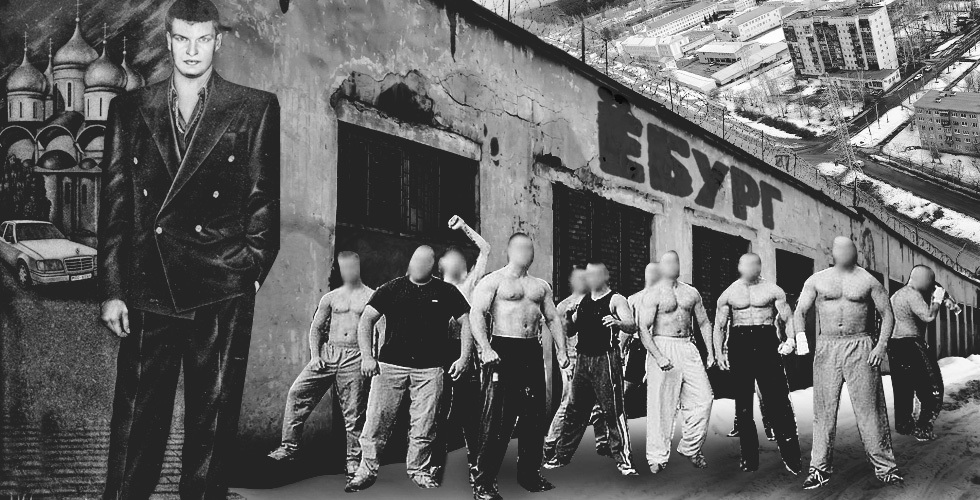
***
The artist Alexander Shaburov sends to the Soros Foundation an application for a grant - the video “Treatment and prosthetics of the teeth” on which he is treated with his teeth. The teacher of the architectural academy, Alexander Golizdrin, copies with fish in an abandoned career - this action shows TV, and it is called the "wedding of Ichthyander." People sniff as a mountain as a song "Ural Ryabinushka." Mad people. Sometimes funny, sometimes cruel. Sometimes prudent, sometimes infantile. Mad people.
***
Perm writer Alexei Ivanov decided to write a book about Yekaterinburg of the era of the dashing nineties. With such formulations, an increased interest in the “Yoburg” began, it was heated and is about to boil completely, on the day of exit. Claims appeared immediately. Like, "Yoburg" - so they do not say or say only gopniks. Why be so distorted by the name of the city? Further - more. In the Urals and federal media, fragments of the "Yoburg"-novels about gangster wars, the socio-political union of Uralmash, politicians and artists, people and Khumlets began to publish. And heavy stones rained down: Ivanov pushed the facts, looks one -sided, and indeed - at a fig? The Facebook audience did not go out the main thing. "Yoburg" with a bloody cover and the inscription "City of the Brave - made in the nineties" - not documentary, not a physiological essay, not a city annals, not a collection of jokes in its purest form; Although both, and another, and the third, and fourth.
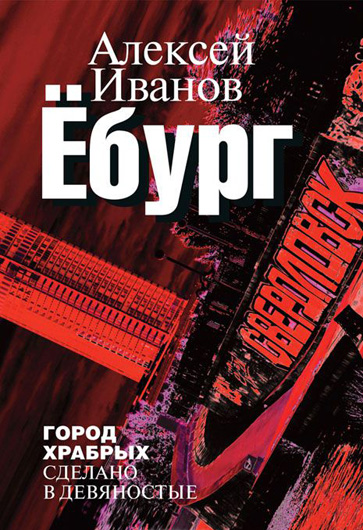 © AST, editorial office of Elena Shubina
Ivanov created primarily a work of art, accumulating all his writer's talents, impressing branded fiction, genuine love of local history and native places, stinging essays and conceptuality - exactly in the sense that Ivanov loves intellectual schemes, concepts (a last name in Bluda and Mudo, the Ural Matrix). This time there is a concept, but it is just a screen to cover a desire to tell about the city. Yoburg is a transitional organism, a transformation from Sverdlovsk to Yekaterinburg. So he came up with, Ivanov. And people are engines of change. Not quite people, however. In the fantasy-historical novel “The Heart of Parma”, Ivanov’s thick htonic, the Humlt, Mansi Prince Asyka, a strong-willed, unbending, decisive, ready to titanically move his fate and history of the Urals. Passionarium. Now in the Urals there are their own khumlta. They climbed from the Ural bowels especially actively into the era of chaos and entropy, in the nineties. Political and political strategist Anton Bakov, who came up with a cloud at the same time both crazy and rational projects (the currency "Ural Franks", the Mansiysk Republic, now - the monarchical party with all the ensuing), director Alexei Fedorchenko, who repelled the Sverdlovsk film studio from the insolent brothers, Governor of the Sverdlovsk Region Eduard Rossel and mayor Yekaterinburg Arkady Chernetsky, who fought with each other, moving the region forward with their competition. Participants in the Uralmash OPS - a powerful mafia structure.
Ivanov, putting on the mask of the storyteller, sorting out the Ural gems, tells them with sympathy, juicy and fabulously, a little naive. Even if the intonation changes and becomes dry and documentary, a fabulous flair still lies with an even layer for the narrative. Cooperation with Leonid Parfyonov on the project “Ridge of Russia” (series and book) did not pass for Alexei Ivanov without a trace, and the notes “The other day” will be lightly lightly: whipping formulas multiplied by glossy splendor. And so the corporate identity of “the other day” on the cover is asked, something like “without which it is impossible to imagine Yoburg is even more difficult to understand.”
This book has not yet been completed, it will be completed by readers' reactions. They have already begun to bombard claims - to reliability, to facts, to estimates, to details.
In general, “Yoburg” is “collective Ivanov”, and here, in addition to Ivanov and Parfenov, the Ural dialect Innocent Sheremet, the head of the television agency of the Urals, famous for the ironic and merciless news feeds, sounds. One of the short stories is dedicated to Tau, in it Ivanov says that it, the agency, began to show ordinary people who fell into incident-prunes. Ordinary people under the lens of television cameras became heroes. Ivanov, in fact, does the same in “Yoburg” - engineers, bandits, scientists mutate in the heroes of the epic.
The space of the city, especially in those days, is truly legendary and mythological. True, each participant in the events has its own. The writer met with the heroes, with the heroes, and then, having processed tons of bizarre ore, he created, no, not a museum of stone as one of the characters, but a whole factory, built an enterprise of the full cycle. "Yoburg" is an industrialized noise, something clangs, here the workers appeared on the entrance. In the optics of Ivanov, the city is freedom -loving, democratic. A place for discussions, rallies, meetings of citizens, deputies, brothers. Not a state Duma. The almost 600-page collection of the Phenomena of Yekaterinburg plows the field for reflexions, raises conversations from Facebook skirting boards. Reader both in the history of the Urals and in literature. This book has not yet been completed, it will be completed by readers' reactions. They have already begun to bombard claims - to reliability, to facts, to estimates, to details.
Alexey Ivanov, passionately not loving the capital, brought his most convincing and detailed argument in favor of a conditional periphery, the province. In the course of the story, he constantly reproaches Moscow (and at one of the meetings with readers a couple of years ago, Ivanov complained: “Channel One” could give more airtime for the “Runa of Russia”, but this is about the province!). “... It is amazing that the decisions of Yoburg turned out to be often more witty or more adequate than the decisions of Moscow or the decisions of the Russian province,” the finale is with naive seriousness. The boiling independence of the city led to the fact that the city answered all questions (read - challenges of time) itself.
***
I am from the invasion, the invaders that is. He lived on the Lumpen-Proletarian outskirts of Yekaterinburg (about which Ivanov also writes) all the nineties and zero. The spirit of places and times is captured, I answer. And yes, Yoburg - so they say and even think so so far.
Alexey Ivanov. Yoburg. - M., AST, editorial office of Elena Shubina