
Translated material
Large gas shift
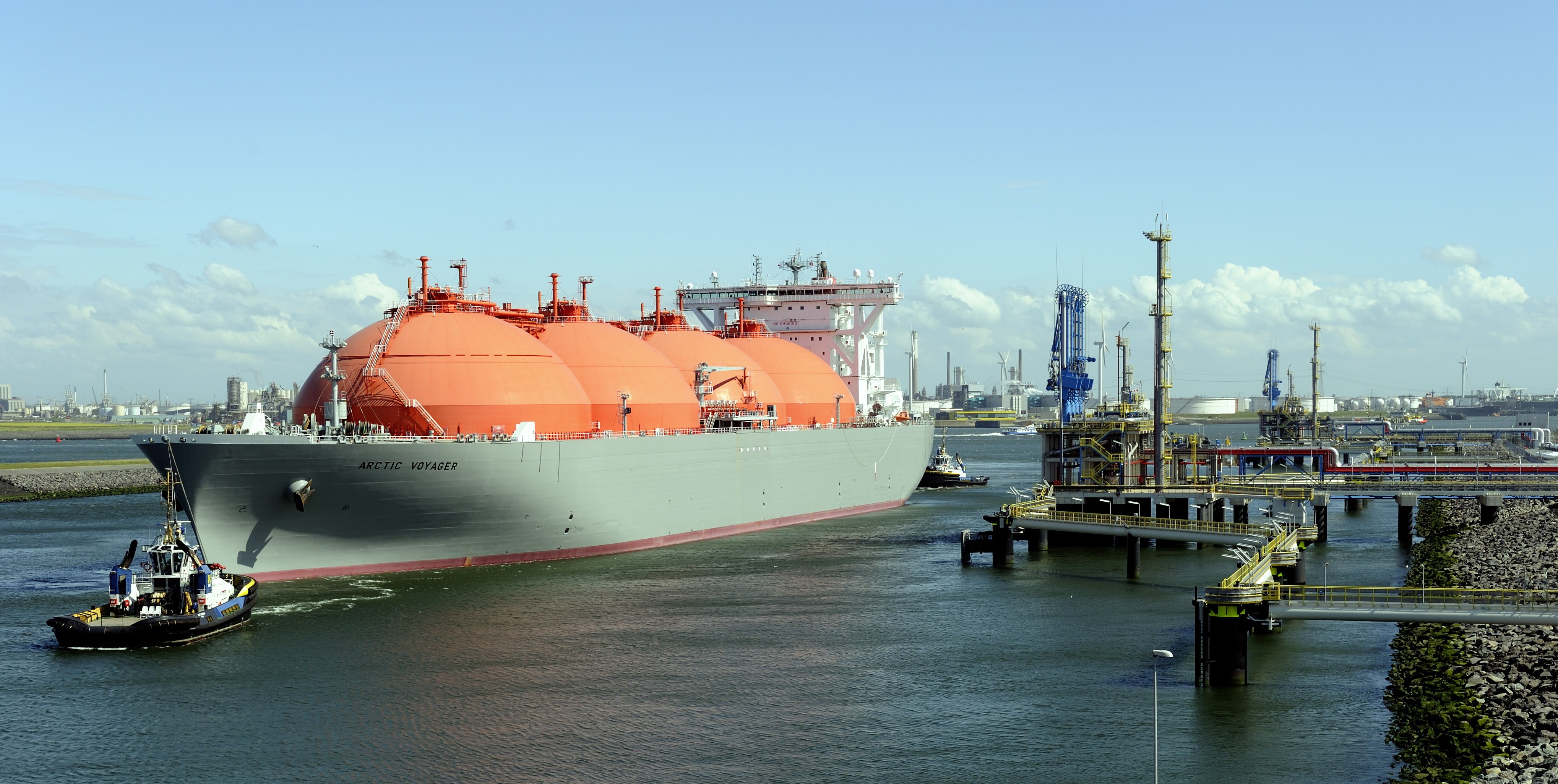
Europe is more likely to receive gas, intended for the markets of North America and Asia than the mined in the United States
One of the main issues of the economic agenda of the EU -Ssha summit, which last Wednesday in Brussels, was the diversification of future supplies of energy in Europe - to reduce their dependence on Russia . It is primarily about natural gas: the share of the Russian Gazprom in the European market amounted to about 30% last year - almost a third more than 15 years ago.And a few days before, at the next summit of the countries of the European Union, its participants called on the United States to expand their own export of gas, the extraction of which, as a result of the shale revolution in the country , has grown sharply in recent years.
For decades, the United States has been the world's largest energy consumer, although their share in global demand was gradually reduced. The development of new and extensive non -traditional deposits in the country - primarily shale gas and oil, which became relatively profitable against the background of high world prices and the widespread introduction of new technologies, allowed to sharply increase its own production of raw materials in a matter of years. In November last year - for the first time in the last 18 years - more oil was extracted in the USA than the country imported.
We make it clear that Europe intends to speed up the reduction of its energy dependence - especially from Russia.
However, the export of energy from the United States is tightly limited by law. For example, any gas supply abroad, so far carried out in scanty volumes, require a special license to the Ministry of Energy.
If we are talking about one of the 20 countries with which the United States has concluded free trade agreements - whether Mexico or South Korea, the license is provided automatically, although it will require a special consideration. If there is no agreement on free trade with the country-buyer, as for now from any of the 28 countries of the European Union- negotiations on such an agreement between the EU and the United States have begun only last year , the receipt of an export license is very difficult.
With regard to the exports of raw oil from the United States, there are even more stringent restrictions introduced 40 years ago, a researcher at the Brookings Research Institute in Washington Tim Bursma:
Tim Bursma:
- In the case of raw oil, we are really talking about the old law adopted in the 70s of the last century during an oil crisis and an embargo for the sale of oil to the countries that supported Israel. Then such a law seemed quite reasonable. Today he is clearly outdated, and many insist on his review.
As for natural gas, a few years ago, when the idea of its possible export arose, there were fears that this could lead to an increase in gas prices in the US domestic market. They are expressed, in particular, representatives of the most energy -intensive sectors of American industry. They have a powerful political lobby, which the beginning of an active campaign for limiting gas exports.
But at the same time, independent studies were also conducted, which proved that the expansion of the exports of liquefied natural gas from the United States would not lead to a significant increase in domestic gas prices. The most famous of them was the work of the NERA consulting company, carried out in 2012 by order of the US Department of Energy.
So the facts are evident. This issue is now being discussed in Washington, but whatever the decision is made, it will have a political character. The word is behind the White House.
It will not work to quickly solve the problem, this is a matter of many years. So far, it is impossible to replace deliveries from Russia - they have to almost a third of the pan -European gas consumption.
Internal gas prices in Europe are many times higher than the same prices in the United States. Nevertheless, only the transportation of American gas through the Atlantic to Europe, at least, will double the American prices for it, last week the head of the department of the European Commission for Trade Karel de Gyhta said. At the same time, the current gas prices in the markets of Asia exceed even European ones by almost a third.
From Frankfurt-on-Main-the head of the department of raw material markets of the analytical department of the German Commerzbank Oyngen Weinberg:
Oygen Weinberg:
- Unlike the global oil market, the global gas market, it simply does not exist yet. There are at least three large such markets - Asian, North American and European, which, in fact, are practically not connected with each other. Unless with tankers who are transporting liquefied gas around the world ... and prices are very different in these regions. Within their boundaries, the main volumes of gas are transported through pipelines.
Prices in Asia are repeatedly exceeded today domestic prices in the United States. Judge for yourself: in the United States - $ 4-4.5 per energy unit (one million BTU, British thermal units), in Europe - $ 11-12, and in Asia - there were more recently $ 20, for example, in Japan, now about $ 16.
That is, the difference is huge, and, of course, liquefied gas producers in the United States will try to discover export markets for themselves after some time. But so far it is a relatively long -term prospect. This will not happen in the present or next year, although in early 2016 it is worth expecting that the first deliveries will already appear. Will they be significant - a big question ...
Like this: will gas exported from the United States be liquefied to become a significant component of the gas balance, for example, Europe is already in the foreseeable future? .. After all, the world's largest exporters of this gas today - Qatar or Malaysia, Australia or Indonesia - are also making plans for the European market ...
Oygen Weinberg:
- Of course, such producing countries, mainly Qatar, have considerable interest - expand production and supply gas to Europe. But the fact is that Europe itself liquefied gas until recently was not particularly needed.
Although his share has increased a little in recent years, nevertheless, in the total volume of European gas imports, it is only 13% - very little by world standards. In some countries of Asia, it reaches 100%. And, for example, Japan (after the accident in Fukushima three years ago) sharply increased gas demand, and today the country consumes 40% of all liquefied gas in the world. And it turns out that if nuclear power plants are launched here again, then the gas of Japan will need less. It will be available on the market and can be directed to Europe.
Most studies show that the United States can become a significant, but far from dominant gas exporter in the world.
More than 70% of global demand for liquefied gas accounts for the Asia-Pacific region , it was noted in the report of the International Gas Union in 2013, while 52% of its total volume for only two countries-Japan and South Korea. And the exports of liquefied natural gas from the United States are still insignificant compared to the supply of other exporters.
Oygen Weinberg:
- There is really no need to talk about American gas exports. But the most important of the events last year in this market is that the United States began to import much less.
And now the export that was recently intended for the American market was the same Qatar (and huge capacities were involved for this), may be directed to Europe. And here one of the central issues of the global gas market begins to be fully manifested, which in the next 2-3 years should somehow be resolved-pricing mechanisms, how prices will be set ...
In the global oil market, current prices, albeit indicative for specific, physical deliveries, change daily - on international raw materials exchanges. There are simply no analogues of such exchanges in the gas sector ...
Oygen Weinberg:
- It seems to me that a certain gas exchanger will appear very soon. It can be either in Tokyo, because Japan is the largest consumer of liquefied gas in the world today. Or in China, as China seeks to become the largest consumer of gas after a while. Or, and this would be the most correct, in my opinion, solution - from the point of view of both logistics and legislation, such an exchange could appear in Singapore.
If the issue of pricing in the global gas market is resolved, then the companies that gas produce will be able to better predict their expenses and income in the future, and gas buyers too. That is, pricing in this market is today one of the most important factors.
Over the past 2-3 years, almost three dozen projects that provide for export from the country of natural gas have been submitted to the US Department of Energy over the past 2-3 years. Of these, only seven are previously approved. And I have received all the necessary permits from the authorities so far only one.
Nevertheless, according to the estates of the ministry itself, if all seven approved projects are implemented, the total capacities of the United States in the export of liquefied natural gas will be, in terms of almost 100 billion cubic meters per year. For comparison, the total export of Gazprom to Europe last year is 160 billion cubic meters.
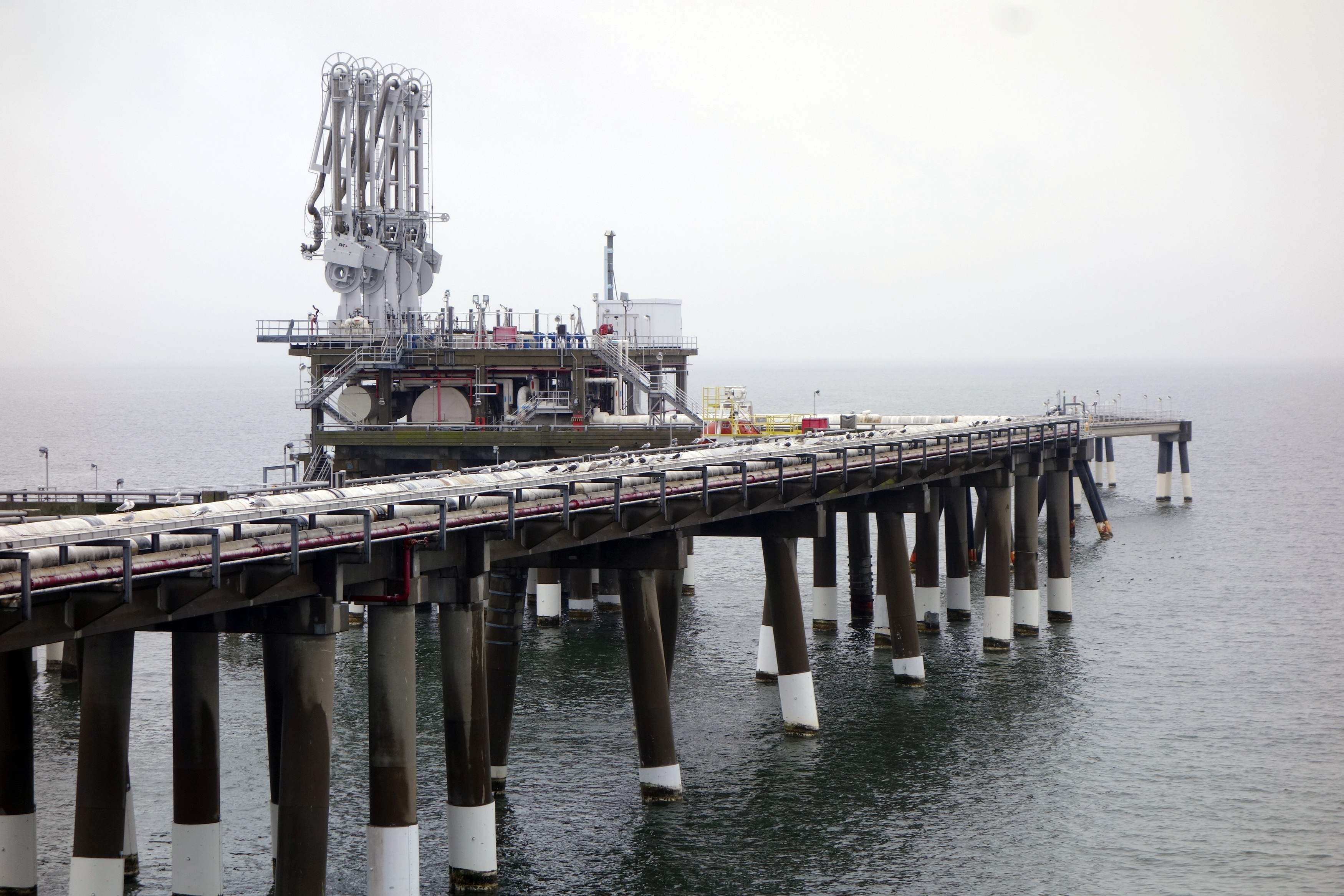
If we imagine that the US Department of Energy will satisfy all the exports presented from the country of liquefied gas presented today, and they will be implemented, then the volume of gas exports from the country, according to the American legal and consulting company Haynes & Boone, will exceed, and recount, 300 billion cubic meters per year. For comparison, this is 45% of the total gas production in Russia in 2013.
However, the creation of major gas export in the United States will take years, and the total volumes of alleged investments are calculated by hundreds of billions of dollars.
Tim Bursma :
- If you look at the list of proposed projects for the export of natural gas, then many of them provide for the conversion of terminals for gas import into the United States into the enterprises exporting. Yes, such projects require very large investments, but still not as huge as you need to create such an enterprise from scratch.
Although such are also proposed. For example, literally this week, a natural gas export permit received a Jordan Cove project in Oregon. It provides for the construction of a completely new terminal, from where American natural gas will be exported to Asian countries. So there are different projects: both new enterprises and providing for the re -equipment of existing terminals.
The main thing here is the psychological moment: one of the largest gas consumers in the world suddenly becomes its exporter!
So far, the construction of only one such terminal has begun in the United States - on the coast of the Gulf of Mexico in Louisian. More precisely, its reconstruction. It was built only a few years ago, resembles the National Geographic magazine as an imported terminal on which liquefied gas delivered by special tankers is transformed into its usual form - for further transportation through pipelines.
Now the reverse production is created here - for the liquefaction of gas. The process itself involves its cooling to a temperature of minus 160 degrees, in which the previous volume is reduced by about 600 times, after which already liquefied gas is loaded into huge sea tankers. The cost of only this, the first project - in Louisian - is estimated at $ 10 billion.
And in the coming years, there is no need to expect a significant expansion of American gas exports, Oygen Weinberg believes, while noting that it is still more significant for the global gas market from the “American” factors so far: another:
Oygen Weinberg:
- We do not think that in 2-3 years the volume of American exports will be significant. But the main thing here is the psychological moment: one of the largest gas consumers in the world suddenly becomes its exporter! This, of course, can completely change the attitude of investors to the gas industry and pricing in it! ..
Will the rest of the manufacturers be the same Qatar and Norway, Algeria or Libya, and expand the volume of production? Surely they will. Moreover, recent events related to Ukraine and Crimea, of course, give a powerful impetus to European politicians to think about diversification of imported gas supply. No one wants to freeze in winter, as it depends on the political will of one supplier.
Although it is impossible to quickly solve the problem, this is a matter of many years. So far, it is impossible to replace deliveries from Russia - they have to almost a third of the pan -European gas consumption. And such volumes in the near future will not be able to replace either liquefied gas or the expansion of its own production, since it is simply impossible to achieve such a significant expansion in a short time.
Nevertheless, theoretically, in the next 2-3 years, some first volumes of natural gas mined in the United States will appear on the European market, how competitive will it be here? Compared to deliveries from other countries, including Russia?
Tim Bursma:
- This is a very good question! .. Those who insist on expanding the exports of natural gas from the United States mainly suggest that American gas will be competitive in Europe. But to be honest, I am far from sure. And most studies show that the United States can become a significant, but far from dominant gas exporter in the world.
Moreover, in Europe, American gas will have to compete with the “local”, which is supplied through pipelines from countries such as Norway, Russia, Algeria or the Netherlands. Therefore, the question of the competitiveness of American gas in the European market is still open, and American exporters are most likely to focus on the Asian market, where they can really compete.
In relation to Gazprom’s supply to Europe, some experts believe that their prices are very far from the minimum acceptable for the supplier. Some even believe that in the case of American gas in the European market, Gazprom can theoretically significantly reduce its prices and thus retain its share in this market.
Unlike the global oil market, the global gas market, it simply does not exist yet.
A separate issue is the development of shale gas in Europe. So far, in the European Union , only three countries are more or less actively supported by the formation of this industry - Poland , Great Britain and Lithuania. And, for example, France, the Netherlands or Bulgaria adhere to a direct ban on the use of its production technologies.
Compare: for the period from 2000 to 2010, 17.26 thousand wells at shale gas deposits, that is, on average, 130 wells per month, was drilled in the United States. In Europe - only about 50 wells in a decade. Such data are given in the special report of the French Research Institute of Sustainable Development and International Relations (IDDRI) presented a month ago.
The authors of the report predict that after 15-20 years, that is, by 2030-2035, the share of shale gas produced in Europe will be no more than 3-10% of the total volume of natural gas consumption in the region by that time.
Oygen Weinberg :
- In Europe, of course, no one wants, conditionally, something was drilled in his backyard. And in many European countries to the environment, a trembling attitude, for obvious reasons. Although there are considerable explored shale gas reserves in the region, and supposed reserves.
I do not think that some serious measures will be taken in this direction in Western Europe. Whereas in the countries of Eastern Europe - Poland. Romania or Hungary - both intelligence and field development will continue to be further carried out. And in Ukraine there are promising fields for such developments.
But such a factor should be borne in mind. It is not so important to an ordinary European consumer where the gas will come from - either from the shale deposits, or from the usual ones ... He argues simply: electricity comes from a socket, and gas from the pipe. And where they bought it - on the exchange, in a liquefied form or put it on the pipe of the Russian Gazprom, this European consumer is not as interested in as a question whether this gas will be at all and at what price ...
Japan (after the accident in Fukushima three years ago) sharply increased the demand for gas, and today the country consumes 40% of all liquefied gas in the world. If nuclear power plants are launched here again, then the gas of Japan will need less.
At the next summit of the European Union about Slantsy Gaza in the region, judging by reports from the meeting, there was no question. They talked about the need to diversify supplies, as well as about energy saving and alternative energy.
Herman Van Rompey , Chairman of the European Council :
- Сегодня мы ясно даем понять, что Европа намерена ускорить сокращение своей энергетической зависимости – особенно от России. Мы будем добиваться этого за счет общего сокращения потребления энергии и повышения энергоэффективности экономики, диверсификации поставок энергоносителей как извне, так и внутри Европейского союза, а также общего расширения источников энергии – в первую очередь, за счет возобновляемых.
Ангела Меркель , федеральный канцлер Германии :
- В Европе есть немало стран, которые на 100% зависят от поставок российского газа. Во многих других эта доля составляет 10-50%. Вот почему вопросы диверсификации поставок становятся столь значимыми в наших дискуссиях.
Многие полагают, что сланцевый газ из Соединенных Штатов, когда будет создана инфраструктура для его экспорта, может стать одной из составляющих такой диверсификации. Но важно подчеркнуть, что нельзя рассчитывать лишь на дополнительный импорт энергоносителей – необходимо добиваться их экономии за счет повышения энергоэффективности…
На саммите ЕС-США, состоявшемся в минувшую среду, европейские политики призвали президента США ускорить процесс расширения экспорта американского газа. В ответ Барак Обама фактически предложил Европе принимать непростые политические решения для разработки собственных ресурсов.
“Вы не можете полагаться лишь на сторонние поставки, даже если это и сопряжено для вас с определенными потерями,” - процитировал американского президента посол Евросоюза в США Жоао Вале де Альмейда.
В самих Соединенных Штатах внутренние цены на газ за последние 10 лет снизились более чем в три раза. Сегодня они являются сегодня одними из самых низких в мире, создавая дополнительное конкурентное преимущество американским промышленным компаниям, которые опасаются возобновления роста этих цен в случае расширения американского газового экспорта. А терминалы для него лишь начинают строить…