
Translated material
We draw a court
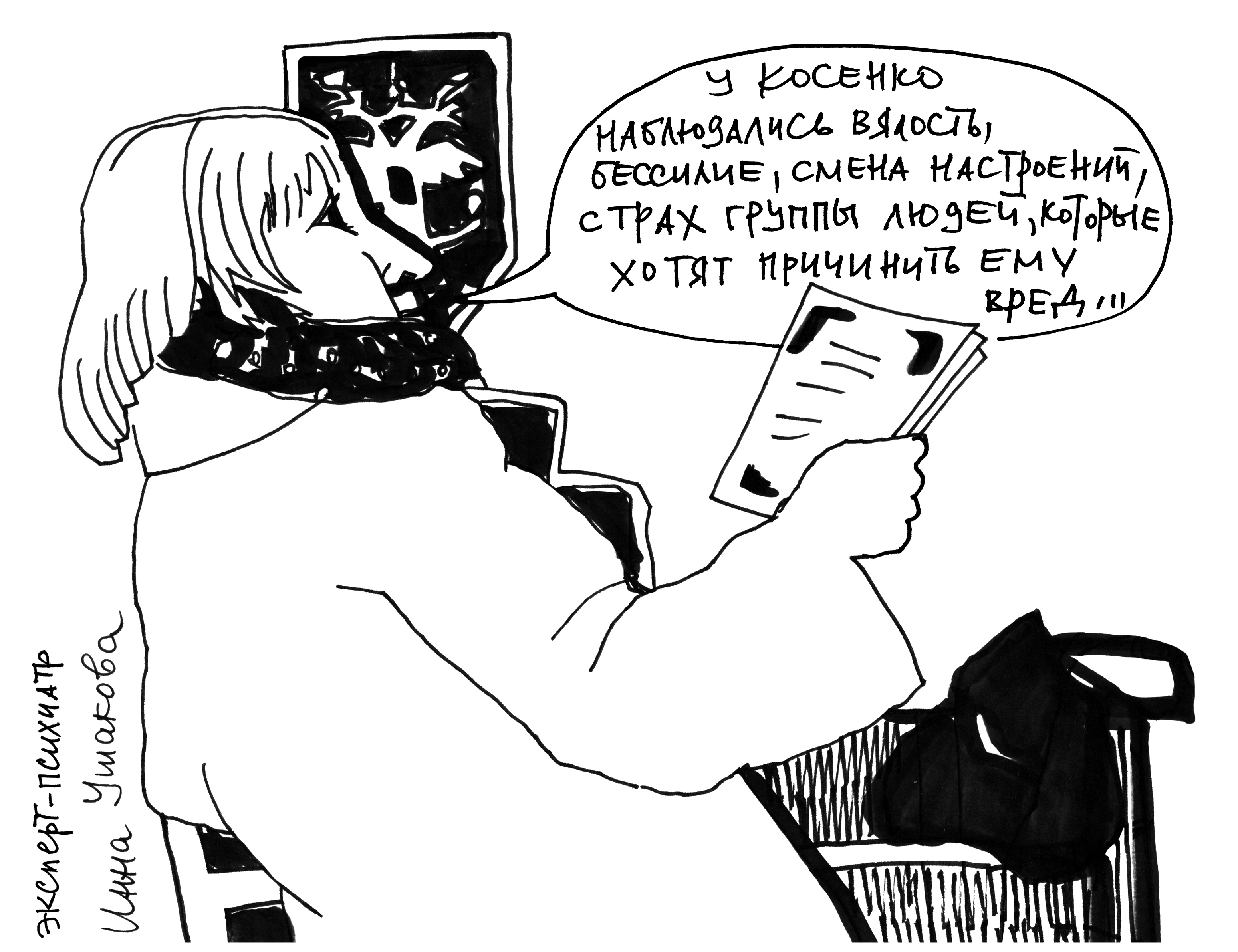
Exhibition of graphics from the courts of court in the "Swamp case" in the memorial.

Exhibition of graphics from the courts of court in the "Swamp case" in the memorial.
The text of the copyWidth PX Height PX
The url has been copied to your clipboard
No Media Source Currently Available
0:00 0:55:00 Download the media file An exhibition from the project "Draw a court" in the company "Memorial".Artistic strategies for supporting political prisoners. Artists and activist protest. “Prisoners of Bolotnaya” and the Pussy Riot case: What is the difference? T -shirts, postcards and festivals in support of prisoners: modern marketing strategies against an unfair court and media engaged by the state. Political pessimism and practical optimism of activist artists against the background of "Putin national consolidation."
The organizers of the project “Draw the Court” Victoria Lomasco and Zlata Ponirovskaya, artists; Project participant Artist Ilmira Bolotyan; conceptualist artist Yuri Albert; Ksenia Kosenko, sister of Mikhail Kosenko, convicted of “Swamp case”; Historian of the Society "Memorial" Alexei Makarov, editor of texts to the exhibition.
Elena Fanailova: The project "Draw a court". Judicial drawings, sketches, art projects from the Russian halls of the court - at the exhibition in the Society "Memorial".
The project has existed for several years and has been associated with such high -profile processes as the case of Yukos, the Pussy Riot case, the "swamp business". When we made a program in the summer about the start of the collection of work for this exhibition, there was a hope that the Bolotnikov would be released that the absurdity of this case would be clear to the court. Nevertheless, in this process, some of the children received significant terms. Do you have your hands? I'm talking about the ratio of optimism and pessimism in your artistic activity. Or, conversely, a sense of healthy anger arises, the desire to continue work? This is still interesting against the backdrop of the sociologically reliable approval of the accession of Crimea. What are the tasks of activists against this background?
Zlata Ponirovskaya: Our tasks remain the same - to attract attention to political processes, the tasks of activists "draw a court". But hands, yes, fall, and there is a feeling that we can be heard worse. After the sentence, it was difficult to get together. We had an exhibition, but we did not know when there would be a verdict, and the exhibition was two weeks later than the verdict. Hands began to sink at the moment when the prisoners come to the verdict catastrophically little. And there was a strong contrast compared, for example, with the support of Navalny. The last time we made an exhibition in Kirov, dedicated to the process above Navalny, and then there were thousands of people not Tver. When the conviction was sounded, there were already very few of us. Almost all those sitting here after the process visited autozaks and the police department, where we also organized the exhibition. Vika prepared postcards that were printed in the printing house, which asked never to name her name. We had thousands of postcards, we handed them out at different public events, and they also took them for the verdict, they took me with these postcards. There are such stands of honor, reporting stands in the ATS, and we placed these postcards on the stands there.
Victoria Lomasko: I did not have a pronounced depression after the sentence to the prisoners of May 6. I had the main screening a few years ago during the trial of the journalist Mikhail Beketov, who defended the Khimki forest and who was beaten, he became a serious disabled person, could not speak and moved for slander and brought him on a reanimobile to the Khimki court. Then it became clear to me that there are many situations when a person cannot be saved, cure, but this does not mean that he should not be supported. On the contrary, we must rally around such people and give them to the maximum of warmth, attention and participation. And for me, the project has now become even more important, because I understand that now each initiative is valuable, we need to deal with this project further. There are ideas and plans to show it in other cities of Russia. There is a fear, what tests are waiting for us, how much we ourselves will find ourselves in order to endure them.
Ilmira Bolotyan: I had the most sad sentiments when I only connected to the project "Draw a court". At the invitation of Victoria, Lomasko, I began to go to the processes in the "swamp business" this winter. When we first with my friend Anna Schaefer, the artist, came to the process, we saw how few people support this particular process, and then he took place in the Nikulinsky court, where it was very difficult to get. And on the first day, a completely incomprehensible person came out, he was without a form, and began on all the people who came, rudely and very loudly. It was so unexpected that at the first moment some began to follow his instructions, and then, waking up, they began to ask: "Who are you? Why are you screaming at us?" It turned out that this was a bailiff, and he had no authority to at least say something to us without a form. At that moment, it became clear to me how this system is overwhelming, repressive, and already in the trial of the court I clearly understood how much the system eats all humanity in people who have power. This, perhaps, was the most depressive sensation. Because it is one thing to read about it on Facebook or on the news, but when you hear with your ears what the judge says, how she is talking, it is very impressive. Participating in the project, getting acquainted with activists and supportive, I felt how optimism was added from me. While there are people who support the political prisoners while they are doing something, there is still hope: something is slow, but it will change. The exhibition "draw the court" was a small event that leaves the hope that something will change for the better, but very weak hope.
Ksenia Kosenko: The process has been going on for a year and a half, and the case of Mikhail Kosenko was allocated into separate legal proceedings. Throughout this case, honestly, I did not particularly feel the illusion, seeing what was happening. For the first one and a half months, the sick person did not give vital medicines, and his condition worsened. Throughout the trial, they did not allow me to him, I did not have the opportunity to communicate with him. And when our mother died, Misha was simply not released for a funeral, no one wanted to solve any issues. I sent official telegrams to the pre -trial detention center and to court, and the New Gazeta was busy in the Moscow City Court, but everyone was rejected. He was not even informed that he had lost his own mother. If there was still some kind of illusions that it would be a little softer further, well, something showed something, then after this story ... And it is difficult to say about optimism and pessimism, because some kind of quiet rage, frankly, arises. But you know for sure that your hands should not be folded in any case. It is necessary to act, and a huge number of people supports various projects, including this, and this helps a lot. Sometimes they invite you to some events, and I feel that there is no strength and I don’t want to, but I understand that you have to go, but you come there-and you just get charged. Such frantic energy and a bunch of positive emotions! The concentration of good, open, ready to help people is very cool!
Elena Fanailova: Yuri, what are your feelings? And is it similar to the Soviet time?
Yuri Albert: It is not quite similar to the Soviet time, it is still better. Probably, due to the fact that I did not live in Moscow and looked at it from the side, I have never been to the court, I was not at all demonstrations, I can say that I never had optimism. I am a long-term optimist-someday everything will be fine. But in the next few years, only everyone will be worse and worse, I have such a feeling, in politics, and in economics, and in art. And for me it was just a surprise that at least someone was released.
Elena Fanailova: Does such projects continue to continue against the background of this inhuman machine?
Yuri Albert: It makes sense to continue these projects, firstly, purely human, because it is not good to retreat. I really like such projects from an artistic point of view, because it may be the most adequate way to respond for a while. All complex installations, videos, and so on, are not designed for the audience, they show the artists themselves what they think about this. These projects are for the audience, and this is very important. On the other hand, this is the revival of traditional mobile genres and techniques, and this gives some lightness and efficiency. It is possible that with the increase in censorship and everything else, this will be needed. In general, pencil and paper, sketches - this is what is available to us until the last moment.
Alexey Makarov: I have no optimism since the beginning of the Second Chechen War. If we talk about what our main question awaits, from the point of view of politics, how long the liberals will be the most targeted group pursued by the authorities. Now they crushed the left, the nationalists were crushed, switched to liberals. This is especially true in connection with the Crimea.
Elena Fanailova: I would say that the game in connection with the Crimea will be more complicated.
Alexey Makarov: Yes, but the question is - while we join the Crimea, liberals are enemies, or will it continue to be such a trend? From the point of view of society, many have powerlessness, many are going to emigrate. But I still see some reasons for optimism. For example, a certain amount of was going to protest against the sentence in the “swamp business”, and this is not so few people. Moreover, the courts are going on now, and on the detentions on February 21-24, many are going to appeal. On the one hand, people see how justice works, but they are going to fight. At least people do not give up. In my opinion, now the main task is to formulate what exactly can be done, how to help. And of course, the drawings of trials are one of the important paths. Artists record what is not fixed in the judicial protocol - for example, some emotions that the bailiffs do, what the audience does - and this becomes accessible to everyone. And most importantly, this is a broadcast into a public space. Those who cannot come to court can look at these drawings. And from the point of view of documenting processes and paying attention, this is a rather important practice.
Elena Fanailova: Let's move on to the pragmatic, optimistic part of the project. What did you do at this exhibition? What are the artistic strategies for the communication of activists and artists?
Zlata Ponirovskaya: We received a letter to which we are very happy. Nadia Tolokonnikova, co -organizer of the “Law Zone” initiative, wrote to us a letter about art strategies for the support of prisoners. It is long ... I will quote: "The aesthetics of the campaign in defense of the political prisoners should be worked out. The campaign in defense is always an advertising campaign, an electoral campaign, if you like. And it is always inevitably engaged. The most enthusiasm has been exposed to the aesthetic measurement of the campaign. I want to remind you how the George was released. Devis, who was arrested and accused of armed robbery in 1975. Justice for George Davis! "The musicians rose in defense, and there is even a track and a clip that was recorded in support. And Devis was released after refusal in the appeal court - the case of an unheard of. The campaign worked! I will not talk about the campaign in support of Pussy Riot, I think this is not quite our business - it is not our business. I am obliged to mention it, to express the time and effort to support us, when we were in prison, the news about your support gave us an incentive to continue our daily prison confrontation!
Elena Fanailova: Victoria, tell us what was at the conference in the “Memorial” during the exhibition?
Victoria Lomasko: The conference - it sounds too much, it was a round table, a discussion.
Elena Fanailova: Yes, people gathered who participated not only in the project “draw a court”, but in six more, probably projects that supported not only “Bolotnikov”.
Victoria Lomasco: These were artists, activists, relatives of the political prisoners, was Vladimir Akimenkov, an amnested “Prisoner of May 6”. There were people who arrange festivals in support of prisoners, collect money for them for lawyers. Everyone talked about his project or about his action, what happened, what is not, what strategies he can offer others, which things are better not to repeat, because they are very energy -consuming, but do not give a result.
Zlata Ponirovskaya: for example, we are open to all media, but the disappointment for the Memorial was that there was the only camera of freedom. Although we were attentive to inviting all international cameras. But no one came. Perhaps it was because of the Crimea. We need to revise the work with the media, because it is one thing - sites that always support us, like Colta, a "big city", freedom. And thank you very much!
Victoria Lomasko: It seems to me that in our project “draw the court” not very successful postcards that we turned up, and Zlata even printed them at our own expense.
Zlata Ponirovskaya: I really liked to make an exhibition from postcards to the police department, so everything paid off.
Victoria Lomasko: And I went with postcards to pickets in support of the Prisoners of May 6, these were a few allowed pickets near different metro stations. It was quite difficult to go there in the evening, in the winter, in the cold, to stand there for many hours. The picketers still had another samizdat, but no one took it.
Zlata Ponirovskaya: at the book festival, which takes place every December at the Central House of Artists, at non-fiction, I brought there a thousand cards and began to spread. Firstly, a huge number of publishers and just people who do not make decisions in publishers, but sit on stands, took postcards and handed them out. And I managed to occupy a very convenient space there, from which, while still working, I distributed these cards. And people approached, interested and took. That is, the moment of the conflict, when you personally try to tell about your project and give some sort of samizdat, it happens. Absolutely unforgettable - I handed the postcard to the young girl and say: "This is a project in support of the political prisoners" - and she said: "Fu, fall off!" That is, at high social temperament, you can work with this, it can be worried. But of course, cameras, the Internet is much more effective than standing in the transition and distributing postcards.
Victoria Lomasko: At the round table there was also an interesting report by the artist Tanya Sushenkova, as they went on an expedition to the Mordovian colony, where Nadia Tolokonnikova was in custody, and the artist Lucine Dzhanyan worked there, and they constantly, almost every day, made promotions, posters, installations there. And how first the local population reacted very coldly, and then for time they began to take them samizdat, to enter into a dialogue with them. That is, this, as it turned out, acts. The media activist Alexander Bedin, who is actively involved in two campaigns, was an interesting report, he participated in the campaign in support of the Khimki hostages, and now in the campaign in support of the Prisoner of May 6, Alexei Gaskarov. It was about the artistic design of the campaign, which in no case should be considered that this is not important. Any logo, icon, banner, slogan, as all this will be represented - is very affected by distribution. It is necessary to attract artists and do professional design.
Elena Fanailova: Your professional training, knowledge of PR strategia, how the information is functioning, the application of this knowledge to such a field as supporting political prisoners-I think, in the traditional one, in the Soviet sense, this would be impossible.
Yuri Albert: In the Soviet, of course, Eric, which takes four copies, there was no particular design. I wanted to say a little different. I listened to Tolokonnikova’s letter, and there is one discrepancy that we, as it were, skip. When she refers to this case in England and compares him with the situation here, there is one significant difference: there is a trial in England. When we say the word "court", it means that the court that may be mistaken, be biased, but there is another, the court of appeal, and there is media. When we use the same words here, they mean something completely different. The court is not mistaken, all the sentences were exactly the same that were set, which means that there are no mistakes. And when we are talking about media, then, with rare exceptions, this is also not a media, but some kind of imitation of media, which at best is censored, and in the worst case it is just a weapon of propaganda. Therefore, I don’t know what to advise, but to compare tactics and actions that are possible where there is a court and media, and where they are not, but still carefully.
Zlata Ponirovskaya: When we collected an exhibition for the Memorial, there were convicted in various matters, not only “Prisoners of May 6”, and we tried to understand who ultimately determines why the political process. And since there is no court, and we do not trust any decisions of the judges, someone can call any process political. Но у нас есть сайт "Рисуем суд", на который любой художник может загрузить работу. Мы решили, что если художник загружает рисунок по любому процессу и называют его политическим, мы работаем дальше по этому процессу и соотносимся с тем, что художники об этом рассказали. Это безумно, что художник определяет, почему процесс политический, но и безумно то, какие сроки при этом судья назначает.
Юрий Альберт: Тут важны еще последствия осуждения. Если взять Турцию, например, то застройка какого-то парка – это спор хозяйствующих субъектов, это не политическая причина, но имевшая серьезные политические последствия. Или в Тунисе какому-то молодому человеку не разрешали торговать, и человек совершил самосожжение. Причины были не политические, но последствия были политические. Тем более в условиях, когда в принципе суд не работает, любой процесс политический, хоть об изнасиловании.
Алексей Макаров: Есть отдельная проблема – использование правосудия в политических целях, когда кого-то осуждают за взгляды, но хочу обратить внимание, что на выставке представлены разные процессы, которые являются общественно значимыми. Когда у нас нет беспристрастного, открытого суда, то возникают проблемы, и общество должно стремиться контролировать любой суд, неважно, есть там политическая составляющая или нет. У нас все процессы, и уголовные, и административные, проходят с нарушениями всего, что только можно, всех норм законодательства. Хороший пример контроля за судами – это дело "минских террористов", двух человек, осужденных за взрывы в минском метро, приговоренных к смертной казни и казненных. Если не брать проблему смертной казни, которой не должно быть вообще, человек совершил взрыв, он должен был осужден, но у нас возникает ситуация закрытого суда, и возникают сомнения – действительно ли они совершили этот взрыв. То же самое было, когда был взрыв 1977 года в московском метро, когда потом выяснилось, что некоторые из подсудимых причастны, некоторые нет, но диссидентское сообщество сказало изначально, что это дело рук КГБ, и все трое невиновны, потому что был недостаток информации, и это важно. С помощью тех, кто ходит на процессы, мы получаем больше информации.
Елена Фанайлова: Ксения,как зрителю и сестре политзаключенного, что вам больше всего запомнилось в этом проекте?
Ксения Косенко: В целом мне, конечно, очень важно, что есть группа людей, тем более талантливых людей, которые таким образом выражают свою поддержку. А вообще мне было интересно. Я была тоже на этом круглом столе, и мне было интересно вот так подглядеть, что в этой среде происходит, поскольку я не очень в ней понимаю, и какие технологии используются, какие мероприятия происходят. Это очень интересно было! И вяжут, и рисуют, и футболки делают, и инсталляции, и как это все используется – это очень здорово! Я была просто потрясена.
Злата Понировская: Кстати, нам позвонили ребята, которые хотят сделать скейтборды с рисунками с "дела Косенко", совсем тинэйджеры.
Ксения Косенко: А это хорошо, что молодежь начинает в это включаться, даже в таком моменте.
Ильмира Болотян: Мне на конференции показался очень интересным проект с одеждой Татьяны Сушенковой. Татьяна и ее коллеги вяжут портреты заключенных и потом эти изображения прикрепляют на одежду и носят. Мою знакомую, например, задело, что тут дело серьезное, а подключают моду, а мне как раз кажется, что в условиях, когда у нас средства ограничены, такое привлечение элементов массовой культуры может быть очень продуктивным. То есть вводится мода на политический активизм и выражение собственного мнения по какому-либо вопросу. Можно носить значок "Свободу узникам 6 мая", а можно надеть на себя такую футболку или одежду. Цель простая – информирование, привлечение внимания к проблеме. Потому что большинство людей, к сожалению, просто не знают об "узниках 6 мая". И важно использовать популярные методы, для того чтобы человек заинтересовался и мог рассказать об этом дальше.
Елена Фанайлова: Если это не вызывает агрессии. Потому что ведь можно выйти в этой майке и получить реакцию – "проплаченный агент" и так далее.
Ильмира Болотян: Да, мы знаем истории, когда люди, носившие футболки с надписью "Свободу Pussy Riot", имели конкретные столкновения, и одежду на них рвали. Собственно говоря, это форма активизма, и человек, который носит такую одежду, должен осознавать это. Но и художник, работающий в суде, приходит туда не только для того, чтобы нарисовать рисунки и показать, что происходит на судах, но своим присутствием он меняет атмосферу в суде. Чтобы рисовать, художнику необходимо смотреть на определенных людей, его видят заключенные, которые понимают, что художника задела эта история, и он пришел поддержать, его видят адвокаты, судья, прокуроры, приставы. И происходит слом обычной атмосферы на судах. Возможно, он никак не повлияет на решение судьи в конечном итоге, но снимается некая шизофренизация, когда все делится на "наших" и "ваших", врагов и друзей. Возникают горизонтальные связи. Например, было забавно, что больше всего на художников реагировали судебные приставы, которые вставали как-то, подбоченившись, они хотели, чтобы их нарисовали, а уж если начать их рисовать, они и стоять будут неподвижно, с серьезным выражением лица, позируя как бы. И они спрашивали: "А что вы рисуете? Покажите". То есть было видно, что присутствие художника каким-то образом побуждает их в контакт с людьми, скажем так, из противоположного лагеря. И мне кажется, что это очень важно во всех этих проектах, художественных и активистских, - именно такое установление связей между людьми.
Елена Фанайлова: А как художники и активисты друг на друга реагируют, как это поле сотрудничества формируется?
Виктория Ломаско: Я бы хотела еще поговорить и про то, как художники работали и освещали дело Pussy Riot, и как почти никто не реагирует на другие политические процессы. Во-первых, участницы группы относятся себя к арт-миру, к современному искусству, а с другой стороны, они же предлагают очень яркие образы, к которым хочется присоединиться, их цитировать. И было сделано очень много удачных плакатов, был, например, автобус, украшенный художниками, который ездил по Москве, было много выставок, уличных и в пространствах галерей. Только недавно в Галерее Гельмана прошла выставка художницы Люсине Джанян, где были ее плакаты в поддержку Pussy Riot, и был издан альбом, куда вошла только, наверное, десятая часть работ художников, работающих с темой Pussy Riot. Присоединяясь к этой теме, художник может сделать себе большой пиар, может сделать эффективные картинки, поехать за границу, ему есть что рассказать журналистам. И многие художники, медийные люди, постоянно общаются с прессой.
Во время дела Pussy Riot ко мне каждую неделю приезжали журналисты из других стран, просили рассказать, фотографировали альбомы. И я им говорила: "Есть не только это дело, у нас очень много таких несправедливых судов! Давайте поговорим про Бекетова, про Мохнаткина" – "Нет, дело Pussy Riot…" И сейчас я каждый раз в общении с журналистами, которые хотят говорить про дело Pussy Riot, хотя их освободили уже, говорю: "Нет, мы будем еще говорить про "узников 6 мая". И если вы хотите показывать выставку, мы будем показывать все вместе, это единый срез того, что происходит в России". Мне кажется важным, чтобы художественное сообщество реагировало не только на такие процессы, которые касаются художников, людей, связанных с этой средой. Это важно, потому что, когда будут судить нас, что вполне вероятно, художники будут ждать, что общество придет их поддержать.
Как, например, было на деле организаторов выставки "Запретное искусство", когда православные подали свою жалобу об оскорблении религиозных чувств. Со стороны православных активистов приходило минимум человек 10, а часто был полный зал, а со стороны художественного сообщества – дай бог 2, 3, 4 человека. Только на приговоре, прении сторон было много. "Узников 6 мая" поддерживают самые обычные граждане, и художники тоже, как граждане, должны участвовать в протесте.
Елена Фанайлова: А в чем разница между заключенным – художником и обычным заключенным?
Ксения Косенко: Я не вижу, в чем может быть тут разница.
Елена Фанайлова: Вот это реакция здорового человека!
Алексей Макаров: Есть проблема, серьезная, объективная и с большим трудом решаемая, - люди выстраивают некую иерархию процессов, что более важно, а что менее важно. В итоге получается, что есть процессы, на которые люди меньше обращают внимания, меньше ходят, меньше про это пишут. Что с этим делать – совершенно непонятно. Мы это видим на всех процессах, на "болотном деле", когда в основном все ходили на основной процесс и не очень много народу ходило на процесс Михаила Косенко, мы это видим и сейчас на примере, все обсуждают, например, "болотное дело", но есть дело Николая Ярста, журналиста из Ростовской области, который признан политзаключенным. Понятно, что люди просто уже не могут удержать в голове имена всех политзаключенных, их более 70 человек. Надо доносить до людей, что каждый человек важен, и каждый такой несправедливый суд важен. Есть прекрасный пример Египта, когда самый обычный человек был при задержании убит полицейскими, и с этой кампании началась революция, когда люди начали писать об этом. Его звали, по-моему, Халед Саид, самый обычный человек, и все началось с этого.
Юрий Альберт: Конечно, такая проблема есть, но можно посмотреть на нее и с другого конца. Когда кинозвезда усыновляет детей или делает мастэктомию, это как бы странно, почему про нее пишут, а про других миллионы людей не пишут? Но, с другой стороны, она привлекает внимание к этой проблеме. И то, что больше пишут про Pussy Riot, может быть, обидно, что меньше пишут про других, но, с другой стороны, Pussy Riot привлекают внимание к этой проблеме как таковой. Я думаю, что это естественно, и это надо просто использовать. Я говорил, что пессимистически отношусь к ближайшему будущему нашего искусства, но я вдруг подумал, что расцвет, например, европейского и американского искусства 60-х годов был связан весь с антивоенной темой и борьбой за права человека. Так что, может быть, если не будет совсем задавлено, потому что нужен хоть минимальный уровень свободы, то это может послужить дополнительным стимулом, и на этом может быть основан новый поворот в нашем искусстве.
Злата Понировская: Я согласна, что Pussy Riot – это именно такая лакмусовая бумажка, которая напоминает людям, что проблема есть. Может быть, проект "Рисуем суд" дает инструмент, чтобы говорить о многих политических заключенных. Можно придумывать и другие инструменты. Я знаю, что в Сахаровском центре в какой-то момент делали проект немножко с другой стороны – они собирали огромную базу данных на судей, где были их лица, их действия. Сейчас он как-то заморожен, но можно обратиться туда и приложить силы еще и к этому.
Елена Фанайлова: Какое будущее вы видите у этого проекта – в эстетическом, этическом и политическом отношении?
Виктория Ломаско: У нас есть такой план – собрать выставку в архив, который любой желающий сможет скачать, и она полностью готова, чтобы ее выставлять, просто распечатав. И сделать всю кураторскую работу: план экспозиции, тексты к работам – подготовленные к печати файлы. И уже есть желающие проводить эту выставку в Екатеринбурге, возможно, в Омске…
Злата Понировская: Мы надеемся, что таким образом этот проект станет не просто российским, а международным, и весь мир увидит, что сейчас происходит в российских судах.
Ильмира Болотян: Мне нравится, что этот проект очень демократичный, и не только любой художник, но и любой человек, даже непрофессионал, может принять участие в нем. И я приглашают других художников участвовать в проекте "Рисуем суд". Я могу признаться, что после моего участия в рисовании процессов по "болотному делу" у меня была такая мысль – больше этого не делать. Это, на самом деле, физически и эмоционально очень тяжело. Ты проживаешь то, что проживают другие люди, активисты и заключенные, ты очень много часов сидишь в душном помещении, слышишь весь абсурд, который там происходит. Но, с другой стороны, я понимаю, что есть момент эмоционального выгорания в любой такой деятельности, и здесь важно просто соблюдать баланс. Поскольку ресурсы у меня есть, в частности свободное время, я планирую продолжать участие в этом проекте.
Ксения Косенко: Я готова поддерживать и дальше этот проект, мы со Златой в Кирове открывали эту выставку. И я с удовольствием побывала на открытии выставки в Москве, в "Мемориале", и хочу призвать и других художников принимать участие, чтобы работы были разные, техники разные. Это видение художников, и это документ того, что происходит на самом деле.
Алексей Макаров: Проект важный, и хорошо бы, чтобы он продолжался, и эта выставка закончилась бы альбомом, который можно было бы еще перевести на английский и распространять на Западе. Потому что кто будет читать стенограммы процессов или отчеты журналистов из зала суда? А это и наглядно, и интересно, и может передать атмосферу и сподвигнуть людей на помощь. Каждый современный гражданин должен, по-моему, побывать в суде и посмотреть на то, как устроено наше правосудие. Это ценный опыт!
Юрий Альберт: С политической и этической точки зрения тут вопросов и разногласий нет, это все важно и необходимо. И эти рисунки – очень большая традиция, идущая от Домье, от Эдуарда Мане, от наших передвижников. Это та редкая разновидность современного искусства, с которой применимы такие слова, как гуманизм, правда, сочувствие людям, доступность… Мне это дико нравится, хотя, казалось бы, я отношусь немножко к другой традиции. Это дико перспективно и важно!
Елена Фанайлова: Думаю, что это с теорией и практикой концептуализма не очень-то расходится, это вполне себе современный подход к искусству.
Злата Понировская: Мне тоже кажется, что не только художники, но и все граждане этой страны должны прийти в суды и пытаться начинать контролировать суды. Это один из немногих шансов, которые у нас есть в пессимистической краткосрочной перспективе.