
Translated material
Golovin's modest charm
An exhibition of one of the most mysterious artists of the Silver Age was opened in the halls of the Tretyakovyki on the Crimean shaft
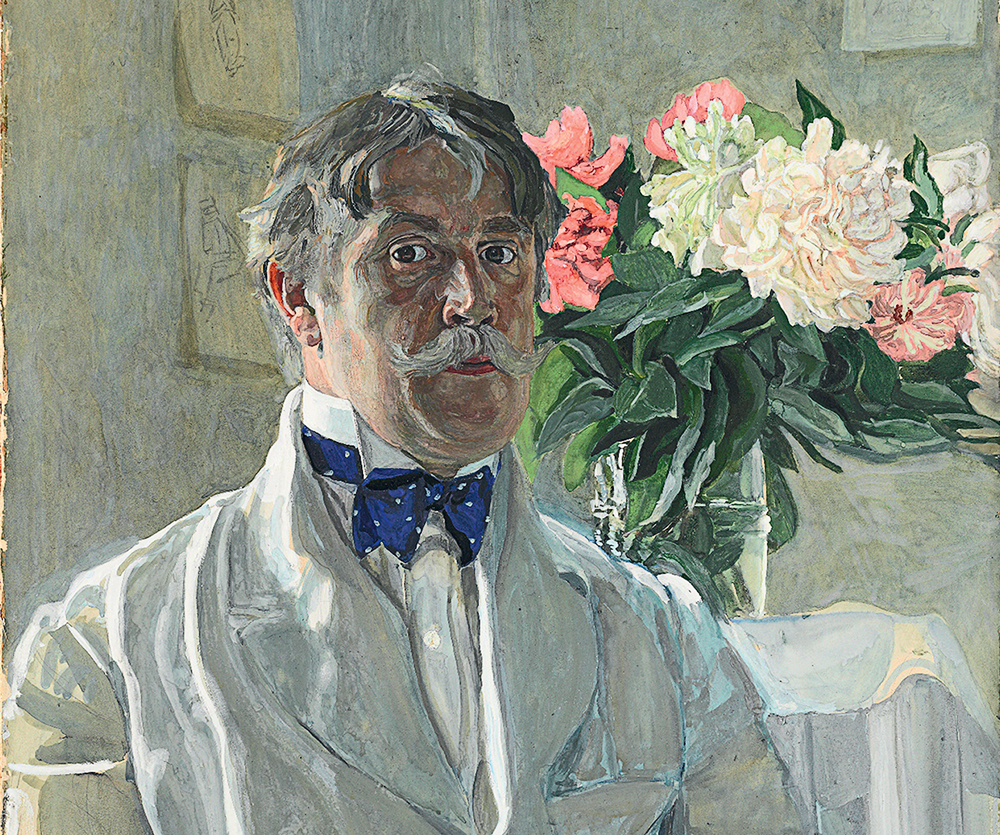
Self -portrait. 1912 Fragment

Portrait of Fedor Chaliapin in the role of Olofern (opera A. Serov “Yudif”). 1908

Koshcheevo Kingdom. The sketch of the scenery to the ballet of I. Stravinsky "Firebird". 1909
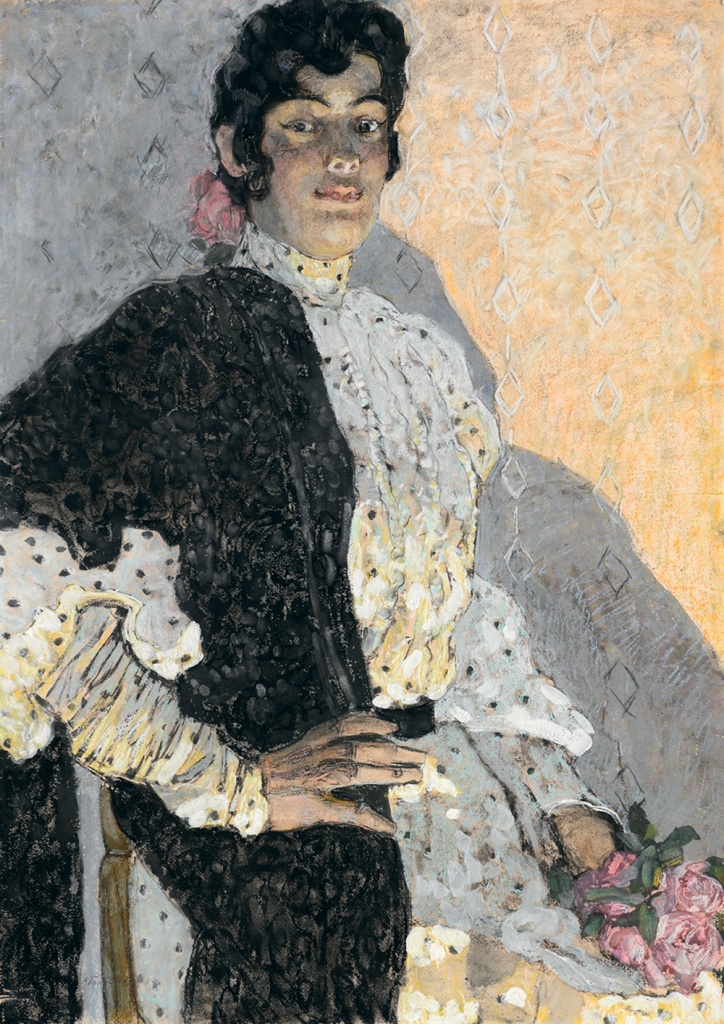
Spaniard. 1907
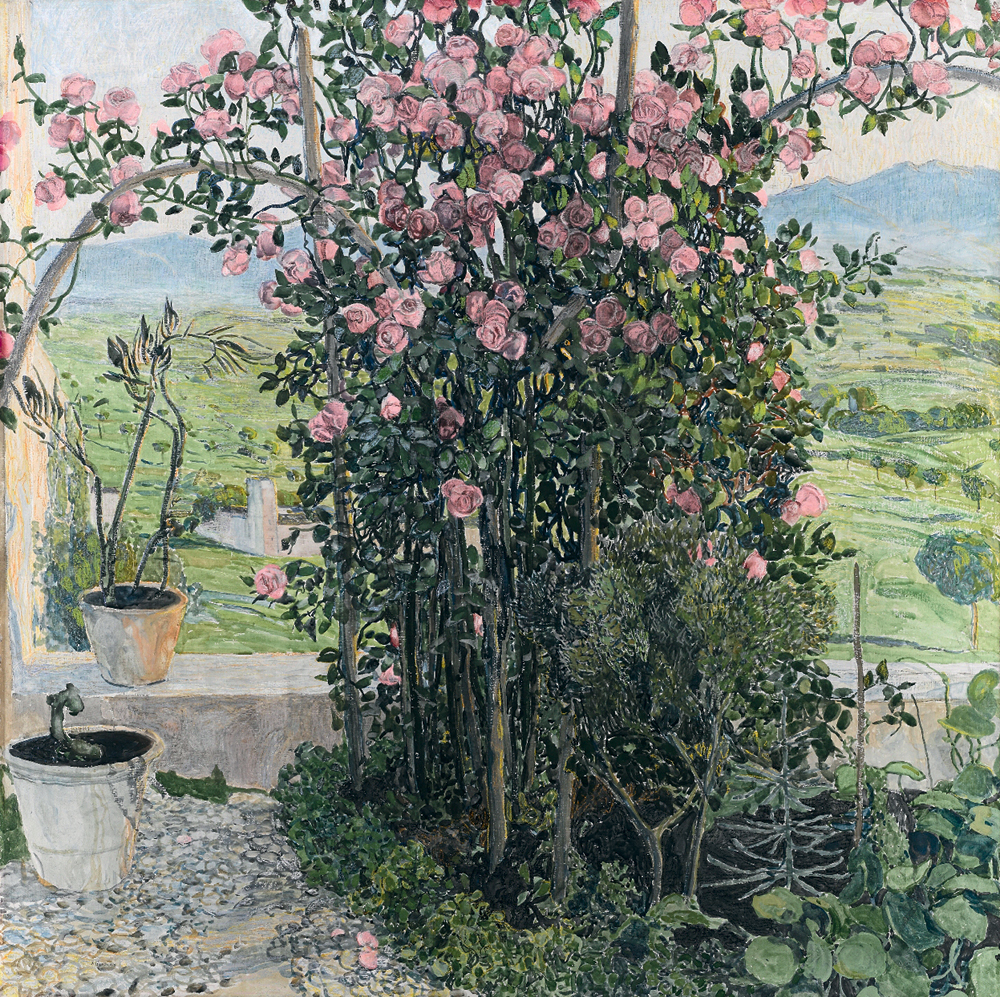
Umbrian valley. Mid-1910s.

Still life with flowers and a Chinese vase. 1912, a student of Vasily Polenova, a regular participant in the Abramtsevsky circle of Savva Mamontov, a friend of Korovin and Vrubel, Levitan and Nesterov, a participant in the association “World of Art” and Diaghilev seasons, an outstanding theater artist, Alexander Golovin still remains in the shadow of his more famous contemporaries. Perhaps this modesty is a feature of his character, or maybe the reason is that most of Golovin’s work was done for the theater, and only the traditions and stories of memoirists remained from these productions, except for his sketches and scenery. His work is permeated by the magical grace that distinguishes Russian modern, they are decorative and whimsical. Alexander Golovin was born in Moscow in 1863 in the family of a priest. Childhood passed in Petrovsko-Razumovsky-an old estate near Moscow, where the Petrovskaya agricultural and forest academy was located in those years. An early tendency to drawing determined the future fate of the boy. After the death of his father, when he was 15 years old, Golovin enters the Polivan Gymnasium, which became a kind of forge of the Russian intelligentsia. The eldest son of Leo Tolstoy, future poets Valery Bryusov, Maximilian Voloshin, Andrei Bely and others studied here. After the gymnasium was graduated, the artist worked as an apprentice with a “cleaner-decorator” and “indoor painter” on Augustus, popular in those years. For seven years, he paints satin decorative fabrics with flowers. No matter how much this period is evaluated in his life, but it was then that the special style of Golovin arose - the love of small details, the ability to convey the sensuality of household items, overflows of colors and moods. Later, it was this style that became a distinctive feature of its festive and magnificent emphasized elegant theatrical scenery. Soon Golovin enters the orbit of the Abramtsevsky circle, together with Vrubel is engaged in a major (his work is marked with medals at an exhibition in Paris), along with Elena Polenova, sister of Vasily Polenova, participates in the creation of the "Old Russian" modern. Like Korovin, and some other talented artists who have neither inheritance nor money, Golovin, takes care of the Polenov family. Thanks to Polenov, he first visits Italy and Paris, the French impressionists delight him and give his paintings that airiness that still delights in his works. But a decisive coup in his fate was connected with the theater. Having received a random order for the manufacture of scenery for one of the performances, Golovin turned out to be, like no other, in demand by the scene. In 1898, he was appointed artist-decorator of imperial theaters, in 1902 he became the main decorator of imperial theaters and consultant to the Directorate for Artistic Affairs. This is the heyday of his theatrical creativity. The works of that period are distinguished by imagination and brightness. The curtains and curtains are covered with color mosaics and ornamentalism. The elaborate forms of baroque are adjacent to classicism. Golovin composes everything himself, not allowing a single household net-atral part into the fabric. *"World of Art"-an art association formed in Russia in the late 1890s. And the magazine published under the same name, published until 1924, published since 1898 by members of the group. The founders of the "world of art" were the St. Petersburg artist A.N. Benoit and theater figure S.P. Diaghilev. Not all contemporaries understood the magic that Golovin created in the theater. So, for example, Alexander Benois, the chief theoretician of “The World of Art”*, in his book “The History of Painting”, wrote: “There will be very few from Golovin: some sketches, two or three paintings, several portraits-all this is marked by genuine artistry, colorful brilliance and subtle instincts, but this is a little-only hints, only promises, which Golovin would hardly want.” Unlike colleagues, the public appreciated the genius of the artist. As eyewitnesses recall, during the premiere of the “thunderstorms” of Ostrovsky (1916), the scenery to which Golovin made, after the opening of the curtain, “the audience groaned from applause, and the scenery unanimously applauded the whole theater”. And the design of the Lermontov “Masquerade”, on which the artist worked for more than five years, contemporaries described as “the magnificent funeral of imperial Russia”. Each performance, designed by Golovin, became a unique man -made work, which was highly appreciated by such different people as Sergey Diaghilev and Vsevolod Meyerhold. Nevertheless, time ordered that modern viewers only now open this great master. The exhibition in the Tretyakov Gallery, which presents about 300 works by the artist collected from 24 museums and private collections, convincingly proves how wrong and subjective in his assessment was. Illustrations are provided by the State Tretyakov Gallery