
Translated material
How are projects done?
I have no profession, from some point I have forgotten how to think quite professionally, and it seems to me my relative dignity, because most of the abomination and stupidity that we often see in the environment was made by professionals. All houses around us with the rarest exception are built by professional architects. The city in which we live is designed not just by urban planners, but by the best urban planners of its time. The music that we listen to the radio composed professional musicians. It’s impossible without professionals at all-they, unlike me, are able to do something. But I am very carefully treated with any examination, because a professional is a professional who knows how it should, but he never questions the question, but how, in fact, it is necessary - he immediately gives an answer.
What I call design (or design) is the process of creating something, but not any process. For me, for example, the design is opposite to art. Art is when a person, an artist, has something to say and all that he needs to do is just to say. Further, it may seem interesting or uninteresting, talented or non -talented to us. The artist has no other problem, except to express himself, and the designer solves the problem with him. Even if he finds this problem somehow from the inside, nevertheless it is always distinct: here is the question, but the answer to it.
Find the answer is quite simple - there is an algorithm for this. For example, sooner or later we will defeat cancer, because we have a way - called “science”. Perhaps it will take us for three hundred years and will cost a universal gross product for several centuries, but we will definitely do it sooner or later. But the difficult thing is to find a question, because there is no algorithm to find the question. Very often this question (or problem) lies under the nose, and it is more difficult to find it. You get used to him like some kind of animal that walks and bypasses some kind of stone all your life. And then the stone was removed, and it bypasses this place. For example, I have not yet met a single person who would be neutral to the yield of a blanket in a duvetail. This is one of the most hated activities in the world. You will pay 3,000 rubles for a machine for a blanket in a duvetel? When it is designed and successfully brought to the market, you will begin to like this rhombic, because it is funny, funny, homely, like a grandmother. And you will begin to love him again.
Is there a value that we do not know how to remember?
By formulating the question, it is important for as long as possible, as much as possible, stay on the side of this question, without jumping to the answer. Because the longer you stay there, the better you understand what it really is. The most common mistake is to slip right away. In 99% of projects, people skip right away, it seems to them that the question is obvious. And if you continue this meditation and reflection on the problem, then it may turn out that the problem is not where it began. The word “reserch” is related to this, because the study is exactly what it allows you to say: no, I need to explore. At this time, you are trying to reformulate the question, to update the task for yourself. Reserch can only occur in your head, for this it is not necessarily a field study.
In parallel with how your problem is formed, there is a second important question - and this, in fact, whose problem? Dad, who are you talking to now? In some strange sense, design is similar to what the actors do, because in order to come up with an answer, you need to temporarily become the very person for whom you come up with it. And for this you must be very modest. You must understand, love and feel the person for whom you are looking for an answer to this problem. This is very important for design. It is very good if you yourself look like this person. If you yourself are not like that, then it would be nice for you to some extent to become them. It is important not to look at him from top to bottom, but to love, respect and understand that he is not always able to formulate his problem, is not always able to understand that it is not with him. He does not necessarily understand what prevents him from living and what can be created for him. The most interesting projects are when you give some answer, and the consumer did not understand that this question was at all. This is some kind of underlying, unexpressed problems. You bring both in one bottle, and he is done happy when he realizes that he had such a need, but he did not even know about it. From this there is a feeling of a miracle. As if something hurts you for so long that pain is life. You live with this pain and do not know, and then suddenly bam - and it was turned off. This is how this, in my opinion, is usually done.
To a conversation about respect and non-violence over the consumer: I have some fundamental discrepancies in the ethical side of the matter with cultural and political projects in Russia for the last decade. I respect the people who make them, I like a lot. But the Perm project of Gelman and Surkov was to a certain extent Bolshevism. This actually means a lack of interest in what was and is in Perm. Because we know in advance that what is is not very high -quality, not very modern, not very fashionable. Therefore, we do not see values in this. And we, the bearers of another knowledge, will simply not pay attention. They want it - let it be, but in principle it is all the remnants of the past or the result of insufficient awareness. For me, this is absolute Bolshevism. And Bolshevism does not work. That is why the Perm project ends-and it turns out that there is some part of the local elite, which was not cooped for money, but for different opportunities, and they actually began to feel like the messengers of some other world. And they feel that they were slightly deceived, because they were not taken anywhere, and nothing has changed in their reality. And at the other end there are people who did not want to play all this, and for them it is, unfortunately, evidence of the impossibility of changes. To illustrate what I call respect and politeness: it seems interesting to me that one of the symbols of this Perm project was such a letter “P” Patfound, which I also respect. Such constructivist. The letter "P" is such a gate, a pure sign. I understand the graphic side of all this, but the Perm province has a completely seductive old coat of arms. It shows a bear on it, which stands on all four paws, on his back is a book, and on the book a cross is on the book, and above the forest a cloud, and such a hand sticks out and shows forward. I forgot what the legend is there-some kind of miracle with the saint to whom God sent Mishka with this book. And it seems to me that this is so beautiful.
But the difficult thing is to find a question, because there is no algorithm to find the question.
This is generally such a Russian syndrome: not to see what is. And because of this, all the time you need to do a new one, and this new one is not enough. Our efforts are connected with the fact that we perceive the surrounding space as something unattended, we do not have enough symbolic. And therefore, it is bad for us, it seems to us that somewhere there, in another world, in some non-existent Belgium that every inhabitant of our country is inside-somewhere there everything is better, ordered, because there is a thicker layer of symbolic. We also have enough of it, we are an old country and an old civilization. These frustrations are associated with the fact that we poorly know how to show it and use it, and then we swear that we have not been given to us. This, of course, is one of the long -standing properties of our culture. I don’t know how much this can be changed: this is the lack of interest in preserving, increasing, building over something. Our material world is a result. Due to the fact that you do not see the symbolic value in this old house, you see only some kind of collapse in which it is dangerous to live. At the symbolic level, this is your grandmother’s house, but you don’t see this, so you are ready to break it.
This is partly the property of our space. Endless size and giving you constantly the opportunity to try again. And clear the place from scratch. In this sense, Russia is at some opposite end of Holland and Japan, where it is clear that there is a limited number of territories where there will be no centimeter and each scrap should be treated very carefully. We have the opposite: it didn’t work out here - well, we went to another place, so our borders are so fuzzy. I am generally learning to see some value in everything. Is there a value that we do not know how to remember? Probably there. That's what you have to work with this.
The problem of Moscow is a provincial consciousness when we repeat other people's owns all the time. Moscow perceives itself provincial. You say: guys, let's look at the question and find a new answer. They say: no, please show us where they have already done so, take Best Practice . What is Best Practice ? Someone invented this in Copenhagen, then they did the same thing later in Paris, then waited until it became obviously successful, and did everywhere. And now in Moscow they will also make bike paths. And what do we create here new, not copy? I do not understand: why do people not want to do the best in the world, the newest, why do they not want to create precedents?
The civilization of the introduct of the introduct of the introduct of the introduction is that after fifty years of falling in love, she is now trying to understand what she is in itself.
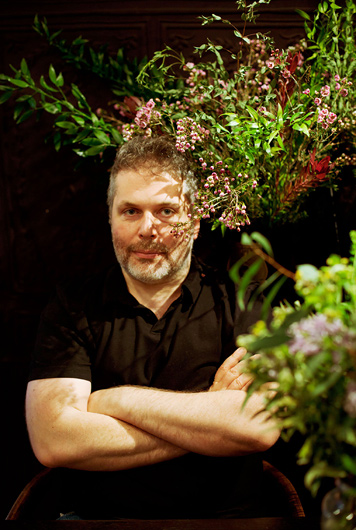 © Julia Ryzhenko / colta.ru
Sometimes you cling to some kind of decision, and then it turns out that the question is mutating and mutating the answer, but nevertheless, in some kind of ethical property, you still remain where you started. You easily refer to the fact that what you say today is not the truth in the last instance, not necessarily some kind of final thing. The Strelka, for example, began as “Institute of Media, Architecture and Design”, but there they do not teach either media, architecture, or especially design. Nevertheless, the task that we formulated at the very beginning is to change the landscape for the better. This task is absolutely certain, another thing is that the instruments of the solution are needed by others.
Almost everything I did interesting was in the projects where I myself studied and where there were still people who studied. This is a special energy that arises when you really do not know how. This requires a certain impudence and well -known fearlessness. It is much easier when you are dealing with some areas, where, besides you, there is no one and who are professionals is unknown. And this energy, which arises from a group of people who learn together, is very valuable. For some reason, it is not like the energy that arises in a group of professionals who in a certain way solve a more or less standard problem. Therefore, it is always important for me to reformulate the task so that it has a new type of call.
In short, designing is when you just tell a story. All the most interesting is just stories. The term I have been working on (I myself invented it or somewhere already six years ago) -Design by TELLING Stories . The story that you can tell determines all your solution in the formal sense. History can capture people's minds. Here on the table is an iPhone - this is an example of such a story.
Once, in the journal Icon there was someone’s manifesto, which completely fascinated me,-opposing the phrase “Form Follows Function” (“Form follows the function”), someone said: “Form Follows Feeling” (“Form follows feeling”). It seems to me that we are in the world of such endless freedom of expression.
This is generally such a Russian syndrome: not to see what is.
Now things have become disposable. When I was small, I had winter shoes and I could imagine that someone had three pairs or even five of them, but I resolutely could not imagine that someone could have ten. Ten pairs of winter boots are some kind of absurdity. Then I had a winter coat, my grandfather Mikhail Borisovich lent it to me, and it was such a gorgeous coat with a Karakule collar, in which I lived for five to seven years with a break for the army. It was such a warm winter coat, it terribly cheerful my friends, because it was a coat of a member of the Politburo, not a boy. Again, I could have imagined that there is some very rich woman who has three fur coats, but no coir-no. And this was due to the fact that things were eternal. On each corner there was a repair of something: repair of hours, repair of panties, repair of pants, repairing sewing machines, etc. And now no one is repairing anything, because it is expensive to repair, it’s easier to throw away and buy a new one. It seems that this is the same table, but twenty years ago, if a leg broke down at the table, you repaired this leg or bought another, but did not carry the table in the trash. On the other hand, the first generations of people appeared in America everywhere in the world who drive much less by car than parents and previous generations. The smaller share of young people surrender to the rights in America. This is amazing, and this is already a change for the better. I can say to myself that I no longer want to live with books, because how many square kilometers of housing are occupied by a warehouse of books. This is also all about things that people become less in physical form. Now the dimensions of the dwellings are reduced - this is also interesting. The size of the average American country house has been growing all the time, and it has grown one and a half times over the past 20-25 years, but along with this in San Francisco and in New York, laws have now been adopted that allow less housing than sanitary and other norms. It is also clear why - the increasing share of people lives alone, they never cook at home. Houses are reduced - it seems to me that this is an important trend. And, of course, more and more things go online. Your archive of documents lies with your Google -all the most important letters are for you, photos are in some iPhoto . Your books are in Bookmate Or in Kindle , your music and films lie everywhere. It seems that everything moves in this direction, and this is good, because these things somehow soften the violence that we exercise over the surrounding nature. Although this is also not free: Google is the largest electricity consumer in America, but it is better.
Old things very rarely arouse interest in me only because they are old. I like perfect things, but a similar amount arises in any era. It seems to me that there is some important barrier around which there is now tension in mass culture and design and anything-what is real? We now love the severity. We want the tree from which the table cover is crooked. We no longer like it so that it is so licked, crushed and light, because it seems to us that it is fake. We want it to be directly heavy - real. This was not always the case: in the 1960s everyone admired everyone that things became weightless, that they became plastic. Now there is an obvious way to see a powerful desire to see where the present is not a fake, and this is like the opposite of digital , because from this point of view Digital is one solid fake. And the food that we eat, some kind of all is not so, fake. Hence the fashion for organic food. But if you look ethically at this, then there is something immoral in this, because these are toys for rich people. Even if these people are relatively poor, they still have so fun, because they live in a rich society that can afford it. If humanity decides to use real things and sooner or later earn money for this, then we are all the end. Because in this sense, reality, in my opinion, is not. In the future, we simply have no options. Therefore, I think that, on the contrary, we should try to learn to see in an incredible explosion of science, creative energy and freedom in which we live, not a lie, but the truth. Not a fake, but just the next level where we go. I think, and many generations have nostalgia for “real” for many generations - we have long come out of the sea, but still I want to go to the sea. The path to the real one is in two branches: the first is to learn to live with what we have, to treat it carefully and economically, the second is to enjoy the new realities that we will create.
Recorded by Julia Ryzhenko