
Translated material
Turkish authorities unlocked Twitter
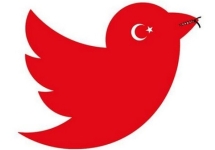
The Turkish authorities lifted the ban on access to the Twitter microblog network. This was reported by Hürriyet with reference to the statement of the representative of the office of the Prime Minister of Turkey Recep Erdogan.
So far, direct access to Twitter is still impossible, since that not all local Internet providers managed to reconfigure their servers accordingly. However, it must recover within a few hours.
The day before, the Constitutional Court of Turkey recognized that Twitter blocking the country violates the right to freedom of expression contained in the 26th article of the Basic Law. The highest court sent the requirement to immediately withdraw the blocking to the Telecommunications Department and the Ministry of Transport, Sailing and Communications.
On March 28, the Turkish authorities blocked access to the YouTube video portal. Earlier, an audio recording was laid out there, which states the head of the Turkish Foreign Ministry, Deputy Minister of Defense and Intelligence Head of Turkey discussing the possibility of hostilities in Syria.
On March 27, the Ankara administrative court suspended the order of the Turkish authorities who blocked access to Twitter. The Turkish courts received a number of complaints requiring Twitter lock. Complaints were subject to both organizations and parties, and individual citizens.
On March 21, Turkey authorities blocked Twitter in the country . This was done a few hours after the relevant statement of the Turkish Prime Minister Tayyip Erdogan. “Now we have a judicial order,” said Erdogan the day before. “We are eradicated by Twitter. I am not interested in what the international community says. Everyone will be convinced of the relics of the Turkish Republic.”
The prime minister’s spokesman later explained that Twitter “ignored court decisions and did not comply with the requirements of the law.” “There was no other tool, except for blocking access, to protect our citizens,” the official concluded.
There is no court decision on the closure of Twitter in Turkey, the prosecutor's office of Istanbul said on March 21. Against the radical disconnects of social networks was opposed by Turkish President Abdullah Gul.
The vice-president of the liberal group in the European Parliament Alexander Graf Lamsdorf called for the suspension of negotiations on Turkey's entry into the EU. The representative of the OSCE to protect the freedom of speech Dunya Miyatovich called for the reform of Turkish laws regarding freedom of speech and the Internet. The United States condemn the decision of the Turkish authorities and believe that such a step is a violation of freedom of speech, which should be observed in any democratic state, said the official representative of the State Department Jen Psaki.
On February 25, Erdogan said that the "technocratic lobby" is attacking the government through messages on Twitter. So the prime minister responded to the publication on the Internet of telephone conversations that convict government officials in corruption. On March 6, Erdogan did not rule out the blocking of Facebook and YouTube "if necessary." In June 2013, during mass protests swinging around the country , the head of government called Twitter a problem, saying that it publishes a “perfect lie”. In the 2000s, YouTube was already repeatedly blocked by the Turkish authorities.