
Translated material
Canton view
Do you know Swiss music? Most likely not, and this is not your fault. Even composer Vladimir Tarnopolsky, who knows about modern music, in a recent interview with Colta.ru began with a very general definition: “This is primarily a reflection of Switzerland itself - the oldest democracy of Europe.” Swiss music arose at the junction of German, Italian and French; However, if behind the words “German music” or “music of France” there is a fairly clear image - even if every music love is his own, - this is impossible to say about Switzerland. Partly - because it is very young: there is practically no centuries -old traditions behind it. Partly-by virtue of its natural cosmopolitancy: the occasion to think about this was the 200th anniversary of the establishment of diplomatic relations between Russia and Switzerland, noted this year.
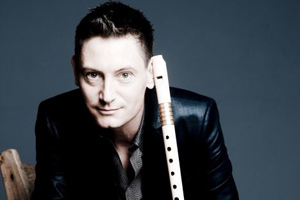
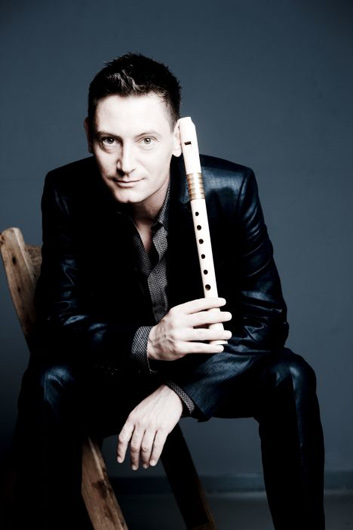 © Marco Borggreve / Harmonia Mundi Maurice Steger
One of the major musical actions dedicated to this date was the Alpenfest project of the ensemble “New Music Studio”, which started a month ago; One concert passed, four more ahead. This is an extremely successful opportunity to get acquainted with Swiss music; Judging by the first concert of the cycle, where the music of the living classics of Klaus Khuber and Hinets Holliger sounded, the programs were invented both for the sophisticated and the novice listener. And those who want to know more about what academic music looks like today, what opportunities new technologies offer it, will be able to watch the premieres of multimedia video settings of composers Oscar Bianca and Nadira Wassena. In general, Alpenfest is about modernity. But the “Window to Switzerland” festival is a window open much more. Although this is a festival of chamber music. It begins today, April 4, in the arms chamber of the Moscow Kremlin and will last until the 10th. What do they promise?
Firstly, this festival is not a novelty, it already has a story. It was first held in 2012, and Valery Prushutinsky, a specialist in authentic old Dukhov , leading, by the way, was still responsible for his general program, and is still responsible for its general program. He also takes part this year in the “window”. Over the years, Prushutinsky managed to gather a representative team of performers, among whom were stars such as Valtornist Arkady Schilkloper and cellist Ivan Monighetti. Schilloper took part in the second forum a year later; His guests were the Swiss ensemble of ethnic music Doppelboard , pianist Alexander Beshenen, flutist Andrea Colle and others. This year everything turned out no less important. And with their surprises. In the opening concert, along with the Telemann Consort ensemble, the Swiss altist Florian Mor will perform, also playing Violy d'Amur, an old bow of the Baroque era and early classicism, which surrendered his position to Alta and cello. Mor is an international class artist: in addition to constant work in the Zurich Opera orchestra, he collaborates, for example, with the Freiburg Baroque Orchestra and the La Scintilla (it was with him half a year ago the star of Chechilia Bartoli performed in Moscow).
The next chance to find out so close to Swiss music can be fifty years later, to the next diplomatic anniversary.
Switzerland music will play at the opening of several centuries at once, and besides the Swiss - Teleman and Bach. In general, the festival will be not only Swiss music, but also music performed by Swiss musicians. Another program of the festival found a place in the museum, namely in the Glinka Musical Culture Museum. Here, the Zurich winds of receipt will play, celebrating the 20th anniversary this year. The program is large, dedicated to the music of Europe - from Rossini to Ligeti. It is curious that among the participants of the ensemble is Clarinetist Dmitry Ashkenazi, the son of the famous pianist and conductor Vladimir Ashkenazi.
"Studio of New Music" will also play. On April 6, in the concert hall “On Kislovka”, the soloists of the ensemble will represent a wide - and moderately democratic - panorama of Swiss music: here will be our world -famous contemporaries Michael Jarkel and Klaus Hubert, and the classics of the twentieth century Artyur Onegger, Ernest Blokh, and the less famous theodor Frelykh, William Form. The program is Vladimir Vogel, the Swiss composer of Russian descent, who studied with Ferruuccio Buzoni, now considered the classic of the Swiss avant -garde. The concert is attended by the cellist Alexander Neustroev, a representative of the famous string school of Novosibirsk, a student of David Goeringas, a diploma of the XI competition of Tchaikovsky, a soloist of the famous Zurich orchestra Tonhalle .
The festival will end on April 10; In the Glinka Museum this evening, Maurice Steger, one of the best blockfleists in the world. The plug collaborates with soloists and groups as Chechilia Bartoli, Hilary Khan, Andreas Sholle, Fabio Bondi, Thomas Quastkhoff, the Galanty Europe orchestra and the Venetian Baroque Orchestra. He acts as a conductor.
A successful addition to the “window to Switzerland” is the Miniature program of the Moscow ensemble of modern music, which will sound in Kaluga, Obninsk, St. Petersburg and Moscow 5, 6, 8 and 10, respectively. The Swiss conductor Olivier Kunde, well acquainted with our public, will present an intriguing program where Swiss composers will meet with Penderetsky, Shostakovich, Sharrino and other masters from different countries. Do not miss - the next chance to find out so close to Swiss music may be fifty years later, to the next diplomatic anniversary.