
Translated material
Extraordinary journey
In late March - early April, a group of civilian activists, independent journalists, bloggers from Russia went to Ukraine as part of the United Ukraine project as part of the mission of the world. We wanted to travel to different cities, talk with different people, feel the atmosphere of revolutionary Ukraine - and try to convey what they have seen, heard, understood and felt to their compatriots, in order to offer them some alternative to the monstrous false propaganda of Russian TV. We were met and accepted in different cities Ukrainian journalists, activists, participants in the self -defense of Maidan and Avtomaydan. Ekaterina Maldon, Anatoly Polyakov, coordinated the project from the Russian side. Arriving in Kyiv, Russian participants divided and went to different cities - Lviv, Ivano -Frankivsk, Kharkov, Donetsk, Odessa, Dnepropetrovsk.
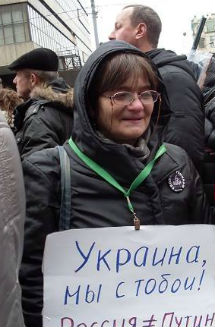
I write these notes in hot pursuit, immediately after returning to Moscow. My comrades are still in Ukraine, and we will try to systematize the collected materials, make a film together with the Ukrainian side, write big good reports. Now I'm in a hurry to share fresh impressions. I managed to visit Kyiv, Lviv and Ivano-Frankivsk, talk with a large number of people, record a dozen interviews.
My first conversation took place on the Moscow-Kyiv train with a neighbor in the compartment, and it so happened that two topics were immediately set in it, which later sounded in the leitmotif in almost all conversations. My interlocutor was Kiev woman Elena , who was returning home after a three -week visit to relatives living in Moscow (daughter, son -in -law and parents of son -in -law). She asked me warily: you are not afraid to go to Kyiv - because they tell you on TV that we are dangerous, fascists, Bandera? I said that I was not afraid, I didn’t believe the TV, I told me why I was food - and her facial expression and intonation immediately changed, she sighed with relief and began to tell.
First, about the Kiev Maidan, what I read many times, but for the first time I heard from an eyewitness and the participant: what an amazing atmosphere was, how the Kyivians suddenly discovered completely unprecedented qualities, how everything suddenly opened: who is who is, and new opportunities and hopes ... told how they and her husband first came to the Maidan to bring medicines and food, and he began to get into the work: he began to hatch in the work Porridge, she is to sort the medications brought. There, Elena said, you feel like in an anthill-a huge team, something in common is being done, while everyone knows exactly what to do to him. She said what I later heard repeatedly: it was almost not scary there, it was much worse to sit at home and watch the broadcast - and it was impossible to sit at home and it was impossible to watch.
Then, with pain, amazement, dumbfounded, anger began to talk about the torment of communication with Moscow characteristics - the parents of the son -in -law. People are almost relatives with whom she had a wonderful trusting relationship for several years listened to her stories about Kyiv carefully, asked, and then they said: well, these are private observations, you don’t know everything, but on TV the general picture showed: the Nazis seized power. Elena watched a TV with them, tried to explain where there is a direct lies, where the stretch, where the famous propaganda techniques - did not help, the next day the same thing was repeated. The young (daughter and son -in -law) figured out, in January they came to Kyiv, made videos, tried to "display" their parents and friends - unsuccessfully.
This topic simply pursued me. Different people in Kyiv, Lviv and Ivano-Frankivsk, having learned that I was from Moscow, asked me different things, but almost everything asked me one question: is it really true that 70% of Russians approve of Putin’s policy towards Ukraine, believe that we are enemies to ourselves? How can it be? Is it possible to deceive the whole nation? People are simply unable to believe it. The fact that we, Russians and Ukrainians, are one people, in some way it is true: almost many of the dozens of my interlocutors in Russia have a relative, friend, kum, many people continue to communicate-and this communication brings people into a real shock.
Kievan Vasil with pain says: “I can’t understand, I can’t - how to believe in propaganda and not believe the person with whom you ate a pood of salt, how? I tell him about the Maidan, where he himself was, and he was a state department, fascists, Bender; I thought he was sick on his head, I thought: I had to come to him, to embrace everything, but not for a bottle, but for a bottle, but for a bottle. Vodka, and then I read about 70%, I think not in it, therefore, oh, I would not have believed if I hadn’t talked with Kum, what is possible. ”
Spring Kyiv is beautiful. No war can disfigure him. In the center there are still tents and barricades, the main "yolka" is still decorated with posters that are changing regularly. All this now looks like a memorial. I do not know how Kiev residents and all Ukrainians decide, but if my will, I would have preserved a significant part of this space in this form. Now officials traveling to the government quarter have to go around the barricades on Grushevsky - maybe if they are left, this will serve as a reminder and a warning.
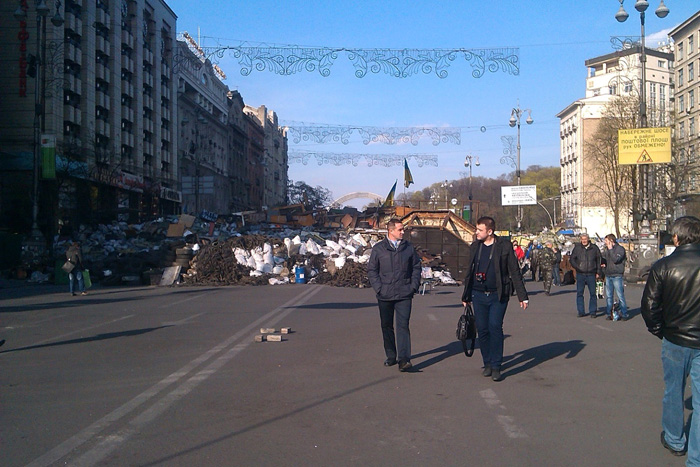
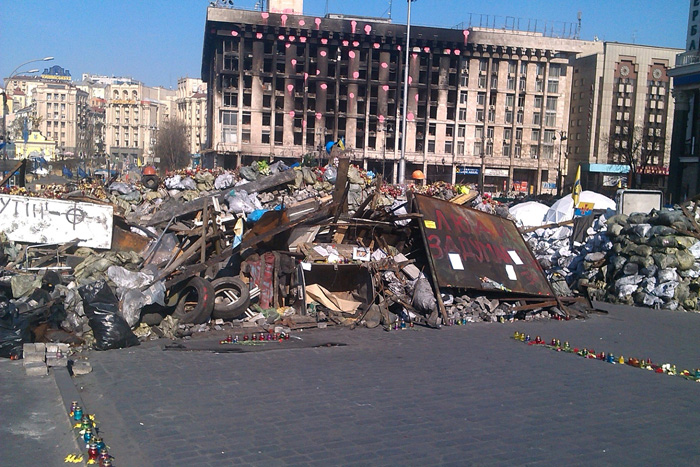
Tiles are laid on Khreshchatyk - the workers say: let it be, suddenly come in handy again, God forbid, of course, but you never know ...
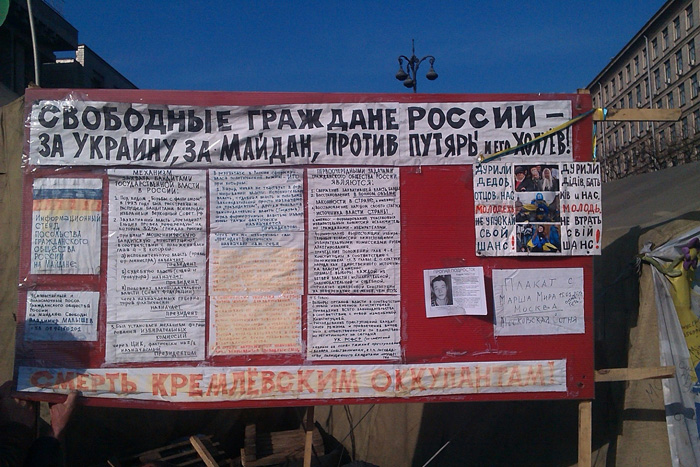
This is a shield near the Russian tent on the Maidan.
We arrived on the 41st day after the mass death of people. The entire center is littered with flowers, laid down with candles, photographs of the dead, posters, home -made memorials in places of death. On Institutskaya Street, which is called the "Alley of Glory of Heavenly Hundreds", a chapel has already been built. Many people of Kiev come to remember the dead, bring flowers, cry, pray.


People in Kyiv and in the west of the country are very excited, very open, willingly make contact. We spoke with people on the street, asked to answer our questions under the recording - they refused us only twice, the vast majority willingly agreed (some asked not to remove their faces - there were units, these are refugees from the Crimea or Russians who asked for refugees). Many spoke with us themselves. People are overwhelmed with emotions, they want to share. Some, recalling the experienced, speaking of the dead, cried. We, Russians, especially Muscovites, were struck by such openness and willingness to talk about everything with a stranger. In the evening, for us was a tour of the Kiev journalist Elena Mokrenchuk , who was on the Maidan from the first day, showed the places where there were battles where people died. She told me that I still have a lump in my throat. About the spirit of the Maidan, about the monstrous cruelty of the "Golden Eagle", about the clown of politicians. We, who came from Russia, were only a few people on this tour. But the Kyivians constantly approached, listened, complemented. One woman, a nurse, told how she pulled out the shot guys, called the names of the dead - she remembers almost everyone!
Among other things, Elena said that every frosty winter in Kyiv publishes sad statistics - the number of people who froze to death. This year they were not - all homeless people knew that you could come to the Maidan, warm up and get hot food. They are still feeding on the Maidan.
That same evening, a group of seven people went to Lviv and the next day we walked around the city, talked with people, examined a beautiful, well -groomed, absolutely European city. Our friends from the Maidan self-defense made us a meeting with Lviv mayor Andrei Sadov (he speaks in Russian perfectly), who, among other things, said: "The dignity revolution has not yet ended. It will end when the conditions for a decent life are created in all respects: the standard of living, freedom, security." But much more interesting were not protocol meetings, but unprepared conversations with people in the synagogue, school, on the street, in the store.
We knew that we were in the west of Ukraine, that is, according to the Russian media, in the nest of Bender, who hate the Muscovites, can beat for Russian speech, which are all up to one anti -Semites. Therefore, they tried primarily to talk with people who are allegedly threatened with danger. Our guide with Euromaidan, Lviv Vasil , a good -natured, calm person, a singer in a church choir, said that he does not understand why the nationalist means anti -Semit in Russia. We, he says, has nothing like this, we have a great relationship with the Jews, there are a little left here, the majority are the patriots of Ukraine, pray in their own way, so what-we have Catholics, everyone prays as he wants, God alone.
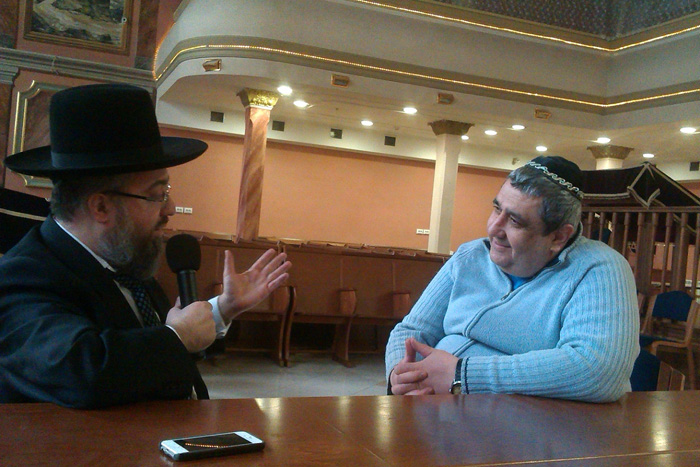
But we decided to check and went to the synagogue. Rabbi Mordechai willingly agreed to an interview with Vladimir Schreidler. His great -grandfather left Lviv 100 years ago. He was born and raised in America, returned to Lviv in 1993. He confirmed that the Jews are not offended. "Nationalism is a group egoism, this is normal. It’s not bad love for one’s own, but hatred of a stranger, Nazism, we know what it is.
Now in the country a turning point, ideology, enthusiasm has appeared - this can lead to good and bad, but I hope that Gd will protect us further. I would like my children who are now studying in America to come here. "
The armed Bandera, running around the city and terrorizing the civilian population, we had to look for a very long time. Finally found-in the restaurant "Kryvka", stylized under the partisan bunker, where "armed people" let visitors after the recall of the password "Glory to Ukraine!" - "Glory to the heroes!". In the menu of dishes like borsch "The first communion of the hero", etc., in the interior - fake weapons, they arrest for the order of dumplings ("Moskali food"). Almost exclusively Russian tourists go there. They feed delicious. In Russian respond willingly.
But the strongest impression of Lviv was conversations with people. People willingly speak any topics, sincerely, convincingly, answer any questions in detail.
We speak in the center of Lviv with several women. We ask Lev Lerman in Russian, respond in Ukrainian, I translate: “We have no growth, no distrust between Ukrainian-speaking and Russian-speaking. The Russians, the Poles, Jews, and others, for independence. For independence, means for free life, for honest life, for our children to grow without fear. Nobody is striving for Russians, a lot of Russians, a lot of Russians, a lot of Russians, a lot of Russians, a lot of Russians. Families who say in Russian, and Russians and Tatars, go to Western Ukraine now, they are also attracted to the European way of life. The need for protection, it wants to destroy us, it does not want democracy, free word is prohibited in Russia, and they want to be everywhere, they do not protect their people and destroy. We need a Russian Maidan, in Russia there are also many cultural people who want freedom, Putin is afraid of Maidan. We are for Russia, only against Putin. Russians, come to Lviv, this is a wonderful interesting city - only without machine guns. "
Two girlfriends, students from the medical university, Local Julia , Sasha from Odessa. "In Lviv, there was never such that Russians were belittled. We have a lot of Russian -speaking students at our university, many have relatives in Russia, they say: what is happening there, you are dangerous, come but nothing like that, they are all a groan. They do not believe." Sasha goes into Russian: “I am a Russian-speaking, I am from Odessa, I arrived two years ago, I could not speak Ukrainian, now it was difficult, at first it was difficult, but here are such open people that I quickly fit. We love our country. What has now taken part of our country, this cannot cause positive emotions. Imagine that you wake up in your city, but this is not your home, not your home, not your home, not your home, not your home, not your house. Nobody has nothing against the Russian people, and it doesn’t matter what the Maidan is not against Russia, but there are people who do not support our point of view in Odessa - I think it’s just that it can be, when people are still Russian, although he was all the time. But because of the latest events, even he, although he is already 85 years old, changed his point of view. Nobody wants the war to be. We are all against the war, it’s scary, we live in fear, we are afraid that maybe it will not stop in the Crimea. ”
Alexander , the seller in the souvenir market in the city center: “There are no problems of the language here. If you are born and live here, you need to love Ukraine, and what language you say - it’s all the same. I can’t watch Russian television without pain, there is a continuous lies. When the blood that was spilled on the institute, when we say that we have shot it, I can’t watch it, even if I watch it, even if I look at it, even if I watch it. This is very painful, I have been born here, I am half -Russian, I can’t communicate with my relatives from Donetsk, because I have a lot of virtual friends on social networks, I see a split: many people believe in the “Russian world” We think that they are zombie, and they think that we are zombie, we just live here, we love our city, our country, the land we were born, we do not associate ourselves with Moscow, and for some reason it is charged with guilty. Totalitarianism is being revived in Russia, Putin wants to return the Soviet Union, for this he crushes everything that he can. He wants to make some Eurasian belt as opposed to the West. The population is inspired: let it be a little not true that we are telling you, but we must rally this, only this is how we will defeat our enemy. I think this will not work, this is not in human nature. We are now gradually born a nation - Ukrainians, Russians, Jews, we are all citizens, in torment, pain is born. But Putin is not interesting, because Russia is strong with its totalitarian device, and this example is under the side - Putin is afraid of this. No one from the outside will be able to destroy their power, but from the inside - it is possible, that's why Putin wants to think about us, that there are lawlessness, Bandera. "
Valentin , Muscovite, Builder: “I completely defended the Maidan, from December 18 until the last events. He was wounded on the Maidan. Why? Yanukovych should ask why he began to beat the students, the guys stood peacefully, they didn’t harm anyone. They were attacked by Berkut - this is all the lies, I lived for the nine hundred and fifth year, I left for the work, came to support the work. The Ukrainians were wounded by Sergei Nigoyan - this is my friend, we were wounded in the eye for a month and a half, I was treated in Lviv. Putin, I tried to convince them, but this is impossible, in my opinion, otherwise than in Moscow, I worked in Nizhny Novgorod to restore the temples of the Smolensk and Vladimir Mother of God - there is Father Sergius, also against Putin's politics. It is a pity that the Russian church renounced the Ukrainian, although we have the same faith. Here people helped me in Lviv, settled, I will ask for refuge, then citizenship. "
In Ivano-Frankivsk, we again tried to talk with people who could be afraid of the "fascists" and "Bender" who came to power, and the first thing they went to school with Russian and Polish teaching languages. Director Svetlana Vladimirovna very willingly agreed to talk to us, invited teachers, high school students. In the method, where the meeting was held, three flags: Russian, Ukrainian, Polish. Svetlana Vladimirovna says: “We have been studying the Russian language since the last century. We have close ties with the University of Novgorod named after Yaroslav the Wise, our graduates go there and study for free (during the Soviet Union, Novgorod and Ivano-Frankivsk, these ties were preserved). Many military people from different republics were in Ivano-Frankivsk, their children Many of our graduates have been studying in Russia, many people serve in the Russian army Someone wants to protect us, thank God, we ourselves are in force, we have experienced a lot of things to hear that we are humiliated here. Был очень короткий период, в 1991-92 годах, когда люди неохотно отдавали детей в русскую школу, но сейчас у нас учится очень много детей. Возможен ли военный конфликт? Я сейчас каждый день с тревогой включаю телевизор. Но честно говорю: я не верю в это. Большинство людей любят жизнь, хотят добра, справедливости, я не верю, что один человек может до такой степени затуманить мозги и поработить волю людей. Я думаю, что когда каждый встанет перед выбором – стрелять или нет, – каждый отступит. Наши выпускники, которые служат в российской армии, – я уверена, они не будут стрелять".
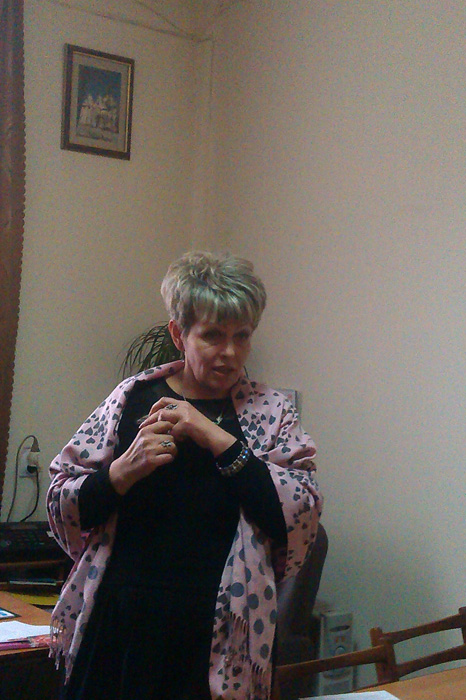
Ученики разных национальностей свободно отвечали на наши вопросы. "Мы тут родные, независимо от того, кто откуда и кто на каком языке говорит".
Наталья , учительница химии: "Я училась химии на украинском языке. Работу в этой школе я очень ценю – моя семья русскоязычная, я хотела сохранить этот островок. В этой же школе учится мой сын. Я преподаю химию на русском языке в русских классах, на украинском – в польских классах. Мы возим учеников в Россию и в Польшу, мы хотим больше узнать о России, но такого, чтобы я просила какой-то помощи, чтобы я хотела туда переезжать или объединяться – ничего такого нет, я свое будущее и будущее своей семьи вижу здесь, в Ивано-Франковске".
В хасидской синагоге шамес Рувим сказал: "У нас за 22 года независимости Украины не было никаких притеснений, нет и сейчас, новая власть особенно старается, чтобы все было спокойно. Фашистов нет никаких".
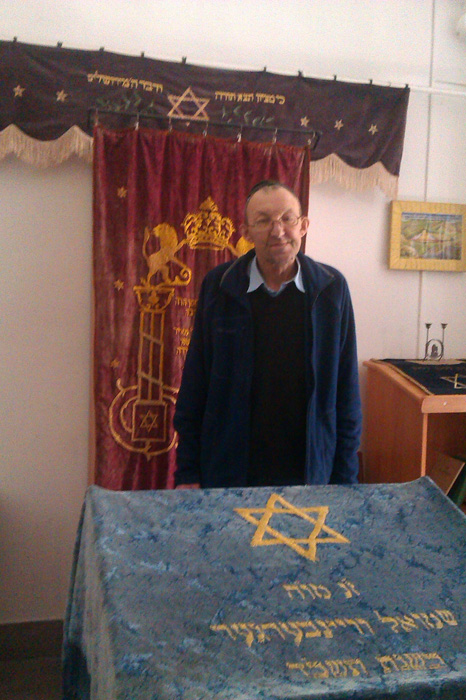
Мы уже не удивились. Все на вопрос о притеснениях русскоязычных или евреев отвечают: это смешно. Нам самим было уже смешно задавать этот вопрос, но мы его упорно задавали и получали всегда один и тот же ответ.
Миша и Богдан , местные, студенты Института нефти и газа, говорят по-украински: "Мы посещаем военную кафедру, надо будет – будем защищать страну. Русскоязычные друзья есть, их много, никаких трений. Большинство у нас рады, что прогнали Януковича, и на востоке, думаем, тоже большинство рады, он там хорошо всем надоел. Там такие же украинцы живут, просто их настроили против Западной Украины. По телевидению российскому называют нас бандеровцами, фашистами - они верят. Если бы приехали сюда, увидели бы правду, но они боятся.
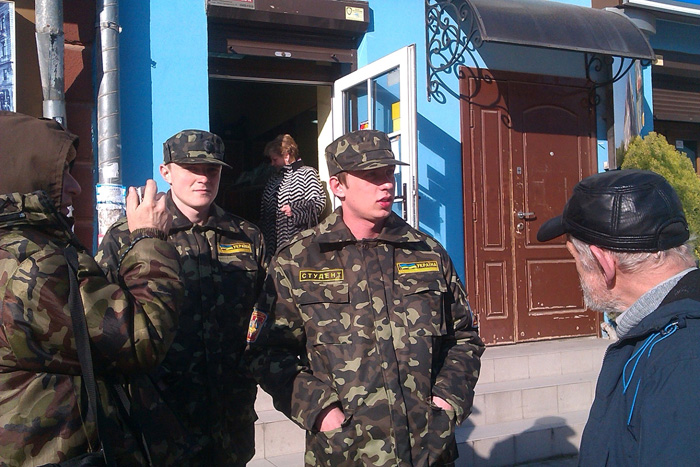
Кстати, о фашистах и их "пособниках" из ОУН. В самом центре Ивано-Франковска, рядом с хасидской синагогой, в месте массового расстрела немецкими оккупантами 27 оуновцев стоит памятник, выбиты 27 имен. Отношение к гитлеровскому фашизму однозначное. Когда мы около этого памятника беседовали с львовянами, мы еще не знали, что в России Гитлера уже, кажется, начинают считать не преступником, а "эффективным менеджером".
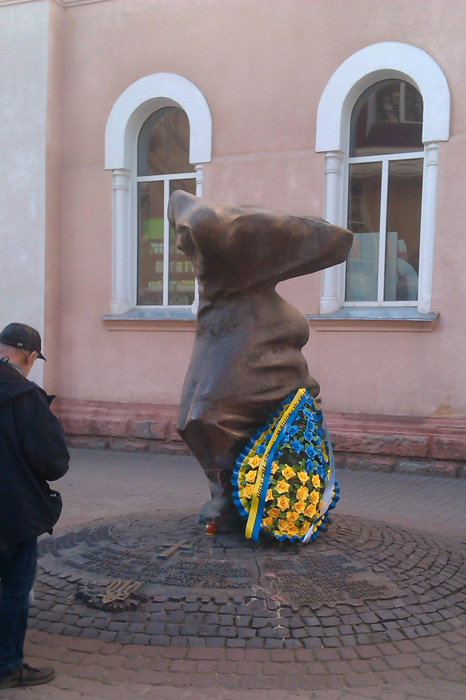
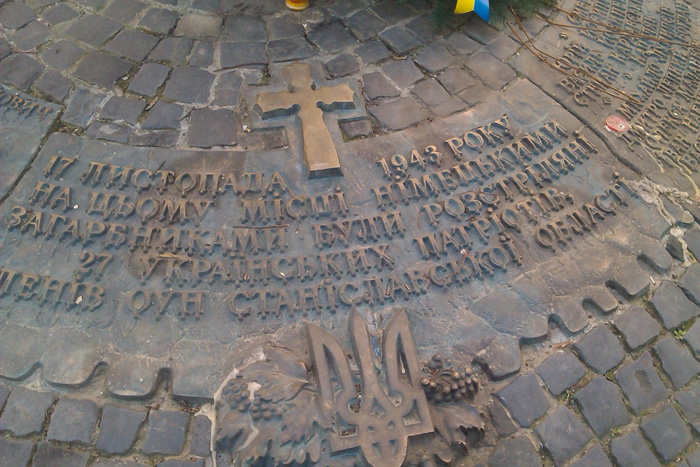
И еще немного из рассказов принимавших нас львовян – участников Самообороны Майдана.
Святослав : "Мы поехали в Киев на Майдан после избиения студентов. Мы тогда поехали без оружия, оружие взяли только после первых смертей. Мы мирные люди, но тогда могли убивать".
Назар : "Год назад я не мог себе представить, что я, смирный человек, адвокат, отец троих детей, могу убить человека. В феврале точно мог. Слава богу, не пришлось".
Юля , жена Назара, рассказывала, как они жили эти недели: "Жены остались, у каждой по двое-трое детей, постоянно перезванивались между собой: звонил? звонил? Ночью по несколько раз просыпались, залезали в ФБ. Почти невозможно было спать, и кроме сидения в ФБ единственное, что получалось, – вышивать какие-то скатерти, перебирать детские вещи... Я в какую-то Пенелопу превратилась".
Назар : "Чтоб вы знали: Юлю (Тимошенко) мы не любим, очень. Это позавчерашний день. Мы ее кортеж остановили, все сказали ей, она сказала, что даже не собирается во власть, что ей власти хватило. Я записал этот разговор, есть в Ютьюбе – а через несколько дней узнаем, что она идет в президенты".
О Януковиче: "Как можно жить, зная, что тебя ненавидят 70% народа? Ненавидят, желают тебе смерти – я не могу представить, как живется такому человеку".
Юрий : "Я был советским офицером, даже в партии состоял. Какое-то время я верил, что правда там. Потом начал разбираться, понял, что правда здесь. Теперь я являюсь украинским националистом. Я хочу, чтобы государство повернулось лицом к людям, чтобы украинцы начали жить нормально, свободно, по европейским нормам. Мы формально имели 22 года независимое государство, но оно не было украинским, по-настоящему независимым. Только сейчас, после этой революции, оно становится украинским. И как раз в эту минуту Путин нанес удар в спину.
На мой вопрос, есть ли страх, Юра отвечает: "Не бойтесь тех, кто может убить тело, душу убить не может. Полегли ребята, лучшие. Я знаю и верю, что мы с вами встретимся, здесь или в России, когда Путина уже не будет". Я сказала в шутку: ваши бы слова да Богу в уши. Юра очень серьезно ответил: "А это так и есть. Он слышит. Когда мы стояли, на нас стена беркутовцев шла, мы молились. Иначе бы не выстояли. Я все время думаю об одном: мы бы могли первого декабря взять Банковую. Легко, нас был миллион, мы были такие злые! И люди бы не погибли. Ведь погибли лучшие! Нас тогда политики отговорили..."
Юра, Назар, Святослав со спокойной уверенностью говорят: это мы уже не отдадим.
С разными людьми мы говорили – студентами, бизнесменами, продавцами, беженцами, разных национальностей, русско-, украино- и двуязычными, разного достатка, профессий, социального положения.
Есть вопросы, по поводу которых здесь, кажется, наблюдается полный консенсус.
– То, что произошло, хорошо для страны и очень важно. Старую власть необходимо было убрать, она разрушала страну. Жалко, что поздно. Жалко, что такой страшной ценой. Мы не отдадим это.
– Мы надеемся, что все будет нормально. Трудно, но нормально. Есть для чего работать и терпеть. Все ждут выборов и намерены в них участвовать.
– Майдан изменил людей. "Жалко, что эта атмосфера – свободы, солидарности, открытости – быстро испаряется. Ее сохранить гораздо труднее, чем сменить власть", - говорит киевлянин Владимир .
– Со стороны России прямая агрессия, по российскому ТВ – чудовищная грязная клевета, никого фашизма здесь нет, фашизм мы видим со стороны России.
– Спасибо Путину, он объединил нашу страну. Назар , львовянин: "Год назад, случись такое, я был бы готов отдать Донецк, Луганск – мне почти не было до них дела. Теперь мы знаем, что мы одна страна". Богдан , студент, Ивано-Франковск: "На востоке такие же украинцы, как мы, только говорят по-русски".
– Никакой розни между русскоязычными и украиноязычными нет, нет никаких проблем, мы друг друга понимаем, эту проблему придумали политики. Ученица 3-й русско-польской школы Ивано-Франковска с русским и польским языками обучения: "Я русскоязычная, думаю по-русски, дома, в школе и с друзьями говорю по-русски, в городе, если ко мне обращаются по-украински, я перехожу на украинский, часто не замечая этого".
– Никаких притеснений по национальному признаку нет, антисемитизма сейчас меньше, чем раньше, ни в какой защите мы не нуждаемся.
Наверное, есть люди, думающие иначе. Их, по-видимому, много на востоке и юге страны (когда я пишу эти заметки, в Донецке и Харькове пророссийские силы пытаются захватить обладминистрации). Но, свидетельствую, в Киеве, Львове, Ивано-Франковске нам такие не попались. Я очень старалась найти человека, от которого можно было услышать другое мнение, - такое поразительное единодушие настораживало. Девушка-подросток, ученица ивано-франковской школы, сказала, что приветствует присоединение Крыма к России, но поговорить с ней не удалось – директор попросила воздержаться от обсуждения политических вопросов с детьми. Второй раз я было обрадовалась в Киеве: разговорились в парке с Ликой , продающей самодельные куклы. Лика сказала, что на Майдане нет доброты и честности и революцию устроили темные силы. Но это оказалась городская сумасшедшая, со своей, не из российской пропаганды заимствованной, "концепцией" – не Запад устроил Майдан, а некие "индивидуалисты", не против России это направлено, а против "доброты и честности", все люди отравлены золотом, золото действует как наркотик, и все это прекратится только тогда, когда золотом станет все – вот у вас на руке колечко серебряное, а когда оно станет золотое, настанет везде доброта и честность. Кроме этих двух случаев, остальные наши собеседники были единодушны.
Но были вопросы, по поводу которых мнения расходятся и здесь.
– О Крыме. Некоторые считают, что Крым – отрезанный ломоть, он так и не стал Украиной. Хотят в Россию – ну и пусть будут в России. "Только перед татарами стыдно. Татары многие стояли на Майдане. Мы регулярно отдыхали в Бахчисарае, там очень хорошо, у них там как будто особая страна. Теперь не поедем", – говорит киевлянка Елена . Другие же уверены, что Крым надо возвращать, крымчане пожалеют, запросятся назад, но возвращать надо только дипломатическим путем. При этом те, кто отдыхал в Крыму, не намерены больше туда ездить, пока Крым российский.
– О России и россиянах. Многие считают: россияне не виноваты, их оболванили. Киевлянин Евгений : "Я однажды посмотрел российские каналы, там такая умелая пропаганда, может быть, сам бы поверил, если бы месяцами смотрел". Николаич из Ивано-Франковска: "Народы бы не воевали, если бы не ссорили их намеренно политики. Путина надо убрать, и все наладится". Но приходилось слышать и другое. Лена , киевлянка: "Никогда не прощу. Никогда. Вчера подумала: могла ли бы я сейчас поехать в Москву – и сразу приступ отвращения: ни за что". Ее тезка, тоже киевлянка: "Я раньше подумывала о переезде в Россию, даже хотела взять российское гражданство, там дочка, но теперь – ни за что, мне было бы стыдно".
– О российской "пятой колонне" и "национал-предателях". Киевлянка Лена : "Перезжайте к нам, вы нам нужны, государство должно вас принять, мы готовы добиваться этого". Львовянин Юрий : "Если вы уедете, других посадят, кто же будет Путина свергать?".
– О том, возможна ли война. Войны не будет, политики договорятся, считает большинство. Некоторые же думают, что война вполне возможна. Путина трудно остановить, страшно, но мы готовы защищать страну, говорят они.
– О "Правом секторе". По ряду причин нам не удалось поговорить с представителями ПС. Но о них мы спрашивали, и здесь для самих украинцев больше всего непонятного и самый большой разброс мнений. Некоторые их опасаются, говорят, что они занимались рэкетом, что это малолетние бандиты, надеются, что новая власть сумеет их нейтрализовать. Валя , киевлянка: "Думаю, что это провокаторы. Ярош вот встречался с Януковичем – зачем?". Но есть другие мнения. Назар из Львова: "Чтоб вы знали: их поддерживает полпроцента населения, ну, может быть, процент. Они много сделали в Киеве. Но сейчас эти ребята больны на всю голову, им необходима психологическая помощь. Они героически сражались, они видели, как убивали их товарищей, они не в себе, они смотрят на всех, кто там не был, как на чужих, это афганский синдром. Я на себе чувствую: я не могу спать, меня иногда шокируют мои же собственные реакции на самые обычные вещи. Но я взрослый человек, у меня семья, я могу себя контролировать, а они – нет. Им надо помочь. Оружие оставлять у них сейчас нельзя ни в коем случае, они опасны". Николаич из Ивано-Франковска: "Правый сектор"? Вы слышали что-то о нем год назад? Я тоже не слышал. Их раздули, кому-то это нужно было. Организации, которые вдруг появляются, так и исчезнут вдруг. От них сейчас избавляться будут, они свою роль выполнили. Среди них много малолетних неадекватов. Служить в армию они не пойдут, легализовать их не удастся. Слухи об их бандитстве я слышал, сам не видел. У нас в городе нормальные мужики, если ПС будет грабить, женщин обижать, сумеем защитить".
Я хотела этими заметками передать настроение, атмосферу, живые голоса украинцев, поэтому здесь много прямой речи. Атмосферу надежды, тревоги, скорби, спокойной готовности защищать свою страну, ощущение рождающейся нации, готовности ко всему, ощущение открывшихся возможностей. Мы отвыкли от всего этого. Украинская революция не закончилась, но, кажется, случившееся уже не может исчезнуть бесследно.