
Translated material
Separatists of all countries, disconnect!
Than Crimea looks like and how different from Veneto, Catalonia and Scotland
Defenders of Ukrainian politics in Moscow refer to the principle of equal rights and self -determination of the peoples, prescribed in Chapter I of the UN Charter. The principle of this is true. The question is different: does it have to do with the Crimea?
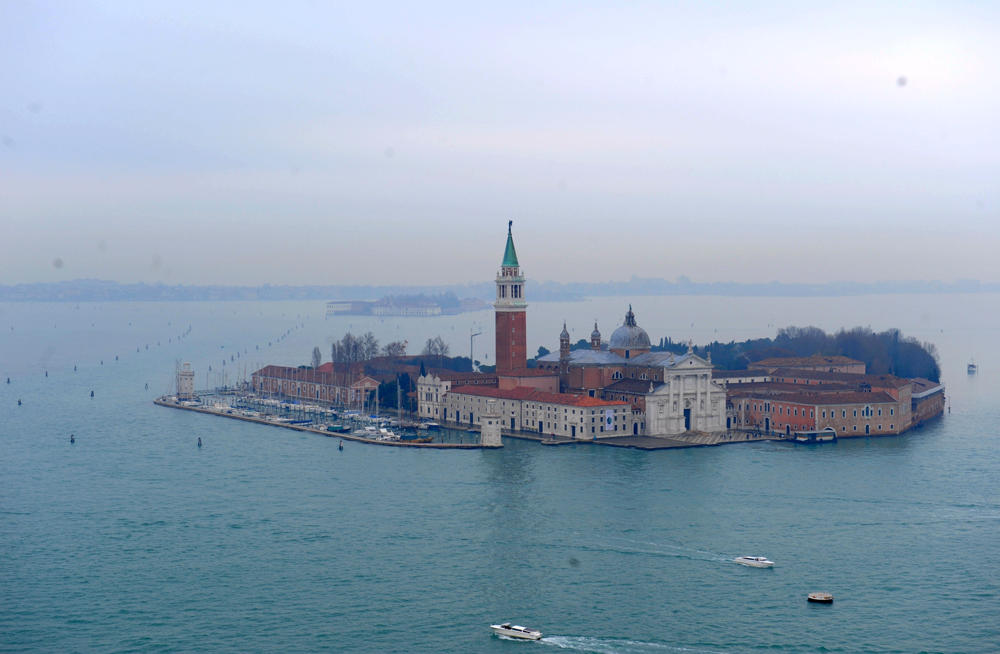
Venice suddenly expressed a desire to separate from Italy and conducted a referendum unrecognized by the authorities: XU Nizhi/Zuma Press/ITAR-TASS
If this happened on April 1, it would be possible to perceive everything as a joke. But this, as luck would have it, happened a day later: on April 2 it became known about the arrest of the Venetian separatists in Italy, who planned a military action on St. Mark Square, and even with the support of Albanian mercenaries. They even managed to make some semblance of a tank capable of shooting home -made shells. The police managed to prevent “uprising”.
The fact is that two weeks before this incident, from March 16 to March 21, 2014, in Venice a online referendum was held on the department of the Veneto region from Italy. As a result, 89% of the residents of the region allegedly spoke out for independence. Allegedly-because it was organized on the Internet, no one really led the accounting of the votes, any foreign tourist could vote. The authorities of Italy were not refused to recognize the results of the referendum - they did not even take the event seriously.
But the very fact that Venetian separatists suddenly started and got down to business is noteworthy. It can be seen: the Crimean example for some does not give rest, because he showed that any problem can be solved using elementary power.
Crimea on Costa Brava
The separatists, however, are different. "Catalonia is not Crimea!" - It hastened to declare the government of the Spanish autonomy, striving to hold its own referendum on its status. In a letter sent to the EU Embassy in the EU countries in Madrid, the Catalan leaders expressed the opinion that the vote held in the Crimea set the residents of the peninsula before the “false choice”, as they aimed to “legitimize the annexation of the sovereign state through forceful capture”. And in Catalonia, they say, everything will be different: the rank of rank, the world with the world ...
The Catalans sent their letter to the embassies not by chance. Reuters quotes unnamed Western diplomats, believed that Russia's foreign policy difficulties associated with the annexation of Crimea will cool many heads and ranks of separatists throughout Europe markedly thin. What is important on the eve of the May elections in the European Parliament.
Diplomats reason sensibly. Madrid, for example, has already responded to the arguments of the Catalans. “It is not true that two referendums-in Crimea and Catalonia-have nothing to do,” said the Foreign Minister Jose Manuel Garcia-Margalo, commenting on a letter from Barcelona. “They are united by the fact that both of them are anti -constitutional.”
Spain does not want to do not like the separation-even a significant expansion of the autonomous rights of Catalonia, the wealthy Donor region, dissatisfied with the fact that in the year of the crisis he has to subsidize the poorer areas of the country. Among other things, the Madrid authorities fear that the separatist aspirations of the Catalans can create a harmful precedent encouraging Basque and other separatists.
| *The Constitutional Court of Spain on March 25 has already made its own decision on this subject: according to the Constitution, a separate region of Spain cannot unilaterally announce a referendum on self -determination. The KS recognized the decision of the Catalan parliament to vote on this issue unconstitutional. Following the Constitutional Court, the verdict of the non -institutionality of the referendum also issued a court of first instance. |
Meanwhile, the head of the Government of Catalonia, the head of the ruling bloc “Convergence and Union”, Arthur Mas made it clear that he was not going to violate the Spanish laws and would be ready to submit to the decision of the Supreme Court of Spain if he prohibits the referendum*.
However, in the Catalan capital it is believed that even if the court says “no”, there is a way out of the situation: the role of the actual referendum on independence could play the nearest regional elections in 2016.
One way or another, the leaders of the struggle of Catalonia for independence understand: to solve such complex problems, great state patience is required, the years, and not months, and even more so not weeks, are needed. In Catalonia, according to public opinion polls, the majority wants independence - but far from absolute, about 50%. By 2016, these moods may well change - in one direction or another. Especially if positive shifts occur in the Spanish economy.
Scottish risks
The leaders of the separatist Scottish National Party (SHNP) are also counting on a change in moods. Indeed, so far all surveys have shown a solid, albeit not absolute, advantage of supporters of the status quo: according to the latest data, 42% of the Scots-against independence from the UK, 28%, while many-28% will not be determined in any way.
Back in 1997-1998, during the premiership of Tony Blair, the so -called Devolution was carried out in the United Kingdom - a wide delegation of power authority to local authorities in Scotland, Wales and Northern Ireland. For wider autonomy, the majority of residents spoke in referenda. Autonomous parliaments were created, government offices responsible to them were formed. But the SHNP of this seemed little, and she tirelessly worked all these years to bring the possibility of gaining complete independence to the country. True, it is interesting that the party is ready to preserve at least two important symbols of general British statehood - the English pounds and the monarchical form of government, and the monarch for Scotland will remain Elizabeth II. The historical background is also curious: the unification of Scotland and England began with the moment when, on the contrary, the Scottish king Yakov VI, the son of executed Elizabeth I Maria Stuart, received in addition to the English crown in March 1603 (formally, two countries united in 1707).
"
The Crimean example of some does not give rest, because he showed that any problem can be solved using elementary power
"
In the elections in 2011, the SHNP received the majority in parliament and formed a one -party government. The party leader Alex Salmond had no doubt: the path to independence is open. But everything turned out to be not so simple: for the party associated with the struggle for independence, the Scottish voter was ready to vote, but I also wanted to reflect on the real department from Britain.
Under the current British legislation, issues such as a referendum on independence are entitled only to the Central, London Parliament. However, after long and difficult consultations and negotiations on October 15, 2012, the British and Scottish governments signed the Edinburgh Agreement, which “temporarily delegated” such a right to parliament of Scotland. Thus, all the laws of the United Kingdom were strictly observed. As a result, the Scottish legislative body adopted a resolution on a referendum on September 18, 2014.
Almost two years ago, two propaganda campaigns were officially established: “Yes - Scotland” (for independence) and “Better together” (for maintaining unity with Great Britain). The Government of Scotland not only does not interfere with both campaigns, but, on the contrary, created approximately equal and fair conditions for them. The agitators send leaflets to the houses, travel to cities and towns and patiently explain their positions to the population, presenting arguments - with facts, numbers, and expert assessments. The Scots have time to carefully listen to both sides, weigh everything calmly, and then vote.
An interesting detail: one of the problems that should be resolved in the case of the separation of Scotland and is actively discussed these days - which part of the Great Britain public debt will have to take on Scotland. But how else - this is a civilized divorce, and not forcibly abandoning the territory.
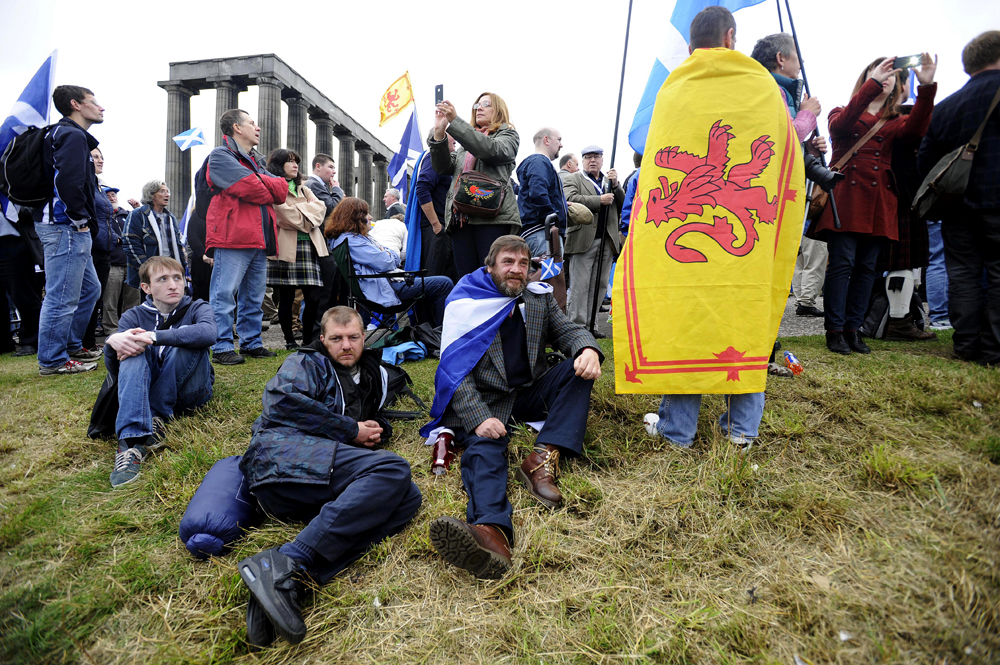
Retail of independence supporters of Scotland. Edinburgh, September 21, 2013/Photo: Andy Buchanan/AFP/East News
Kosovars against Crimeans
Another point on the European map, weighed down by the threat of separatism, is Belgium. Here, perhaps, partly under the influence of Crimean history, the conversations about the separation of the rich Flanders (from the poorer Wallonia) were somewhat became silent. The main Flemish Nationalist Party “New Flemish Alliance” (NFA) did not put a branch, but the requirement to change the system of redistribution of taxes - so that the Flemings remained more collected in the areas inhabited in populated areas. The extreme right from the Flemish interest party are concerned about the problems of immigration and Islamization, they are also not up to separatist slogans.
The only place in Europe, where the Crimean example caused the desire to imitate him is the Republic of Serbsk, the Serbian part of Bosnia and Herzegovina (Big). Local politicians declare their support for Russia's actions in Crimea. The leader of the Bosnian Serbs Milorad Dodik called the Crimean referendum "legal and democratic." Adding, however, that his government will study in detail the experience of not only Crimea, but also Scotland with Catalonia, to “follow the best world practice”, and will apply this experience when “time comes”.
It is interesting, however, another: Belgrade, perhaps, sympathizes with Bosnia Serbs, but does not openly encourage them. For Serbia, the entry into the EU is most important now. No wonder the ambassador of this country at the UN, as the Serbian press writes, received an unspoken instruction to take a session of the General Assembly, at which there was a vote on a resolution condemning Russia in relation to Ukraine. It turned out that the allied Moscow was not offended, and the belonging of Serbia to European values was not in doubt.
In general, in the Balkans, following the President of Russia Vladimir Putin, everyone recalls Kosovo: they say, the world powers supported the separation of this region from Serbia, including the UN International Court in The Hague. But Kosovo leaders themselves reject any attempts to compare the war for independence of 1998-1999 with Crimean events. “Nothing in common, Kosovo history is unique,” said the leader of the Kosovo Albanians Hashim Tachi. - In our case, the international community intervened only after the start of the genocide. In addition, we never demanded that we be withdrawn from one state and given to another. ”
And although most of the Serbs will not agree with such a question, it will be necessary to admit: the Kosovo precedent lasted exactly nine years. Exactly so much time passed between the cessation of hostilities in Kosovo in 1999, the introduction of international forces and the proclamation of the independence of the Kosovo Territory in 2008. International intermediaries came to the conclusion that there is simply no other way out of the provision of Kosovo Independence. Returning the land of Serbia would mean the guaranteed beginning of a new, possibly even more terrible civil war. Mutual hatred was so strong that all negotiations with Belgrade did not have any practical meaning, the parties began to talk to each other only in small practical issues only in 2011, and even then without much hunting. The annexation of Kosovo to Albania was considered morally and legally unjustified, but the region could not always be under international administration.
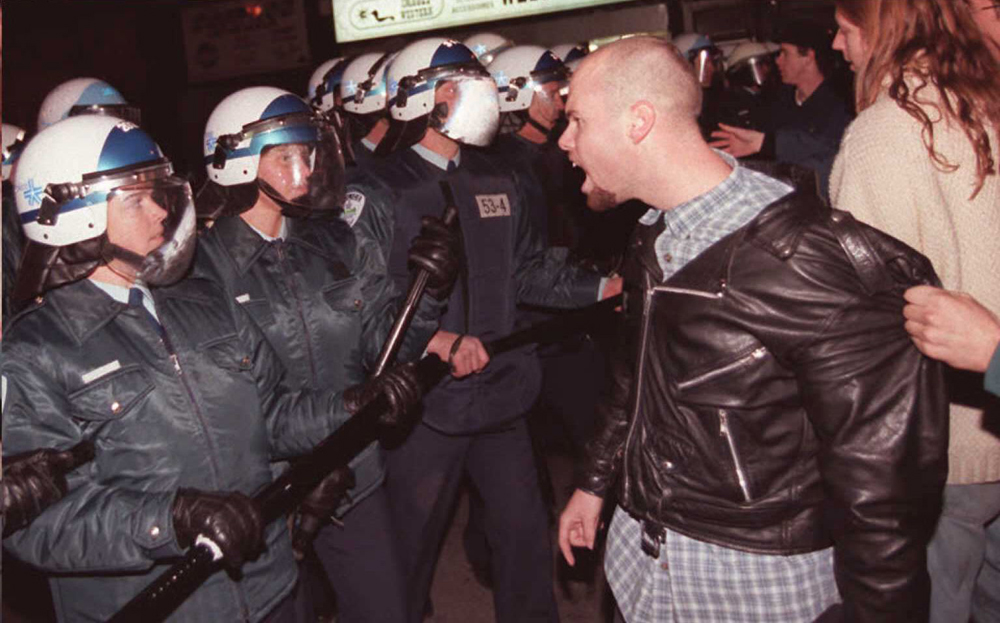
The referendum on the independence of Quebec ended in demonstrations of separatists disappointed in the results. Montreal, October 31, 1995/Photo: Andre Pichette/Nosource/AFP/East News
Patience and labor ...
Kosovo case in the latest European history is really unique. But problems with the coexistence of ethnic minorities and central authorities exist on all continents. There are several dozen such foci in the world. Some of them are barely smoldering, others threaten to break out at any time.
In the Franco -speaking Canadian province of Quebec, the separatists lost both referendums - both in 1980 and in 1995 (for the second time, the voices were divided almost in half), but they were preparing for them seriously, ahead of time, and found the strength to openly admit the defeat: since then the separatist Quebec Party had to rebuild their work, the separation from Canada has ceased to be a very end in itself. But the hastily organized March referendum in Venice was doomed from the very beginning - so the separatists had to take up the construction of the tank ...
The main contradiction of international law is between the right to self -determination of the peoples, on the one hand, and the territorial integrity of the states and the inviolability of their borders, on the other. Practice shows: the only way of the civilized resolution of this contradiction is in a patient, sometimes long search for compromises and mutually acceptable solutions. In this regard, the fundamental differences between how the fate of the Crimea was decided, and how, for example, the fate of Scotland (as well as Catalonia, Flanders, Quebec, etc.) is decided, are not subject to doubt.
Crimea accession to Russia and the right
- According to the Constitution of Ukraine, a referendum on changing the territorial borders of the state can only be all -Ukrainian.
- According to the Budapest memorandum of the 1994, the UK, the United States and Russia guarantee independence, sovereignty and preservation of the existing borders of Ukraine in exchange for Kyiv’s abandonment of the nuclear arsenal.
“According to Chapter I of the UN Charter, UN members should refrain from“ threat of force or its application against the territorial inviolability or political independence of any state. ”
- According to international law, “forcible joining the state of the whole or part of the territory of another state unilaterally” should be considered annexation.