Date
Author
Виктор Черецкий; Сергей Сенинский
Source

Preserved copy
Translated material
Gas bridge for Europe
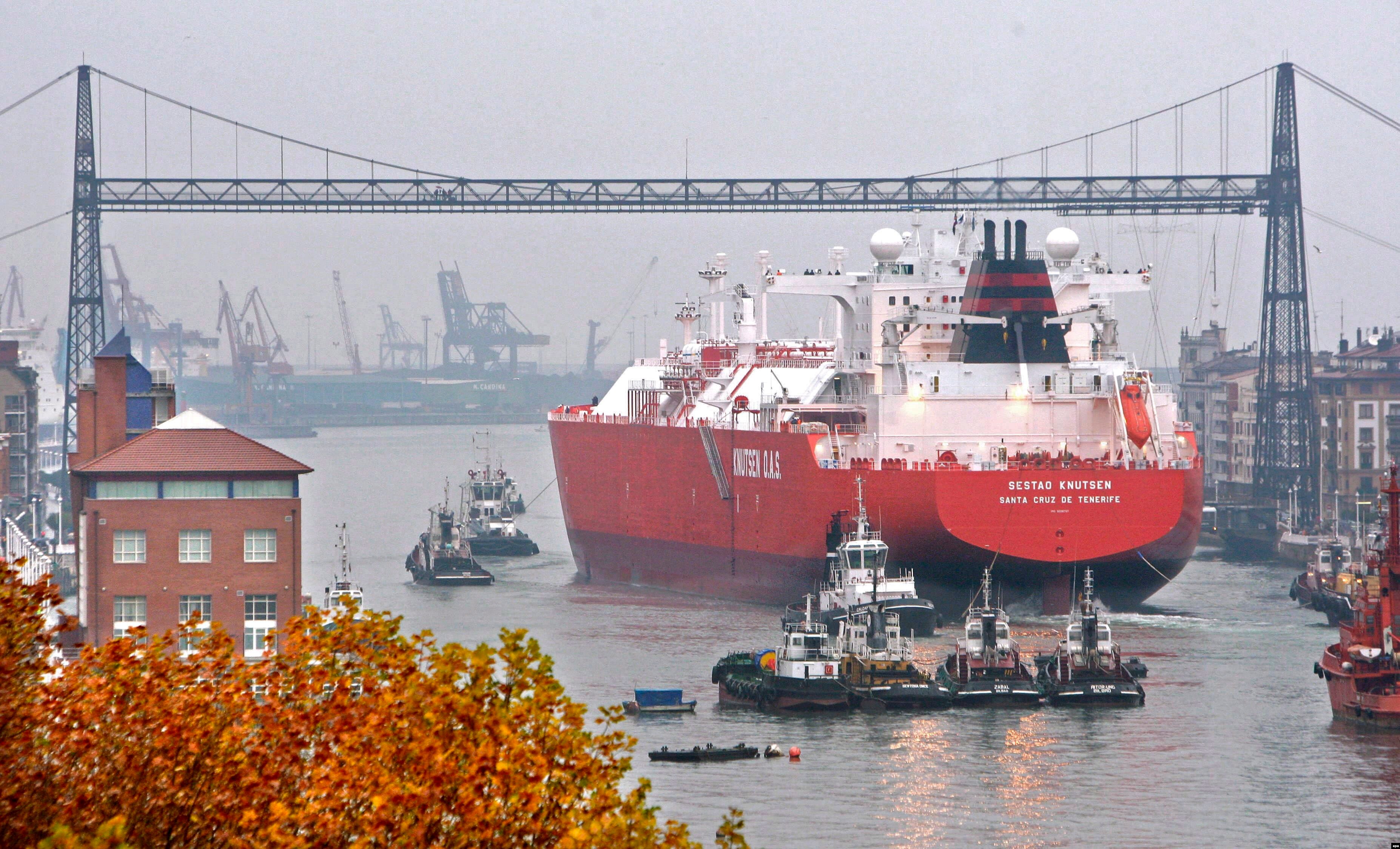
Spain is ready to replace the European Union 10% of Russian gas supplies
At the March summit of the countries of the European Union, their leaders instructed the European Commission by June to submit a draft complex of measures that would allow the region to reduce the current, 30%of its dependence on the supply of natural gas from Russia. Prime Minister of Spain Mariano Raha said at the summit that his country is ready to make a significant contribution to the implementation of such plans, although there is no own gas in Spain.
Spain, unlike most countries of the European Union, does not use Russian gas. She has her own suppliers. Approximately 42% of natural gas consumed in the country enters two gas pipelines from Algeria. One of them was built recently - in 2011, Medgaz. These are 210 kilometers of pipes laid along the bottom of the Mediterranean Sea between the Algerian port of Beni-SAF and the Spanish Almeria, as well as another 547 kilometers-by land in Algeria to the Khassi-Remel field.
The throughput of this gas pipeline is 8 billion cubic meters per year. For comparison, in general, Spain receives from abroad and consumes about 36 billion cubic meters of natural gas. The construction of the new gas pipeline thread cost almost one billion euros.
In the future, as its imported and export potential increases, Spain could offer other Europeans and much larger volumes.
This is one of the most important strategic projects not only for Spain, but for all of Europe, says Medgaz representative Federico Royg . The gas pipeline was created by an international consortium with the participation of Algerian, Spanish and French capital. “Construction was not simple, it required non -standard technical solutions. But now these efforts are justified.”
Spain purchases gas in other countries. But, unlike Algeria, it is delivered here in liquefied tankers - from the region of the Persian Gulf and Nigeria. Over the past ten years, six major regagation centers have been built in Spain, which now account for 38% of all such capacities available in the European Union . And special tanks appeared in the corresponding Spanish ports - for storing liquefied gas.
In order for the gas produced for thousands of kilometers on other continents can reach the Spanish consumer in its original form, a special infrastructure is needed, the president of the largest Spanish gas company Enagas Antonio Ljarden . In extracting countries, gas liquefaction plants are created (at a temperature of minus 162 degrees) so that it can be transported to any point of the planet with special tankers.
In the country of destination, it is necessary to build regable plants - to turn the liquid again into gas. “And this gas is already delivered to consumers in ordinary local gas pipelines,” continues Antonio Liangen. “That is, we are talking about a complex and very expensive technological chain. And it is gradually lining up.”
If nuclear power plants are again launched in Japan, then the country will need less gas - it will be available on the market and can be sent to Europe
The President of Enagas shares the opinion of the Prime Minister of Spain Mariano Rahya that the country, thanks to the existing infrastructure of this industry, as well as the experience accumulated in it and its geographical situation, can become a “bridge between Europe and the gas producing countries located on other continents”.
The Minister of Industry Jose Manuel Soria said that Spain today could supply the European Union to about 10% of the volumes of the gas that they receive from Russia. And in the future, as its imported and export potential increases, Spain could offer other Europeans and much larger volumes.
However, for the implementation of such plans, an additional infrastructure should be created - in particular, to build another gas pipeline in France. Two already available with new tasks will not cope. Whereas the project of the new Midcat gas pipeline involves expanding the volume of gas supplies from Spain at three times. According to it, this gas could be delivered not only to France, but also to other EU countries.
At the last summit of the EU countries, the Prime Minister of Spain Mariano Rahoy told his colleagues about this project, adding that the problem is only in its financing. Judging by reports, the leaders of European countries liked the idea - they promised to think about the project.
x x x
Spain is the largest importer of liquefied natural gas in Europe today. It accounts for almost 60% of its total consumption in the country, while on average in the EU region, according to the International Gas Union, only 19%.
For comparison, in Asia, only the average indicator is 46%, and in countries like Japan or South Korea it approaches 100% of domestic consumption.
The country can become a “bridge between Europe and the gas producing countries located on other continents.”
In general, 20 plants for regagation are already operating in the European Union countries, the total design capacity of which is 198 billion cubic meters per year, the British newspaper Financial Times notes. That is, more than the entire European export of Gazprom in 2013 - 155 billion cubic meters. Several new such plants are built in the EU, including in Lithuania and Poland, the total capacity of which is estimated at 30 billion cubic meters per year.
However, even the powerful liquefied gas processing capacities are loaded only by a quarter. So, according to British GAS, the total volume of this import to Europe amounted to 48 billion cubic meters last year, becoming minimal over the past 10 years and half the peak volumes of 2011 - 90 billion cubic meters.
One of the main reasons was the expansion of the main exporters of liquefied gas-Qatar, Malaysia, Australia, Nigeria Indonesia and a number of other countries- supplies to the region of Southeast Asia, where current prices are almost a third higher than European -more than 15 dollars per conditional unit of volume (one million British thermal units) against 11 dollars in Europe.
After the accident at the Fukushima nuclear power plant three years ago, Japan, practically closing its nuclear energy, which had previously provided about 30% of the production of electricity, sharply increased the demand for imported gas. As a result, the country today consumes 40% of all liquefied gas produced in the world.
“If nuclear power plants are again launched in Japan, then the country will need less gas,” the head of the Analytical Department of the Analytical Management Department of the German Commerzbank, Oinberg , said in a recent interview with Radio Liberty. “It will be available on the market and can be sent to Europe.”
According to the International Energy Agency , almost 80% of all supplies of liquefied natural gas to the countries of the European Union provide only three countries - Qatar (45%), as well as Nigeria and Algeria (17% each). The share of Norway in these supplies, for comparison, is only 5%.