
Translated material
Memory. Mikhail Gasparov
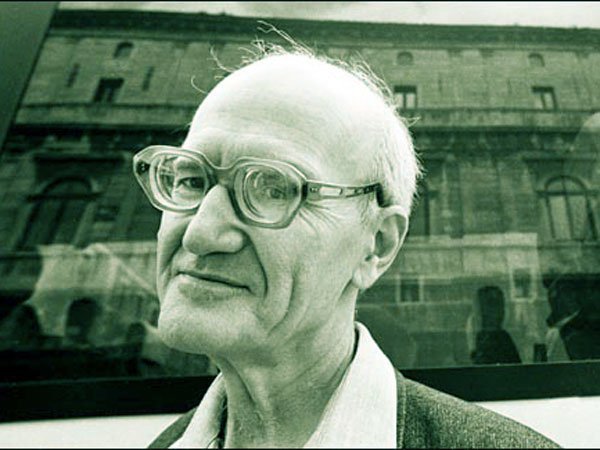
On April 13, Mikhail Gasparov was born, one of the largest Russian philologists of the 20th - early XXI centuries.
Personal business
Mikhail Leonovich Gasparov (1935 - 2005) - historian of ancient literature and Russian poetry, poetry, theorist of literature, translator (from ancient and new languages), essayist.
What you need to know
In many ways, the works of Gasparova is the domestic audience of the 1970s and the 1990s. I got acquainted with ancient literature and culture: transfers of theoretical treatises and fables, accompanied by articles and comments, antiquity in the “History of World Literature”, 15 years in the editorial office and “entertaining Greece” in 1995. The latter became an example of educational humanitarian literature, accessible to the schoolchild and an interesting adult, familiarizing both the basic dictionary of culture and the mechanisms of social structure. The scientist is adjacent to the classical hypostasis of the scientist with medieval Latin literature.
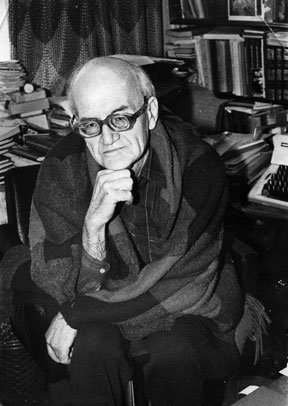 Mikhail Leonovich Gasparov
Gasparov-translator was not limited to classic languages and classic forms of translations.
The second core of his interests was poetry. In this area, he studied and “cataloged” the device of a Russian verse in all its diversity, the history of the Russian verse, the history of the European verse. Gasparov’s works devoted to the analysis and commenting of specific poems and their buildings (including the works of Osip Mandelstam), as well as the semantics of Russian poetic sizes, adjoin this block.
The intellectual bestseller was the “records and extracts” published from the number to the number “new literary review”, and then released in the publishing house as a separate book. Its constituent texts can be attributed to aphorisms, quotes, comments, essays and memoirs.
In the 1990s. Mikhail Gasparov became one of the prototypical figures of the humanitarian scientist, which sets the canon of academic severity, fantastic performance and human sobriety.
Direct speech
- “I feel like a syllable of a syllabic verse, on which Sillabo-Tonic readers present each of their metric expectations”
- “.. If we imagine a science that is engaged in remodeling its objects - it will be anything, but not a science. We know that this cannot be completely avoided: before us is always not an isolated object, but the contact of the object with the researcher. But the task of science is to minimize this. In particular, not to mix the assessment for the study, criticism for science. Do not divide flowers into beautiful and ugly "
- “Philology means love for the word. Of all the Russian ,ogies, this is the only one in which there is a root of love. This gives this science a special dimension - human ""
- "Expressing irrationally, using a word for a spell and hypnosis - this means using a word not for the present purpose"
- “All knowledge begins with an intuitive movement, but people can communicate only at the rational level: twice two for all four. The process of scientific work is to pass your intuition through the filter of reason and the result to serve in the form accessible to understanding your neighbor. When a philologist likes some poem, he is obliged to be aware of why he likes it. There is a large category of people who are unpleasant, they have aesthetic pleasure from such an understanding. Such people are no worse than others, they are just contraindicated to be philologists - just like a short -sighted person is contraindicated to drive a car. "
- “After all, it only seems to us that we are reading our contemporaries against the backdrop of classics - in fact, we read classics against the backdrop of contemporaries, and each of us in our life earlier meets Mikhalkov than with Pushkin and Pushkin than with Homer”
- “We do not want to admit to ourselves that Pushkin’s spiritual world is as alien as an ancient Assyrian or Kashtanka's dog. Questions that are the main ones for us did not exist for him, and vice versa. We not only cannot forget everything that Pushkin has not read, but we read - we still do not want it "
- About Bakhtin, but not only: “The Prophet of the new Renaissance turned out to be canonized by the century of new classicism. The overthrust of all food was the subject of Pyatet. Untimely followers made the theory of research from his work program. And these are things fundamentally opposite: the meaning of creativity is to transform the object, the meaning of the study is not to deform it. "
- “... Historical poetics not only requires us the ability to enter the poetic systems of other cultures and look at them from the inside ... It also requires the ability to approach from outside, from the side, to the poetic system of its own culture. This is almost more difficult, since it teaches the abandonment of that spiritual egocentrism to which each era and culture are subject to. In order for the poetics to be historical, it is necessary to look at your own time with historical impassivity ... "
Words about Gasparov
- Olga Sedakova : “Mikhail Leonovich Gasparov took on a huge common work that could be compared with the“ correction of the names ”: he began a cultural battle with slurred, unclear, inattention, with machine use of words, feelings, methods, opinions”
- Alexey Muravyov: “A classic in philology is Varna. Belonged to this Varna, a scientist can do anything - he always remains a classic. Antiquity impregnates meanings and constructs them. Gasparov-classic is also the principle of the greatness of the structure, as in architecture, when it is not clear how it is done, but with analytical dissection, breathes in the spirit. He is a classic in the sense of “legislator” - for many anti -people he will remain a model of scientific verification and clarity. ”
- Nina Braginskaya: “In pushing away from intuition, emotions, inaccurate speech, mystical insights, feelings, an attachment imagines some task that has long been obtained by Gasparov from the highest authority unknown to us and performed as a vow. And the work, brought to such incredible sizes, begins to seem to be priestly serving some unknown or all other already forgotten deity ”
- Alexander Dmitriev, Ilya Kukulin, Maria Mayofis : “The combination of enlightenment with the literary“ academic avant-garde ”and the philological marginal academicism and gives rise to the dashed self-prominent tradition of Gasparov, the individual tradition of academics and margins”.
Gasparov on "Polit.ru"
- Mikhail Gasparov. Lotman and Marxism
- Olga Silver. The phenomenon of Gasparov
- Rebekah Frumkin. "Survive, please, I will also try"
- Memory of Mikhail Leonovich Gasparov - the best Russian literary critic
Gasparov on external resources
- Main works and online publications
- Olga Sedakova. "Mikhail Leonovich Gasparov"
- Kirill Kobrin . Universal book
- Alexander Dmitriev, Ilya Kukulin, Maria Mayofis . Entertaining M.L. Gasparov: Academician-reckless
- Ruthenia. Memory of Mikhail Leonovich Gasparov
- Nina Braginskaya. Comfort
- Victor Sonkin. Gasparov, or the science of understanding
- Victor Zhivov. Perfect the Divorizer
- Boris Dubin. Consciousness and will
- Alexander Zholkovsky. Perfect Gasparov
- Nikolai Bogomolov. Gasparov and axes
- Grigory Dashevsky. The clarity of hopelessness