
Translated material
"Megapolis." "From the life of planets"

On April 17, a double album of the Megapolis “from the life of the planets” is released, from which a large-scale project-improving begins with a thaw cinema, invented by Oleg Nesterov . It will be followed by a multimedia website in the Web Documentary format and a musical performance in the Gogol Center. Oleg Nesterov represents on COLTA . Ru Three compositions from the album and explains why he chose the movie of the 1960s.
Obviously, not an artist is looking for topics, but topics are looking for an artist. So this topic found me. I sat on the seashore in Croatia. It was the autumn of 2010, when we had just finished Superango . I, as usual, played the guitar, wrote down melodies on the recorder. Before leaving, I listened from the beginning to the end everything that I wrote down, and realized that this was not songs, but clearly some kind of movie music. Moreover, distant films-judging by harmonic turnover, from the dear 60s.
"Megapolis" - "seven pairs of unclean"
The fact is that I have long had the plan of the second book (the first-“Skirt” -was published in 2008- Ed. ), About Moscow in 1962-a turning point for Moscow. I read a lot of historical literature about that time, documents, even the minutes of the meetings of the Politburo. I deeply plunged into the context of the sixties, and, apparently, it played in me. Therefore, this music began to knock on me. It became clear that she was nothing more than musical dedication to the incessant films of the 60s.
Fantasy turned on. I began to collect data about the 60s cinema, began to pester the people whom I met-directors, scriptwriters; They drained the information to me. In the State Commission, I accidentally met with the most prominent movie historian Valery Fomin - the author of the books “Cinema and Power” and “Regiment” about the uninhabited, article. I, like Schliemann, who stumbled upon gold and then excavated the whole city, followed the trail-starting to look for what kind of films from the 60s that I had not seen, and why the music only knocked on me now, stumbled upon a whole cemetery of the rushed films.
As a result, I chose four stories from the entire array of the uninhabited films: Gennady Shpalikov’s debut in the Movie movie and his penultimate scenario “Jump, the ceiling collapsed,” the Istern of Vladimir Motyl “Seven Steams of the unclean”, which reads the ideas of the film “The White Sun of the Desert”, and the “foreboding” of Andrei Smirnov. These four films themselves asked for this music. They somehow connected by themselves.
"Megapolis" - "foreboding"
I watched four hundred films of those times to plunge even more in the context. Ours and European. Moreover, I tied up with European ones very quickly, because they are very similar to modern European ones - they predictably started what they began to shoot further. And our films of the 60s were special. Such films are no longer shot and, most amazing, they will never shoot again. Because even in the most brilliant European film is a man of a wolf man, even if a film is about love. And we have solidarity between people. The vectors act in another way, and the films are different, and the values are different, and most importantly, they can’t say a lot of air in them-I can’t say otherwise.
Valery Fomin said very well that unrealized plans were more radical, bolder and more saturated. Their creators went further than those who ultimately realized their plans. The carried films of the 1960s, on the one hand, are similar to the shot-they are growing from one pot; On the other hand, they are different and, most importantly, about another. Brodsky’s favorite phrase was: “The main thing is the greatness of the plan.” The most important thing is that a person has is his plans, because it all begins. Unrealized plans sometimes talk about the era more than the implemented intentions.
"Megapolis" - "in blue twilight"
Life consists of what sometimes develops, and sometimes does not add up. The "pier" was not removed because they did not find the main character. 60th year-the thaw has just begun. Nobody has shown her yet - later Shpalikov will show the thaw Moscow in his films. Nobody forbade the “pier”, just the screenwriter Shpalikov wanted Svetlichnik to the main role, and the director Chinese wanted Abramov, and then he wanted Vertinskaya. The summer was over, the fall was rainy, the filming of the film was first suspended, and then generally closed. The director Chinese hanged himself on aspen - such a tragic fate.
The painting of the bloodworm fell under the millstone. The film was supposed to act on Kaverin’s novel “Seven Pouns of unclean”. The novel about the Stalinist repressions from published in 1962 in the New World, where Solzhenitsynsky was released "One Day of Ivan Denisovich." And then once - and the change of milestones, 1964-1965, and no one understands what will happen with the assessment of the Stalinist repression. Khrushchev will be removed now - will it continue to continue the topic or to restore a little? Officials of film studios asked for an answer from the employees of the Central Committee: you tell us exactly what we can shoot and what is impossible. The 50th anniversary of the Great October Socialist Revolution loomed ahead-everything related to the Stalinist repressions should have left the cinema. Motyl even Kaverin did not help the Motyl film, he was covered once and for all.
Our films of the 60s were special. These are no longer removed.
Why was not the “foreboding” of Andrei Smirnov - one God knows. He is about the author’s childhood, about 1953, the era after the death of Stalin. There is generally nothing about Stalin, just a boy's growing up. The most beautiful script.
“The jump, the ceiling collapsed,” the ceiling ”of Shpalikov-this is about what happened to him then, and then he did not happen very good with him: he had nowhere to live, he wandered around his friends, he did not even have paper to write. At this moment, his family relationships, relations with his daughter Dasha are collapsing ... As Sergey Soloviev said, this is a brilliant script about all the beautiful and terrible that gives drunkenness. Shpalikov knew all the beautiful and terrible aspects of drunkenness well, honestly wrote about this, and the Durnel film studio, because they could not make a film about it.
The reasons were different - sometimes serious, sometimes frivolous. Sometimes - randomness, sometimes - patterns. But if we talk about a thaw of cinema as a phenomenon, then there was no accident. Soviet cinema suddenly received a powerful impulse, and after the Prague Spring, the authorities were finally scared, introduced new rules of the game, and a different degree of accuracy appeared in the cinema. The directors-sixties, especially those who were taken up for and who were hard for-Larisa Shepitko, Andrey Smirnov, Gennady Shpalikov, Vladimir Motyl, Vasily Shukshin-the degree of accuracy was the same. In the late 60s, filmmakers and authorities had a new relationship-partnerships. The directors began to work again inaccurately - the tolerance system arose.
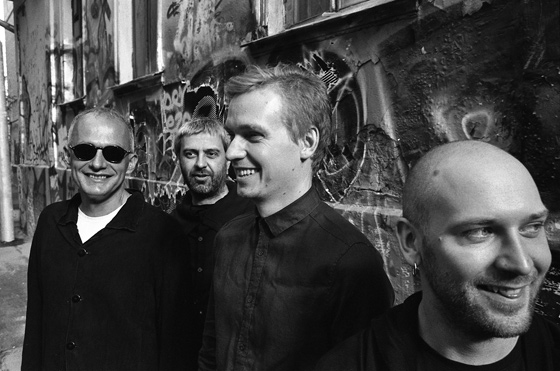 © Yasha Vetkin
I am not the first to engage in music for the uninhabited films. This is such a completely obvious stamp, which was chewed by two thousandths. And this is cunning: the film always dictates what the music should be. The music serves the frame: somewhere to scare a little, but let go somewhere. And if there is no frame, then what kind of music? I have a fundamentally different approach - I do not have a soundtrack, but musical initiation to the uninhabited films. I hope that if you listen to our music, it is easy to imagine how these films would be.
First, we will give you listening to music - a double album “From the life of the planets”, which will be published on CD , vinyl and available in digital services. Then a multimedia site will appear where you can listen to music, read scripts, stories about how these films were not shot - to plunge into their mysterious background. Each of them has its own fate, its own detective novel, which will be accompanied by archival documents, manuscripts, photographs and evidence of eyewitnesses. It will be beautifully and clearly made how new network resources in Web format are made Documentary . In the end, everyone who listened and read everything will be able to see his imaginary film.
Life consists of what sometimes develops, and sometimes does not add up.
We will play this music-but differently, not in clubs. The concept of a musical performance occurred to us, where I would tell all sorts of stories about my searches and finds, and the Megapolis would play soundtracks for these beautiful films. We came up with that we should play, sitting “in a circle”, energy should be assembled in the center, and the audience should sit around. On April 30, in the Gogol Center we present our project and we really hope that in the fall it will develop in a full-fledged musical performance that will be included in the repertoire of some theater.
We designated only four crosses in the cemetery of the uninhabited thaw films, but there is still a whole field. I had the idea to show me all this field, providing the site with a powerful context of the shot and carried cinema.
I came across a survey, which was made by the magazine "Session". They interviewed a hundred experts on the topic "The most significant films of the Soviet era." I chose films of the desired temporary range from them-from January 1, 1960 to December 31, 1970. Then I went to the experts who helped to adjust and supplement this list. These were such beautiful people as a film historian from Moscow Evgeny Margolit, director of the Museum of the Kino Num Kleiman and Valery Fomin. As a result, we received a representative expert sample, where for the first time the gold era of domestic cinema is presented 120 with the most iconic films: 60 shot and 60 carried. Those that were removed can be seen thanks to the IVI service. ru . Each of them is equipped with a profile, and in the profile there was a task - a minimum of a subjective assessment. It was a very large archival work, it was done by a wonderful team - 15 people who made this project absolutely on a voluntary basis.
Later I realized that “from the life of planets” - also dedication to my parents. Touching that era already in conscious, adulthood is an opportunity to talk and understand them again. The mission of the project “From the life of planets” is a relay wand. The current twenty-year-olds must understand the twenty-year-olds of the 1960s. So far, they do not understand that their ancestors really experienced how they really lived and survived, working on their creative projects, on their ideas and simply living in this country, in these special conditions. While those for them are dancing phantoms in narrowed ties.
And if there is no frame, then what kind of music?
“From the life of planets” is a project about the way. The way is not war, not revolution, and not tectonic faults. This is when mom tells a lot to her son, dad tells a lot to her daughter, the grandson carefully listens to his grandfather. This is about the fact that on the corner of my street there is a cafe, which was built in 1816. We really miss this.
People can be controlled in different ways. You can control the force. This is fast, but ineffective. You can control the poison, planting on different ones. You can manage money. There are non -structural types of management - through a worldview, ideology or religion. And you can manage them through history. When mom says: “And I know one boy, he did not eat semolina. A gray wolf came and dragged it into the forest. ” And this is one of the most effective ways of management, when a person, recalling history, evaluates what is happening and thinks: “No, anything, but not that.” Wars begin when the last one, who remembers what war is actually dies. Giving advice and say: “If you don’t have a semolina, then a gray wolf will come” - sometimes useful. It is sometimes useful to know how it all began and how it ended.
The sixties are a cultural myth, as the writer Genis said - and added that with the exception of cinema. Cinema in the Soviet 60s is definitely not a cultural myth, we did not dream of it, this is a really big and serious business on a global scale. It is possible to inspire the current twenty -year -olds on new Cannes, new Venice and new victories, just telling a little more about what was really then. I want, through “musical initiation to unrelated films” - through music, which is at the same time very modern, on the other hand, it could sound then - this relay stick was transmitted. This is a bridge that will connect what was accumulated before the revolution, with those who come after us.
"From the life of planets" - a fragment of a documentary about the project
Everyone with whom I talked about the thaw of cinema said the same thing: in the 60s, air appeared-it became possible to say, there was a prospect, hope and there was a lot of effort, because during the war the country's immune system was trained so that everything could be demolished. But everyone remembers the point of leaving this time in different ways. I really liked how the screenwriter Natalya Ryazantseva said about this: “I remember when the conversations in the kitchen changed. Two topics arose: who left or did not leave and where to get the rubber for the “Lada”. ” Then the plant appeared in Togliatti, everyone wanted to have a brand new “Lada” (or “Lada”), and everyone sat in the kitchen and discussed how to go into emigration and where you can get rubber. This was a real point of exit from the beautiful era of the sixties.
"Megapolis" - "from the life of the planets" - on "Yandex.Musik" and in iTunes