
Translated material
A solid boutique for a refined clientele
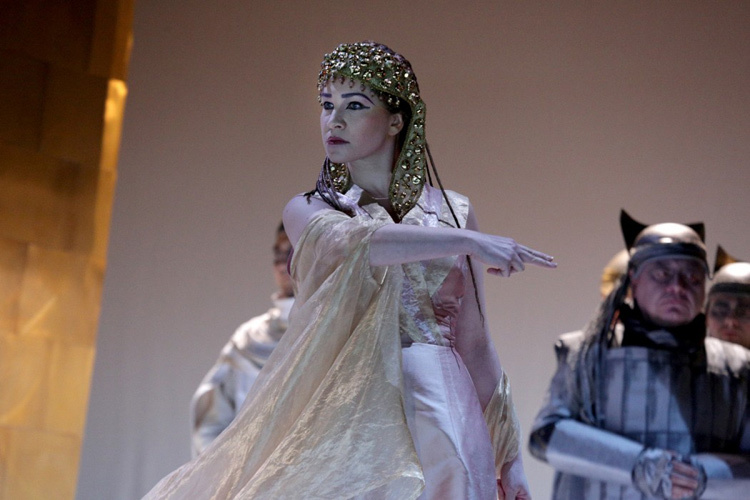
“Aida” in the production of Peter Stein, just released at the Stanislavsky and Nemirovich-Danchenko Theater, in a sense, the symmetrical answer to the Bolshoi Theater with his last year’s “Prince Igor Lyubimov. Another belated opera debut in Russia. Another loud name of the theatrical calm of the theatrical calm from the distant era, which is not necessary to specifically represent. One thing is the key to increased interest. It is also the key to solid work and very calm directing, from which no one has been waiting for dangerous attacks for a long time. Especially when the master takes the opera (and he does it quite often). And if with Lyubimov there was a tense about voluntarism with a party, then here everything is as calm as possible - only one insignificant dance episode was stopped.
 © Oleg Chernous / Theater named after Stanislavsky and Nemirovich-Danchenko
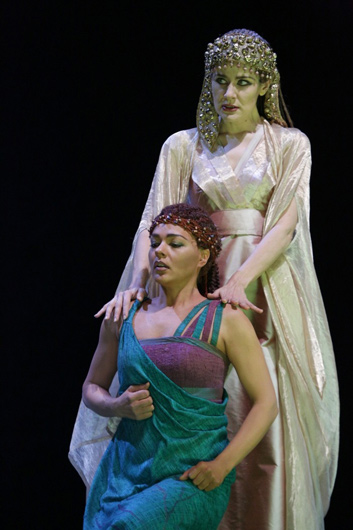
The Aida Stein, started by Vladimir Urin, even before his transition to his large, is another ambitious jerk, the successful acquisition of the theater, which this time representing high -quality traditionalism. No deviations from the canonical libretto, no underwater currents and second meanings. But the hand of the master is visible, the lines are clear, the space of the stage is not littered, mass processions are culturally built. However, the main thing is the love triangle in which Aida gets the most: her opponent kicks her legs, then dad throws over the ground. This, in fact, is the only liberties in the play.
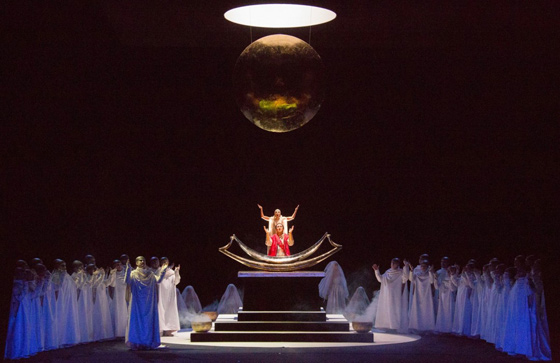
There are many changes in the decorations, the eye does not miss for several hours on any one depressive structure, no one argues with the fact that the opera, especially the Aida, is a spectacle. And so that when the curtain is closed, the audience does not scatter around the buffets, the credits intelligibly report that preparations are underway for the stage “Temple of the Volcano” or “Neil Bereg”.
 © Mikhail Logvinov / Theater named after Stanislavsky and Nemirovich-Danchenko
At the same time, tourist pictures do not mean at all, everything is strictly, almost abstractly, almost booty, with good taste, without elephants, pyramids and other bastards, but only with design allusions (scenographer Ferdinand Vegserbauer) and luxurious intricate clothing without vulture opera costumes (nana chek costumes). All together is a sort of solid boutique for a refined clientele. Perhaps such an exquisite color score on the Russian opera stage will not be found anymore - oddly enough this compliment in the music theater sounds.
Having first ended up in a Russian opera company, Stein ran into a new phenomenon for himself called “repertoire theater”. This means that you need to work, firstly, with regular singers, and secondly, not with one composition. He grunted, but reconciled-as the director himself said at a press conference.
 © Oleg Chernous / Theater named after Stanislavsky and Nemirovich-Danchenko
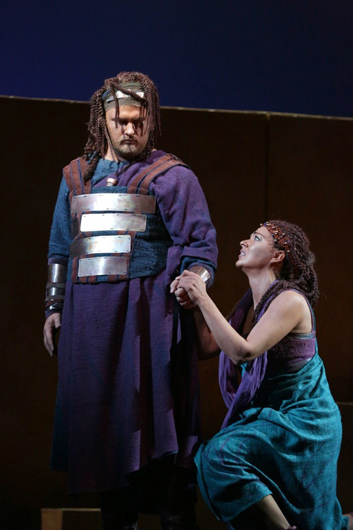
There are two compositions so far. However, the one that sang on the first premiere day pleased primarily an exception to the rule - invited from the Bolshoi Theater by a call of Anna Nechaeva in the title role. Larisa Andreeva did not have enough rich paints for Paria Amneris-after all, Verdi's opera, in which the music director of the production and the chief conductor of the theater Felix Korobov set to find and voice all Piano and Pianissimo , whatever one may say, remains an arena for large opera votes. The young, giving hopes tenor Zazmiddin Mavlyanov illustrated the bitter capital truth, which is easier to sing loudly than quietly. Of the local firsts, the most impeccably Basil Dmitry Ulyanov (Ramfis). Anton Zhaev (Amonasro) added fire in a stormy scene of a secret meeting of Aida with Radamama, where both lovers rush between feelings and duty. The same scene became the most convincing, whole and Verdievskaya and in the conducting work, which in other cases disappointed with static and intermittent breathing.