
Translated material
Alexander Podrabinek: In search of the genre
It is not easy to determine the genre of the book written by Alexander Podrabinec.
In offhand could be called this text memoirs, covering the short period of the life of the USSR from 1967 to 1983, where a living era is represented full, thoroughly and multilaterally. Documents, certificates, facts are either unfolding into a panoramic picture, then focus on accurate and recognizable details. The Pigobink does not take accounts with any of his heroes, tries not to give assessment of the characters to one or another act. Impartial documents speak for themselves.
Khronik Roman? The scrupulous chronicler, the author an hour after an hour restores the events of a stubborn struggle of a handful of decent people against a fire -breathing dragon about a hundred heads. The struggle goes against the Soviet law enforcement agencies, turned into a total punitive expedition against their own people, against the use of medicine, and especially psychiatry, for punitive purposes, against censorship, arbitrariness and lies.
But name the book with a documentary novel - you will not be mistaken either. The work is densely populated, and human rights activists and employees of the State Security Committee, workers and Baptists, doctors and suicide bombers, murderers and disrespectful, heroes and traitors are faced in this stormy communal world. In the war against totalitarianism, the heroes of the novel at each turn are at complex intersections, when the moral and ethical choice must be made under the pressure of the circumstances here and now.
Strict polyphony sounds without effort and stretch. This is a choir of Baptists, who "were taken to the funnels at a time, and they responded with a prayer for state violence." “First, men were taken out. The remaining continued to sing, not paying attention to the police, and as the men were leading away, the voice of the choir became higher and more piercingly. It sounded like we were not a ceiling at a height of two and a half meters, but a dome of a huge temple or a whole world, which looked from above what was done on a miserable patch of a standard Moscow apartment. ” This is the voice of the brave lawyer Sofya Vasilievna Kallistratova, who takes care of the dissidents: “Have you seen the pedestrians crossing our crossroads with a traffic light? Who wants to. And I tell you: go only to the green light. You will not get away with you if you switch to red. ” This is the ironic and affectionate voice of the “mother” of Zinaida Mikhailovna Grigorenko, who, when asked why she did not tell her friends to meet the author after combat baptism at the gates of the prison, replied: “And so as not to be accumulated!” This is a tense and dramatic trio of the Pearls: Father, Pinhos Abramovich, and his sons, Cyril and Alexander. This is the growl of sadists in shape. This is a dumb exit of a phlegmatic supervisor, ensign Volodya Surel, who silently laid the loaf of bread into the feeder of a single chamber in order to at least somehow feed the author, who weighed at that time 40 (forty) kilograms (hello to Auschwitz!). This is the shortest party of Balander Vitautas Abrutis, from whom the author asked for bread on the same days. He asked, because he was also a political prisoner. Abrutis answered "extremely politely and concisely": "not supposed." All motives are closely intertwined, but each line is clearly executed and sinks into memory to become an organic part of the reader's experience.
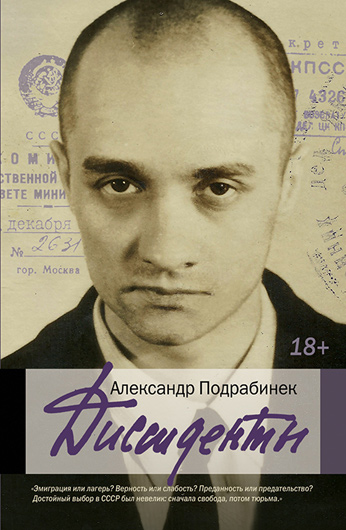 © AST, editorial office of Elena Shubina
The novel is saturated with accurate portraits, and each is imprinted in the reader's mind. The abundance and density of information does not create a feeling of crowds and stuffiness - the novel breathes naturally and widely.
Each chapter is an independent short story, every novel is a psychological dilemma. Often, like Chekhov, the culmination of the novel is carried out of the story. The author and Chekhov are related not only to belonging to medicine, but also by active compassion for defenseless and powerless. While Soviet doctors, namely called the author, competed in cruelty with the KGB, echoing healthy people with psychotropes, the paramedic of the sub -Rabinek eagerly followed the letter of the hippocratic oath: he sat for the patients as long as the patient needed, not 60 minutes, which required the rules, extracted the necessary drugs. He learned about the practice of violent psychiatric hospitalization of dissenters about the 20-year-old paramedic of the ambulance.
“I did not assume that medicine can be used in such a wild way,” writes Podrabinek. This discovery urges the author to fulfill moral duty. He is accepted for the creation of the book “punitive medicine”, realizing that it will cost him freedom. Anyone who is familiar with the book “punitive medicine” was probably surprised that this mature labor is not a work of a collective of venerable psychiatrists, but a test of the pen of a young paramedic. Even in a disgusting translation into English, she was in demand: in the States I fell into my hands of a copy, diligently dotted with the reader's marks.
"Dissiders" can be called a detective without stretching. Only here the detective plot arises by itself, at the command of life. The author masterfully uses the emerging capabilities and enhances the detective sound, not running forward, but following the bizarre thread of genuine events. Who was a stupor-committee on a search, who put in a stack for the investigation of any nonsense, passing by seditious documents? What is the fate of green socks, which the author, tearing away from the heart, gave it to the common fund? Who sends important signals from the enemy camp: Mole to the KGB or a provocateur?
Adventure novel? Thriller? Young energy, vitality and wit of a hero are leaded to some parallels with d'Artagnan. The Gascon, almost a peer of the hero, also inherent in ingenuity, recklessness and audacity, on the one hand, and scrupulousness, courage and judgment on the other. Reading the lines dedicated to life in exile, you involuntarily recall Robinson Crusoe. Painful, stubborn creative activity allows the author to break out of the whirlpools of adversity and despondency. Whatever the author would take on, whether it is the creation of a working commission, writing a book or building a toilet in permafrost, meaningful work is thoroughly performed, for conscience.
"Dissiders" is a detailed and comprehensive textbook for everyone who decides to fight for the right to live honestly and dignity. Undoubtedly, this is the continuation of the glorious case of Anatoly Marchenko, who took martyrdom in the dungeons and left invaluable documents to the offspring. A painstaking battle in seconds, grams and millimeters of life in single cameras, under fierce physical and psychological torture. “In a relationship with the investigator, when there is a table between you, and there is a protocol of interrogation on it, there are only two difficulties: you must stop seeing a person in the investigator and you must stop hope for the best ... and forget that you can get a term less than the maximum. Calculate the whole coil. Then you will become free, fear will leave, your head will become clear, and you will receive such forces that you have not dreamed of. ”
And here the named-named man is scrupulous and serious. He honestly warns everyone who is eager to “live not by lies”, so that he accurately calculated his strength, appreciates the strength of his moral rod, carefully studied his vulnerable places, because the sadists will accurately beat in the heart. Is a person who enters the path of the struggle for his own dignity and justice, to the trials that there are numbers? Describing the vicissitudes of glorious destinies, the suburban, a beautiful narrator, sends us to folklore. Seven pairs of iron boots are demolished, seven iron states to find a source of living water. Are you able to withstand interrogations and not pass everyone, including his wife and an eleven -year -old son? Fine. Then let's go further. Are you scared of court? Imprisonment? Rights? References to the Arctic Circle, where –64 Celsius on the eyelashes grow icicles and it is impossible to blink, without damaging the eyes, but to work 30 minutes? Lay alone, where one task is: not to die of the cold, hunger and not go crazy? Are you ready for scurvy? To tuberculosis? Are you ready to declare a hunger strike? Are you ready for torture insomnia? To physical torture? And if they poison dogs? And if they buy in handcuffs and squeeze them so that you will lose consciousness? Are you ready for the fact that a minute before the release you will be wound a new term? Are you ready for the fact that you will be blackmailed by freedom and the life of your relatives? Singing Orwell in “1984”, the author warns: the KGB unmistakably finds all your vulnerable places and fears before you realize them, and will become methodically and mercilessly exploiting them.
Chaplinian on the blood.
The book clearly presents the mistakes of those who overestimated their forces. At the threat of a new date and fear for loved ones, the KGB broke many who were steadily held in captivity. Pigobinka besieges the mistaken. He refuses to accept help, how generous, so necessary, from the activist of Ida Noodles. She insists that she is ready to help political prisoners. Pearberry writes: “And who will help, for example, to the paramedic or the elevator? The Fund for Assistance to Political Personal Foreign Compention was not engaged in support, they received support without distinction of the nation or profession. ” Strictly and consistently conducts the watershed between those who go into the protest movement at the call of the heart, and those who want to earn the coveted visa to travel to emigration, neatly stuck to the periphery of the human rights movement.
Maybe “dissidents” is a satirical novel? A free person who has a life -affirming consciousness of the personality of the Renaissance, the author speaks of the most terrible trials simply, with his healthy nature inherent in a healing laughter. One short -haired critic fiercely indignant that the mournful pages were filled with live humor. But every competent doctor knows that only the ability to laugh at himself alone and, together with the world, can help a person overcome the most tragic and traumatic events.
The porch of the book, then thoughtful and thorough, is rapid, but in all cases exciting, creates a deceptive impression that this is a slight reading. Indeed, it is impossible to break away. However, the book causes such serious experiences to life and sets the reader with such complex moral and ethical puzzles that the beating of the heart does not keep up with the narrative. The chapters on stories with hostage require not only thoughtful reading, but also thorough analysis. It is like a simultaneous session of several chess parties with unpredictable moves. However, a comparison with chess sins inaccuracies: this is whites play the checkers, and blacks insist on the handicap, taking away the Party of White Fersa and both elephants; They change the rules of the game at every move, steal figures and overturn the board if the party seems losing to them.
Pearl is a thoughtful orderly, and he makes the necessary vaccinations to the living and healthy body of the book. Pride and arrogance await every strong person - he without hesitation gives the floor to his associates and opponents and introduces two detailed quotes into the book. The reader is given the opportunity to hear the voice of Alla’s wife, in which she describes one night of the Yakutsk link. Excerpts from the memoirs of his father, Pinhos Abramovich Podrabink, “hostages” allow the reader to hear the ambiguous assessments of the actions of the author himself. Sakharov for saving emigration. Solzhenitsyn supports the decision to abandon emigration and stand on a martyrdom. This solution will solve not only the current problem of the participants, but also indicate the vector by which the relations of three families will be determined for decades ahead, and the time to solve a few painful and painful hours. The fate of his father and his two sons, coupled with their families, was tied to a dramatic knot: neither to untie nor cut ... "The solution to the problem was not in choosing between prison and freedom, but in the choice between freedom and internal consent."
"Dissidants" - a finished script. Stormy events, household scenes, chases, surveillance, change of faces and landscapes, an abundance of plot lines, unexpected turns, fascinating novels, freshness of the look, extraordinary tricks - all this is called to cinematic embodiment. What is the scene when the suburbanke indicated his son Mark for surveillance in 1988. The eight -year -old child “was delighted that people who turn not where they need them, but where we need it, are following us. Before each turn, he turned around and lured them like a dog, immensely rejoicing in their obedience. ”
This is a psychological novel in which important ethical and moral issues are raised for discussion and make multiple decisions. The Pigobinka knows how to see himself from the side, knows how to carefully and soberly talk about his doubts, weaknesses and imperfections. A little man alone celebrates the New Year and clumsily shifts from foot to clock at the drawn Christmas tree. Simple words - and such a piercing feeling of total loneliness and suffering. Nudity in the novel is completely cleared of exhibitionism or masochistic identification of itself with a victim of circumstances. A naked man on naked earth respects himself and makes the executioners treat him with respect (how much this ethical category is available to them). Even the painful lack of solitude during physiological departments becomes a form of protest. Sitting on a parash, the author confuses his tormentors with a serene power of the spirit. “You are going the right way, comrades,” he will admit Vertukhaev of both sexes and solemnly waves his hand, like a leader from the heights of the mausoleum. Chaplinian on the blood.
For a person seeking to live by honor, “dissidents” is a novel-cell. For any reader, this is a novel.
Alexander Podrabinek. Dissidents. - M.: AST, editorial office of Elena Shubina, 2014. 477 p.