
Translated material
Natalia Traubberg. From "home notebooks"

Natalya Leonidovna Traubberg has been known only as a translator from several languages for many years - as a writer she became famous in the last years of her life, when she began to publish her memoir notes, thoughts and articles. Of these, she managed to compile and release only two collections: “Invisible Cat” and “Life itself”.
Few knew that Natalya Leonidovna wrote prose and poems in her youth, except that a narrow circle of friends and acquaintances. In 1958, she married a translator of Virgilus Chepaitis, who was obsessed with the idea of a home publishing house, which is recalled by the Lithuanian poet Thomas Ventzlov “... Chepatis generally wrote the absurd plays, very funny‹ ... ›In connection with these literary exploits, a home publishing house in Russian by Natasha Traumberg and Chepaitis at home, which was organized, which is at home, which It was called "Christmas tree". "
In fact, only some books of this family publishing house were marked with the Christmas tree brand. Friends of the family recall that in 1959-1961. The translations of Borges and Chesterton (lane N. Traubberg), the play by Ionesko “Lesson” (per. N. Traubberg, drawings by V. Chepaitis), a collection of poems by T. Ventzlov in Russian, a book about yoga with drawings by V. Chepaitis and several more books, were released under this brand. The rest of the Books of the Chepaitis family publishing house were published without a brand or with a Chepgiz brand, and they were released from 1958 to 1969 about sixty books printed under a carbon copy in four copies. All of them were crushed by close friends who sometimes allowed them to reprint, then family works diverged wider, discussed in Moscow and Vilnius circles.
It was because of her husband’s addiction to print books by Natalya Leonidovna that she decided to publish several of her works for a narrow circle of friends. Perhaps she would not have written them at all if it were not for the constant knock of a printing machine at home. All her books were given, and when Natalya Leonidovna returned from Vilnius to Moscow in 1969, she did not have a single one left. But she calmly accepted the fact that everything written by her was lost, because neither then, nor then she seriously treated her work.
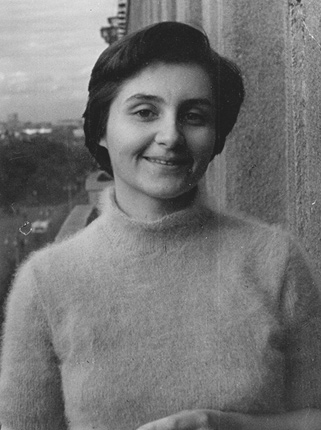 © V. Chepaitis N. Traubberg. Moscow, passionate boulevard, on the balcony above Pushkinskaya Square. 1958
Nothing but preface, afterwords, vocabulary articles and biographies, until the 1990s, Natalya Leonidovna did not write. For Samizdat, she translated her beloved authors: Chesterton, Lewis, Tagell, whose books could not be published in Soviet publishers.
In the last years of the life of Natalia Leonidovna, several books of the 1960s, preserved by friends, returned to the family. She asked her daughter Maria to reprint them to give friends to read. So in 2008, a home publishing house, again called the "Christmas tree", was revived. Natalya Leonidovna was already seriously ill, and the publishing house became her last hobby. She immediately came up with a second book, then the third, fourth ... Since in the name of the first collection there was the name of the grandson of Matvey, subsequent books received names, which mentioned other descendants of Natalia Leonidovna - Peter, Jacob, Luke, Elizabeth. Eleven books were published in the revived publishing house: memoirs, collections of translations, works of close friends. The “Christmas tree” again spread only among “its own”, it was the independence and modesty that Natalya Leonidovna always welcomed. In Jacob on Lukishki, she writes: “ ... you have to publish something like samizdat, such home books. The direct benefits of them are the one that is much reduced by focus on themselves ‹...› Out your properties associated with the best that is in the foam, family, house. ”
Maria Chepaitite
Five years
Once I read by Solovyov-Father [1] that the “last five years” of the Nikolaev reign were completely unbearable. In 1948–53 - not even hoping, in 1980–85 - already hoping, but timidly, we remembered this. These years, all three times, have common features-some strange peace, which later, in nostalgia, can be comfortable. Either everyone is sitting home, or tensely rejoice at something very simple, but there really is a feeling of perverted, intolerable idyll. I remember very well how it was. When someone else remembers, we hasten to stipulate: "Do not give the Lord to anyone such peace."
The second five years were clearer-at the very end of the 79th, my daughter and I left for Vilnius, in the summer of the 84th we returned to Moscow [2] . 84–85 “School Year” turned out to be very difficult, already without a hint of idyll, but now I will try to recall the Lithuanian years. As for the first five years, I taught a year, then they kicked me out [3] , and since the autumn of the 51st, my mother again and again sent me from St. Petersburg to Moscow, where it was easier and was supposed to work, albeit hourly [4] . It turns out that in its purest form, suffocating peace refers only to 49-51 years.
OK then; I'll try to tell about him. Lewis writes in “divorce” that the past is either a paradise or a hell. He went too far, but when you know the end, you can see how much this past gave. However, the most important reservation is needed here: this is how you can only look at yourself; Neither another, nor to the country or there, such reasoning is not applicable to the world. Otherwise, a phenomenon popular in the church environment will be obtained, which Sergey Sergeyevich Averintsev compared with the speeches of Porfiry Golovlev [5] .
Like serious illnesses, these years threw me up. In the first race, I again began to go to church, but it is better not to tell such things. All the second five years have passed among the secret priests and the Christian samizdat. With one of these priests, we recall his visits to Vilnius when he bought fried chickens on the market and this was called Curarium ; But we remind each other and the painful hearing of “solidarity” or the BBC, and Poland, and Afghanistan, and the night when he carried all kinds of books to the Lithuanian monastery (also secret), and we were sitting in the kitchen until four in the morning, waited for him. It turned out to be a miracle that he fell asleep, and waking up, he realized that we would completely get out of the morning, and went through an empty city. You can recall how the secret dominic [6] , whose addresses were named in the novel “Daniel Stein”, during the service a call was heard, no one got up from his knees, and then no one was on the site. What is there, many have something to remember and blasphemous - to forget.
The certificate dragged on, it's time to go to think. The first winter in a retrospect may seem idyllic, more precisely, the beginning and partly spring 51 years. After January 1, I went to Moscow, lived with the Garins [7] , and this in itself can be called help. There was no life in St. Petersburg, in Moscow - it was. Students read poems that we and we read to each other in the 45-49th, but we had someone who was destroyed, who was fired, the remaining sung and/or drank, and the local ones were almost gone. They told how “Emka” or “Alik” are sitting [8] , but they themselves were alive, unlike, say, from me. I remember Frida Vigdorov [9] In the summer of the 49th she began to tell what she had seen with a lawyer to help my wife Ilya Merman [10] (he was given 25 years without the right to correspondence, so we were not talking about help). I sobbed terribly. In St. Petersburg they forgot about lawyers. One of them, Alexander Alexandrovich Krolenko, said that he really wanted to defend young physicists accused of “mocking over Soviet science” (they did something in the spirit of “physicists joke”), but he himself knew that this was a pure utopia.
And so - who drank, who made the lampshades (my mother and I) who worked in small cities. But this is not thought, although still a certificate. What, besides troubles, was different from the previous fifth anniversary? Further it will be very subjective, in others - otherwise, but then I opened three new phenomena for me. The beginning of 51 was connected with Georgy Petrovich Sviridov [11] , he went to us and helped us. It seems that it was he who reminded me that it is not at all necessary to love Proust or Hemingway. With all their differences, both entered the indispensable set, yet - not Babaevsky! - And I read them diligently, but fell in love with Woodhaus and Chesterton in the same years. Probably, I was ashamed to admit to my tastes to older friends, although they soon became not up to Proust, they sat or waited for landing. Sviridov renounced the spirit of those years no less than they, but Leskov loved-it was loved, believed him, and did not consider him some kind of “master”. He probably went to church, but we did not talk about it. Voloshin’s poems, which I then discovered, say, “Demetrius Imperator” , he knew very well. In addition, he sang, just sang Khovanschina. All this surprised the Westernik dad, pleased my grandmother (mother’s mother) and helped me a lot.
However, there was a distortion of such a spirit that the Latins would call per Excessum or Per Abusum [12] . After the death of Mikholes, anti-Semitism immediately escaped from somewhere. They attributed him to Sviridov, but he helped my father. Probably here you need to explain. The cosmopolitan exiled from Lenfilm began to write texts for others, including some kind of operetta in the style of his “Maxims”, with Maevki and others. A imaginary author, or maybe just a co -author with a decent surname turned to him so that his father asked Shostakovich to write music [13] . Like Sostakovich’s vein, it is worth recalling; This is probably normal and moral even more than a struggle. He literally could not breathe. And now, having arrived in St. Petersburg, he left his pope a note with refusal, begging to understand him. Dad almost died and did not forgive, and Dmitry Dmitrievich sent Sviridov in his place. The unfortunate operetta went and gave some money.
So, anti -Semitism. Prior to this, almost I alone allocated Jewry at least somehow, because I believed in God and read the Bible. It says that the people are special, warnings and promises are given to him - and I learned them. And so, among the intellectuals, no matter what this word means, no one thought about it. No, someone thought, probably, but hardly said.
However, somewhere everything accumulated and blossomed in the shortest possible time. The next winter, I noticed that accountants or tooth doctors, and most importantly, their wives live in some special communal services, we can say-a sacred life. Reading at Mandelstam about utensils and comfort, I was no longer represented by Greece, but rooms with an orange lampshade, shirs, a piano. For example, we went to the sister of one of the mocking physicists, a music teacher. Her neighbors were good for her, but (which was new) obviously they were considered to be foreigners with his brother. Among the surviving intellectuals, a reference to the atrocities of the commissars was not used. Those who thought about them reminded themselves that they brought the people - they atrocious. That this is atrocities, there was no doubt. In addition, many were repented by their people. It seems almost no one remembered the biblical side of the matter.
The third was "English". Between the painting of the lampshades, I, one after another, read the Late -North -Victorian and Edwardian books - not classics and not Hardy or Haxli, but female novels, adventure novels, detectives, Strand magazine. When after half a century I arrived in England, it seemed to me that I had already lived in it. Not only her comfort and not only her freedom saved me, but also their combination, which is unconscious and inseparable there. It opened to me in the winter 50-51.
For five years in a row I dreamed that runes with Ilyusha were returning [14] , waiting for some English hotel, and I am running there. The next “last five anniversary” (80-85) I dreamed that they arrived from abroad Glazov [15] , Shragins [16] , Thomas Ventslova [17] , and I am already running to them. Now I dream of those who are not in this world, and I bring out that there will be no new five years.
Book N.L. Trauberg "Home Notebooks" was released at the St. Petersburg Publishing House "Session"
[1] N.T. She loved to read the History of Russia since ancient times Sergey Mikhailovich Solovyev (1820-1879), which was brought from Odessa by her grandmother Maria Petrovna. The History of Russia was sold during the time of cosmopolitanism.
[2] N.T. She lived in Vilnius twice - from 1961 to 1969 and from 1979 to 1984, on the street. Pshevalsko. Pranas Morcus: “Years after the divorce of N.L. She returned to Vilnius, this time not to the sittic Lithuania: and people amazingly resembled those from which she tried to hide, and there was no question of any home. ”
N.T.: “From 1980 to 1984 (until May 31), I lived in Lithuania again. In letters to Thomas Ventzlov, behind the impenetrable wall, compared it to the kitset and with a bastard. Indeed, the secret life of a small captured country, which, like many countries, calls itself the land of the Virgin Mary, was like both a sunken paradise and an unpleasant flying island. ‹...› Lithuania by this time finally became quite Soviet, having learned not to work, snapping and even pester on the street with reproaches like: “Why is this your coat is dirty?”. She was dry, no matter how they painted the old Vilnius in candy colors, and-unlike the 1950s or 1960s-almost did not resemble Europe. The dislike of the Russians and the similarity with them intensified, and they looked like the Soviet ones, and did not love the Russians, even if there was nothing Soviet in them. However, Lapo or Kitezh remained there, but here - I do not know. Probably, too (does it happen without them?), But I would not notice, otherwise God would not hide me in Lithuania ... ”
[3] After graduating from Leningrad, N.T. Distributed to the Institute of Foreign Languages.
N.T.: “I was sent to teach me at the Institute of Foreign Languages. It was located to the left of Smolny, in the places that I loved since childhood. The Tauride Garden and the streets behind him were especially beautiful for me. ‹...› Autumn at the institute was strange. The teacher of Marxism, he is some party bosses, only seeing me, said joyfully: “Well, you will not linger with us.” On the other hand, Etkind was already pushed into this institute, and the student of Tynyanov, the translator of Hoffmann - Andrey Venediktovich Fedorov, was led by the Department of Translation. We are three, but not only we changed by Mandelstam leaflets, the early collections of Akhmatova and the like. ‹...› I began to expel me from the winter. When, before the New Year, my students wrote the control, Gotya Stepanov looked at the door and gave me a Christmas toy, a tiger in sparkles. Almost immediately, I was carved for this “on the complaint of students”. Students (more precisely, students) swore that they did not say anything to anyone ‹...› Herring began. It was carried out literally a few people, but very representative, from the director to the cleaner. Different sins were charged to me: professional attentiveness (this is true; we, philologists, were not taught to teach at all, but here I did not differ from others); absenteeism (their absence cannot be proved); a bang and takes; The fact that the dog is called Molly; Moral decomposition ‹...› The moral decay instantly intensified - I almost married a sympathetic and helping me the head of the same department. In a word, having a popularly discussing my menstruation (yes!) And accusing me of breaking a window, from one department, the theory of the language, I was kicked out. However, Fedorov, similar to a wet mouse from Alice, said that he, at the department of translation, is needed. The Strange was the system: this “watch” was left to me. ”
[4] In Moscow N.T. She worked at the Military Institute of Foreign Languages (Viyak).
N.T.: “Mom made me go to Moscow, look for work. I found hourly at the Institute of Military Translators. My friend Borya Weissman worked there. They collected the whole of Shusher, from all over Moscow, but I did not have a Moscow registration. Either I taught, then I did not teach ‹...› and so it continued until the doctors landed. ‹...› I have been on the state for one year, one year on hourly. I knew that they, like civilian clothes, were not allowed to something and can always call me, Borya was a military, demobilized. I did not know, leaving that the next day I work. We were nobody - they could drive out all the Jews. The Department of Translations was headed by a Ruzer, an absolutely wonderful uncle. ‹...› In general, there was some strange life. But still it was after the death of [Stalin]. It was 1953-55. I left there in 1955. "
[5] Apparently, this refers to a fragment from the preface by S.S. Averintsev to a conversation with Metropolitan Anthony (Bloom) in London.
S.S. Averintsev: “The Metropolitan Bloom, the ruling hierarch of the Russian Orthodox Church in the British Islands living in London, is a man of acute and deep mind, outstanding giftedness. More important is another property that is rare among believers and unbelievers: impeccable intellectual honesty ... Therefore, his word is accurately and objectively, absolutely free from adherence, fog, and noble stylization. This is not just a literary style - this is a style of spirituality. The style of Orthodox asceticism, which always condemned both dreaminess and the Pharisee verbal ceremonies of “Smirrino City”. He has neither the listener nor the reader stumbles on the beauty of the syllable in the taste of Porfiry Golovlev. ”
[6] In Vilnius in 1980 N.T. I met the elderly dominican nuns.
N.T.: “Every Sunday we walked with him ‹ A.V. Kasyanenko › To the nun, who, having served their own, lived in pairs in their apartments. More often we went to a nearby apartment, at the station. There lived a ninety -year -old abbess, mother of Antonina, and a tidy, grayish sister Margarita. The other two and one more, living on their own, came there - Ekaterina, Magdalene, Filumen. Our father Dominic served the Mass. Then they dined and certainly for sweet spruce cream-brown or cow sweets. Forget -me -nots and margaritians grew on the balcony. Antonina’s mother recalled my favorite children's books - “Little Princess”, “Lady Jane”. ‹...› The sisters and mother gave vows continuously. They were especially worried when John Paul II was wounded on May 13, 1981. They began to call back: “What will you dedicate?”, “And you?” I dedicated the translation of "Thursday" ‹ “ The Man Who WAS Thursday ” Г.К. Честертона›, там как раз про анархистов и террор, и перевела его месяца за два».
[7] Эраст Павлович Гарин (1902—1980) и Хеся Александровна Лакшина (1902—1982) — друзья родителей Н.Т.
Н.Т.: «…я рассказываю ‹…› о том, как было хорошо у Гариных. ‹…› Они были праведники, настоящие московские праведники ‹…› это были люди, которые были островом, противостоящим всему советскому строю. Приходишь в их квартиру — и все, его нет! Там частично лежал архив Мейерхольда, лежали пьесы Эрдмана. Когда вернулся Эрдман, он у них дневал и ночевал. Там каждый мог читать все, что он хотел, от Мандельштама до Ахматовой ‹…› Я подвизалась со своим репертуаром, читая стихи. Потом мы все пели песни. ‹…› Читались “Басни” ‹Эрдмана›: “Рояль был весь открыт, и струны в нем дрожали. Почто дрожите вы, спросили у скитальцев игравшие сонату десять пальцев. Нам нестерпим такой режим. Вы бьете нас — и мы дрожим!..” ‹…› Это все читалось в 1945 году. Запросто. Вот такой оазис был в этом доме. ‹…› Приходила Раневская, заикающаяся. И они все уже хором читали “Самоубийцу”. Мы катались. Когда я читала: “Я Маркса прочел, и Маркс мне не понравился”, — мы все лежали на полу. Это были такие мои университеты. Я из кисейнейшей барышни, которая, кроме походов к Митрохину, мечтаний и молитв, вообще ничего не знала, попала в какую-то божественную среду. Она тоже была страшно нужна, я от родителей этого не получила. ‹…› И Фаина совершенно дивная, с ее заиканием. Хулиганка абсолютная».
[8] Наум Моисеевич Коржавин (Мандель, род. 1925) и Александр Сергеевич Есенин-Вольпин.
Н.Т. об А.С. Есенине-Вольпине: «Среди гостей ‹в Вильнюсе у Чепайтисов› был Алик Вольпин. Сижу и пишу это 12 мая, в день его восьмидесятилетия; значит, тогда ‹1963› ему было тридцать девять. Наверное, читатели знают, что через два года он основал движение, поразительное не только неожиданностью и смелостью, но и тем, что он не нарушал закона, поскольку призывал соблюдать существующую конституцию. Назвать смелым его самого будет неточно. Он витал вне страха, а тут, в быту, переваливался из психушки на волю и обратно. В Бога он не верил и отговаривал тех, кто верит».
[9] Фрида Абрамовна Вигдорова (1915—1965) дружила с Серманами, Ильей и Руней, друзьями Н.Т.
Н.Т.: «…Илье ‹Серману› дали 25 лет без права переписки ‹…› Мы тем временем пошли к его матери. ‹…› Красивая интересная женщина. Типичная бывшая дама 1920-х гг. Она очень любила Руню, и остались два внука. Мы отправились через Мостостроительную, и никогда не забуду, как мы шли. Ощущение было такое, что у нас, как в сказке, какие-то железные башмаки на ногах. Так тяжело было к ней идти. Что с ней, когда сына на двадцать пять лет посадили… ‹…› Детей увела Фрида Вигдорова. На всякий случай, чтобы не пришли за ними. Была она женщина совершенно замечательная».
[10] Руфь Александровна Зернова (1919—2004) и Илья Захарович Серман (1913—2010) — друзья Н.Т. с университетских годов.
Н.Т.: «…весной 1946 года я увидела на филфаке женщину с ребенком на руках. Очаровательную. С рыжей челкой, французским личиком, живыми глазами. Это оказалась Руфь Зернова. ‹…› …Мы очень подружились, и я стала к ним ходить. Ее муж, Илюша Серман, совершенно очаровательный, тишайший человек, считался просто суперзвездой литературоведения».
«Я ходила к Серманам очень часто и сидела у них на кухне. У них бывали Ефим Григорьевич Эткинд, Георгий Владимирович Степанов, иногда Юрий Михайлович Лотман — цвет российского литературоведения тех лет. Лотман, создавший целую школу в литературоведении, все время работал — он мало ходил по таким тусовкам. Мы тоже много занимались, но все-таки еще сидели друг с другом, много говорили, читали стихи. Жизнь была чрезвычайно интенсивная, это постановление ‹о журналах “Звезда” и “Ленинград”› ее не перерубило. Она продолжалась. Жизнь перерубило убийство Михоэлса. ‹…› И буквально наутро в университете был другой воздух. Никто еще ничего не делал, а воздух был другой».
«…6 апреля 1949 года посадили Руню Зернову и Илью Сермана. Ей дали пять лет, ему — двадцать пять без права переписки. Когда мы пошли к его матери, Руниной свекрови, она сказала, что прекрасно знает смысл этих слов, но к Илье это не относится, мы его скоро увидим. Действительно, мы увидели его в Москве, на вокзале, в 1954 году».
[11] С Георгием Петровичем Свиридовым (1915—1998) Н.Т. подружилась, когда он писал с ее отцом оперетту «Огоньки».
Н.Т.: «…пришел Свиридов и стал писать “Огоньки”, и до весны включительно, если не лета, — то есть зима 50—51-го и лето 51-го — Свиридов сидел у нас каждый второй день, и они писали эти “Огоньки” — выдумывали тексты, подгоняли под “рыбу”, “рыбу” подгоняли под музыку и так далее. Не могу вам сказать, как утешил нас Свиридов ‹…› Он был нелепый, застенчивый, очень милый человек. Мы с ним гуляли по зимним улицам; оказалось, что оба страшно любим Лескова, просто безумно.
Мы подружились. Причем время от времени он говорил мне, как Бендер Зосе: “Вы нежны и удивительны”. Это у нас была шутка такая: если он скажет “нежны и удивительны”, то надо смеяться… Лесков, парк, сидение у бабушки, где он нашел наконец верующую женщину — он был абсолютно верующим человеком, ходил в церковь…»
[12] Per excessum or per abusum — термины томистской этики, восходящие к Аристотелю. Per excessum oзначает «по преизбытку», «в искажении», per abusum — «по недостатку».
Н.Т.: «Скажем, Честертон доюродствовался до того, что даже с отцом Брауном себя не особенно отождествляют. Все-таки какой-то он еще более нелепый, надо приличней себя вести. Однако дальше, уже per excessum , лежит удобное смешение изгоя распущенного с изгоем евангельским, на котором живет и держится предпоследняя (?) контркультура».
[13] Н.Т. рассказывает историю, случившуюся во время космополитизма:
«…К папе пришел человек по имени Симеон Полоцкий (буквально) и сказал, что он хочет написать мюзикл из жизни рабочих ‹…› его обещал с папой написать Шостакович, но испугался и оставил записку в гостинице.
Вот как это было: папа пошел на встречу с Шостаковичем, с которым они были очень близкие друзья. ‹…› Когда папа пришел в гостиницу, то там лежала записка: “Леонид, прости, ты понимаешь, я же сейчас не могу” и т.д. “…я пришлю хорошего человека” — что-то вот такое. Но папа обиделся чудовищно. Просто чуть не умер.
‹…› Когда умерла Нина Васильевна, жена Шостаковича, он его простил, и в последние годы они опять общались в Москве. А мама его не простила никогда. Хотя я лично вообще не вижу преступления. Совершенно законно для нежнейшего, тишайшего человека, затравленного. Ну что с него взять? И он ведь прислал Свиридова, и Свиридов был совершенно очарователен».
[14] Илья Захарович Серман и Руфь Александровна Зернова.
[15] Глазовы — Юрий Яковлевич Глазов (1929—1998) и Марина Григорьевна Глазова (урожд. Рафальская, род. 1938), друзья Н.Т., с 1963 года ездили с детьми к Чепайтисам в Литву.
Н.Т.: «Незадолго до отъезда домой, в одну из московских побывок, я познакомилась у Григория Соломоновича Померанца с молодой женщиной, похожей не то на эскимоску, не то на голландку (какой-то северной уютностью). G.S. уже говорил мне об этой семье — Глазовы, Юра и Марина. Был там и маленький сын Гриша ‹…› Сразу выношу за скобки слова “...мне очень понравились”. Повторять их пришлось бы очень часто, и они слабы. Тогда, в те годы, сваривались связи, которые можно сравнить только с близким родством. ‹…› Летом того же года Глазовы приехали в Литву, но все мы прожили там, в Пярвалке, довольно мало, никак не все лето. Следующий год и мы, и они пропустили (у нас папа ездил в Польшу, у них — не знаю что), и постоянная пярвалкская жизнь началась в 1965-м, когда время явственно изменилось».
[16] Борис Иосифович Шрагин (1928—1990) и Наталья Николаевна Садомская (1927—2013) — друзья Н.Т.
Н.Т. о Б.И. Шрагине: «Помню, как я увидела его в первый раз, скорее всего — в 1969-м, а может — в 1970 году. Мы были у Глазовых, он пришел и стал рассказывать, как ездил в лагерь к Александру Гинзбургу. Говорил и улыбался он так, что я сказала одному молодому философу: “Прямо Пьер Безухов!” — но тот сурово возразил, что передо мной не тюфяк какой-нибудь, а борец, герой и диссидент. Когда я это вспоминала, мне пришло в голову, что Пьер был именно диссидентом.
Через какое-то время мы увиделись по делу с Бориной женой, Наташей, и до самого их отъезда очень часто встречались. После отъезда мы с ней переписывались».
Наталья Садомская о Н.Т.: «Она была такой христианкой диккенсовского типа. И даже в последний раз, когда я ее видела, а это было православное Рождество, накануне того, как ее увезли в хоспис. А я только что прочитала ее книжку ‹“Сама жизнь”›, она там одну главку посвятила Боре, я и говорю: “Наташ, ты же все про него выдумала, а потом его за это и похвалила”. А она говорит: “А я вообще про всех все выдумала!” Мы с ней так хохотали, и она говорит: “Знаешь, это вообще роман-приключение. Пускай все думают что хотят. А я что захотела, то и выдумала”. И это говорил человек, который лежал, которого на будущий день должны были увезти в хоспис. Это было замечательно. С ней всегда было — вот представьте себе — с ней всегда было весело!».
[17] Н.Т. познакомилась с Томасом Венцловой (род. 1937) в гостях у И.И. Муравьевой и Г.С. Померанца в Зачатьевском переулке в 1958 году и до конца жизни дружила с ним. В 1966 году они вместе поехали в Кяэрику на симпозиум по семиотике (см. Третья тетрадь Summa Anthropologiae ), в 1977 г. Томас Венцлова эмигрировал в США. В издательстве «Елочка», возрожденном в 2008 году, Н.Т. мечтала выпустить сборник писем и открыток, присланных ей Томасом Венцловой в период 1977—1988 гг., когда он находился в эмиграции. Этот сборник вышел в «Елочке» под названием «Божественная Натали» в 2010 г., после смерти Н.Т.
Н.Т. о Томасе Венцлове: «Тем же летом ‹1958 г.› мы познакомились с очень молодым, двадцатилетним Томасом. Вместе с Пранасом Моркусом и Юозасом Тумялисом мы сидели в крохотном кафе, которое местные highbrow , из них же первый — Томас, называли “Стойлом Пегаса”. С тех пор мы почти не расставались до моего возвращения в Москву (1969), но я и потом часто ездила туда, он — сюда. Когда в начале 1977-го Томас уехал (все мы более или менее понимали, что навсегда), наши письма и открытки исчислялись сотнями, пока он не явился против всякой надежды — кажется, на Сахаровский конгресс».
«Недавно в газете ‹…› писали, что йельские студенты ввели в язык глагол to venclow — бродить, глядя вверх или вдаль, и тому подобное. Таким он был с юности. Я очень хорошо помню, как, выскочив из “Неринги” или другого кафе, посреди проспекта ‹…› он становился на мостовой, вскидывал руку со знаком victoria и громко читал стихи. Но гораздо чаще он сидел и разговаривал.
Может быть, он и лорд Эмсворт ‹персонаж П.Г. Вудхауза›, но разум у него совершенно другой, по-томистски ясный, и пишет он не смутную “прозу поэта”, а очень нужные статьи, где с доминиканской точностью говорит о главных ересях Литвы и Москвы».