
Translated material
"The good story swallows fast enough"
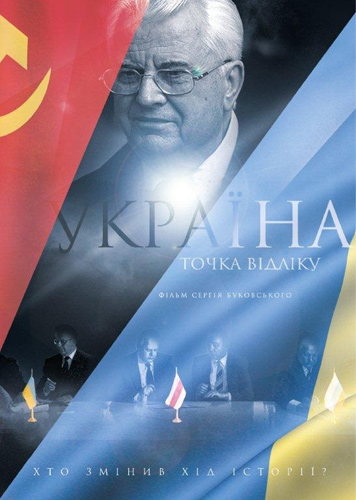
Tomorrow, April 16, in the Moscow Documentary Cinema Center , the next show will be held from the cycle "Memories" organized by the Goethe-Institute in Moscow. They will show the film by Sergey Bukovsky “Ukraine. The reference point ”(those interested in military history could see his documentary series“ War. Ukrainian account ”; it is available on the network - in Ukrainian, of course). Filmed in 2011 for Ukrainian television, the “reference point” suddenly and unexpectedly reactionized in connection not so much with recent Kyiv events as with the Russian official reaction to them. Bukovsky’s film-memories of the emergence of Ukrainian statehood in 1989-1991. Among the witnesses are Leonid Kravchuk, Zbignev Brzezinsky, Gennady Burbulis and half a dozen of other not so famous people, whose names probably will not say anything to today's viewer: dissident-Russian-speaking in embroidery, Kiev intelligentsia and the then mining leaders from Donbass. A lot of chronicle. There are a lot of insaida and seemingly quite accessible, but as if forgotten information: Gorbachev deftly plays a pitch card (the possibility of which was obvious to many at the beginning of the 91st), George Bush arrives in Kyiv not to decide from the USSR (now the popular myth of the "overseas backstage" is diverted by Kravchuk himself, who was shutting down that the USSR was destroyed by the USSR destroyed that the USSR was destroyed by the USSR Soviet officials in the ondatural caps, who were tired of bowing to Moscow, and Brzezinsky, indicating that the collapse of the nuclear opponent was the most terrible script - yes, they helped them, supporting these, hoping only on a decrease in the intensity of the Cold War). All the same conversations about the impossibility of the empire - then still Soviet - without Ukraine. The stigma of "Bandera". Flame speeches about the importance of the Ukrainian language, which are pronounced from the rostrum of the ex-Komsomol. A lot similar - or is it all the same?
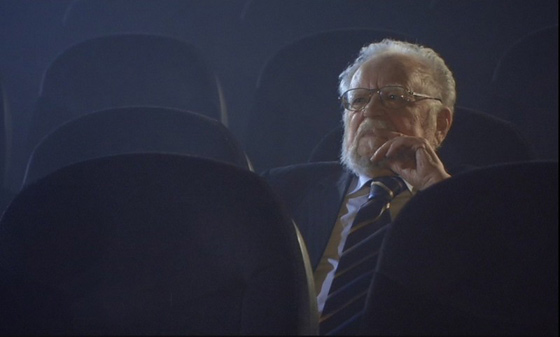
- Almost all the heroes of your film, eyewitnesses to the events of 1989-1991, are sitting in the cinema, commenting on the staff of the chronicle, which they seem to see on the movie screen. What is the reason for such an unexpected choice of the place of conversation? Is this such a way to emphasize the historical distance separating the speaker (and the viewer) from those events?
- Everything is simpler - the timing of the film was very compressed, and we decided to bring the heroes to the studio. This was more convenient for us and for them. For each of the participants, his own newsreel was prepared and mounted. This is precisely the newsreel. Then the studios worked at full capacity, and the chronicle was shot on the film. The exception is Americans - they were removed by a separate group, led by producer Mark Edwards; By the way, together with Mark, we made several films - “Name your name” about the Holocaust in Ukraine and “Living” about the Holodomor. So the choice of the location of those from whom we interviewed was dictated by a dense production schedule. In addition, we wanted to get away from the direct “speaking heads”. Cinema, a projector, Soviet movie magazines - all this gave the heroes the opportunity to react to what was happening on the screen. The reception does not captivate with novelty, of course, but still slightly changes the atmosphere.
- How do you assess today's dramatic processes in Ukraine and Russia? Is this an echo, the continuation of all the same events that your film talks about?
- I am not a historian, and even more so not a political analyst. Therefore, do not blame me, but it seems to me that it is today that the real battle for the independence of Ukraine is taking place. And if Ukraine stands (and it will stand), we will live in another country. By and large, in 1991, independence - may those who were sitting in camps and prisons for dissent - was presented with a historical moment. It happened. It was a unique situation, and they used it correctly. As this happened, in sufficient detail is described in the film.
Today they say and write that Putin (and he is the main director of what is happening) is irrational, entered a steep historical turn, from which he could no longer come out. It seems to me that all this is nonsense. Putin is healthy. He wants to remain in Russian history as a king who restored the empire within the previous borders. And the point is not only in the upcoming at the end of May the elections of the Ukrainian president, which Putin must be disrupted by Putin. No. The strategy is long -term, it was developed for a long time, and he will follow it.
 Frame from the film "Ukraine. Reference point "
-And in the early 90s, and now in political disputes on the Ukrainian theme, the Bandera label is equally actively using ...
- With the "Bandera" everything is very simple. This is an old, naphthalin drama. Only personalities are changing. Who is the enemy on the agenda today? Jews? Already. Do not fit. Americans? It also does not work very much. Far. And let's scare Stepan Bandera again. Alas, no matter how regrettable, it still works. The Soviet regime weaned millions of people not only to think critically, but to think at all. However, he accustomed to unconditionally believe any printed word. Once printed, it means true! This is the worst thing that socialism did. Brutal zombies of modern Russian propaganda fell on well -hungry soil. But for me personally, something else is strange. In the lists of cultural figures who supported Putin were my friends. Well, how was the documentary director with the Ukrainian surname Sergey Miroshnichenko, I understand, but what Alexey Teacher forgot there is a mystery. Why is it for him?
-The Russian intelligentsia has now lost a significant part of its illusions of the 90s. And the Ukrainian society? How, for example, today relate to the figure of Kravchuk?
- Ukrainian society is very different. Probably, the first president of Ukraine is different. But in general, I would dare to say that the attitude towards him is restrained. He is a very cautious politician. Cleep and flexible enough. It is no accident that they say about him: "Kravchuk does not use an umbrella." Do you know why? Because it walks between drops! By the way, Kravchuk, during the next surge of mining unrest in the Donbass, back in the early 90s, left the presidency a year before the end of his cadence. He came to the protesters and asked: "Do you want me to leave?" The miners screamed: “Yes !!! Ganba! " And he left. By the way, Kravchuk also came to the starving students on the Maidan (“Revolution on granite”).
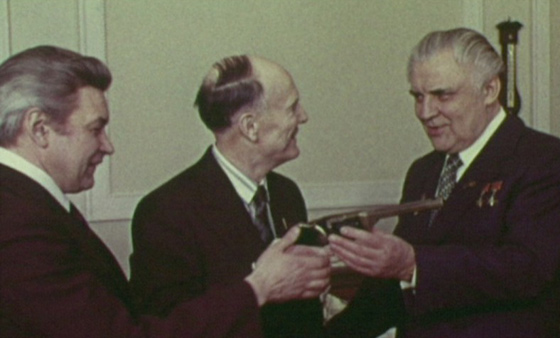 Frame from the film "Ukraine. Reference point "
- By the way, about the miners - how did it happen that today the Donbass has become pro -Russian (and whether it really became) and reactionary? Is this a consequence of the population of the population or is everything somewhat more complicated?
- Donbass, like the whole East, not pro -Russian. I would not say so ... He is pro -Soviet. Enslaved and, I agree with you, monstrously lumpenized. There was not even perestroika there. While in the center, in Kyiv, for years they found out in what suit we will fight - in a single -breasted or better in embroidery, the guys from the "regions" robbed the country. And now everything is from a cigarette shop to the steel plant - in their hands. So it turned out: the war is on the threshold, in fact it has already begun, but we are not ready. That is why - I have no other explanation - when the time came, they chose the president of this. Zavgar Yanukovych. But try not to choose! Tomorrow you will collect cigarette butts at the entrance mine. Scary? Very.
Actually, the Maidan rebelled against this. Against kickbacks, cigarette butts, robbery and trampled dignity. Do you know what rollback Tatar-Mongols took? 10 percent. And the people cried. And these? 50! Yes, it would be nice just 50. You don’t give it - under the asphalt.
-The film shows that in the 90s the problem of the language was extremely important for supporters of Ukrainian independence. What now?
- To be honest, like an ethnic Russian born in Bashkiria, and as a People's Artist of Ukraine and the laureate of the Taras Shevchenko state aids (I am adding this not for bragging, but to strengthen what has been said) - for all my 53 years no one reproached me that my native language is Russian and I have been talking in Russian. This problem does not exist! The problem of the Russian language in Ukraine is the same “Bandera” and nothing else. Tool. Occasion. Ours beat! Well, send green men there!
Of course, Putin to the light bulb and the great and mighty, and miners, and metallurgists, and Crimean grandmothers who hand over their chicken coat on a spat on the beach. What, tomorrow Crimea will become Nice? And Makeevka - Barcelona? Never. Not in our life.
- Do not you think that post -Soviet Russia repeats the path of post -Soviet Ukraine, but in Ukraine all the processes - both the reaction and thaw - begin earlier, as if they are undergoing a general rehearsal?
- I'm afraid this is not entirely true. The example of Ukraine is contagious, of course, but it is hardly possible to repeat it so quickly in Russia. Russia is huge. I will quote the seeds of Gloman from our film: “In Ukraine, another resistance gene ...” Somehow he said so, I don’t remember literally now. This "resistance gene" is different from the Russian one. By the way, Gluzman was sitting in the camps with the Bandera. There were no Belarusians, Kazakhs, Armenians, there were mainly Ukrainians and Baltic states. There were no others. Russia, I will allow myself this truism, without a prince-priest-well, nothing. Good or cruel, not so important. Good, as a rule, the story swallows quickly enough.