
Translated material
"It was felt that, listening to economists, Putin simply fulfills the promise given to Chubais"
Fragments of the biography of Evgeny Yasin in dialogues and analytical retreats
The other day, the publishing house “New Literary Review” (UFOs) is published by Andrei Kolesnikov’s book “Dialogues with Evgeny Yasin” - the intellectual biography of one of the brilliant representatives of the “Sixtys”. We publish fragments of a book regarding the hero’s life.
The other day, the publishing house “New Literary Review” (UFOs) is published by Andrei Kolesnikov’s book “Dialogues with Evgeny Yasin”-the intellectual biography of one of the brilliant representatives of the “sixties”, the story of how the engineer from Odessa turned into a market economist, and how a market economist became a “grandfather” for a whole generation of reformers. We publish fragments of a book regarding the hero’s life.
The first fragment.
From the life of Soviet statistics: "There will be no orders, orders too"
-In 1963, I was distributed to the graduate school of our faculty. But among those people whom I really respected, was Aron Yakovlevich Boyarsky, who then became my scientific curator. And when Boyarsky suggested that I go to the Research Institute of TsSU, I agreed.
I’ll tell you two episodes related to Boyarsky.
One episode concerned the events that took place in Czechoslovakia, Poland and so on. Some conversations came from us, and they told me about Boyarsky that in the 30s he was one of the members of the Polish Spies gang. Why Polish? Because there were four people there: old, boyars, Yastremsky and wanting - all surnames on "... sky." And who is on our "... sky"? Poles!
- Despite the fact that he, Aron Yakovlevich, is clearly not quite a Pole, right?
- Well, it doesn't matter. It turned out that he, Boyarsky, wrote denunciations. Many believe that it was he who planted them all. I asked him: "How could you?" And he told me: "Well then you did not live, you don’t know how it was." But it was like: you had to find yourself some kind of place, a haven where you could count on support.
Vladimir Starovsky then beat all the conceivable records of political longevity, having spent three and a half decades to the chief of Soviet statistics, until his death at the age of 70, 50 years after the statistics authority. (We’ll talk about this figure and I will still talk about this figure.) Aron Boyarsky was considered a student of Boris Yastremsky, a major specialist in mathematical statistics, who worked in the Higher Statorgan immediately after the revolution - head of the insurance statistics department. Valentin Sobimsky, together with his colleagues in the Polish espionage, was the co -author of the “theory of mathematical statistics”, published in 1930 under four surnames. He wrote the first report on the 1937 census, being the head of the Department of Statistics of the Population and Healthcare in the status. From the whole four, it is his biography that breaks down in 1937.
I must say that in a sense, Aron Boyarsky was right: everyone then played according to the rules. In the book “Elements of the General Theory of Statistics” (1935), Yastremsky and Wojimsky dealt with Nikolai Kondratyev, Vladimir Gromin, Vladimir Bazarov, who were described by them as “representatives of Russian bourgeois science, later exposed as pests”. Moreover, Yastremsky once called himself a friend of Vladimir Bastard, the well-known statistics and an official who was shot in 1938. As the researchers of Soviet statistics Alain Blum and Martin Mespule (bureaucratic anarchy. Statistics and power under Stalin. M., 2006), the work of these four authors testified "about a huge statistical culture and at the same time of undoubted dexterity, which allows us to get out of difficult provisions related to political positions."
By the way, the statistics of Vera Maksimova first became the wife of an employee of the highest statorgan, Lazar Brandgendler, who was repressed, and then - the wife of Aron Boyarsky. In her memoirs about the 30s, she wrote: “It turned out that we believed in our own and our right (and even the obligation!) Treme experienced senior workers, theorists and practitioners of statistics ... Bourgeoisness was attributed to all of them, and this label was enough to shout:“ Atu! ”
- This is one story. And another story. Boyarsky, silent sins, tried to do good to people ...
“But he himself did not sit then?”
- No. He found the “correct” line, and his Old Friend became the head of the CSU. The predecessor of Vladimir Starovsky - Ivan Kraval was shot for high -quality conduct of the 1937 census. In 1939, Starovsky answered the census. He came from the Kremlin, gathered everyone at night and said: “There will be no orders after the census. But the orders too. "
- Then people knew how to express themselves figuratively! How is Academician Stanislav Strumilin said: “It is better to stand behind a high growth rate than to sit for low” ... Boyarsky then worked in statistics with Starovsky?
- Yes. Then at the University of Boyarsky was the center of Marxist thought at the Department of Statistics. He denied, of course, the ultimate utility and all these bourgeois delights remained a supporter of the theory of value. He found in the works of the Russian economist and statistics at the beginning of the 20th century Vladimir Dmitriev, the equations, which then processed and which were close to the scheme of intersectoral balance and made it possible to present labor costs exactly as they looked among the old Marxists. He used this. He was primarily a demograph.
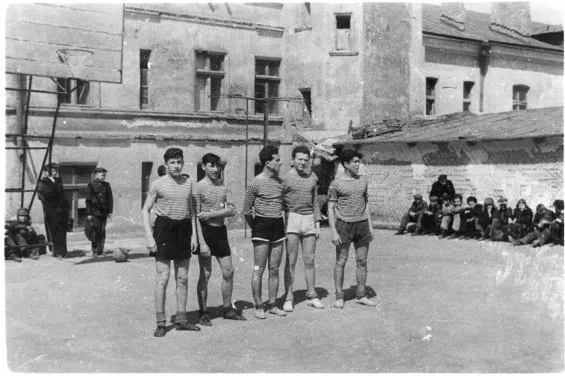
So, the second story. 1962. There was such a student, older than us for the course, Kolya Engver. (By nationality, he was Latvian; he was ill with polio, he went on crutches ... Then, when perestroika began, he became a deputy of the Supreme Soviet of the USSR from Izhevsk.) These were the last years of the life of Ilya Ehrenburg. He performed at our university with stories about his book “People. Years. Life". When Ehrenburg finished his performance, Kolya Engver appeared on the rostrum, who said about the following words: “Dear Ilya Grigoryevich, we respect you. Your book is a revelation for us, and we now understand that this Soviet life is actually not the same as other authors write about it. You make us think ... ”And all this says a little little man on crutches, unhappy, but such a sincere truth -lover. A lot of correspondents were present there, as was around Erenburg; They printed an article about this event in the newspaper Mond or Yumanit, I do not remember. What immediately became known in the Komsomol circles - they reported, everything is as it should. The guy was in the 5th year, and time was already approaching the defense. It was necessary to exclude him from the university in order to then not give a diploma. And now, you can imagine, the course was on the course! Students had to gather at the Komsomol meeting and exclude Engver from the Komsomol, and they refused.
What does Boyarsky have to do with it? The fact is that he could somehow influence the situation with Engver, to call someone ... And he lay at death. I also went to Boyarsky home with some guy. We found him on his deathbed and asked to save Engver, Boyarsky called somewhere. And just two days later he died.
Our dean invited the main Protestants, dissidents, and said: “There will be nothing to you, stop this activity. And I promise you: you exclude him from the Komsomol, and we give him the opportunity to protect the diploma, and he will work in his specialty. ” On that and agreed - such a healthy compromise. And the dean fulfilled his promise.
- Large -scale and very different people were. As expressed now - nonlinear. And the old one seemed to be the same ... Everyone says that the degree of reliability of statistics was small. So you observed it from the inside - is that true?
- It is very small. I can say: the most important point of view was that it is definitely impossible to measure a lot in the economy, and the most important thing is that the numbers are all the same, in the sense - interconnected. One problem is one digit. And this rule was respected.
Oldovsky was a walking database. As soon as Stalin called him and say: “Vladimir Nikonovich, there you have such and such a figure on this issue, the other ...”-and the old one, as a schoolboy, had to get up and answer by phone: “Comrade Stalin, this is without taking into account that ...” (Spring losses, what was herself.) And he calmed down. Startovsky had to have a prepared answer. And if then something was required to remake, it was rapidly redone.
In general, he was an experienced person, and by the way, we owe many him. I remember how they began to actively introduce computing equipment in the CSU. Our respected “remote control” (I mean special services) immediately wanted the TSS to begin to cooperate with them. And Starovsky took a position - beat off. They offered him to enter some accounting and transmit all the notes to them, and he said over and over again that the central statistical management did not need this. I found such a situation. The special services in that era were not as powerful as in the 1930s.
<...>
The second fragment.
From the life of the intelligentsia during the years of stagnation
-In the 70s you lived the life of the Soviet intellectual, without dissident, but talked with people who understood everything ...
- I expected the change would begin. And I was ready for them.
- And the circle of your communication - economists from work?
-In other places ( in addition to the Central Economic and Mathematics Institute ( Tsemi ).- A.K. ) I also had friends, at the Gosplanovsky Institute for example. There, by the way, I met Nikolai Petrakov, Stanislav Shatalin, Emil Ershov. Everyone was so young, hot ... Of the significant figures - Alexander Anchishkin, Yuri Yaremenko, Eduard Baranov later also worked in Tsemi.
-Then anti-Semitism was somehow felt? Still, the amendment of Jackson-Vanik was adopted. Or is your circle such a reserve?
- Nothing was felt inside. But it was felt outside. When I came to Tsemi, Aron Katsenlenbogen left immediately (subsequently professor of Pennsylvania University). And in Tsemi they stopped hiring Jews. But the leadership - Fedorenko, Shatalin, Petrakov - never treated Jews badly. Normal human relations have developed ... Then, in Tsemi in the office, Petrakov began work on the program of scientific and technological progress, on the "Improvement of Management" section. We gathered at 10 hours, looked at each other, at 11 o’clock the store opened, some veteran walked behind the bottle. After another half an hour, the work stopped ...
- By the way, in all these research institutes, how: drank?
- Drunk.
-But not in the morning, after all, as in connection with an unbearable program?
- Well ... from the middle of the day ... in Tsemi it was very accepted. True, not in our department, it was so, sometimes, in a way, but not a daily procedure. But in the CSU there was a completely different life.
- More formal relationships?
-With someone informal. But even formal ones-so, in advance: they say, we are considered to be each other. Here, for example, Czechoslovak events. One lady worked as a deputy in my department (she was the secretary of the party organization of the Research Institute of the CSU), and she and I argued with her on the evening of August 20, 1968: I said that ours would not enter the Czechoslovakia, and she said that they would enter. Ours entered. The next day, I was surrounded by understanding from all sides.
- Did you worry?
- I was terribly worried. It was for me ... how can I tell you? I have grown in respect for communist ideas. It was their end, because if you are not able to convince people otherwise than the introduction of troops, everything is a sentence. This is a sentence of everything that happened in the country after October. There were many people in intellectual circles, which perceived what happened. I did not enter the dissident or bohemian circles. I was a very modest person, excitement. But my ideological life was quite intense. And I was terribly worried about all this. Previously, I wanted to contribute to the development of the ideas of Marx - Lenina - Stalin. I always looked for my place in life, and always in the calculation that we will do something real. And in 1968, I realized that this is the end for me - I can’t play this game anymore.
- And that lady surrounded with care and understanding, while being the secretary of the party organization?
- Yes. She did not say anything, but she looked knowingly, stroked on the shoulder ... A good, pretty Russian woman. Such a big one, everything is in her place ... And this is the secretary of the party organization! Who could knock on the table with his fist: "We expose you!" She also knew how to.
... there was a meeting in support of the input of the Soviet troops. With voting. I didn't go there. My colleague and I went to the door, opened and listened to all this bodyager ... And at the same time I remained out of suspicion. But my friend Kolya Blinov (from another sphere, he worked in X -ray at the Institute of the Academy of Sciences) abstained during the vote. Then, throughout all the years, to Gorbachev, he was remembered for him, he could not go abroad. A whole bunch of repressions was against those who somehow discovered their negative attitude to this invasion. I will not pretend to be more smart than I was then, but I had the feeling that there, at the meeting, I did not need to go. <...>
The episode is third.
A group of liberal economists "teaches" Putin
-At some point, it became clear that Primakov really claims the role of the president, and Yeltsin decided to demolish him. As a result, he demolished. You were already a third -party observer of all these events, when Nikolai Aksenenko was offered to the premieres, then Sergey Stepashin.
-Of course, I did not think that Aksenenko was suitable for the post of prime minister. He did not think that Stepashin was suitable for the post of prime minister. And I perceived Primakov as a person from another party. Therefore, I had such a feeling: well, everything was gone.
Then the era of Putin came. At that time he was absolutely indifferent to me. I met him, we were familiar, but no personal relationship ... And then Chubais invites me. Together with me were two of my fighting deputy last composition of the Ministry of Economics - Sergey Ignatiev and Sergey Vasiliev. Chubais says: we agreed with the new Prime Minister that we are working and I ask you to help him. I think to myself: I need him for a fig, I don’t even know what will happen to the country ... This whole dubious election campaign, all this was from some other opera, not like in the 90s.
-The conversation took place in the summer of 1999 or in the fall?
- In the fall. Putin had to help go on the course of business. Chubais persuaded me, and Ignatieva, and Vasiliev. We helped - helped. I was appointed the head of a kind of working group with the Prime Minister. I don’t know if there were official papers about us, but we gathered at the appointed time, discussed some issues, he made decisions.
- That is, it was a more or less real influence?
-Well, some influence was. These meetings lasted three months.
- Who else entered this group?
-In my opinion, Leonid Grigoryev, Evgeny Gavrilenkov ...
- They advised - and he listened?
- He listened ... Then they stopped inviting.
- Did you vote for Putin the “first period” under the influence of Anatoly Borisovich?
- I was convinced by Chubais that this is our person, it is necessary to work with him and in everything he needs to help.
“Chubais wanted it to be his own man to continue the reform.”
- That's right. After the work of this group ended until 2010, I met with him once when he handed me the Order “For Merits to the Fatherland” of the IV degree. It was on the day when the anniversary of the ministry was first celebrated. And the ministry was founded in 1802, generally just the ministry, it was not a name and was the only one under Alexander I ... I was subjected to the economy; There were several more people in a small room - so that I did not annoy people with my reformist guise. Then Putin reminded me of how we went with him in 1995 to the Russian Diesel plant, a corps in Vsevolozhsk, and I expressed an idea unexpected for him, that there was no need to try to produce everything. Something can not be produced, bought abroad ...
- How long have you been internally ready to support the president?
- Until 2003, before the work of Khodorkovsky.
I think that the time between 2000 and 2003 is the most peaceful and fruitful in the relationship between Russian business and the government. There were no special disputes, they tried to move together.
-You probably were still embarrassed by some authoritarian trends in politics?
- I was embarrassed by the new old anthem, I was embarrassed by Chechnya ... History with the persecution of journalist Andrei Babitsky, with the acceleration of NTV.
- Have you calmly appreciated this “to wet in the toilet” at the very beginning of Putin's career?
- I just broke up with the government of reformers, with Chubais. For me, the government of the reformers continued while Chubais worked there. Even earlier, in 1992, I broke up with Gaidar. These were my people. And Kiriyenko, or even more Primakov, or ... what difference does it make to me - Primakov, Putin ... Moreover, they promised me that I will deal with the program and counseling. I can’t say that I was eager to continue this work - they asked me, I was engaged. Then they stopped inviting me, and God be with them.
Why did I treat all this? Firstly, I, by my nature, are not a person of the bureaucratic service. I am used to being in scientific and teaching work and reflect on substantive issues. И потом, в то время у меня сложилось такое впечатление, что огромный этап закончился, главные реформы сделаны, и теперь что-то новое намечается. Что надо раздумывать, надо наблюдать за событиями, анализировать…
И правительство Путина выглядело продолжением реформаторского кабинета. Но когда пошло дело с НТВ, я, конечно, уже гораздо более обостренно воспринимал эти события. Ну а потом Ходорковский. То есть решающую роль в формировании моего отношения уже не к правительству, а к президенту Путину сыграло дело Ходорковского. До этого я сотрудничал с правительством, потому что у меня были отношения с Грефом, были отношения с Кудриным, с Касьяновым.
— Кстати, когда вы работали с Путиным на первом этапе, он казался вам разумным человеком?
— Тогда он мне казался очень вменяемым. Хотя чувствовалось, что, слушая экономистов, он просто выполняет обещание, данное Чубайсу…
— …и не считает, что учится чему-то.
- Yes.