
Translated material
Memory. Neil Filatov
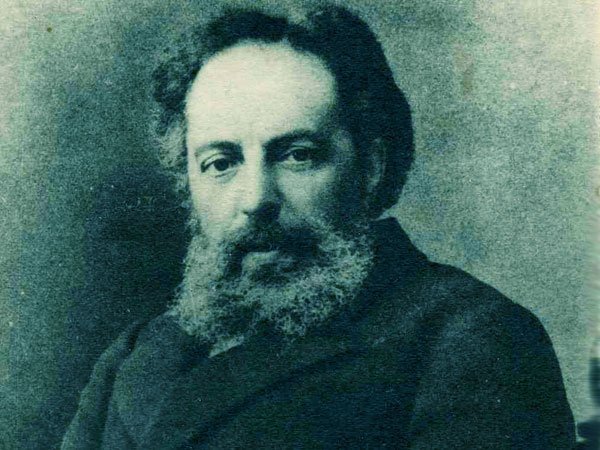
On April 16, 1847, Neil Filatov, the founder of the Russian school of pediatrics, an outstanding doctor and scientist, was born.
Personal business
Neil Fedorovich Filatov (1847-1902)-Russian pediatrician, clinician. He defended the dissertation on pediatrics in Germany. He worked as a zemstvo doctor, was the director of the clinic and professor of the medical faculty of Moscow University (now - I Medical University named after Pirogov), substantiated the allocation of pediatrics in a separate area.
What is famous
For the first time, Filatov identified as separate nosological forms of scarlet rednuine, infectious mononucleosis, masked malaria of infants, protracted and miserable forms of influenza and chickenpox as an independent disease. Filatov also described one of the early signs of measles-the spots of Filatov-Koplic. He wrote several textbooks that have endured many publications: “Semiotics and diagnosis of childhood diseases”, “Lectures on open infectious diseases in children”, “Clinical lectures”. Together with G. N. Gabrichevsky, he introduced serum treatment of diphtheria. He published a “Brief textbook of childhood diseases”, which survived 12 publications, 6 of them during the life of the author (the 12th edition was published in 1922).
What you need to know about
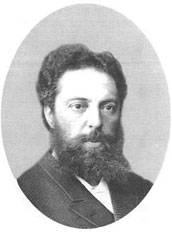 Neil Filatov
In the old school of medicine, pediatrics were not studied as a separate branch of medical knowledge. The date of her birth is considered to be 1802, when the first children's hospital was opened in Paris, which for many years became the center for training pediatric personnel for the whole of Europe. The beginning of the second period and the impetus for the allocation of pediatrics in independent discipline was the opening of the first Russian children's hospitals: in 1834 in St. Petersburg (the third in Europe after Paris and Vienna), and in 1842 in 1842 in 1842 in 1842 in 1842 in 1842 in 1842 Moscow. Both hospitals now bear the name of N.F. Filatov. Filatov’s lectures at the university were clinical, he did not like theoretical lectures.
Direct speech:
“My goal is to give novice doctors a brief leadership, with the help of which they could easily understand the various symptoms of this disease and make diagnostics on the basis of the main symptoms, not being carried away by trifles. I thought to achieve this goal in the 1st, through more detailed than this is usually done in the manuals, analyzing the value of individual symptoms and in 2, the fact that, with the paintings of the diseases, I tried to give only the most significant features, with the intent, omitting everything unimportant, since for12 years of study with students with students, I had the opportunity to make sure that the beginning often gives the meanings that began Little things, not noticing the most important and, so to speak, "they do not see the forest because of the trees."
“In children, starting from the age of 2, breathing is so sharp pueric in nature that it can be regarded as bronchial! Puerial breathing is listened to up to 5 years. And the tone dominates the entire surface of the heart, and not just at the top. The presence of a pronounced shock in the underside region and listening to tones on the sternum with the expansion of the heart to the right and the absence of exudate in the left pleural region is indicated by the preserved embryonic (median) position of the heart. ”
“From external means with a dry, frequent cough, a warming compress around the whole chest is often used, but I rarely resort to it, willingly replacing with weak large mustard. I take for young children I part of the dry mustard PA 5 parts of wheat flour, for older children, 1 part for 3 parts and, preparing a mustard of such a size that it closes the entire chest, put it on the back or on the chest and leave it 3-5 hours, but not more. ”
Filatov’s student about his teacher: “There are people over whom death is powerless,” one of many students of the Russian Pediatrics school found over his grave, “Nile Fedorovich belongs to them. The entire course was gathered at his lectures. There, before us, the workshop with the hand of a artist-artist, he threw a living picture of diseases, unraveling with unusual subtlety the most difficult cases. The patriarch stood in front of us in appearance, with the soul of the patriarch, always responsive and sensitive. ”
8 facts about Nile Filatov
• Dr. Filatov - a native of Mordovia.
• He defended his thesis in Heidelberg, spoke freely and read in the German, main language of the then medicine.
• Filatov is a hereditary doctor. The uncle of the famous ophthalmologist V. Filatov, a distant relative of I. M. Sechenov.
• Two children of N. Filatov died of diphtheria, after which he took up the search for a drug from this disease.
• In honor of Filatov, two hospitals are named-in Moscow and St. Petersburg, he was erected by two monuments.
• “Brief textbook of childhood diseases” by Filatov withstood 12 publications, 6 of them during the life of the author.
• Filatov had to treat children L.N. Tolstoy, with whom he was personally familiar.
• Filatov was an advisable theater and chess player. Once a gymnasium student came to the hospital, who won all parties with Filatov. It was A. Alekhin - the future world chess champion.