
Translated material
The Transnistrian question
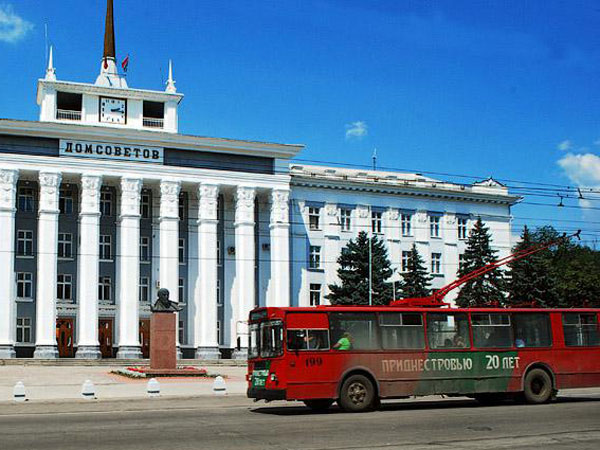
The Supreme Council of Transnistria is going to appeal to the State Duma, the Council of the Federation and the President of Russia, as well as the leader of the most unrecognized republic Evgeny Shevchuk with a request to initiate the procedure for recognizing the republic as a sovereign and independent state with the aim of its subsequent accession to Russia.
Today, the existence of the Transnistrian Moldavian Republic is recognized by the unrecognized Nagoric Karabakh, as well as partially recognized South Ossetia and Abkhazia.
In their appeal, the Transnistrian deputies refer to the right of the people to self -determination, as well as the results of the 2006 referendum in the UN Charter, when 97% of the unrecognized republic who came to the urns supported the Independence from Moldova and further joining Russia.
In mid -March, we recall, the Vedomosti newspaper was informed with reference to its sources that the head of the Transnistrian Supreme Council, Mikhail Burl, sent a letter to the speaker of the State Duma Sergey Naryshkin with a request to provide the possibility of entering the Transnistria in the Russian legislation.
True, later, after Chisinau’s reaction to the message about the letter, in Transnistria it was hastened to assure that it was unofficial and was published without the knowledge of Mikhail Burla.
On March 24, with a call to recognize Transnistria and accept him in Russia by Vladimir Putin was addressed by a deputy of the Supreme Council of the Unrecognized Republic, one of the closest associates of President Shevchuk Vyacheslav Tobukh. The deputy publicly stated that from a legal point of view, nothing differs from the Crimea, which means joining Russia is inevitable.
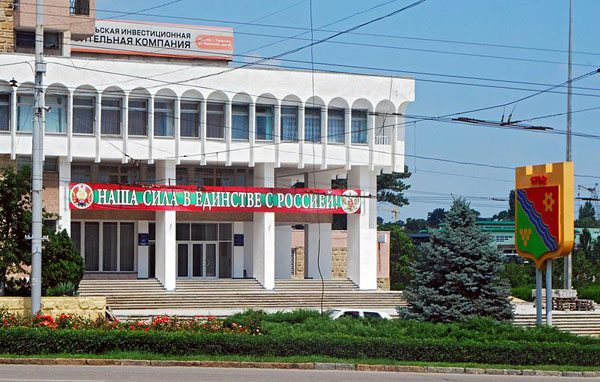 Tiraspol. Transnistria
I must say that far from only in Transnistria thought about joining Russia.
An unrecognized state does not have a common border with Russia, and in a normal situation it is difficult to imagine how the region, which was squeezed between Ukraine and Moldova, can become part of the third third of the country.
However, the accession of Crimea forced hot heads in Moscow to draw cards , on which part of Russia are all regions of the south and east of Ukraine, from Odessa to Kharkov. If we imagine that the Odessa region is part of Russia, then the accession of Transnistria will no longer be a problem - the four hundred -kilometer eastern border of the unrecognized republic will no longer be with Ukraine, but with Russia.
If the Odessa region really turns out to be part of Russia, then Moscow will be able to play a much more noticeable role in Gagauzia - this part of Moldova at least formally did not leave the country, but has a wide autonomy. On February 2, local authorities even held a referendum where she should strive for - to self -determination and the Customs Union or, together with Chisinau in the European Union. Most citizens, as expected, spoke out for self -determination and the Customs Union. The authorities of Moldova did not recognize the results of the referendum - however, the presence of Russian troops a kilometer from the border can change the alignment of forces.
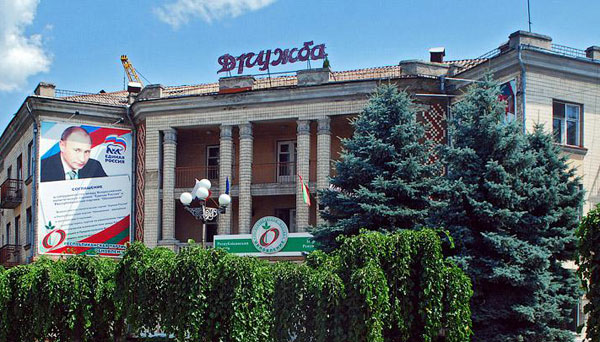 Tiraspol. Transnistria
However, even if the eastern border of Transnistria will separate the unrecognized republic not from Ukraine, but from Russia, in the life of the region, nothing can change. An example of this is South Ossetia and Abkhazia.
These two partially recognized republics separated from Georgia at one time and and a half years existed as unrecognized states. Their status has changed only after the Russian-Georgian War of 2008. Initially, the decree on the recognition of the existence of Abkhazia and South Ossetia was signed by President Medvedev, then Venezuela and Nicaragua adopted a similar act. The governments of several other Pacific Islands established diplomatic relations with the new states, but then withdrew their decisions.
From a formal point of view today, Russia does not prevent Russia from accepting both Abkhazia and South Ossetia, the procedure will be exactly the same as with Crimea and Sevastopol. And if Abkhazia, at least theoretically, can exist as an independent state - at the expense of tourism or industry, which, however, is absent there, then southern Ossetia, blocked by Georgia, survives only due to subsidies from the Russian federal budget. It is easy to justify the accession of South Ossetia by the reunification of the divided people.
Russia, however, in spite of everything, is in no hurry to include Transcaucasian regions. Moscow either does not want to be under the sight of the criticism of Western politicians about another expansion of the country's territory, or “holds” South Ossetia and Abkhazia in a slightly suspended state for further negotiations with Tbilisi.
Perhaps the only unrecognized republic in the territory of the former Soviet Union, whose fate does not directly depend on Russia - Nagorny Karabakh. This region was under the control of Armenia as a result of the armed confrontation of Armenia and Azerbaijan, which was from 1988 to 1994.
Since then, only other unrecognized or partially recognized republics recognize the existence of Nagorno -Karabakh, not a single member of the UN, even Armenia, has established diplomatic relations with Stepanakert. The official position of Yerevan lies in the fact that Nagorny Karabakh will be recognized immediately after any other state does it. So far this did not happen, the Armenian budget supports the existence of Nagorno-Karabakh at least at some level and without official recognition.
However, international recognition does not guarantee well -being and confidence in the future. An example of this is Western Sahara, a former Spanish colony in Africa. The independence of this state is recognized by 47 other UN member states, 29 of them even have ambassadors in this country. Western sugar is stubbornly depicted on all maps of the world, a representative of Western Sahara even sits in the African Union.
However, such a state, in fact, does not exist - the territory of the country almost 40 years ago was annexed by Morocco. Since then, the Front Polisaro, an organization that often fights for the country's independence with terrorist methods, controls well if a tenth of its territory is located in the desert.