
Translated material
Russia, world orphan
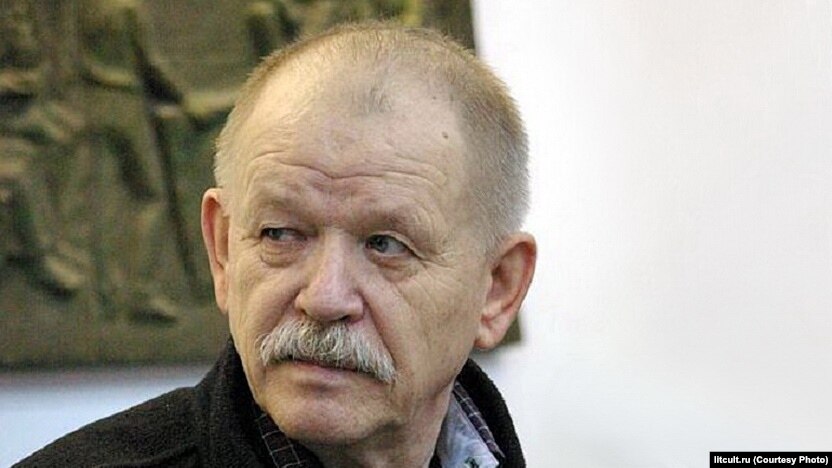
Gennady Rusakov became the winner of the Poet Prize. Its themes are an injury to Russia's non -participation in world history, Russia as a "world orphan"
In Moscow, the Russian National Prize "Poet" was awarded, established 10 years ago by the Society for the Promotion of Russian Poetry. It is awarded for the highest achievements and merits in the field of modern literature. The founder of the Prize was the RAO "UES of Russia" and personally Anatoly Chubais, now the duties of financial support of the prize have been transferred to the Dignity to the Fund (a premium fund - one and a half million rubles). Gennady Rusakov became the laureate of the award.The representative of the Virty Foundation Leonid Gozman at the laureate’s announcement ceremony said that the fund will continue to finance the prize, "if everything does not collapse, everything is generally." The prize coordinator, critic Sergei Chuprinin proposed to honor the minute of silence Inna Lisnyanskaya. The Poet Award, whose laureates were such aesthetically opposite personalities as Victor Sosnora and Evgeny Yevtushenko , chose the figure of consensus this year. Gennady Rusakov is a younger friend Arseny Tarkovsky . The writer Maria Galina talks about the choice of the jury:
- There are figures that arrange everyone - both right and left; Very worthy, not tunnered in any social life or in anything, and, as they say, not very loud. Rusakov is a very good, interesting poet worthy, but I think that in this context it is still very important that he does not cause rejection for anyone. A certain compromise-to some extent, this is a sign of time: they choose the figure not bright, not marginal, but a mainstream figure, relatively speaking. I am not even talking about politics, but about the poetic system. Say, if two years ago the bonus was given to Sosnore, today, perhaps, according to some kind of social, social moods, this would not be very convenient. Or, as they say, this would not be a solution that would unite everyone. Now, perhaps, even in terms of aesthetics, you need a solution that unites everyone.
The co -author of the project “Cultural Initiative” Yuri Tsvetkov adheres to the opposite view of the “Poet” strategy:
-Everything in our country is somehow political, and therefore the “poet” prize is engaged. Many wonderful poets did not survive to get it - Bella Akhmadulina, Andrei Voznesensky, and so on, because the awards at the very beginning were important to dissociate himself from the Soviet heritage, and everything
They did not even note such a large children's poet and the Oberiut adult as Sergey MikhalkovThe names that sounded in Soviet times from the pages of newspapers did not fit. Yevtushenko was the first swallow, and so many were missed. I can joke that they did not even celebrate such a large children's poet and the Oberiut adult as Sergey Mikhalkov, he died in 2009. Poets Vladimir Kostrov, Andrei Dementyev, are alive, although it is possible to treat their poems differently, or Dmitry Sukharev, or Novella Matveev. For some reason, these figures did not arise here. That is, the premium is not unifying.
Finally, about the laureate of this year, Gennady Rusakov, says critic Sergei Chupinin :
-Gennady Rusakov has a unique literary path in his own way. He released the first book of poems with a very young man, at 22, in the city of Kuibyshev, now Samara, it was called "throat winds." These were completely disgusting Komsomol poems. Then 20 years - a pause, not printed. Arseny Alexandrovich Tarkovsky, who, in fact, read his poems in manuscripts, chose an older friend and landmark, they spoke, corresponded. And finally, after 20 years, he has already released a mature book of poems, and he has six such mature books today. Gennady Rusakov first was an orphanage, a street child, graduated from the Suvorov School, then pedagogical, and then his whole life went abroad, because he served as a transinthing-synchronist in the UN secretariat, then in some international organizations. What, to
He writes about Oka incomparably and is not an example more often than about Sena, he does not write about Hudson at all, on the shore of which he lived most of his lifeMy deepest amazement, did not affect the verses in any way. He writes about Oka incomparably and is not an example more often than about Sena, does not write about Hudson at all, on the shore of which he lived most of his life. It seems that America is not at all in his poems. Now, I hope, a new book of his poems will be released, and I think that if they make up the frequency dictionary of his lyrics, it will be difficult to imagine that this is a person who knows a dozen languages, like a synchronist. As for his poetics, his literary appearance. When I said that he chose Arseny Tarkovsky with his guideline, I meant that he belongs to what is called the “School of Harmonic clarity”. This, of course, is an acmeistic tradition, it is a strict rhythmic, stripic, sound and other organization of verse; Topics traditional for Russian poetry. The topic of orphanhood was especially emphasized, which is caused by early childhood, and this topic from his autobiographical note has passed in verses of the last one and a half decades to the topic of Russia's orphanhood. Russia in his eyes is such a world orphan, which 300 years ago cut a window to Europe, but has not managed to become equal in Europe in Europe. And this trauma of Russia's non -participation in world history is unusually important for him.