
Translated material
To the question of the role of the state
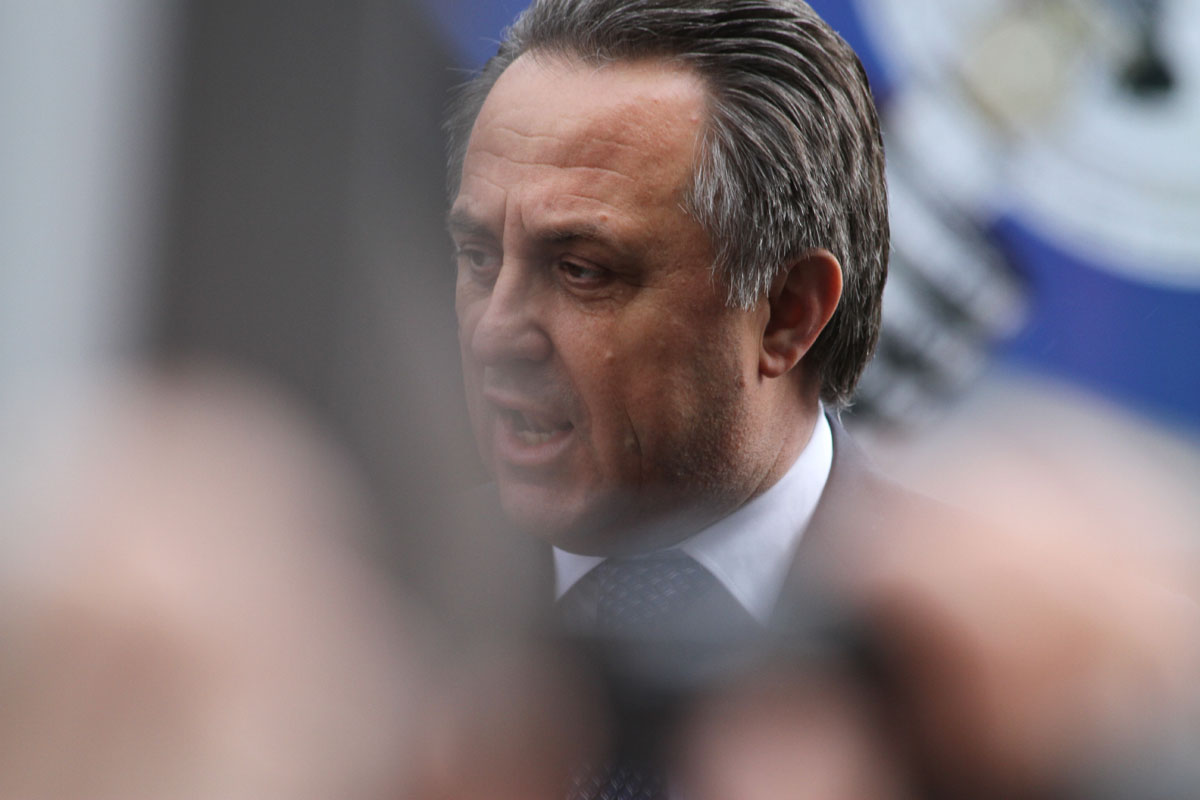
Vitaly Mutko once again touched on a very painful problem for Russian sports - the separation of the spheres of the authorities.
There are two parallel structures involved in the organization of sports life in the country. One is state, this is the Ministry of Sports. The second is public, this is the Olympic Committee of Russia and all the national federations acting under its auspices in sports.
Strictly speaking, if it is so necessary to have two sports and organizational structures in the country (and in Soviet times there were three of them-party curators were also added), the “water development line” is determined very easily. There is a sport of higher achievements and there is "physical education for health." The first exists on the verge of show business, there are the highest salaries and cosmic level technologies. That is, - professionalism. The second is characterized by mass, "universal", that is, the average level of results, understanding of sports as leisure of a special kind, low salaries of coaches. In a word, amazing, in the good sense of the word.

Theoretically, the Ministry of Sports should do the state affair: the health of the nation. Physical education in schools and universities, in courtyards and athletes. Sports grounds, rinks, football fields, tennis courts and gyms for a massive visit. Sport as an integral part of medicine, physiotherapy exercises - and so on. The state should allocate funds for this, and regional administrations - to master this money.
The Olympic Committee can solve its problems without attracting public funds. Sports are a large show, a lot of money rotates there. And to attract additional state money there, especially in those days when the national economy cracks at the seams, at least, strange.
Of course, these spheres have an intersection area, for example, an important point in the transition of a young physical education at the category of a professional athlete. These areas in the West are mainly engaged in student sports - the most serious part of the sports industry. In Russia, student sport does not have a small share of such popularity and commercial potential. But on the other hand, the share of state influence on the so -called "adjacent sector" significantly exceeds all others. In essence, in Russia, almost all of the sport is recognized as a zone of particularly important state interest - including in its commercial component.
"Some suggest giving everything to the federations and wait for the result. I understand that you can be superfluous when you are responsible for everything yourself, but look at the scoreboard-this is the result of the 2014 Olympics . If we went a different path, we would not have received anything," the Russian athletes said at the Games in Sochi, although the sports federations, according to the minister, were calculated a couple of years ago. Only in the fifth and sixth place.
Mutko said that the OKR was allocated 120 million rubles for contributions to various sports federations. “But we won’t give it anymore, since there is no information where this money is spent,” the minister said. According to him, Russia was in the backyard due to the poor work of the OKR.
In general, everything is clear. The Russian state invested and will invest tremendous money in the sport of the highest achievements, even to the detriment of "folk sport". The reason is simple - the highest "advertising" of sports, great attention that is focused on sports in the country and the world. With the help of sports victories, it is easy to prove that your country is the best in the world, you can educate the population with high feelings of pride in your winning and “rising from the knees” of the state ... You can, regardless of costs, “give the world a sports festival” - the Winter Olympiad in Subtropics or the World Cup.
Well, besides, Vitaly Mutko said that changes have already been agreed upon in the state program "Development of physical culture and sports", and the program itself will be signed by the Prime Minister in the coming days.
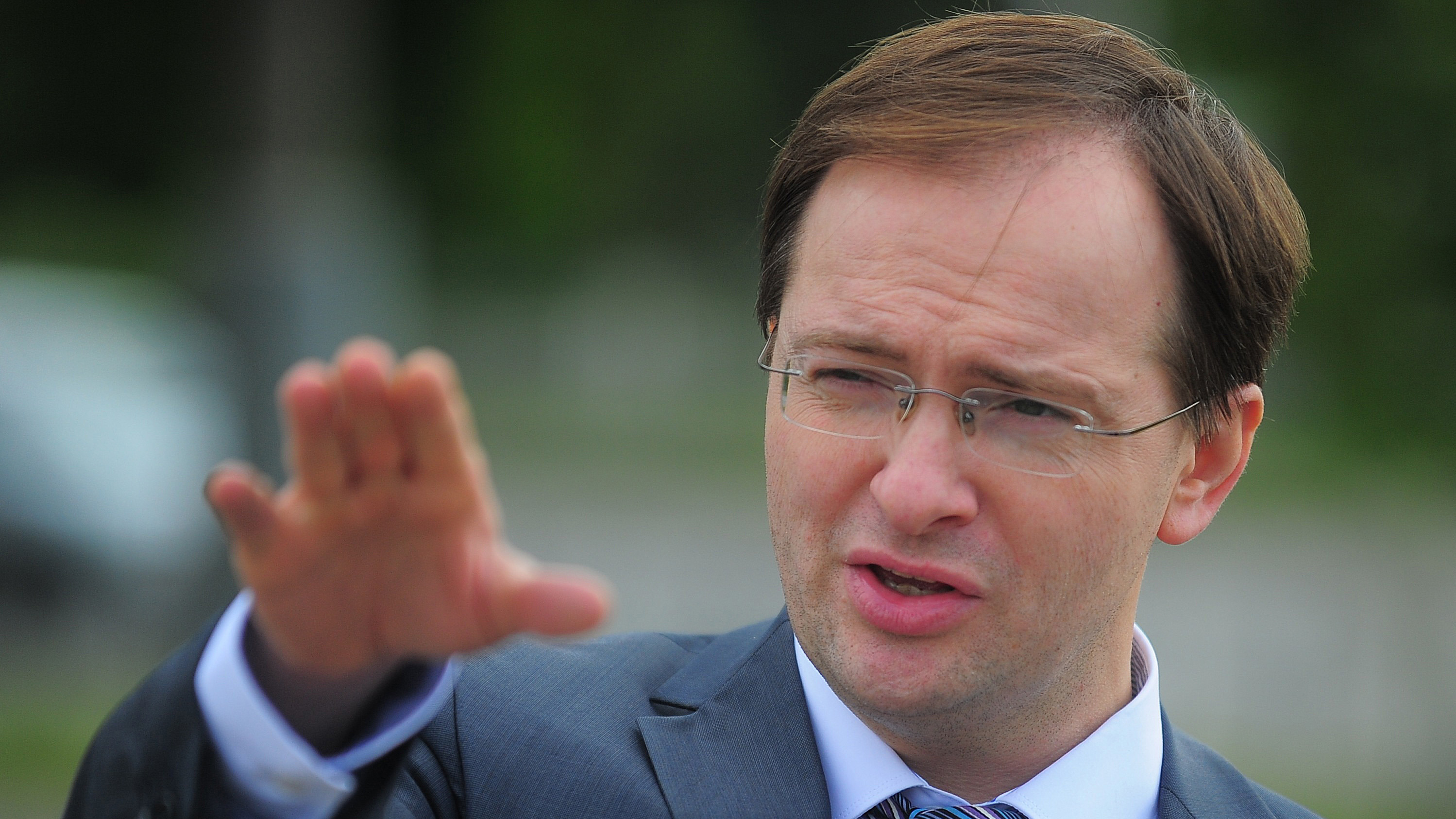
It is interesting that almost on the same day the Ministry of Culture of the Russian Federation sent to the presidential administration the draft program "Fundamentals of State Cultural Policy", the task of which, according to the Minister of Culture Vladimir Medinsky . According to the project, the state will cross "from the support of" fashionable "," elite "and certainly provocative to the support of talented and socially significant." Cultural projects that promote any perversions, directly opposite to the traditional values of Russian society, will not receive state support, but no one will prohibit them, ”Medinsky said in an interview with Kommersant .
The coincidence of the statements of the two ministers is very eloquent! So, according to Medinsky, "fashionable and provocative" is opposed to "talented and socially significant." From here there is only one step to the Gulag term "socially close" ... but now it did not give it. The difference between culture and sports, of course, is available. In sports, willy-nilly has to not only be supported, but also to educate pronounced leaders, winners. In culture, leadership is very often manifested in extraordinary forms, which may not be supported in financially (and then you can also rejoice to direct prohibitions). However, the idea is the same: culture (like sport) - "a means of forming social cohesion in conditions of cultural diversity." You can also recall that last week the State Duma discussed the draft concept “aimed at building a special system of education and education of citizens”, which says: “Russia must maintain its unique state-civation state, its moral and spiritual foundations, reveal to the world, but not dissolve in it.” And the purpose of the Russian state is proclaimed "the return of a strong, unified, independent in all respects in Russia, committed to its own, inherent only to it model of social development."
So, centralization in everything - in sports, and in culture, and in education ... For the example, as easily guessed, the Soviet Union is taken. Or modern China. Or, less nice, China of the time of the "cultural revolution" ...