
Translated material
Caution of the Great War
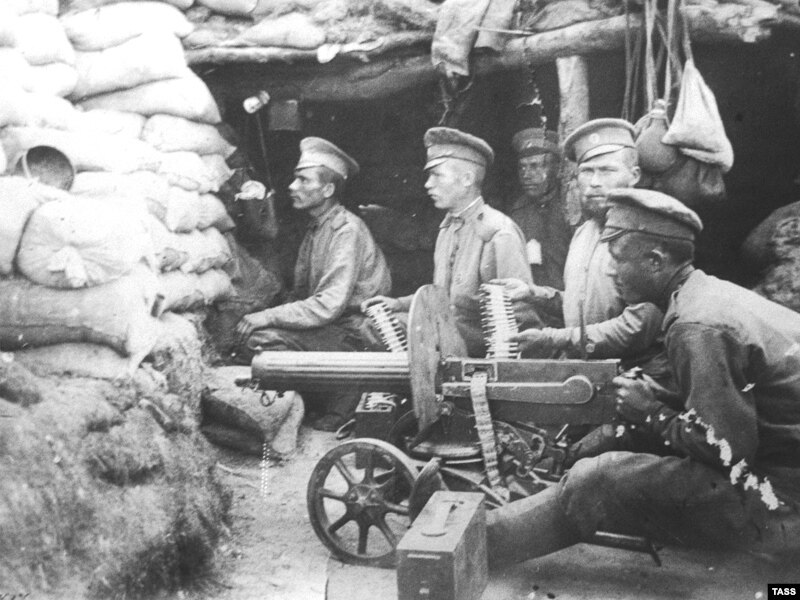
From now on, access to the Russian archives of the First World War reminds how international crises arise
The Russian Ministry of Defense announced the beginning of a large project-the creation for the 100th anniversary of the beginning of the First World War, which will be celebrated on July 28, a special site "Memory of Heroes of the Great War" , where information from Russian and foreign archives will be available. Almost simultaneously, the head of the Russian Federal Archival Agency Andrei Artizov said that all the documents of the First World War, which are stored in Russia, are now in the public domain and can be seen from anywhere in the world. The two these news, regarding the memory of the First World War in Russia, leave an unequal impression.Message of the head of the Federal Archival Agency of Andrei Artizov that all documents of the First World War, which are stored in Russia, have been in the public domain from the past Monday, and their inventories are posted on the Internet, on the website of the military-historical archive, cannot but rejoice both professional historians and everyone who is interested in history and wants to have an idea of it not only in different quality to popular books, but also from popular books, but also from popular books. primary sources. Moreover, we are talking about the First World War - an era that played, without any exaggeration, a fatal role in the history of Russia.
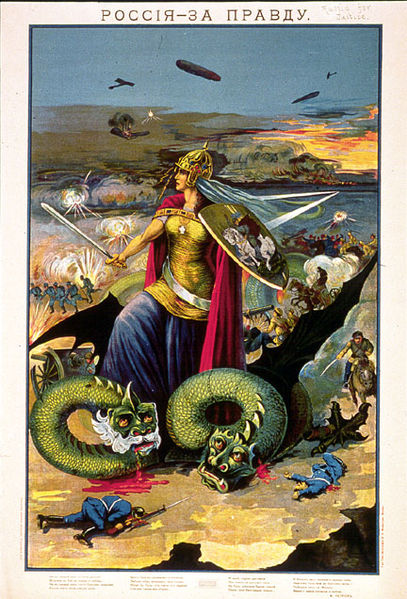
Digitization, systematization and transfer to open access of more than 300 thousand archival affairs - a fruit of huge and long -term work. In the post -Soviet years, Russia, fortunately, began to quickly reduce the lag from other European countries in concerning the archival and historiographic study of the First World War. After all, the Soviet era of this kind of research was not favored. In the official Soviet historiography, the First World War was mainly present as a prologue to the Bolshevik revolution and the visual expression of the crisis and the decline of the "damned royal regime." Interest in it as an independent - very important - historical event was very small compared to Western countries. For example, collections of documents regarding the July crisis of 1914 and the outbreak of war, first released in the USSR back in the 1920s, were very incomplete and were ideological "editing" in the spirit of Bolshevik ideas about the First World War as "the fight of imperialist predators."
Therefore, the current full opening of archives can be considered an excellent gift to the whole society for the centenary of the outbreak of war. Moreover, the popularization of the history of the First World War, or the Great War, as it is commonly called in Europe, is still relevant for Russia. Indeed, despite all the efforts of historians, about the war, which led to the collapse of old Russia, the general public is still known much less than about the Second World War. Although, according to the representation that was tended among historians, which we tend to share, the tragedy that began in 1939 and ended in 1945 was largely a continuation of the 1914-18 war-wars, which created much more problems and conflict nodes than it removed.
The other news of the last days is the intention of the Ministry of Defense of Russia to create an Internet portal under the name "Memory of the Heroes of the Great War." According to Andrei Taranov, the head of the department of this department for perpetuating the memory of the dead during the defense of the Fatherland, it is planned to post information from Russian and foreign archives related to the First World War, as well as interactive military operations, photographs and models of memorial facilities located in Russia and Europe.
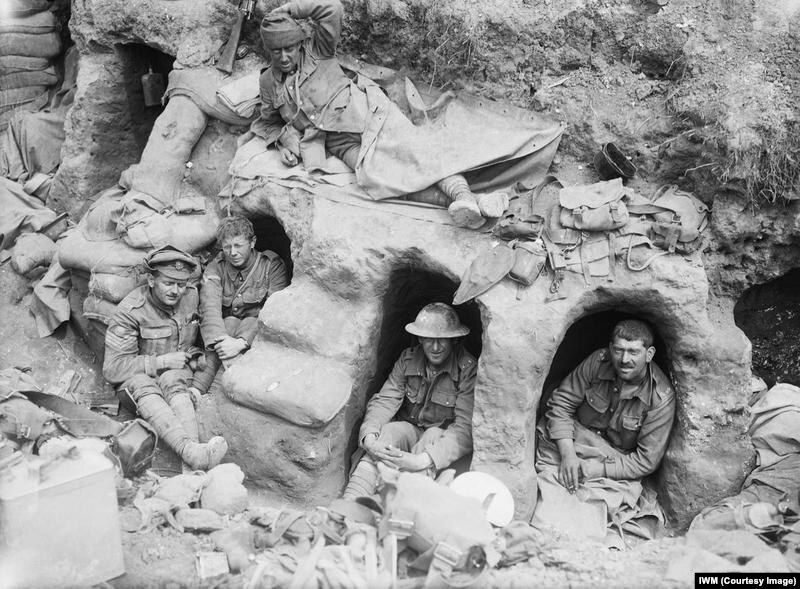
It would seem that a good deed. But certain questions arise about how the history of that war on the site created by the military department will be presented. The atmosphere of a hurra-patriotic upsurge, stimulated by the authorities in connection with the events around Crimea and Ukraine, makes you doubt that the approach to the events of a hundred years ago will be objective and unbiased. That it will be aimed at the fact that it is most valuable in the study of Russian historical experience of the First World War and what does it now, after a hundred years, unexpectedly relevant. This is a mechanism for the emergence of international crises. This is the appearance and disappearance of the patriotic "fever". This is the heroism of soldiers and officers, used by rulers in order to achieve foggy geopolitical goals. This, finally, is the output of an external conflict into an internal crisis that resulted in a revolution and destroyed the former Russia. All these are much deeper and most important things than a kind of “game of soldiers”, studying the war in the directions of offenses and retreats and numbers of losses of the parties in separate battles. Too often recently, history in Russia has been used to justify a relevant policy.
The historian-archivist Nikita Brusilovsky recalls: no one can deny that Russia's participation in the First World War was very large, but on the eve of the 100th anniversary the use of pseudopatriotic rhetoric and pathos expressions, such as, for example, “Russia has again saved Europe” (and they are increasingly starting to flicker in certain circles), this is at least at least Unprofessional from a scientific point of view:
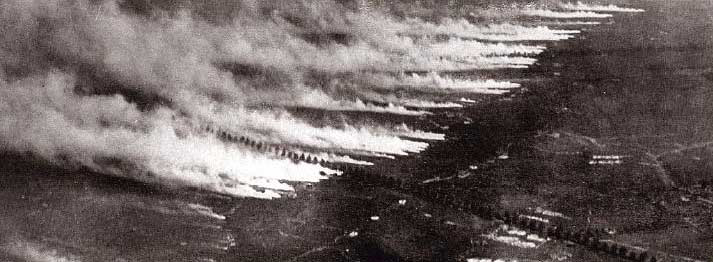
- Russia helped its Entente allies a lot, because it pulled a significant part of the forces of the triple union . When the war began, Russia won a number of major victories, not so much over the Germans as over the Austro-Hungarian army, which was not so strong and large. The Russian army very quickly moved forward around the territory of today's Western Ukraine, Transcarpathia, that is, lands, which were supposed to be attached to the Russian Empire based on the results of the war. And the local population as a whole then this movement of troops welcomed. Even the Russian administration was created, it appeared, very not for long, the Lviv province, the city of Lemberg was returned to the historical name of Lviv. But then , as a result of the great retreat of 1915, all this was lost . Vienna very quickly fell into a difficult situation, and the Germans, like the allies of the Austrians, had to save them, as a result of which they abandoned huge forces precisely at Russia. Poland, Western Ukraine, and other lands were lost. But this, of course, significantly delayed German forces. And plus, of course, military operations against the Ottoman Empire - Russia was not used to, and it won the victory, captured Western Armenia, which now remains part of Turkey, and moved actively along the Black Sea coast.
-You mentioned one of the most popular theories in the mass Russian pop system, as I call it that in this war Russia at the cost of self-sacrifice saved other countries of the Entente from imminent defeat, and then, in 1917 and further, the Entente betrayed the ally. And this first led to defeat from Germany and Austria-Hungary, and then to the victory of the Bolsheviks in the civil war, which began in Russia when the World War I had not ended all over the world.
- This, in fact, is quite strange. Firstly, the Entente countries later helped the white movement, the question is, of course, how active, but help, and, secondly, it would be extremely stupid to shift the responsibility for the revolution and everything that happened after February 1917, to Western countries.
-In modern official Russian history, it is generally always believed that Russia is one of the victorious countries in the First World War. Despite the fact that the state called the Russian Empire disappeared from the world map before its end, and the leaders of New Soviet Russia instantly concluded with the enemy the Brest-Lithuanian Peace Treaty , which they themselves called the obscene. How are these historical myths all today fit in the heads?
- To call Russia a winner in the First World War is absolutely wrong, this contradicts the historical truth. The Brest world - he was not shameful in the history of Russia. Not only because significant territories were rejected from the state, and colossal monetary indemnities were supposed. The very fact that the war, which lasted almost four years for Russia, ends with such a shameful world - this, one might say, was the "Russian Versailles".
Calling Russia the winner in the First World War is absolutely wrong, this contradicts the historical truth
- This is regarding modern Russian historians. But for Soviet historians this did not exist at all, they looked at the First World War as a war of classes, the war of gentlemen against each other.
- Yes, that was the idea of the Bolsheviks at that time, and it will pass through the entire Soviet history with a red thread. They spoke about this very loudly, as in the 20s, when they continued to make a world revolution, then, during the Stalinist patriotism of the era of the Great Patriotic War, when they began to push the idea of the world revolution back, but still, in the post-war textbooks, one way or another, this idea slipped. That is, they either spoke about the First World War from the negative positions that this is an imperialist war, and the proletariat in it has nothing to do, or they did not say anything. In this sense, by the way, the declassification of the archives that happened now is a very big plus for historians, because it becomes possible to objectively consider real historical sources, without any comments and Soviet historians, and any others, and to draw conclusions on this basis, ”says the historian Nikita Brusilovsky.