
Translated material
The case of Pavlensky is closed
The case of Pavlensky is closed
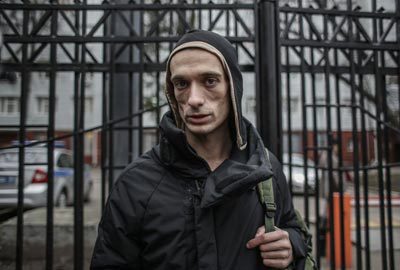
The criminal case against the actor-acting artist Pyotr Pavlensky, instituted after the rally on Red Square in Moscow in November 2013, was terminated due to the lack of corpus delicti.
“The investigation came to the conclusion that in the actions of my client there are no extremist motive, and in general any corpus delicti. The case has been terminated, ” ITAR-TASS lawyer Ramil Akhmetgaliev told ITAR-TASS.
On November 10, 2013, Peter Pavlensky nailed himself to the paving stones on Red Square. On November 13, a criminal case was opened under Part 1, paragraph “B”, Articles 213 of the Criminal Code of the Russian Federation (hooliganism based on hatred or enmity). The maximum punishment under this article is five years in prison.
“Come to the Museum of the History of Medicine and Psychiatry. There, ask about Pavlensky, ”the Minister of Culture Vladimir Medinsky commented on the action .
The defense conducted several independent studies, including using a polygraph, which confirmed that the artist gave true testimonies as a suspect, as well as the absence of an extremist motive in his campaign. The results of other independent studies showed that the actions of Pavlensky were a form of contemporary art - actionism.
“The motive of the Act of Pavlensky was aimed at showing a socio-political situation in Russia in a metaphorical form,” Rapsey quotes a decision on the termination of the case. In connection with the termination of the case, the measure of coercion in the form of the obligation of Pavlensky about the turnout was canceled, and the right to rehabilitation was also recognized as it.
On February 23, 2014, Pavlensky and several more activists set fire to an impromptu barricade from car tires on a low-adulthly bridge in St. Petersburg in support of those who protested in Kyiv. On February 25, the administrative case against Pavlensky under the article “Minor Hooliganism” was terminated .