
Translated material
The European Union and the United States threatened Russia with "serious sanctions" if the Geneva agreements were torn off
Western countries promised to impose new sanctions against Russia if it does not fulfill the agreements that were reached during four -sided negotiations in Geneva on April 17. This time, European politicians say, restrictive measures will "seriously hit" in the Russian economy, and their consequences "will be long."
Geneva agreements, in particular, suggest that all parties that the Ukrainian crisis affects the future from provocative actions, and illegally occupied administrative buildings in Ukraine will be released. The implementation of all the agreements of the agreement should be monitored by the special mission of the OSCE.
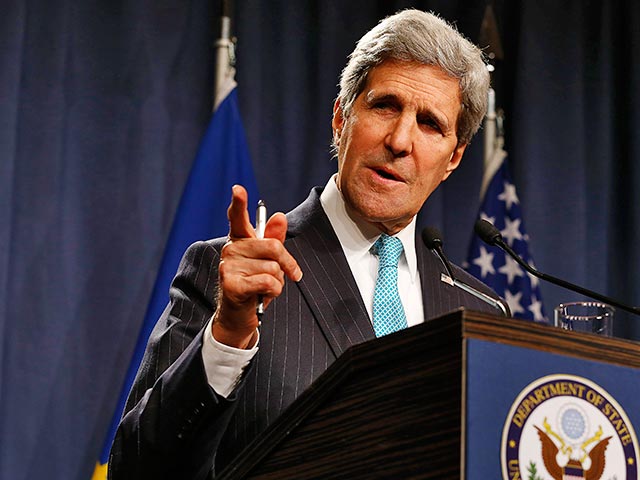
“We expect the Russians to show their responsibility and insist that those who support them put up their weapons, leave the buildings and take part in the constitutional process,” said the head of the US State Department John Kerry, whose words are quoted by the Ukrainian Pravda newspaper. Western leaders believe that the Russian authorities are behind the protests in the east of Ukraine.
If the Russians "do not show their responsibility", then, as follows from the words of the French president Francois Hollande, new sanctions are waiting for Russia. According to the resolution of the European Parliament, adopted on April 17, European countries are recommended to introduce an embargo for the export of weapons and technologies. In an interview with the Ukrainian Focus magazine, the head of the German Ministry of Defense Ursula von der Layen said that the new sanctions are most “stronger and for a long time” are affected by the Russian economy. First of all, according to Layen, this should be expressed in the outflow of capital, which is already predicted by the Ministry of Economic Development of the Russian Federation. However, she also admitted that new restrictive measures will influence the world economy, reports DW-depend .
Great Britain will also advocate the introduction of a new portion of restrictive measures against Russia in the event that Moscow does not comply with the terms of the agreement on Ukraine, reached in four -sided negotiations. "I had a telephone conversation with the Minister of Foreign Affairs of Ukraine on the implementation of the Geneva Agreement, and the UK supports the introduction of additional sanctions (in relation to Moscow. - Note by Newsru.com ), if Russia does not follow the agreements (achieved in Geneva. - approx. Newsru.com )," wrote the head of the British Foreign Foreign Affairs of William Heig Twitter .
To discuss the new package of sanctions, the leaders of the European Union intend to gather on April 24. Presidential candidate Yulia Tymoshenko, after a meeting with the head of the European Parliament Committee, Elmar Brock, said that "if there is no aggression, the premises will not be unlocked and troops will not be withdrawn from the territory of the Donetsk and Lugansk region, then on Thursday the summit in order to make a decision" about new sanctions.
“We all hope that the Russian Federation will fulfill the agreements that were reached in Geneva, namely, unlock administrative premises in Donetsk, Lugansk regions and withdraw its troops, which operate as terrorists, from the territory of Ukraine,” the Tymoshenko press service of the Fatherland party.
Currently, the United States and the EU are already operating against Russia. They relate to persons who, according to Washington and Brussels, are involved in the Crimean separation from Ukraine and the accession of this autonomy to the Russian Federation. Basically, sanctions were applied in relation to several dozen politicians and part of businessmen close to power. Among the restrictive measures is a ban on entry into the USA and the EU, as well as blocking accounts in American and European banks.
Some Western politicians call the imposed sanctions "funny" and offers not to directly affect Russia. Senator John McCain, according to Radio Liberty , offers to speed up the process of integration of Georgia and Moldova into NATO structures in order to prevent the possible "occupation of Transnistria by Russia." Earlier, a referendum was held in Transnistria, according to which the vast majority of citizens wished to join the Russian Federation.