
Translated material
The path is east?
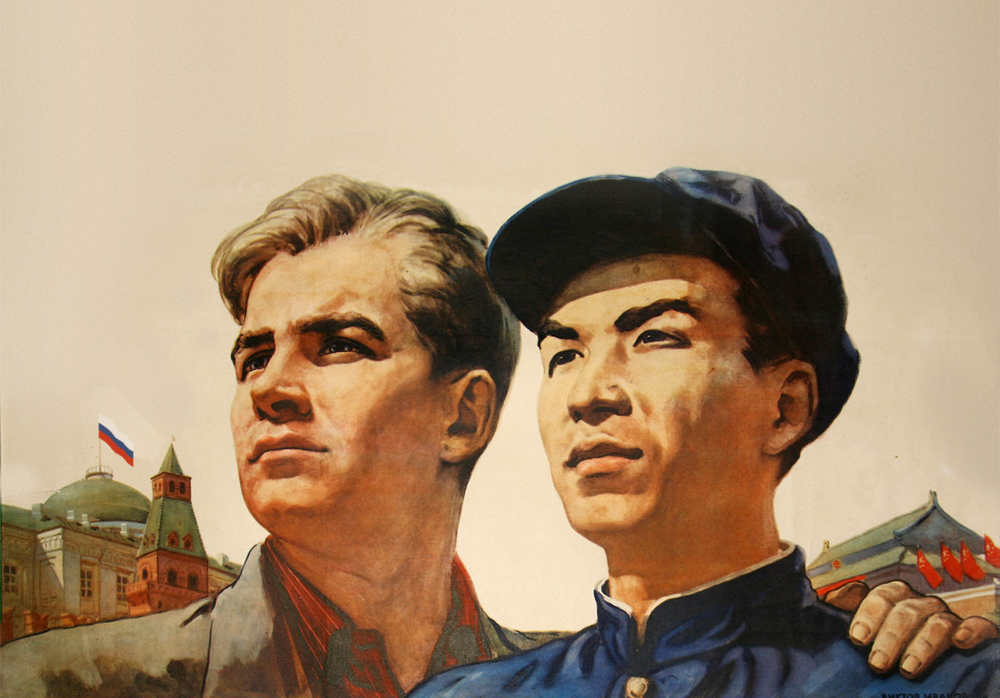
1954 poster. Artist Viktor Ivanov
In February 2014, the press secretary of the President of the Russian Federation Dmitry Peskov announced two visits to China planned by Vladimir Putin this year: in May-to Shanghai, and then to Beijing, along the way (or on the way back from-did not specify the sand) for the Twentieth Summit in the Australian Brisben, planned for the November. But since February, too much has changed in the world. The relations of Russia with the West are spoiled, relations with China - for the same reason - gained a special weight for Moscow. Until the fact that the Kremlin, according to rumors, is ready to give in to Beijing on the issue of prices for Russian gas in order to sign an agreement on its supplies during the May visit of Putin.
Can the military-political union of both countries become the result of Russian rapprochement with China, asked Vladimir Putin during a “direct line”. No, the president assured, the question is not posed. Yes, and the block system has long outlived itself, although Russia has already been conducting joint military exercises with the PRC. The main thing, Putin specified, in another: China in the foreseeable perspective - after 10, 15 or 20 years - will inevitably become an economic power number one. So, Russia has a reliable strategic alternative to the West. However, even before the Direct Line -2014, the idea began to hover in the Stubmrevsky circles: the “Russian world” as an alternative to the West will grow Asian. Whether the calculation is correct - for explanations The New Times turned to experts:
Vladislav Inozemtsev, Doctor of Economic Sciences, Director of the Center for Research of the Post -Industrial Society:
The quarrel with the West does not automatically open for Russia the possibility of rapprochement with China. The dualistic view of the Russian global choice - either America or China, quarrel with the West, get closer to China - is fundamentally wrong. The world in which China lives, paradoxically sounds, is much more “modern” than the one in which Russia lives. The Chinese leadership will not be friends with us just because we quarreled with America. China behaves much more carefully and calculates all its steps in the international arena much more carefully. The Chinese topic, if the Kremlin wants to discuss it seriously, should stand in the center of the entire Russian foreign policy.
For example, no matter what they say in Moscow about the restraint and “understanding” of China in the Ukrainian question, Beijing is very preoccupied with the situation around Ukraine. China perfectly understands: Russian political tools in Ukraine may be universal. The slogan of “our own”, which underlies Putin’s policy, may well be applicable throughout the post-Soviet space-in Kazakhstan, Kyrgyzstan ... And China has their own interests in Central Asia and, in addition, their problems with separatists in Syngyan-Uyghur Autonomous Region.
Interests
 |
 |
Europe will not refuse the import of our energy carriers from tomorrow - the process will take several years. During this time, Russia can redirect a significant part of the energy export to China, forcing technological solutions to the issue - having built new pipelines, improving the port infrastructure, etc. The problem here is different.
Europe is not just one of the most economically developed regions of the world. Europe is an economy that can be called post -industrial. China cannot boast of such a level of development, it is “only” the largest and most dynamic on the planet, but still an industrial power.
Russia is not even an industrial country. The reorientation from the post -industrial strategic client to industrial means for it a reduction in income and, more importantly, to a certain extent, loss of prospects.
If Russia began a conscious transition from its current state of the raw materials appendage to something more, that is, to the industrial status, the Europeans would support it-they are interested in a powerful industrial base in the east of the continent. Actually, this is the European idea: let Russia become an industrial power, we have what orders to download it, what technologies to give it. Industrial Russia is a positive incentive for the EU. That is why "partnership for modernization" was proposed.
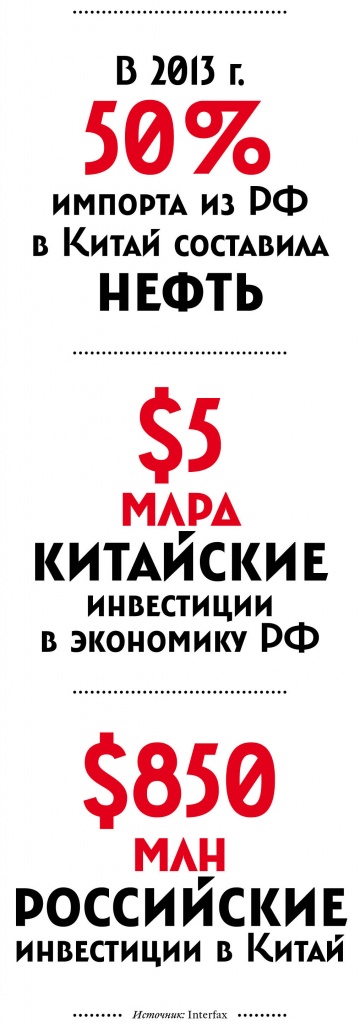
China is completely different. He will never be interested in industry to develop in Russia. China, I repeat, itself is an industrial country. He is interested in the fact that we remain a gas station, if only to download oil and gas. Yes, we can reorient the export of our raw materials to China, but in the technological, industrial sphere from cooperation with Beijing, to expect some serious breakthrough into the future, in principle, it is impossible.
When the Europeans understand that we are leaving, they will not hold us for the phalda. Europe is now busy with the search and development of alternative energy sources, and Qatar and other Middle Eastern emirates will easily take our share of the raw material market. But China, having heard the signal “We go to you” from Russia, will immediately conclude: Russia does not have industrial export, and now there is no alternative and raw materials - so it can be calmly “squeezed” at energy prices.
Costs
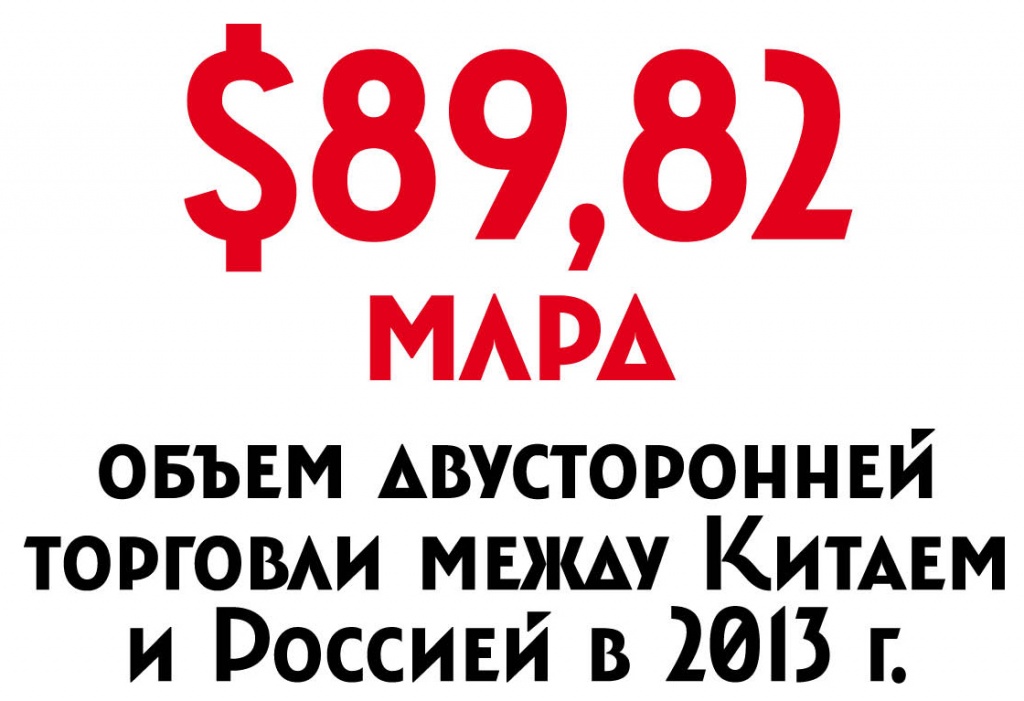
Optimists refer to a sharp increase in trade between the Russian Federation and China in the last 20 years. (Vladimir Putin during the Direct Line called the current figure of $ 87 billion, according to the China Embassy in the Russian Federation, the volume of bilateral trade in 2013 reached $ 89.21 billion.) However, the increase in the turnover is due to an increase in Chinese exports to Russia, and not ours to China. Here are the numbers: in 2000, the volume of Chinese exports to Russia was $ 950 million, in 2012-$ 51.7 billion. Similar figures for Russian export to China: $ 4.5 billion-in 2000, $ 16.3 billion. In the first case, a height of 55 (!) Once, in the second - only 4.5. The growth of trade occurs due to the increase in Chinese exports to Russia - and I'm not even saying that the share of industrial goods in our supply to China is less than the corresponding share in our supplies to Europe.
Change dependence on Europe for dependence on China is easy, especially now, on the wave of anti -Western rhetoric. But if tomorrow the conjuncture changes and we need to turn around in the opposite direction, what then? After all, it may turn out that there will be nothing and nothing to change the “Asian path” - after all, in the world as a whole and in each region there is a certain level of energy needs. Now Europe and China consume approximately 25 million barrels of oil per day (the EU is a little less than 15 million, China is a little more than 10 million). 4.5 million barrels go to Europe from Russia. We cannot suddenly take and redirect this oil to China - it does not need so much oil in addition to the consumed 10 million barrels. If this happens, China will abandon part of deliveries from the Middle East and from Africa, which, in turn, will easily tighten the volume that Russia will undergo Europe. Turning away from Europe, we will not “substitute” it: oil production corresponds to demand, sellers will always be found. Moreover, all the oil and all the gas that Europe consumes today account for approximately 4% of the EU GDP. If energy raw materials rise in price even by 20% of current levels, it will not be 4% of GDP, but 4.8%. Loss of 1% GDP - what is not the price of protection against Russian "energy policy"?
But for Russia, a sharp roll towards China can turn into real costs. Talks about the signing of a contract for the supply of Russian gas to China have been going on since 2006. Each time they promise to sign "in a month." And so - endlessly. Since there is no agreement, therefore, the parties are desperately traded. It is clear and the issue of bargaining is the price. That is, for 8 years (!) There is a price coordination. Was there something similar to Gazprom in relations with Europeans for whom the supply of Russian gas is a matter of real life support? There was no. But China can afford to bargain for years.
Now China sees: relations with clients in the EU at Gazprom are spoiling. And if indeed on the eve of the Putin visit to the Celestial Empire, the prerequisites for the achievement of the agreement appeared (the Chinese officials were talking about this now. - The New Times), then probably due to Russian concessions. The Beijing contract is fraught with Gazprom at least 20 percent loss of revenue compared to average European prices. In 2013, Gazprom supplied gas to the far abroad (read - in the EU) an average of $ 387 per thousand cubic meters. For 2014, the monopoly predicts the price of $ 372. Negotiations with China have been going on all these years in an atmosphere of complete secrecy, but if we agree at a price above $ 300–310 per thousand cubic meters, I personally consider it a great success for Russia. We add additional costs in the form of a pipe construction here.
Initially, Moscow’s choice was the choice of Europe as the main consumer of our energy alien. The idea of diversification of supplies in itself is good, say, 75% of oil and gas go to the EU, the remaining 25% to China. But diversification and reorientation are different things. China, as the same long fate of a gas contract shows, is a much more complex and unpredictable partner. To consider it the only alternative to the European market would be the height of naivety.

Alexander Lukin, Vice -Rector Diplomatic Academy of the Russian Foreign Ministry, Doctor of Historical Sciences:
In the Ukrainian issue, China generally supports Russia. Both in the statements of officials, and in the articles in the party press, in particular in the newspaper Zhenmin Gibao, and in the messages of the Sinhua agency all these weeks, the idea was held that the crisis in Ukraine was provoked by the West, the Russian response is quite logical. Moreover, it is said that the West, and especially the United States, underestimated the determination of Russia to defend its interests.
The only thing that China does not officially support is the accession of Crimea: Beijing always defends the principle of the territorial integrity of all states, and it does not leave its fundamental position. He adhered to it during the Russian-Georgian conflict in 2008. This is explained by China’s own problems associated with separatism.
| *China abstained when voting by resolution in the UN Security Council in the Crimea. |
On the other hand, even on the Crimean issue, China openly did not condemn Russia, taking a neutral position*. Russia has been building partnerships with China over the past 30 years - “based on partnership and interaction”, according to the 2001 agreement. Europe and the USA technologically surpass China, but if they will block high -tech imports as a result of sanctions, we will be able to partially reorient in Asia countries, primarily to China. Let not all positions, but almost all. In China, now, by and large, everything is produced - from computers and consumer goods to the pipeline. Russia needs China as a supplier of not only energy carriers, but also, for example, weapons, which, due to EU and the US sanctions, he cannot purchase from other countries. However, Moscow does not raise the question of a complete refusal to cooperate with the West.
Russia and China are strategic partners, but this partnership is unlikely to reach the level of the Military-Political Union. They do not want this either in Moscow or in Beijing - both countries pursue an independent foreign policy.
The majority of the population in Russia in mental, cultural and domesticity gravitates to European civilization. Speech about the reorientation of the country to Asian Confucian values cannot go. But the understanding of the international situation, international relations and their further development in us, at the level of elites, in any case, closer to the Chinese. This is caused by the real foreign policy interests of our countries. Russia and China are supporters of the concept of a multipolar world, in which there are several centers of strength and influence. A single -Polar world, in which the powerful center refuses to listen to their voice, is not suitable for them.
The West must understand: the more it will repel Russia from itself, the more actively it will move in the eastern direction, towards China, other Asian countries with fast -growing economies. Russia simply will not have any other choice.