
Translated material
Lost addressee
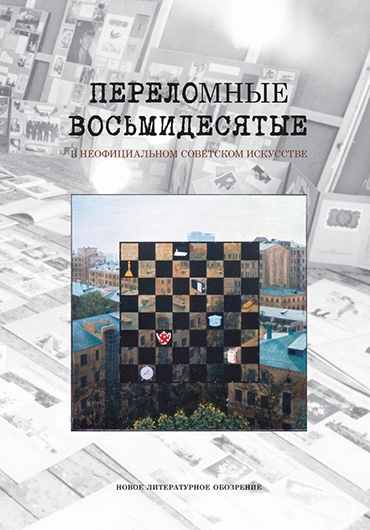
The new collection of articles (editor-compiler-George Kizwalter) “Fracture eighties in the unofficial art of the USSR” , dedicated to the 1980s in unofficial art, like the previous one, dedicated to the 1970s, is the base of historical sources: monologues and interviews of artists, mostly close conceptualists, but also metarelists, new artists, foreigners, foreigners, foreigners, foreigners, foreigners, foreigners, foreigners, foreigners, foreigners, foreigners, foreigners, foreigners, foreigners, and new artists guests of the USSR; It has yet to be analyzed. When I am talking about the analysis, it is not quite about describing the 1980s as something whole and independent. This is already trying to do this Kizwalter himself in a generalizing introductory text, as well as authors of other articles that sometimes offer similar, and sometimes various periodizations of the era, usually coinciding in the division of decades by and after perestroika. But rather it is interesting to figure out how exactly the years later contemporaries speak about this time.
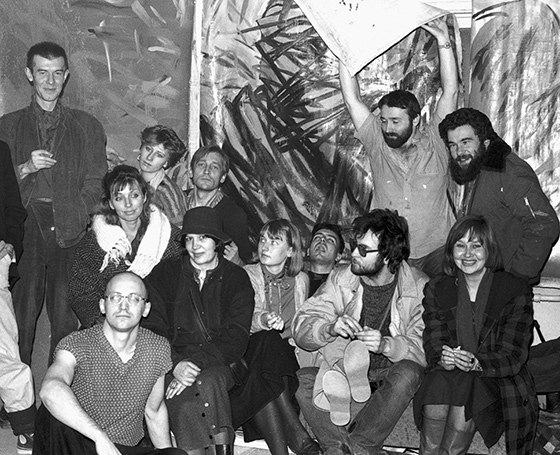 © provided by G. Kizwalter Squat "Kindergarten", 1985
Despite the mosaic of the book, which sometimes clarifies, and sometimes confusing the effect, in the speech of different contemporaries, general mental moves are traced, the general modalities of the memories of the 1980s from the 2000s, when it became clear what the attempt to create a “normal” art system in post-Soviet Russia led to. For example, the leitmotif of the texts is the topic of flaw, loss, lack. Or lack of imperfection in the art of the 1980s compared to the West, imperfection, which forced the artists themselves to “prosthet” many related functions of the art system; Either shortage as the loss of something along with the end of the era, when monetary relations that decompose human ties invaded the between the artists, and when the previous hope for a new fullness partially turned into a loss of what allowed us to hope.
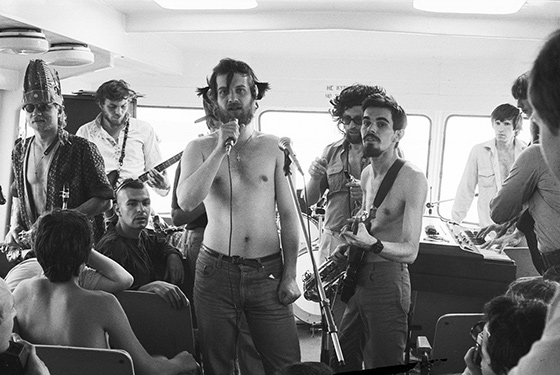 © provided by G. Kizwalter concert of the group "Central Russian Upland" on the ship
The Kizwalter respondents most often have two poles: the utopian far -out of the west and the closed system of the Soviet underground, and the official also, also official art. The average element in this bicopolar scheme “We are the distant West” is the most problematic, it is with it that the excitement and injuries of exit from the underground to perestroika are associated; This element is a society directly around the official and unofficial art produced in the USSR, the Soviet public. The lack of relations with this society forces Yuri Albert in his interview even to say that there was no contemporary art in the USSR until the 1980s as a phenomenon built into society. It is the impressions of the socialization of art in the second half of the decade along with impressions of the violence of power in his first half - the main punctum of the era for a variety of heroes of the book. The shocks of socialization include the first exhibitions open for the public of underground artists: for example, an exhibition of the Hermitage association, where residents from neighboring entrances, or the 17th youth exhibition in the arena, the first curatorial project in the Soviet Union, for which the organizers had to close the exhibition had to close the exhibition four days before the planned date. According to the book, the sensation expressed in different ways that this impulse of updates related to the anxieties of the socialization of art and with painful questions, how to present the Soviet outside world, passed as if a little by the goal, went somewhere in the wrong place-although what exactly went wrong, almost no one indicates. It seems that the problem is precisely in the “average term” of the couple “artists - peace”, in the Soviet society itself, which was subjected to such deformations that it was not up to modern art.
 © New Literary Review
A semi-nuclear, but constant presence of a number of this society: neighbors, janitors, firefighters-the background of all the stories of the book, which is about APT art , what about the squat "kindergarten" .
Artists are immersed in this world, work as guards, janitors, secretaries, but at the same time it is practically not perceived by them as a potential subject of dialogue. Behind the texts of the book, you feel a whole system of hidden parallel worlds of Soviet society, which do not have the strength or desire to know each other, but constituting a single reality together and are in uniform interaction, economic, social, political, which was the essence of the “Soviet”. You catch yourself on the fact that suddenly the adequate perception of that era for the person of my generation, who does not remember the USSR, is the view of the foreign galleryman Matthew Baun, one of the most flaer heroes of the book, superficially, but an intended Soviet society and equally interested in his sliding by the building of the Foreign Ministry, Helius Korzhev, Dmitry Nalbandyan, Andrei Monastery and Constantine Starning. But this tourist complacency of exotic curiosity disappears when you understand that inside this picture the failure of a public dialogue, the failure of the notorious publicity, which was one of the main slogans of perestroika, was already potentially contained, a failure that led to today's atomized state of society, where art is forced to click.