
Translated material
RELOCATIONS: Movement of poetry
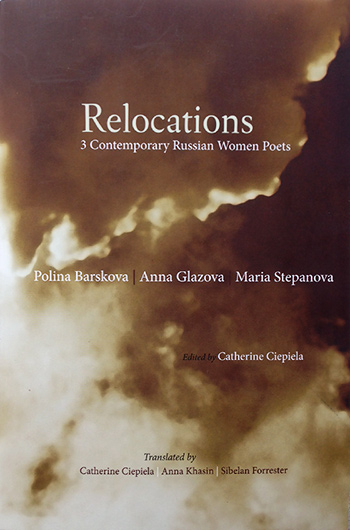
At the end of 2013, the book by Zephyr Press published the book “Relocations: 3 Contemporary Russian Women Poets”, compiled by Catherine Cepiela) and included Polina Barskova, Glazova and Maria Stepanova in Kristina's poems. Chipila, Anna Khazina and Sibelan Forrester. She just entered theBest Translad Book Award.
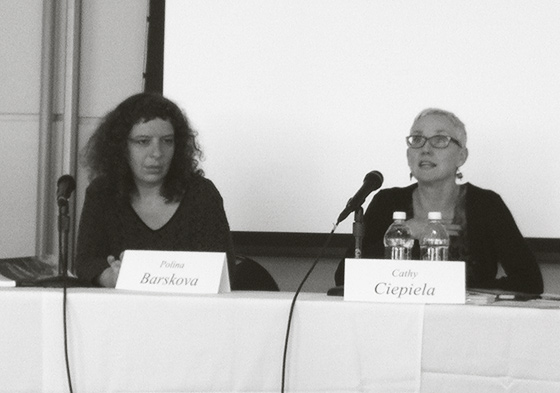
The presentation of the book was held at the University of Boston as part of the ASEEES annual conference in Boston. Colta.ru publishes Polina Barskova and Anna Glazova's performances at a panel discussion dedicated to the discussion of the book. We thank Jim Kates (Zephyr Press) and Boston University for their help in preparing the publication.
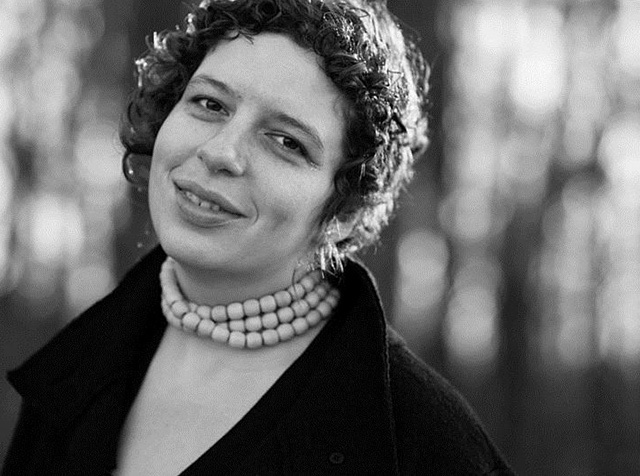 Polina Barskova
"The desire to belong to the St. Petersburg tradition is inseparable from the desire to betray it"
Katherine Chipila: I would immediately like to start with a conversation about St. Petersburg. What does he mean for you and how much do you identify with this city?
Polina Barskova: Yes, I think about myself as a person who began to write in St. Petersburg, but then this city seemed to itself Leningrad all the same. It so coincided that this year I teach in Harvard the course “Leningrad affairs” - the task of which, in particular, is to see the problem of the Petersburg tradition, continuity from the point of view of the culture of Leningrad. I am interested in how the legacy of the St. Petersburg monsters and giants of elegant literature was used and, so to speak, productively perverted by their Leningrad heirs. It is interesting how we can associate ourselves with that tradition. How far this position is now meaningful: to be part of the St. Petersburg poetic tradition. Sometimes it seems that this is an absurd idea. The desire to belong to this tradition for me personally is inseparable from the desire to betray it. In general, connecting oneself with the cultural figures and statements of such a force, such a scale cannot but be productively and destructive at the same time. This is also with the last of the great modernists, who firmly connected and associated themselves with Peter, with Brodsky. Where I live - in Amperst, in the state of Massachusetts - I have to hear: “Ah, yes, we have already lived with such a poet, Russian, with the same accent ...” And each time the demon -resistance and desire to object in me: oh no, I am not a Russian poet, I am a Brazilian dancer, I am a Parisian confectioner, I actually represent something completely different ... You were born there, that city and those texts absorbed, you don’t have a lot of choice - you can’t tear yourself away from them. First of all, do not disconnect from the characteristics of that dictionary, that prosodium. Just as you can’t tear off from those streets, and rivers and factory buildings, how not to forget, with whom you wandered and wandered ... Suppose, with the same most important St. Petersburg poets of the Leningrad period, Elena Schwartz and Viktor Krivulin, whom I had to know a little and whose translations went out at the same publishing house “Zepfir” - that is terribly pleasant, of course. And here we are approaching the paradox - to one of many, on which our anthology is built, as I want to think. One of the basic tasks, the basic principles when building it was a desire to confuse, confuse the reader-for example, so that there was no opportunity to arrange a cozy algorithm for themselves: “Yeah, women of this generation are now writing this way ...” Women (and this is obvious here) write very differently, while constantly changing ... We are not in this unity, consent, we generally come here to agree, but to be different, but to be different, but to be different. different. The same feeling of paradox is the idea of communication with tradition, in particular - with the Petersburg tradition; To be herself and to remain alive, she must constantly change. Otherwise, it is a dusty, boring museum, meaningless and sterile. And the idea of moving, setting the tone for our book, is associated with this idea of a change.
Probably, from my poems in this anthology, the most directly turned to the conversation about the St. Petersburg and Leningradsky “reference book of Leningrad Frontoviki writers (1941-1945)”, the text caused by my now very prolonged interest in cultural life in the besieged city. For various reasons, an open, serious conversation about blockade is now in Russia, and when they ask me - why, why are you doing this, it seriously seems that if I had not gone so far, I could not see it, do it. For some things, for their understanding, to restore relations with them, distances are needed - sometimes you need to be very far from yourself, from everything that has formed you, and suddenly for this reason you find yourself able to speak.
 © Zephyr Press
Chipila: Yes, I agree that in your verses some most striking shifts occur precisely because of this sensation of the gaze from afar-be it “far” geographical or historical. One of the poems important for me in this regard is the poems related to Shakespeare in which you are from afar, but at the same time you are very closely and intimately treated with a seemingly canonized, “fermented” material, making it part of your world and language, your problem. In the end, for me, the phenomenon of the “Petersburg poet” is a poet, mired, drowning in the texts (both those around him and preceding him), and your poetry is precisely what is teeming with allusions, both Russian and all kinds of other cultures. You are talking about the weight of tradition, but I know few who would raise the tradition, dealt with it - with the effect on the verge of shock, provocation ...
Aryel's message
Your father lies crushed by sea
He is the volume of the wave, he is coral.
Your father is diluted by the wind by the wind
His skin is bark
With a panic anta.
Squirrels of his eyes - proud pearls.
The yolks of his eyes became unbearable pearls.
His skull is a chorele.
Everything in him sounds, trembles.
Nothing fades in him,
But everything turns
In something strange, thick, promising.
In this solution, inquisitive non -regimes are immersed -
Observe the transforms of your father,
After all, nothing fades in him, but everything turns
In you, to you, Ferdinand: Your father is alive!
Your father is sleeping.
Your father is a ball
Red,
Naughty under a new bridge.
Your father is shame.
He is a fever
blindness, approaching when I look at him: the shell melts.
He is a tongue -haired one as a sting creeping from his mouth.
Your father is still alive, but he falls asleep.
Look at the sleeper, Ferdinand.
The stream of saliva flows down the chin.
So the snake neatly descends along the rock,
So the oily chain is spilled into the boat.
He sighs, but somehow not out, but inside:
Rather, locking the sound in itself than sharing it with us:
He is sleeping, Ferdinand. The ice flickens on his lip chick.
Breath is a very small thing rounded by dreams.
For me, this poem is about inheritance and continuation. And it quite clearly shows how you use this material of tradition, translating it into another register - often it is a bodily register. Could you say anything about the erotica of your poetry? This question is somewhat unexpected, sorry, but, in the end, this is an important method of handling verbal material for you. How does this feature of your poetics correlate with other manifestations of erotic in modern Russian poetry? How does this correlate with your individual interest in a decadent letter?
Barskova: It is in the decadence that the point here is, it is not for nothing that I delved into all these marvelous Guismans & Co with such gloomy stubbornness. In the end, decadence is inextricably linked with the fact that at that time happened in other parts of the European Duman - with biology, with psychology - well, these are well -known things ... This is a poem - it is my personal answer to the decadent question. The great “carrion” of Baudler is a poem about the continuation, that decay is also a continuation, that all forms of being are worthy of attention, and maybe desires.
And this is a poem about Ariel, who informs the boy Ferdinand that what he considers the end is actually not an end. With its terrible, fantastic, differing from the rest of the matter of the play, Ariel cancels death. It is the acquisition of the right to such messages that I see erotica. This is when you dare and say the impossible.
Once I had a conversation with one of the most important characters for me in modern Russian literary life - with Dmitry Kuzmin, who wrote in one of the articles about me that I am writing “erotica”. And I thought: where is it, in fact, where in all this photographically depicted horizontal joys? There are very few of them there. Nevertheless, by eroticism, I understand something else - appeal, addressing myself to another, the desire to connect your voice and a way to understand things with the voice of another. Sometimes this appeal is bodily, very often it occurs in other ways. Such a moment when a fantastic, all -hearted, non -poured, strange creature tells the prince and heir, murdered by grief: “Your father is alive, no death, he recognizes you, is still beginning,” is an erotica for me, because at that moment they are connected, incredibly needs each other. And the further question is a craft, my professional task is to create an illusion-while the poem lasts-that the king is alive, that January 1942 in Leningrad can somehow be remembered and understand that writing in Amperst is not an absurd limit. The creation of such an illusion is what it seems to me by eroticism.
Chipila: A conversation about maximum, minimal forms of life clearly occupies you and takes different forms. Now I think about your poems about the homeless. Some of these texts you call “physiological essays”, which echoes the interest in “physiology”, which we see from another author of anthology - Maria Stepanova. For me, these terms are associated with very distant times and names - Gogol, comb ... Now in Russian poetry there is a return to this?
 © colta.ru ASEEES Conference in Boston
Barskova: A good question, only very difficult. I emphasize once again that if the reader of this anthology is looking for a way to tie together Stepanov, Glazov and Barskov, to find the general in us - this will not happen. We are completely different, but at the same time they are sometimes occupied by overlapping things. In particular, we approach literature both as teachers and as philologists. We are not a pythium, I hope, but we rummage in literary material. Among other things, one problem is obvious and relevant there - an uninhabited, unlimited romantic impulse to the end. Perhaps, of the three of us I fought most and still struggle with his awareness, overcoming, germinating into something new and useful. For me, this is also very important, since I am doing a lot of the city and write about the city. And for me this is an urgent problem - how the most domineering way to write about the city, that is, from the point of view of “from above,” descends to other points of view. And here I am occupied by this literary group and the situation of “physiologists”-the young Nekrasov and others like him, whom the city was not interested in as a map outstretched in front of you, but just like something that you can be on an equal footing: you don’t take off with a movie camera, do not pronounce a brutal dialogue on the Wheel Wheel, which is happening in my favorite city film “The Third Man”, but you have the opportunity to breathe the city, but you have the opportunity to breathe the city, but you have the opportunity touch him. To be very close to him - and then you see: the homeless lie, bask in the sun, like in Berkeley, their dogs, their carts ... All this causes me feelings that I understand for myself as love - shame, disgust, pity. Such is for me a physiological city look, a gaze.
Chipila: And here is another topic that we somehow approached. It is customary to think a lot at the American Academy and talk about the relationship between politics and poetry. And you seem to have these things connected in some not quite in the usual way-the connection here is not external, but it comes from your variety of curiosity to the world, attachment to it ...
Barskova: Well, yes, the question of poetics and politics seems to be the main thing for us and fatal. And everyone is given him to everyone: “But this is political poetry? What is it at all? Are you doing this or something else? "
Yes, I believe that all three poets who are talking about here today are doing this, but completely differently and not as this may be expected. It seems that none of us has yet written poetry, directly covering the notorious theme, the current government is good or bad ...
Recently, my favorite Air magazine was conducted by a survey: “What is political poetry? How do you understand this? " Yeah, I understand that - one morning you wake up and know: now my poetry is a policy. And the most curious here is for me - how much this feeling can be subjective, individually. So once I realized that my blockade poems are already my policy. I am writing about those who were deleted from the "History", that is, from official history. They lived, died. They died the most terrible death, by the way. In addition, they wrote about this their experience, sometimes wrote absolutely wonderful texts-and then all this “disappeared”, or rather, all this is someone for a number of curious and dull reasons “disappeared”. This “disappearance” is generally a remarkable trick of the twentieth century, especially the Soviet century. And in the case of a blockade, this is still a million people at least ... And now I gradually understand that my political task today is such a scene of the people of Mazai and hares: to transfer shadows one by one from the world of an invisible to the world visible. To fight with the most passionate desire that I observe today in the Russian world is not to remember. And not that the desire was not clear to me somehow-in the end, the Russians (in the state, not ethnic sense, naturally) made and allowed monstrous things with them. I don’t want to remember this. But if you don’t remember this, hell opens, and that the most disgusting, the same, is already seen.
That is, for me politics is a look at the other, at the one whose voice is drowned by someone. Here are my poems ... I don’t know ... About Zinaida Bykova or Olga Matyushina - this is my policy ... I see the same impulse in the poems of Glazova and Stepanova. Impulse - to be distracted from myself, which, by the way, is the difference between erotica and politics for me, if we already have such a conversation. In the erotic world, we are still talking about your own pleasure, you are preoccupied with your sensations in a certain act, at a certain moment, and so, and politics is an attempt to break into the hell of another .
Chipila: And how are such thoughts - about other voices - are connected to you with the problem and the task of translation? This is no longer about disappearance, but, on the contrary, about the appearance, manifestation - in a new language, in a new culture. In addition, you came up with a special course about this and teach your students in Hampshire - about what the poet is able to do in the field of translation.
Barskova: Well, for example, in the light of our conversations today and our anthology, a translation of translation is a way to interrupt the enchanted and partly still a vicious circle of solipsism, loneliness, inextricable from our craft. And it is precisely the translation that is a way to let someone into your process. This is a very healthy thing sometimes. This is already an American in me - health is contrasted with decadent delights. Suddenly, in your closed creative world, someone appears, whose linguistic skills you respect, and begins to ask: why?
Why is this word necessary here, this term, this sound? And the immediate reaction, of course, is the protest: “Yes, therefore! I have no idea why. Leave me alone, alone. " But since the contract is signed or the dream of any publication is hovering, you are slowly tuning up for such questions, you let them into yourself: how much is necessary, for sure, is this word?
You allow another to lead, push, teach you. In this very seminar about the task of poetic translation, I am tirelessly amazed at the excitement and patience of my students. I ask them all the time: "My poor, what is so fascinating you in this lesson?" And it is very difficult for them, they, by the middle of the semester, can neither look at you or at the text chosen for translation without horror. I think the most important thing is the most attractive here - it is precisely this possibility of dialogue ... As in the case of our anthology in general, with our cooperation in particular - it was so interesting for me, what kind of creative dialogue arises when you translate more than one poem together, but you have a significant tune of texts and time ... I had a question, there was curiosity - whether people will have a common poetic language. Let the reader of our anthology judge the result.