
Translated material
How to pay teachers: field research experience
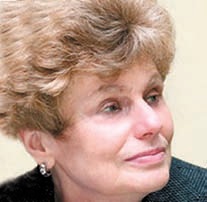 The idea to reform the system of wages of teachers was born back in 2008 as part of the priority national project “Education”. This "coincided" with the decision to translate all state employees into a similar scheme. Today, changes in the level of their life should have felt all teachers. About why this does not happen, and why the objective picture does not coincide with the subjective, says the director of the Center for the Continuing Education of the Russian Academy of National Economy and the Presidential Service of the Russian Federation, Professor Tatyana Klyachko , says. Talked Natalya Ivanova-Gladilshchikova .
- The teacher’s salary should be made up of the base part (it is laid for everyone) and two allowances: compensatory and stimulating. The size of the latter depends on what virtues the teacher has (the successes of his students in the exam, olympiads and competitions, extracurricular work, and so on). However, in the end, the amount of the allowance depends on how the school administration evaluates the work of the teacher. Officials assure: the transition to a new wage system greatly increased salaries. What really happens? I know that you analyzed this situation.
- Yes, analyzed. If you rely on statistics, then really salaries in the field of education have increased quite strongly. By the end of 2012, the average salary in education was approximately 22 thousand rubles. Already in the first quarter of 2013, it increased to 25.7 thousand, and in the first half of the year-already to 28.9 thousand. The decline went on: in the third quarter of 2013, it decreased to 27.6 thousand rubles. (Perhaps the case is in leave, which teachers have large and are calculated at the average annual rate).
We see that at least in the first half of 2013 the wages were 6.8 thousand rubles. More than at the end of 2012. That is, it seems, a very significant increase. And when officials talk about the growth of salaries, they just rely on these statistical calculations.
- What showed your research?
- We asked two questions to teachers. The first concerned how their salary had changed over the past year (at the same time, the data that the statistics gives in their heads). The survey was conducted in May-June 2013, when the growth of salaries became (according to statistics) noticeable. The study took place in three areas: Sverdlovsk (region-donor), Voronezh (middle) and Ivanovo (subsidized region).
And it turned out that in the Sverdlovsk region, about 8% of teachers said that their salary increased significantly, 40% - that it grew slightly, 35.5% - that it has not changed, and 11.5% - that it has slightly decreased. That is, in this region, almost half of the teachers felt an increase in salaries, but at the same time 40% considered it insignificant.
In the Voronezh region, only 13% of teachers noted that their salary increased significantly, 64% -that it increased slightly, and only 15.2% -that it did not change at all. That is, in the shelter region, teachers felt more and more much stronger.
- Why?
- Because if you have a strong region, then there, most likely, the salary is higher and, accordingly, in it its increase is not so noticeable.
And in a weaker economic region it is felt better.
In the subsidized Ivanovo region, where, it seems, everything was very bad, the salary increased significantly among 7.8% of teachers (the same figure is in the Sverdlovsk region), 50.8% claim that it increased slightly, and 25% of teachers said that it has not changed.
That is, the subsidized region was in the middle - between strong and medium. They have a salary with 12.8 thousand rubles. In 2012, she climbed to the first quarter of 2013 to 17.3, and in the first half of the year increased to 20.9 thousand rubles. Then it again decreased to 17.9 thousand.
- Is this statistics?
- Yes. But there is a sociological picture: the impressions of the teachers themselves. According to surveys in the Ivanovo region, almost 60% of teachers felt changes in salaries, but only 7.8% felt serious changes. Paradoxically, the Ivanovo region largely repeats the strong Sverdlovsk.
- That is, the purpose of your research is to fix the objective picture and subjective (how do teachers feel it)?
- That's right. Therefore, we asked the following question: how the level of your financial situation has changed (after increasing salaries). Why? Because salaries are growing, but prices, housing and communal services (light, gas) can grow.
And here we received the following data: the financial situation has significantly improved in 6.7% of teachers in the Sverdlovsk region, in 3.1% in Voronezh (and remember, the salary, it seems, has grown significantly). And in the Ivanovo region, only 3.8% felt a significant change in their financial situation.
-That is, on the one hand, teachers add salaries, but on the other hand, socio-economic conditions in the regions change in such a way that they do not feel serious changes in their financial situation?
- Yes, the financial situation has changed, at best, in 7% of teachers. And did not change in the Sverdlovsk region in 41% of teachers, in the Voronezh region in 39%, and in 45% in Ivanovo.
- And the horror is that the victims that teachers make in order to increase their salary (increasing hours, additional load) are inadequate to the result.
- Right. When we asked people, due to what their salary increased, then 44.9% of teachers in the Sverdlovsk region replied that, due to the growth of the hourly load, almost 42% and Ivanovo (where the salary increased) - 56% of teachers in the Voronezh region.
We asked a question related to what share in the salary of teachers over the past month was a stimulating allowance. And they found out that in the Sverdlovsk region this share of 42.6%of teachers is up to 10%, in Voronezh - in 43.1%it is also less than 10%, and in Ivanovo - it was 28%.
But the share is from 11 to 20% in 32.1, 17.1 and 35.5% in the Sverdlovsk, Voronezh and Ivanovo regions. That is, in the Ivanovo region the stimulating part of the salary is the most significant. There, her teacher feels her role. At the same time, 58% of teachers in the Ivanovo region believe that this allowance is established fairly (in the Sverdlovsk region, 46% agree with this, and in Voronezh only 37.6).
- Maybe such a situation with a stimulating allowan in the Ivanovo region is related to the fact that in the subsidized region this is the main source of increase in salaries? There they hardly allocate a lot of money.
-No, the money is allocated everywhere now, raising salaries is now the most important priority.
- What global conclusions can be drawn out of this?
- The study showed that they are optimistic at the situation of school principals (in their opinion, young people went to school). And also (and we first noted this) - parents began to attribute teachers to the medium -sized layer. Prior to this, when we conducted research in the early 2000s, the teacher was considered by both parents and students, like an outsider, as a poor person. And this gave rise to a very bad situation: the income in the families of students was higher than in the families of teachers. That is, a person was economically inferior to educate the next generation. Now teachers stop looking at the poor staff. This is a very positive result.
- How do you yourself assess this new teacher's wage system?
- I must say that from the very beginning I was against such an understood new wage system. Economic, managerial theories say it is bad. Because in corporate systems, which include the school (a small team where everyone knows about each other), it is impossible to introduce stimulating allowances. This is splitting teams, all the directors later told me that I had to close information about these salaries (which means that it does not work outwardly). Suspicions begin, many consider the allowances unfair.
And one more thing: complete idiocy to believe that if you began to pay less to someone, it will work better. If we take and redistribute the money, and someone gets 70, and someone-120%, then why will the one who gets less work better? He will be offended. In addition, such a system can only work if salaries are really actively growing. As soon as this growth stops, everything ends.
-There is one more evil: it is known that in order to fulfill last year’s decree of the president and bring the teacher’s salary to the regional average economy, the rates of social teachers, defectologists, and teachers of additional education are reduced ...
- As for the fact that to increase salaries, they reduce “unnecessary” rates - this is bad. On the one hand, we had a period when, for example, the number of headquarters and so on was excessively grew. But, on the other hand, the auxiliary staff in a modern school is a command of time. If we increase the technical equipment of schools, then there should be people who are engaged in this technique. If we want the school to develop financially normally, school accounting is needed so that school managers have an idea of all the expenses of the school.
Yes, in small schools this is impossible, but in large it is necessary. There should be a normal number of auxiliary personnel. In the same “rot” of the West there are teachers of the teacher (so that the teacher can focus on the main job). Assistants perform educational functions, monitor the social situation in the classroom. Modern life requires increased attention to the child -he also does not always withstand the growing pace of changes occurring in society. It does not withstand, first of all, psychologically.
- And what really needs to be done? Salaries still need to be increased.
- Of course, it is necessary. At the end of 1960, the famous scientist, director of the UNESCO Institute of UNESCO Felix Kumbs published the book “Education Crisis in the Modern World”. There he wrote that if the teacher’s salary is lower than the average in economics, then the school will receive weak personnel from the labor market. Now we are talking about negative selection.
The salary must be raised, but do not introduce stimulating allowances. The one who works poorly needs to just be fired. But, since we did not have the turn of those who wanted to come to school, we could not dismiss a bad teacher, and therefore we started playing strange games: I will give good ladies and a bad one. But after that, the bad will not turn into good, rather become embittered, and children will definitely not be better.
In addition to increasing salaries, you need to very seriously improve the qualifications of teachers (significant funds should go to this), conduct certification, and change the teacher training system. And besides, one of the largest problems of the education system (and all over the world) is that teachers have a short career staircase. They very quickly become nowhere to grow.
And it turns out that after five years, most teachers cease, as Kumbs noted, to develop in their profession. And the school (ideally) should always think about how to interest the teacher in good work. This is certification and teacher competitions (not only the choice of a teacher of the year). This is the development of new additional educational services so that the teacher does not have a sense of routine.