
Translated material
Two on the film
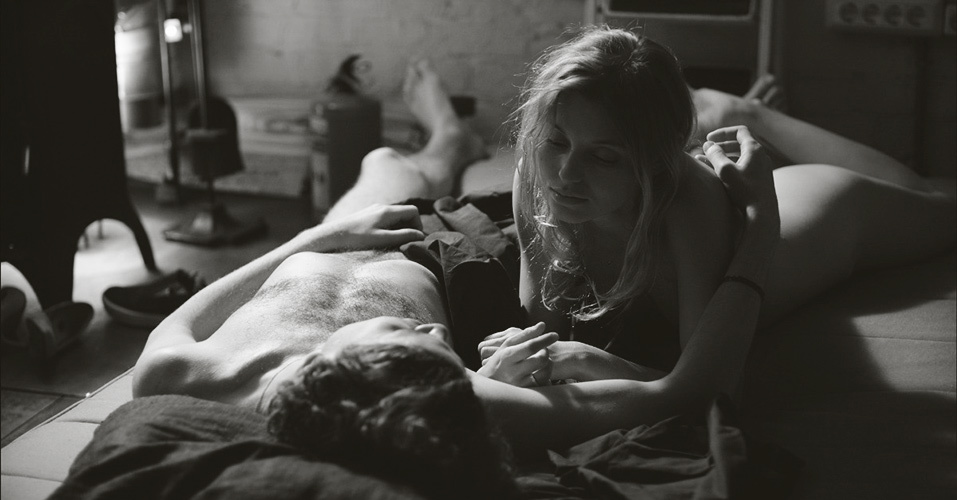
This is a story about two Russian films. They are shot in different style, belong to different genres and raise, in general, different problems. However, in the intonation of these paintings, there is something that makes us talk about their ideological unity. The first is the “winter path”, the second is “intimate places”. What is related to them is the tart taste of pre -revolutionary cinema, designed for the bourgeois audience and the life of the bourgeois public illuminated.
In the Winter Way, Evgeny Tkachuk and Alexei Franetti play a piquant erotic drama with love, blood and rhetoric. The character of Franetti - a student of the Conservatory Eric - learns the vocal cycles of Schubert and falls in love with the bum in the bum on Lech (Tkachuk), but they cannot be together. They are surrounded by the total impossibility of communication (the copy that I had to watch was comically turned out to be a very bad sound, so almost all the heroes were awarded speech defects). To the music of Schubert, one of the heroes will fall in the snow in order not to get up anymore, and the second will pay for the impossibility of love.
Well, before us is a real tragedy, with some reservations characteristic of Russian cinema, the beginning of the century. That's just not XXI, but XX. Then, in the days of Vera Kholodny and Evgeny Frantsevich Bauer, beautiful stories about unhappy love between representatives of different social groups were the most popular product.
The films of those remote times, representing, in the words of Neva Markovna Zorka, “aesthetic symbiosis of the Lubka and Modern style,” were distinguished by pathological interest in sex issues (usually this was expressed in indispensable rape of the heroine) and a craving for sad finals. Both corresponded to the tastes of the era, when the audience, on the one hand, was read out by the prose of Artsybashev, in which the naked legs of the heroines kept trembling painfully from the imperious touch of someone’s exposure, and on the other hand, along with the symbolists, she dreamed of an escape from the “terrible world”.
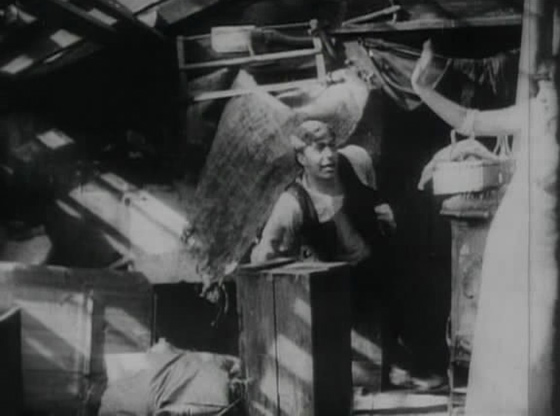 Frame from the film "Twilight of the Women's Soul"
The typical plot of the Russian film of that time can be described as follows: in a certain cruel big city, the conditional representative (usually representative) of the world of fragile beauty encounters (usually falls in love) with the representative of the rude material world, after which someone is very beautiful. So, for example, in the film of Eugene Bauer “Twilight of the Women's Soul”, an elegant, living among flowers and sunlight, the conditional, a rough conditional worker Maxim seduced the conditional countess. The heroes of early Russian films were more like delicate dolls, each of which was a set of certain qualities brought to the extreme. The events of all these numerous dramas had nothing to do with real life, which only increased their value in the eyes of the public.
The visual series of such tapes was expressed, an impeccable picture turned action into a purest tragedy. The craving for poor finals, which was considered an indispensable element of highly artisticity, was so strong that foreign filmmakers specially shot the “tragic finals” of their ribbons for the Russian viewer.
The main consumer of such paintings was an educated city public, the wide layers of the Russian bourgeoisie, who, in the suffering of the heroes, satisfy their needs for the beautiful.
But what is the "winter path"? Two very conditional heroes from different social groups meet each other in a large cruel city, so that one of them will die as a result. He died with taste, under the elevated music, obsessively causing the figure of an old -year tape in memory. And all this has been seasoned with a piquant erotic theme and was removed sophisticated-inhabitant. The terrible world, a large cruel city, the country of alienation in which the heroes live - all these are theatrical asses. The tragedy of the “Winter Way” unfolds on the next street, and the bumzhonok Lech fries the sausages at the Winery. And anyone can make sure that places and phenomena shown on the screen grew exclusively from the heads of the authors, very remotely recalling the reality surrounding us.
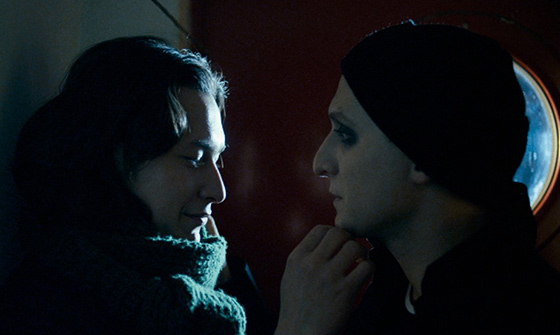 Frame from the film "Winter Way"
The heroes of the picture are only a conditional set of certain qualities. The novel by Eric and Lehi is the novel of two puppets, which develops according to the author’s arbitrariness. So Pierrot falls in love with Colombin because Pierrot is obliged to fall in love with Colombin. And as Roman Pierrot and Colombrine is doomed according to the rules of the game, so according to the rules of the game, the novel by Eric and Lech is doomed. The talented actor Tkachuk perfectly plays outbreaks of anger, and we only wait for the next such outbreak to fall on Eric, giving us the opportunity to feel the sweet feeling of tragedy.
It is also significant that with all the piquant erotic subtext, the Winter Way is an incredibly chaste, almost bashful picture. The whole film has one, at most - two kisses. Something similar was found in Russian pre -revolutionary films, in which (although the “fall” of the heroine was often an important element of the plot) sex was never shown, but always implied, being a kind of obsessive “figure of silence”. The ethereal heroines of the dumb film never had sex, but they hinted at him and constantly thought about him.
The acute erotic substrate of the “Winter Way” is only a tribute to convention. She excites the minds of the audience, but does not touch the authors, the authors do not know anything about eroticism and, it seems, chose a one -sex romance only for greater picturesqueness. Of course, this film is not a statement in support of same -sex relationships (just like the films of Evgeny Bauer were not suffering), and if they had not been the theme of “Russian gays” so heated by legislative initiatives in the Russian Federation, it would not cause so much noise and scandals.
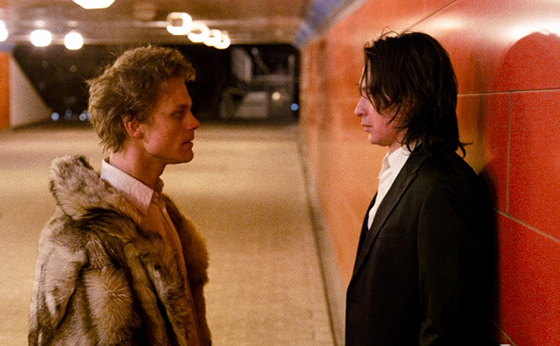 Frame from the film "Winter Way"
At one of the shows of the Winter Way, I saw a well -dressed elderly, intelligent look of a lady who, having adjusted the cervical scarf, turned to the authors: “Ah, perhaps your film will not understand in Perm or Krasnoyarsk, but in Moscow, in St. Petersburg, among a thin and elegant viewer, this thin and elegant picture will find its fans.” And she is really right. Such a thin and elegant picture simply cannot but find connoisseurs!
Like Russian films from the time of Bauer, the Winter Way is designed for an educated bourgeois public in every sense. This film satisfies the craving of such a public for the beautiful (Schubert, Kricman, Franetti), and also makes it possible to demonstrate the enviable breadth of views. The decision to go to the Russian drama about same -sex love is already a powerful application for nobility.
But the best idea of the Winter Way is given by his first frames. We see a man in a female wig and a female overalls in a mesh run along the bridge. He runs for a while, until the frame goes into a dimming and a titer with a title does not appear on the screen. Who is this person? Where and why is he running? What does it mean? In the film, we will not find answers to this question. And what's the difference? He runs because it is beautiful and expressive, and in the Russian cinema of the beginning of the century the expressiveness of the frame is more important than the plot or characters.
***
The “intimate places” of Chupov and Merkulova seem to not apply for kinship with Bauer, especially since their closest relative is Todd Solondza's “happiness”. Like Solondza’s film, “places” tell about the oddities of the private life of the middle class (in our case, Russian) and - paraphrasing Homer Simpson - the bottom of the top of the society. The heroes of “intimate places” are the head of the Duma committee, leading the analytical program of the state channel, a fashionable photographer, psychoanalyst and other respectable people. But if the heroes of Solondza tried to overcome alienation by building a new relationship, then the heroes of Chupov and Merkulova simply have sex - seriously, busily and sometimes tastefully.
There is nothing decent than sex of decent people. Even their perversions seem Puritan and decent. For most of the picture, the heroes, shot by an impassive, cold camera, defend their right to satisfaction. They do this with each other, with their maids, with saleswomen near the metro, with unpretentious gadgets - and each is filled with the highest dignity. After all, they affirm the right of the bourgeois to private life, and the whole picture is not so much a tragifars as the manifesto of the new Russian bourgeoisness - decent, serious, untold.
Here the line of contact of "intimate places" with the Russian pre -revolutionary film comedy passes. In it, the same decent people in no less beautiful interiors also busily engaged in indecent love adventures, and the plots found taste for sex questions.
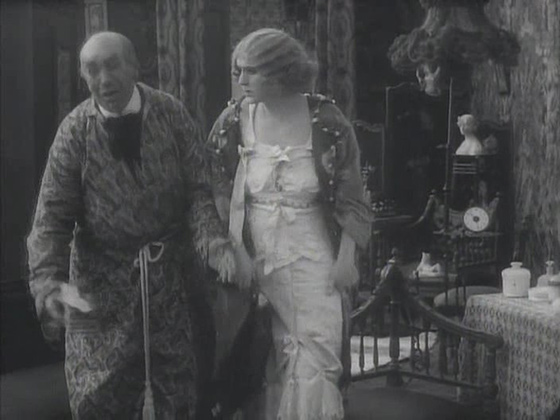 Frame from the film "1002th Cunning"
So, the “1002nd cunning” of the same Bauer is built around the joke about female infidelity, which is told seriously, boring and without any sentiments. “House in Kolomna” or “Dyadyushkin’s apartment” Peter Chardynin also turn out to be serious jokes about respected bourgeois, which concentrately solve the problems of their personal life. These films were not mixed, but rather, in an easier form than “serious” dramas, satisfied the audience’s requests for an image of sexual relations.
Unlike drama, the Russian pre -revolutionary comedy possessed strong bodily, but this corporal was a very specific properties, recalling more about the meat shop than about the books of Apuley or Petronius. For example, in one of the scenes of the already mentioned “1002nd cunning” Bauer, an incorrect wife, going for a walk with an old man-mush, began to call her skirt in front of passers-by, putting her legs on the public. There were nothing ridiculous in the legs or gymnasium students, the eroticism of this scene is close to the eroticism of “intimate places” with the equally seriously demonstrated tasks and genitals.
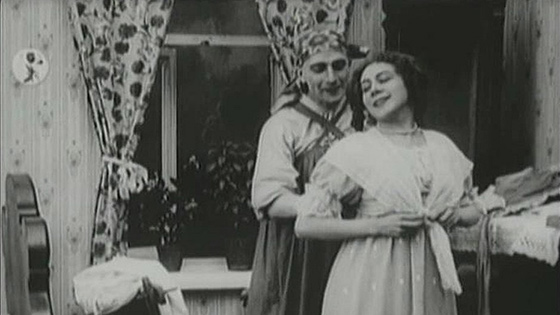 Frame from the film "House in Kolomna"
If we assume that the “intimate places” is precisely the bourgeois manifesto, related to the Russian pre -revolutionary erotic comedies, it becomes clear why there is so a degree of grotesque and why the characters' stories, despite their satirical potential, are stupidly stubbornly told. Only the end of the film with the absurd death of one of the heroes brings an element of comic obscenity to the picture. The authors know how to laugh at their heroes, but do it as it is generally customary to laugh at decent people - in moderation and maintaining the necessary respect.
But how did it happen that, along with the new Russian cinema, the old days of Evgeny Bauer came to us with his “sentimental fever”? To understand the reason for this unexpected and wonderful resurrection, you should turn to the figure of a viewer who consumes such films.
A hundred years ago, a formed middle class went to the faith of a cold (the bottom of the city society preferred “militants” about the adventures of Sonya of the Golden Handle or tearful paintings from the life of the coachmen freezing in the steppe). The monument to this viewer is the old cinema "Artistic" with its velvet curtains, every detail of which shouts about belonging to a high culture. The viewer wanted to escape from everyday problems, meetings of the Duma, anti -government manifestations and no talk about possible war and revolution in the world of dreams and beauty. Well lunch, but not fully confident in tomorrow, he enjoyed the thought of the fragility of this beauty, while completely legally observing the plots that the official ideology of his time would consider immoral.
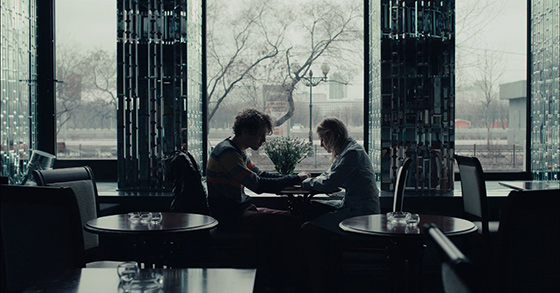 Frame from the movie "Intimate places"
Living a hundred years later, the spectator of the Winter Way and “intimate places” is hardly very different from his great -grandfather. The new Russia brought to his life some comfort and the right to the Prowes, he has lunch well, although he is not sure of the future, he will strive for a high culture and needs a sweet dream, which will distract him from the meetings of the Duma, anti -government manifestations and reality of the ambulance. The fragile beauty and anathematous questions of the floor are of interest in him - as well as the tickling nerves of the cinema, which relieves him of the need to think about the usual silence, inevitably waiting for him in the evening in his own bedroom.