
Translated material
Decent regret
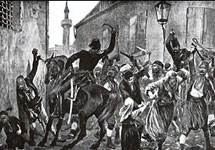
Turkish Prime Minister Recep Erdogan at a meeting of parliament first expressed condolences to the descendants of the Armenians who died in the events of the early twentieth century, RIA Novosti reports. April 24 - Day of memory of the victims of the Armenian genocide. On this day in 1915, more than 800 representatives of the Armenian intelligentsia were arrested in the Ottoman Empire.
“With the hope and faith that the ancient peoples with similar customs and traditions belonging to one complex, but unique geography will be able to together and worthy to recall their past and losses, we wish the souls of the Armenians who died in the events of the early twentieth century, rest with the world, and their grandchildren are condid their condolences,” he said.
The prime minister recalled that April 24 is a special day for Armenians. "The day, which is of particular importance for the Armenian citizens of our country and all Armenians of the world, is a valuable opportunity for a free exchange of views in relation to historical events. It cannot be denied that in the last years of the Ottoman Empire for millions of its Turkish, Kurdish, Armenian, Armenian and other citizens, regardless of their religious and ethnicity, it was a difficult period filled with bitter events," - - Erdogan emphasized.
Erdogan’s statement notes that the events of 1915 were “inhuman” and now became the “common pain” of the two countries. Earlier, not a single Turkish leader brought such frank condolences to the Armenians.
In April 2010, it became known that Armenia decided to get out of the process of resolving relations with Turkey . Then this was stated by President of Armenia Serge Sargsyan in contacting the people. "The current stage of Armenian -Turkish negotiations is considered completed," he said. Prior to this, Erdogan said that more than 100 thousand illegal immigrants from Armenia could be deported from Turkey. He warned that he was considering such an opportunity in response to the resolution adopted by the Committee of the US Congress and the Swedish parliament on the recognition of the Armenian genocide in Turkey during the First World War.
The view of the events in East Anatolia in the period 1915-1917 is the main stumbling block in the relations of Armenia and Turkey. Yerevan insists that the Armenian people were then subjected to purposeful persecution, as a result of which, according to some estimates, more than a million people died. Ankara calls what happened for a forced resettlement and rejects the accusations of the mass destruction of the Armenians. The fact of the Armenian genocide is officially recognized by several countries, including France, Germany, Canada, Lithuania, Uruguay and Russia.