
Translated material
The representative of the Russian Orthodox Church called to learn how to distinguish between good and evil in the intensity
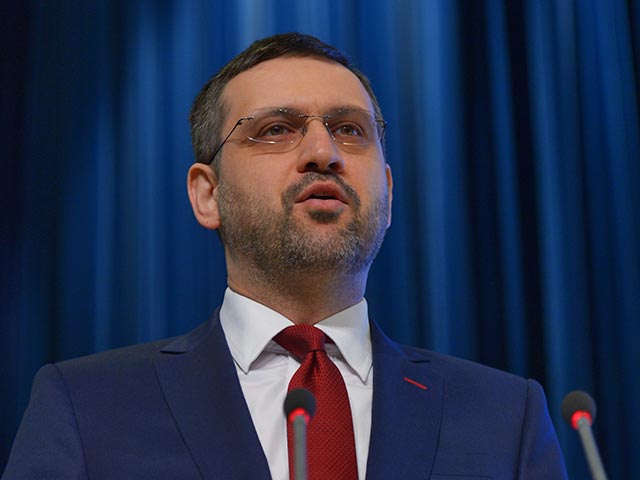
The Chairman of the Information Department of the Moscow Patriarchate Vladimir Legoyda took part in a meeting of the FBI-2014 International Forum, organized by a safe Internet league-the largest organization in Russia, created to counteract the distribution of dangerous content on the World Wide Web by self-regulation of a professional community, Internet market participants and ordinary users to avoid the introduction of censorship.
According to the representative of the Russian Orthodox Church, the Internet, like any other field of culture, needs a clear distinction between good and evil, since this is necessary for the full inclusion of virtual space in the cultural sphere.
"Culture is often defined as a taboo system. This approach is true for the Internet. I foresee possible objections:" Here, you want to introduce prohibitions here. "But let's figure out why the culture is the Tabu system? What is the tabular of one or another phenomenon in the cultural space? On the understanding of good and evil, it is good, from what is bad," RIA RIA leads the words of Vladimir Legoid "News" .
According to him, the taboo system grows from the value system, from ideas about good and evil.
“Evil is taboo, and the good is encouraged. If we want the Internet space to be fully included in the cultural field, and not excluded from it so that the Internet has a positive content, and not negative, then we must listen to such a cultural approach,” Logoida is convinced.
He noted that often discussions about the regulation of the Internet are reduced to the struggle of two extreme points of view, one of which implies complete, unlimited freedom, and the other is the same comprehensive regulation.
“It is pointless to discuss whether our children are sitting on the Internet. The answer is obvious. Probably, it’s not the most reasonable way to try not to let them go there or to turn off the Internet at all. The question is whether the Internet will become an opportunity for the communication of fathers and children, or we simply will not be there,” added Logoyda.
In his opinion, the answer "is seen in that the children see the world of adults there and enter into communication with adults." “It is very important that here the church acts as a participant in this process, because if we talk about the content, the church is a natural source of positive content,” concluded the representative of the Moscow Patriarchate department.