
Translated material
Crypton helps to date antarctic ice
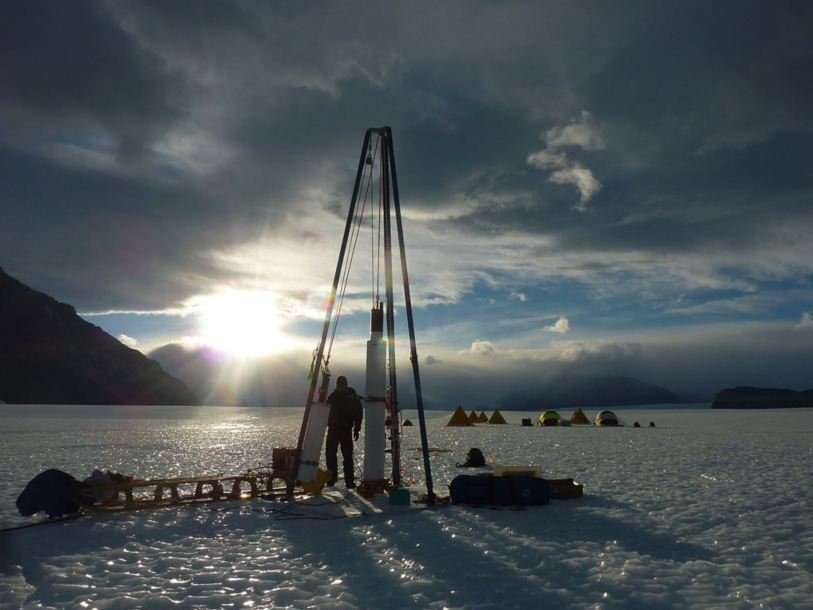
Scientists have successfully determined the age of 120,000-year-old Antarctic ice using radiometric crypton dating-a new method that can determine the age of ice, even exceeding a million years. The results of a study conducted by scientists from the University of Oregon were published this week in the journal ProChedings of the National Academy of Sciences. The work was financed by the National Scientific Fund of the United States and the US Department of Energy. Dating ice samples from Antarctica is necessary for a more accurate reconstruction of the climate of the Earth in the past.
Crypton dating resembles a well -known dating method using a carbon isotope 14C. Only crypton, unlike carbon-14, does not enter into chemical interactions, so it is more stable. The period of its half -life is about 230 thousand years (about 5700 years in carbon). Crypton is formed under the influence of cosmic radiation, and then remains in the air bubbles of antarctic ice. Dating is based on a comparison of the share of the radioactive isotope 81KR and a stable 83KR isotope.
In 2011 alone, scientists from the Argonne National Laboratory, headed by Zheng-Tian Lu, managed to create a fairly reliable method for detecting Krypton-81 atoms. The “nuclear trap” they developed is called Atom Trap Trace Analysis (Atta).
Ice samples for research were mined in the Antarctic glacier of Taylor. At the University of Berne, air was allocated from the moment of ice formation, and in the Argon National Laboratory determined the content of radioactive crypton in this air.