
Translated material
Difficulties without translation
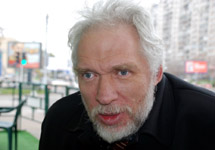
The Congress of the intelligentsia "Ukraine - Russia: Dialogue", carried out in Kyiv at the height of the Russian -Ukrainian state confrontation, is the action is primarily symbolic. Its organizers, the former Russian oligarch and political prisoner Mikhail Khodorkovsky and the leader of the Third Strength movement, ex-head of the Ministry of Internal Affairs of Ukraine Yuri Lutsenko, expected to show that the sane people of the two countries could agree with each other when the government could not do this.
Many Russian participants in the Congress, whom the Posoputin media call the "national predators" and the "fifth column" thought that they were committing a bold act, going to the seething Ukraine, and even under the threat of subsequent repressions in their native country. Ukrainian colleagues welcomed the arrival of guests, but did not consider their behavior to something heroic. After all, everything is calm in Kyiv, and few people went to the Donbass, where tension remains. The Congress itself took place against the backdrop of armed skirmishes near Slavic and the maneuvers of Russian troops near Ukrainian borders. The Ukrainians felt in the besieged fortress, and the Russians, although they represented a point of view, different from Putin, effective assistance to them, except for the words of encouragement, with all the desire to provide.
And the dialogue got better. Of the leading Ukrainian politicians, only Petro Poroshenko, a probable winner in the upcoming presidential elections, spoke to the participants in the congress. He said that Russia has already lost the information war in both Ukraine and the world. And here you can agree with him. According to the data of sociological surveys, even in the eastern regions of Ukraine - Donetsk, Kharkov and Lugansk - supporters of Russia, only 20-30 percent. But here you can recall Goebbels propaganda. In neutral countries and even more so in the states of the anti -Hitler coalition, its effectiveness was close to zero - it really affected only German communities and some marginal groups of absolute pacifists. However, it was extremely effective in Germany - mainly because she practically had no competitors and skillfully cultivated a sense of superiority of the Germans.
The main thing for Hitler was to convince Germany Germans in its right to seize other people's lands and wage war. And he hoped to win other countries not by propaganda, but by the power of weapons. In the same way, for Putin, now the main thing is to enlist the internal support of his policy in the post -Soviet space. Those states that are not included in NATO, he is ready to subjugate by force. And the Western powers should not be convinced of the civilizational advantages of the "Russian world", but only that to fight with the second nuclear power of the world is extremely dangerous, and the sanctions against it will bring serious difficulties to the West itself. Russian propaganda about Ukraine and the "Russian world" acts only on part of the Russian -speaking residents of the post -Soviet countries who have preserved Soviet self -awareness, and in the West - only for part of the left or right -wing marginals.
Meanwhile, in Russia, such propaganda works quite successfully. According to the data given at the Congress, Levada Center employees, only 7-10% of Russians are configured against the annexation of Crimea and attempts to split Ukraine. Now independent media in Russia are incomparable with state propaganda on the scale of influence on the audience. Some participants in the Congress have hopes for a new Russian -speaking television channel, which is supposed to be created in Ukraine. But this will require money, which are not yet, and several months of time, which the new Ukrainian authorities may not have. In addition, it is unlikely that Russia will allow such a television channel on its air, so it, apparently, will be able to affect only the Russian -speaking population of Ukraine and, probably, neighboring Moldova. It is more realistic to create several Russian -speaking sites in Ukraine in a short time with the participation of Russian journalists.
Disputes at the Congress arose regarding the cessation of the relay in Ukraine of Russian television channels leading a massive anti -Ukrainian propaganda. The guests asked if this was an attempt to freedom access to information. Ukrainians reminded that only relaying was disabled, and through satellite TV and the Internet, Russian channels are still available. And for Kyiv, unable to still give adequate television on the Russian -speaking field, this is the only way to limit the influence of subversive propaganda.
Exactly the same questions arose about the slogan of federalization and the rights of the Russian language as the second state. The Russian politician Boris Nemtsov even proposed to make concessions to the Putin requirements of federalization and the second state language, if this helps to reduce Russian pressure on Russia. But here he was objected not only by Ukrainians, but also by many Russians. Indeed, for Putin the issues of federalization and the Russian language are just a way of subordination and split of Ukraine, and no concessions will stop him.
Some Russian representatives persistently repeated that Putin’s fundamental difference and Hitler were that he solved primarily not geopolitical, but internal problems. Here it is permissible to disagree. Putin primarily fights the consequences of the "greatest geopolitical catastrophe" and tries to TC or otherwise restore the USSR. A high rating in connection with the Crimea is not a goal, but only a means to solve this problem. And only very serious sanctions can stop it that can put the Russian economy on the line of disaster.
As for the resolution adopted by Congress, it seems that the Crimean question seems to be the most difficult in it. The annexation of Crimea is not mentioned there, but it is stated: "We support the territorial integrity of Ukraine within its constitutional boundaries." Obviously, a number of Russian participants were afraid that the direct condemnation of the capture of Crimea could provoke the charges of separatism. But at least in such a cautious form, the preservation of the territorial integrity of Ukraine (with Crimea) was supported.