
Translated material
Security merchants
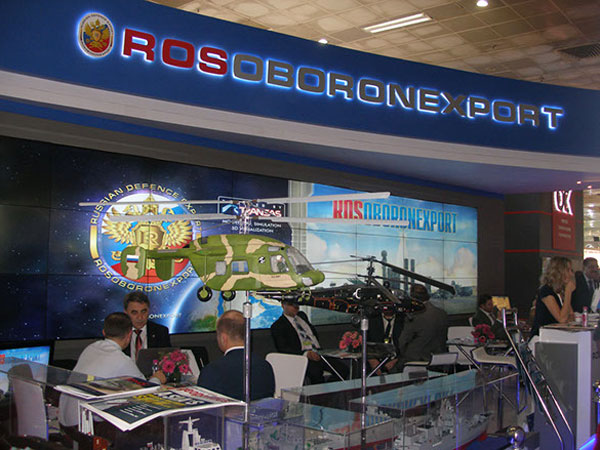
The volume of export orders for Russian military equipment in 2013 amounted to more than $ 49 billion. This was announced on April 25, President Vladimir Putin. According to the head of state, Russian military products are supplied to 65 states, and the contracts on military-technical cooperation are concluded with 89 countries.
Vladimir Putin emphasized that Russia is one of the world leaders in the field of weapons exports - only a little back on its main competitor, the United States. According to the president, in 2013, the United States occupied 29% of the arms deliveries market, Russia - 28%, Germany, France and China - from 5 to 7 percent.
The figures are not the total volume of contracts, but only the size of the supply of weapons in 2013 looks less impressive, but they are still impressive. In February, Vyacheslav Dzirkaln, Deputy Director of the Federal Service for Military Technical Cooperation, said the volume of supplies amounted to $ 15.7 billion. Almost a third - 4.78 billion - was in India.
At the end of January, the general director of Rosoboronexport, Anatoly Isaikin, told Kommersant that his company in 2013 took out weapons by $ 13.2 billion, slightly exceeding the planned indicators that suggested the sale of equipment by 13 billion.
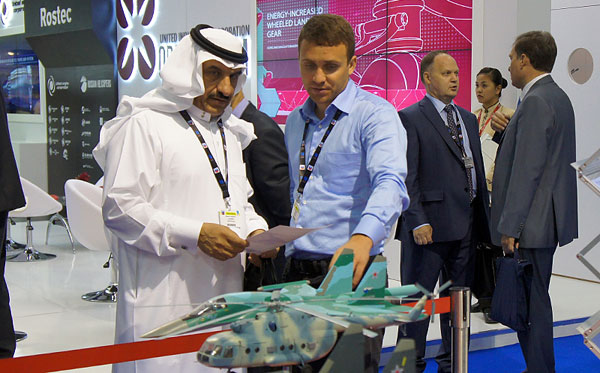
Despite the fact that more than 70 percent of supplies falls on the largest and already familiar partners - India, China, Algeria, Vietnam, Indonesia and Venezuela - recently, more and more weapons have been sold to poor countries in Central Africa. The peculiarity of this region is that the governments of the republics take loans in Russian banks for the purchase of Russian weapons - according to the head of Rosoboronexport, if this scheme worked with difficulty earlier, now the banks are more and more confident that the money will be repaid and more willingly.
The export of weapons from Russia is growing every year: in 2011, Russia delivered weapons to $ 13.2 billion on the world market, in 2012 - already 15.16 MDD. At the same time, in the world, the total volume of weapons exports since 2011 has been steadily declining. At least this is evidenced by the report of the Stockholm Institute for Research of Peace Problems (Sipri).
According to Sipri, as according to Vladimir Putin, Russia ranks second in order to export weapons, and over time it scores its competitor. If in four-year-old from 2004 to 2008 Russia occupied 24% of the market against 30% of the United States, then in 2009-2013 the share of Russia increased to 27%, and the US share fell to 29%.
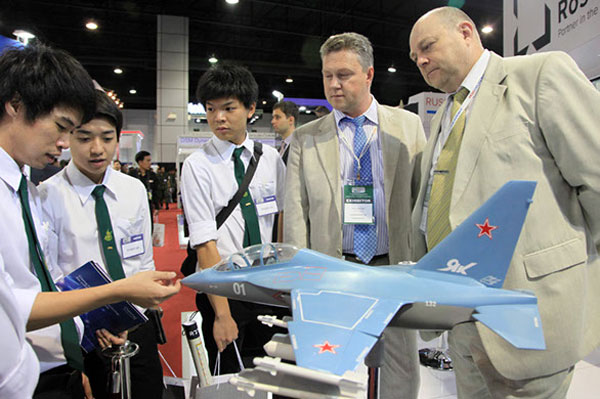
Over the past four years, Russia was the largest exporter of warships - taking into account the aircraft carrier sold by India and the atomic submarine. At the same time, 43% of the cost of Russian exports gave aircraft - from 2009 to 2013 they were sold 219. According to Rosoboronexport, the most popular aircraft are Su-30 and MiG-29 fighters, as well as the Yak-130 training aircraft.
Last but not least, the sales of Russian weapons is due to the fact that traditional partners began to purchase weapons even more - these are India and China, the world's largest weapons importers. In general, almost half of the world's weapons imports - 47%account for the countries of Asia and Oceania.
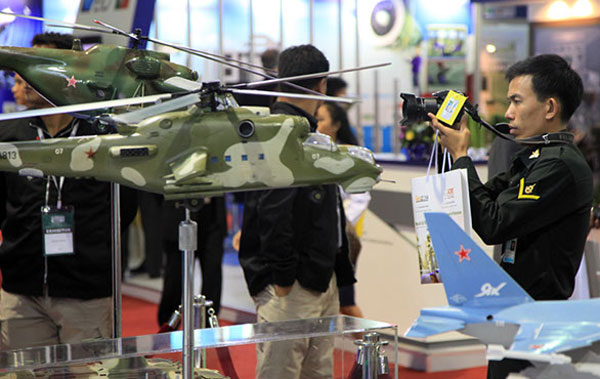
Vladimir Putin, on the contrary, believes that the successes in Russia in the arms market have been achieved thanks to the reform of the industry. He recalled that some time ago, the powers of defense enterprises were expanded: weapon manufacturers received the right to independently modernize products, determine the directions of research, as well as create joint enterprises with foreign companies.
However, in the near future Russia may have a new serious competitor in the international weapon market.
China, which has purchased weapons for all the last decades, has sharply reduced the volume of procurement in recent years and began to export weapons. In 2004-2008, China accounted for 11% of the total import of weapons and only 2% of exports. In the past four years, the situation has changed dramatically: Beijing has given the lead to Delhi’s weapons and now occupies only 5% of the market, but the share of Chinese weapons in the export market has increased from 5 to 6 percent.
Experts began to talk about the "high -quality jump" of the Chinese defense industry. Previously, Beijing was famous for mass procurement of products of Russian enterprises and sufficiently mediocre copies of the imported weapons.
Over the years, Chinese manufacturers have learned to make such high -quality copies of Russian weapons that they began to differ much from the originals, but they cost much less. Such equipment with great pleasure is bought by countries with an extremely unstable economy-because of their dubious solvency, they are unattractive for large players such as Russia, but they can serve as a good market for Chinese equipment.
However, Chinese weapons even fell into NATO countries-in 2013, Türkiye purchased Chinese Earth-to-air missiles, preferred them to European, American and Russian patterns. The main buyer is the government of Pakistan, this country accounts for about half of the total exports from the Middle Kingdom.
China burst into the top ten leaders of weapons exporters in 2012, taking the fifth place at once, and last year he rose another line up. Now the size of the export of weapons in China is second only to similar indicators of the United States, Russia and Germany. After China’s entry into the “top ten”, Great Britain was supplanted from it - a country that has occupied a worthy place in this rating since 1969, that is, since the first publication of Sipri.
Moreover, China can become a dangerous competitor for Russia that domestic manufacturers cannot supply the most interesting for buyers the latest weapons, until the Ministry of Defense will satisfy its demand. Given the huge re -equipment program that was adopted last year, the latest weapons samples can reach foreign states not too soon.
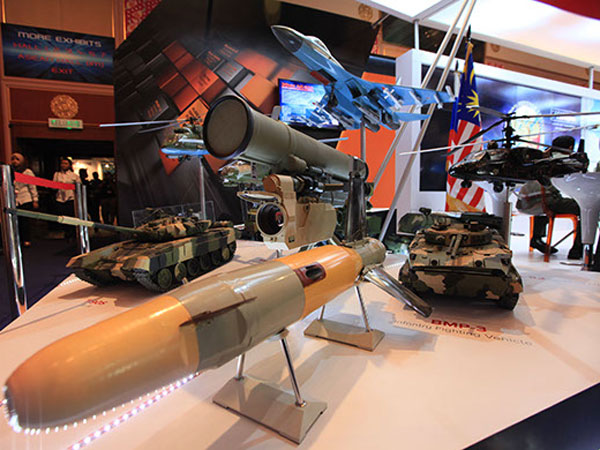
According to Rosoboronexport, in the next couple of years, Russia will sell weapons by about 13 billion - and other exporters are unlikely to be able to greatly change this figure. Only after the supply of weapons of the Russian army can sales volume increase by $ 2-3 billion.
Be that as it may, in the coming years, even when increasing exports, even when reducing the market, Russia will have to meet with a new competitor, China, and there will be contacts with old partners and new ways of managing the industry.