
Translated material
Memory. Alexander Kerensky
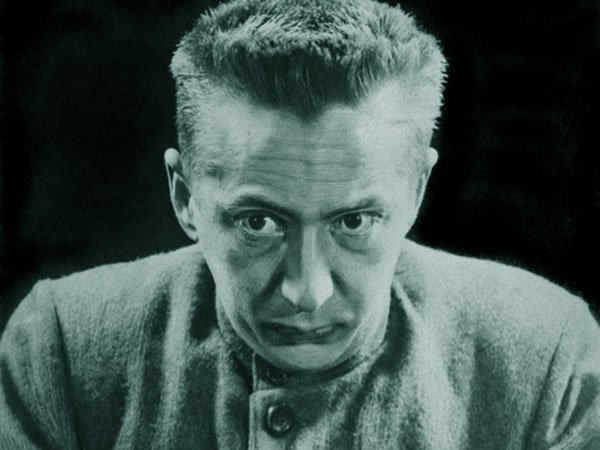
On May 4 (April 22), 1881, Alexander Kerensky, the chairman of the Provisional Government (1917), one of the most famous Socialist Revolutionaries and Russian emigrants was born.
Personal business
Alexander Fedorovich Kerensky (1881-1970) was born in Simbirsk (now Ulyanovsk) in the family of the director of the gymnasium. The Kerensky family was associated with friendly relations with the Ulyanovs. Ilya Ulyanov was the head of Kerensky Sr. One of his students was Vladimir Ulyanov (Lenin). After the appointment of the father, the main inspector of schools in the Turkestan Territory, the family moved to Tashkent. In 1899, Alexander Kerensky graduated from the Tashkent gymnasium with a gold medal and entered the law faculty of St. Petersburg University.
In 1914 he was elected deputy of the IV State Duma from Volsk by the Saratov province. In the Duma, he denounced the government and gained the glory of one of the best speakers from the Trudovik faction. Thanks to his revealing speeches, he became one of the leaders of the Duma opposition. During the February Revolution of 1917, Kerensky again joined the Socialist Revolutionary Party, and on March 2 entered the Provisional Government as a Minister of Justice. He initiated the amnesty of political prisoners, the recognition of the independence of Poland and Finland.
In 1939, he married the Australian journalist Lydia Triton. After the occupation by the Nazi troops of France in 1940, he emigrated to the United States. After the death of his wife in 1946, a donkey in New York. At Stanford University of California, he taught students. He died of cancer in 1970.
What is famous
In March 1917 he became a military minister. He organized a June offensive of 1917 crushed for the Russian army. On July 20, Kerensky became the Prime Minister, while retaining the post of military and naval minister. In October 1917, he was appointed a cabinet of the Supreme Commander -in -Chief. Having concentrated enormous power in his hands, he dismissed the State Duma and announced the proclamation of the Russian Republic. He arrested Kornilov, Denikin and other generals, by order of the Provisional Government sent troops to Petrograd.
Member of the Cadet Party Ivan Kutorg: “Kerensky was a genuine personification of February with all its rise, impulse, good intentions, with all its doom and frequent political child absence and state crime. Hatred personally to Kerensky, in my opinion, is explained not only by his undoubtedly huge political mistakes, not only by the fact that the “Kerenshchina” failed to provide serious resistance to Bolshevism, but, on the contrary, cleared the ground, but also by other, wider and general reasons. ”
What you need to know about
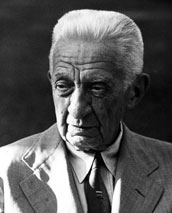 Alexander Fedorovich Kerensky
In the high school of the gymnasium, Kerensky had a reputation as a well -mannered young man, a skilled dancer and a capable actor. With a special brilliance, he played the role of Khlestakov in amateur performances.
In June 1917, Kerensky traveled the front -line units, performed at numerous rallies, and sought to inspire troops. For this, the politician received the nickname of the "chief -speaker."
The author of numerous publications, research and memoirs on the history of the Russian revolution.
In October 1917, he fled from the Winter Palace from the Bolsheviks who captured the capital. In June 1918, Kerensky, under the guise of a Serbian officer, went first to London, then to Paris. In Paris, in 1922-1932 he edited the newspaper "Days", spoke with sharp anti -Soviet lectures, called Western Europe to a campaign against Bolshevik Russia.
In 1968, Kerensky attempted permission to come to the Soviet Union. However, he did not seek permission.
In the summer of 1970, cancer was discovered at Kerensky. In order not to be a burden to his relatives, he refused to eat. Doctors introduced a nutrient solution through a dropper, which he pulled out. The Russian and Serbian Orthodox churches in New York refused to funeral for politics, seeing in it one of the main culprits of the fall of Russia. Kerensky was buried in London, where his son lived.
Direct speech:
From the memoirs of the journalist Henry Borovik, who met with Kerensky in 1966 : the version of the escape from the Winter Palace in a women's dress burned his heart and after 50 years, the first phrase he said when meeting, it was: “Mr. Borovik, tell me there in Moscow - you have smart people! Well, I did not run from the Winter Palace in a women's dress! "
The writer Somerset Maugham, who was in Petrograd as agent Somerville of the British secret service from August to November 1917: “The situation of Russia worsened every day, and he removed all the ministers, just noticed their abilities that threaten to undermine his own prestige. He made speeches. He made endless speeches. There was a threat of a German attack on Petrograd. Kerensky made speeches. The lack of food became more and more serious, winter was approaching, there was no fuel. Kerensky made speeches. The Bolsheviks actively acted behind the scenes, Lenin was hiding in Petrograd ... He made speeches. "
5 facts about Alexander Kerensky
- Since 1830, the grandfather of Kerensky served as a priest in the village of Kerenki in the Penza province, from the name of this village and a surname occurred
- As a child, Kerensky suffered tuberculosis of the femur, in 1916 his kidney was removed, which did not prevent the policy from surviving until 89 years old
- After the February Revolution in the public, Kerensky appeared in a warrior warrior, but he himself never served in the army
- In June 1917, the Provisional Government issued new Dengans, called "Kerenki"
- In 1915-1917 he was the general secretary of the Russian Masonic Organization (Supreme Council of the Great East of the Peoples of Russia).
Information about Alexander Kerensky:
Article about Alexander Kerensky Wikipedia
A.F. Kerensky - biography
Portrait in the interior of the era. Alexander Kerensky