
Translated material
Ehrenburg: Poetics
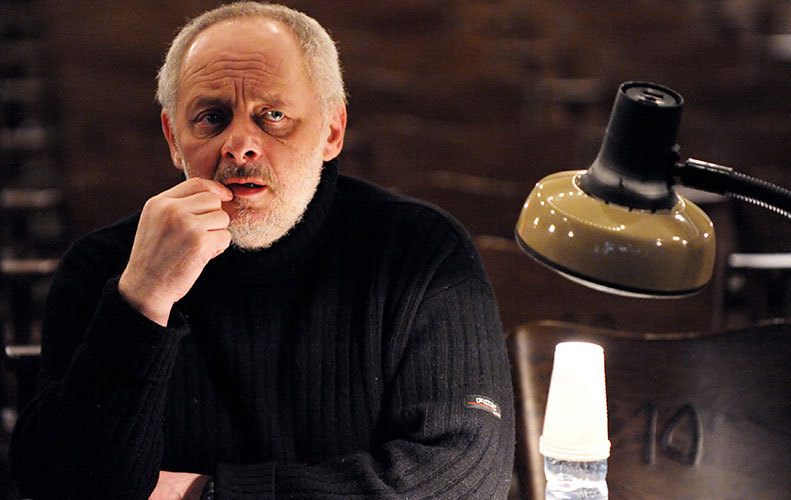
On the nearest Wednesday, the Mayakovsky Theater will release Ostrovsky’s “Association” in the production of Petersburger Leo Erenburg. Having measured in anticipation of one of the key prime minister of the capital's season, Colta.ru publishes Alexei Gusev’s essay about the poetics of directing the founder of a small drama theater.
He is sculpting the experience
And he drinks the babble out of experience.
(Osip Mandelstam)
This article is dedicated to the premiere of the Moscow performance of Leo Ehrenburg “The Downtan”, and is devoted to the previous one, in his theater made by the play “Yu”, although the dedication is more likely from those that are printed in a healing on the foresets, you can’t call the text awaiting you, it would be necessary to make out the drawings and architectonics, and in conclusion, whether to say further A small drama theater has advanced in the play “Yu” and, if so, where - or, on the contrary, stained on the spot, about the author’s theater to raise the question: to compare with previous work and outline the vector - but with “Yu” everything is different, it is not at all to the vectors, except for the well vertical from “at the bottom”, and the performance of Olya Mukhina is primarily important Because this is the first average play, the play-gorgean, taken to the turn, although there was, of course, the diploma “in Madrid, in Madrid!”, But after the “three sisters” that gestalt can be considered closed, Madrid was there only an attempt by Moscow, a distant output, and therefore the main thing in “Yu” is no longer important, which is no longer important, for what material to make a play, that there are Chekhov and Gorky, sketches will germinate from any text, and at least on top of the text, pruding the plot and piling up the proposed circumstances, although the fans of the play, if they are found, are just right to be offended by the original, as recently, fans of the Strugatsky, they were offended by German, which was longing out of the length and bouncers Komsomolsky intelligible ideological message of the novel, and this is what it really will be discussed here, and the whole wild style of this paragraph (which could have reminded the other “Mazurka for two dead” Camilo Jose Sely, if Madrid was not only an attempt by Moscow, and God forbid Ehrenburg good health) was needed only to immediately scrape their insistent to long planes and sessions. Development, because this is the whole thing, that's it, so now you can return to the COLTA.RU format, probably.
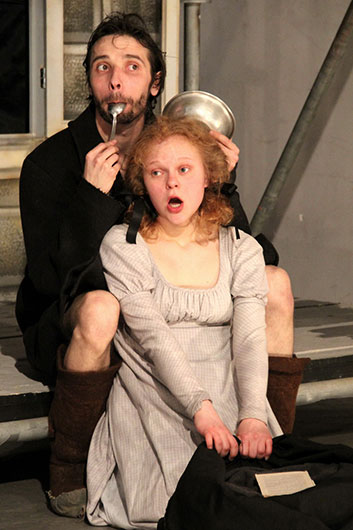 © "Small Drama Theater" Scene from the play "Crime and Punishment"
The “Invaluations of the Material” is not reproached and not even offense, on the contrary. The text is something that is aiming to surpass: the understanding of this is the basis of the basics of the theater system that arose at the end of the 19th century on the wake of the then fashionable concept of the superman and was called the doctrine of the super -task. (Therefore, the newly -minted guards are still so funny, requiring allegiance to the chosen material and the covenants of Stanislavsky at the same time; however, the paradoxalists are generally funny.) To overcome the text, to penetrate it, compose in detail the life of the power lines that boil under the cover, and to orient it to the imaginary non -Eclida point: everything This, in the end, takes the play the function of the symptom. Or, if you like, the evidence: my late teacher Vadim Golikov, a graduate of the first Tovstonogovsky workshop, explained that the play is a decoding of a dictaphone record, accidentally discovered at the crime scene, and the director is a discount on this record to reconstruct the picture of the incident. Lev Erenburg, a graduate of the last Tovstonogovsky workshop,, however, clearly prefers the role of the diagnostician and restores the clinical picture with an anamnesis and a bouquet of complications; However, after the eight -season era of “Doctor of House”, make a difference between a detective and a diagnostician - an idle activity.
Sounds to express the basics of the Stanislavsky system in the midst of 2014 - the lesson seems to be no less idle, but there is a clear reason, and not even one. Firstly, the idea of the system varies in Moscow and St. Petersburg no less than the nomenclature of bakery products: otherwise accents are placed, otherwise the methodology is built; And the prism, through which the basic concepts and techniques of the school in the capital are perceived, which was sown, was polished half a century ago to Tovstonogov (not without reason there was a period when his students occupied the posts of Khudruks in almost all Leningrad theaters). Secondly, Lev Ehrenburg, despite some kind of official recognition, continues to be considered even by St. Petersburg standards marginal, which is partly fair, but in its own way is it funny: after all, he is the only one in the modern Russian theater who is not only seriously the adherent of the system “in its pure form”, but who, in addition, contrary to everything, works for all. Having adopted her Tovstonogovsky production, he does not disdain for months, sometimes accumulating countless sketches for years, in order to then compress up to three hours of super -dense stage action. Colleagues crooked respectfully: “too much, they say, everything is too much”; Well, still not to shout, authenticity is a tart substance. And they say - they say, "naturalism." And this is very important thirdly.
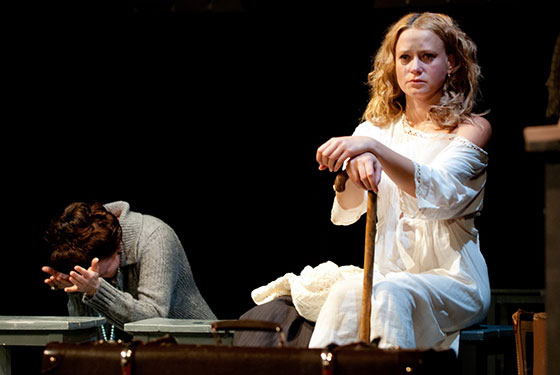 © "Small Drama Theater" Scene from the play "Three Sisters"
Because, thirdly, in that multi-brand tiger of schools and styles, which was the European culture of the second half of the 19th century, the naturalism and the Stanislavsky system-especially if we understand the first correctly, according to Andre Antoine, and Ehrenburg understands it correctly-they are fed closer than it is accepted. And the point here is not so much in anthropology or the idea of the world as in relation to the text. For Zola or Ibsen, the genuine essence of a person is hidden under a thin, ash film of culture and upbringing, like meat under the skin; His reflexes, neurosis and phobias come out in acute, conflict situations, while in a normal environment they appear indirectly, hints. The Stanislavsky system also accurately perceives the text and the action that needs it, which needs the director to identify: as a cultural layer on top of the undivided riot of reactions and extensions caused only by the environment and biography (read: heredity). The sketch method is, in essence, a stress test for the text that exacerbates the symptoms of replicas so much that the body of the play in the end is simply different. The more important what is happening, the less important the pronounced, and the difference between “mom, give me the sun” and “in this very Africa now terrible heat” is in the level of reception, but not in the method.
To combine the levels by constructing a zver man with the super-task, few dares. Chekhov was too squeamish for a scientific approach to the animal beginning in man, while Ibsen Brand and Oswald tried to cross only in Gedda - and with a clear loss of the second first. It seems that it seemed that only Gorky with his specific equal addiction to lead abominations and youthful nietzscheanism-and this is extremely important fourthly. Because the Stanislavsky system is quite checked not on Chekhov (it is still too universal), but just on the bitterness, under it it resonates like a bridge under a platoon. It is possible to “three sisters” in harmony, and “Yu” in freedom, “at the bottom” of Ehrenburg remains the same authorized capital, the catechism of the poetry of a small drama theater, as the Tovstonogovsky "bourgeois" for the big. It is important, however, another: this is the same poetics. In spirit, in the letter, by the method, by nuances, according to side effects. The Gorky Gorky Dramatic Theater, led by Tovstonogov, is not inherited by the BDT named after Tovstonogov, but the nonsense of Leo Erenburg, because he is also the name Gorky. Funny, it was said above, to see how Ehrenburg was listed in marginals; It’s only more funny to observe how the BDT for many years for many years (after two weeks of blowjob a quarter of a century) carefully searches the successor to the deceased mentor, sorting out worthy, but irrelevant candidates, while the heir wanders unrecognized at the distance of a simple punalist.
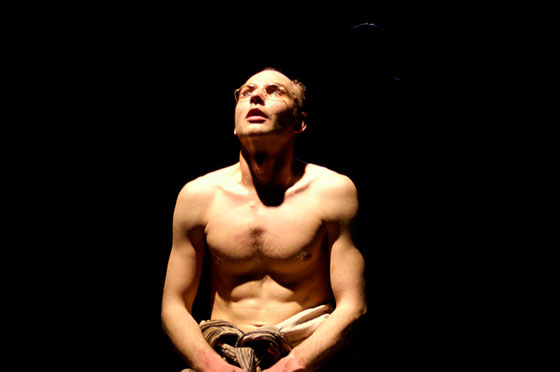 © "Small Drama Theater" Scene from the play "Ivanov"
... Another reader of this story - about the sketch method and naturalism, about detectives and diagnosticians, about students and successors - may seem too private: what, right, he is a matter of St. Petersburg theater, playing once a week for a small hall, no matter what important contexts he was placed upon proper consideration? What is such an urgent and relevant in these intricacies of aesthetic heredity? But the fact is that this whole complex of funds will be accepted - ultra -consuming development of action, for the years the rehearsals, naturalism of details and images, the priority of the every second detail over the overall structure and rhythm, the diagnostic approach to the motivation and reactions of the characters, and finally, the erosion of the text of the total directing - all this is the legacy of Tovstonogov, recently was in the focus of not only a broad Russian one. but also a global audience. Because Tovstonogov had another student among others. His name was Alexei German. And he was good for the student.
To see that German films and the performances of Ehrenburg are identical in their poetics- adjusted for the difference in film and theatrical languages- rather in stages, a reception, to accommodate them (although there would be enough indistinguishable spectator reviews: praise and especially Pravdov). Say, the notorious perfectionism of the Germanic vanity is the same sketch method, just in visual production, where light and texture become “performers”. For both directors, the excessive length of the episode plan complicates the installation: in “it is difficult to be a god,” and the joints between individual scenes are sometimes so mechanical and violent that they look almost inept. Both have a sketchy, i.e. The situational isolation of the development, leads to uncertainty, intangibility of the main category: in the Erenburg Theater - time (it will never determine whether the clock or week seems to be one seemingly continuous act), in the Kineman cinema - the space (both Klensky General in Moscow, and Don Rumata by Arkanar move as a whole, continuous labyrinth). Both equip the main characters, standing face to face with world chaos, something small and domestic (a shoe, which Satin clogs rusty nails sticking out from everywhere, flows snow-white shawls with which the Rumat is flinged to overwhelm the Arkanar stench). And the death of both is usually given in addition, unexpectedly and walking: where the human, as in a vice, is clamped between the delirium of the outside world and the nightmare of the internal, any life is so fragile and incorrect that it breaks off without a prevention. Well and so on. And the poetry of techniques entails a aesthetics of style. And here you have to exalt the tone.
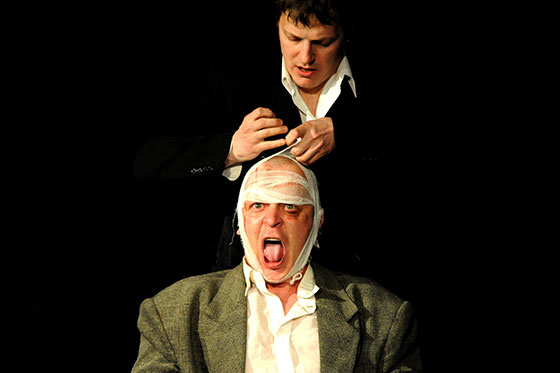 © “Small Drama Theater” Scene from the play “In Madrid, in Madrid!”
Lyubov Arcus once said that Herman seemed to mysteriously manage to translate the nation genocode into the cinema, embodying on the screen not only the “grip of privacy” of local life and history, but the attitude itself that lives on the local expanses; Genius Loci as kinnostil. Well, with the same right, it can be said that the Lev Erenburg Theater is the only cultural phenomenon today, which does not deal with “individual manifestations” of Russian reality, but with Russia as such, talking about the main in it, basic, specific, slurred to anyone except “local”, whether it is habits, reactions or the general structure of the soul. Why is it so, why exactly the sketch method of the Tovstonogovskae is generated by such phenomena - let theorists, the benefit of options, even offhand, are understanding in that. But if this is the case, it means that not everything is lost. For art is a demanding substance. Nothing ephemeral, false, dead or absent into his tongue can be translated: after all, it is arranged so as to make meaning. And, in the end, perhaps the aesthetics of Ehrenburg performances is the only thing that still provides us with a chance of authenticity.