
Translated material
Dying worlds
Kyiv in a fire of revolutions: 1918–1919
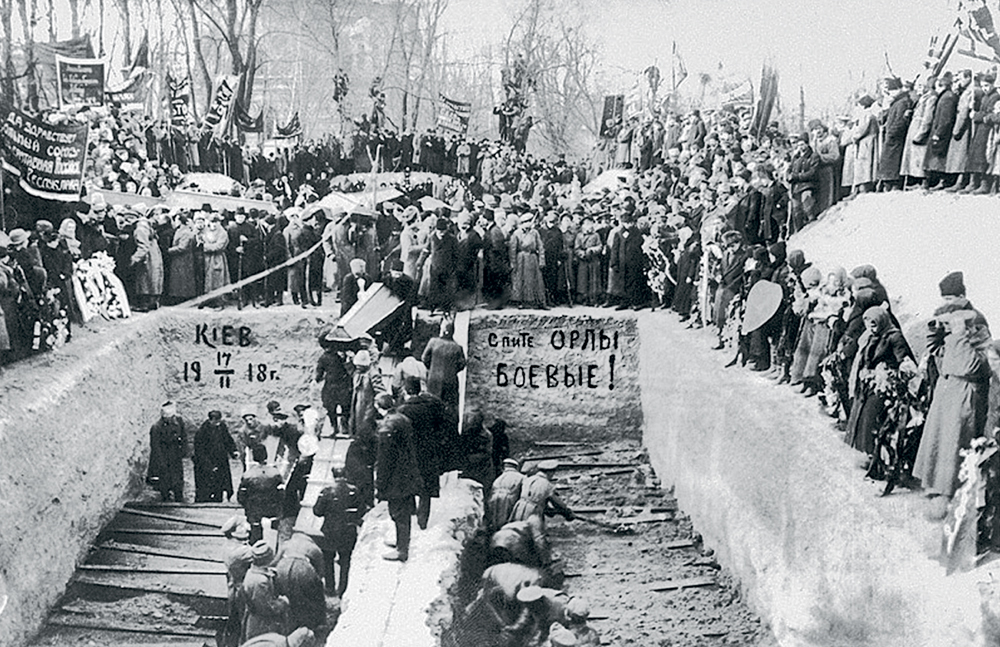
The funeral in the mass grave of 750 participants in the uprising in Kyiv, defeated by parts of the Kyiv military district, faithful to the temporary government, and military units of the Ukrainian People's Republic. Kyiv, February 17, 1918 /Photo: Private collection
In one of the Moscow publishing houses, the book of writer Pavel Permenko is preparing for the release of “Rod from the Silver Age: the stages of the fate of the priest and poet Anatoly Zhurakovsky. Moscow - Kyiv - Belomorkanal. " The action in this historical novel-research takes place for the most part in Kyiv. 20-year-old Anatoly Evgenievich Zhurakovsky (1897–1937), a philologist and a soldier soldier, in 1917 returned to the city from the front. Together with his older friends from the Kyiv religious and philosophical society (KRFO), famous theologians, historians, linguists, followers of Vladimir Solovyov, he tries to find Christian paths in a disaster unfolding in the space of the empire. In 1918, the structures of the so-called Ukrainian state were formed in Kyiv, and the Orthodox intellectuals tried to offer her cultural policy. But, clamped between the Ukrainian radical-socialists, the German occupation administration and the Bolshevik rebels, the Skoropadsky power broke up. We publish an excerpt from the chapter “Dying Worlds”, provided by the author, about the tragic episodes of the struggle for Ukrainian statehood in the first quarter of the twentieth century.
Kyiv on the front line
By the Christmas of 1918, the hetman power hit, and the streets of the city were filled with blood and dead bodies of the dead young idealists.
| *Petliura Simon Vasilievich (1879–1926) - Ukrainian politician and military leader of the left -wing nationalist sense, head of the Directory of the Ukrainian People's Republic in 1919-1920. ** Skoropadsky Pavel Petrovich (1873–1945) - Russian general, after the revolution of 1917 - Ukrainian military and politician; The hetman of Ukraine from April 29 to December 14, 1918 *** UNS - the Ukrainian National Union was formed in late July - early August 1918, was a block of Ukrainian political parties and public organizations of a wide range. The purpose of the Union is the formation of an independent Ukrainian state, "Protection of the rights of the Ukrainian people and the Ukrainian state in the international sphere." UNS is considered one of the organizers of the anti -Getman uprising. |
The invasion of the Petliurian national revolutionary troops*, and then the proletarian Red Army broke off the course of time.
The prohibitive cruelty of the national revolution, a whirlwind bursting into the city in December, and then the power of the Soviets, returning from the north and methodically approved by executions, indemnities, hostages, hunger and cold-turned the everyday creative life of the young family of Zhurakovsky into agony of daily dying.
The uprising against P.P. Skoropadsky **, organized in November 1918 by the Ukrainian National Union ***, led by the Directory, quickly took on extremely fierce. But the main blow did not occur at the hetman Gaidamaks, but on the detachments of volunteers from Russian officers, students and cadets. They tried to protect Kyiv from the Petlyur’s army, rightly fearing the pogrom of their native city. The leaders of the uprising were eager to finally establish themselves on the Dnieper hills and build their own national Ukraine. Their army, thanks to the support of the villagers, quickly grew into a hundred -thousandth, which, it seemed, had no barriers. The hetman renounced the authorities on December 14 and in an official statement admitted that, despite the desire to get the country out of the difficult situation, God did not give him "the strength to cope with this task."
Until recently, in the leading of the Kyiv newspaper “Word”, “deep” confidence was expressed that “the Ukrainian people belong to a great future in the Christianization of life, both personal and social”. Now, on the streets of Kyiv, the killed, disfigured his defenders, whose life was interrupted on the fly, in the color of the forces, lay everywhere on the streets of Kiev. Lyubov Belozerskaya, the future second wife of Mikhail Bulgakov, recalled the shock experienced in those days: “Somehow I left the house in the morning-a young man with such a face was lying ... such suffering ... He was lying in a student jacket, half stretched to the tunnel-he was in a hurry to pull, and he was shot, did not have time!”
The flowering city finally turned into the front line, regularly passing from hand to hand. Artillery shelling of civilian buildings, permanent canon, machine -gun queues, a whistle of bullets, a commandant hour, searches, and hopeless reprisals.
Gaidamatsky rampant
The second half of December 1918 became a fateful fracture in the life of Kiev.
One of the vowels of the City Duma from the Bund party, lawyer Alexei Goldenweiser noted the main feature of the Ukrainian authorities of those days: the affirmation in the affairs and speeches of nationalist and social raches, hatred of all the “strangers” by blood and class.
“The first days of the Directory vividly reminded me of the beginning of November 1917, when Ukrainians first received power over us. Immediately in politics and the public, the same rough and causing tone was established ... Along with nationalism, the directory resurrected in an enhanced form another tradition of the initial era of the Rada: competition with the Bolsheviks in the levisan. The composition of the government was entirely socialist ... "
Former student of the University of Kyiv, Nikolai Poletik, recalled: “The massacre and murder of officers, junkers and youth who served in the hetman detachments or recruited in the Volunteer Army, which began on December 14, continued all six weeks of dominance of the Directory in Kyiv.”
Intoxicated by luck, the leaders of the directory believed that now they would not release Ukrainian statehood from their hands. They will not be released at any cost, up to the alliance with the Bolsheviks, at least with anyone! Hence the frantic ruthlessness to everyone who, in the slightest degree, seemed disagreeing with their goals. "
On the streets of Kyiv, the killed, disfigured his defenders, whose life was interrupted on the fly, in the color of the forces, lay everywhere.
"
| **** Vinnichenko Vladimir Kirillovich (1880-1951)-one of the founders of the Ukrainian Social-Democratic Workers' Party, headed its left wing. Together with Simon Petlyura, he acted as one of the initiators of the uprising against the Ukrainian state and the creation of the UPR Directory on November 14, 1918 |
The People’s Teacher of Praskovya Kucheryvevenko, who always with a shudder recalled the years of the Civil War held by her in Kyiv, wrote about the bloody events associated with the brief rule of Petlyura and Vinnichenko ****: “The shelling of Kyiv is especially memorable for 18 days in [the end] of 1918. The gangs burst into the city, occupied the streets, raided their homes, cut, killed and robbed innocent people. Dressed in the scamers, the view of caftans, in high hats with long tongues, as haydamaki once wore, with sabers and knives behind the boots of boots. They burst into Jewish houses, cut the whole family, then robbed and went further to other families. In my hometown, Vasilkov, where my elderly parents lived near the synagogue, Gaidamaki cut out the entire street, populated mainly by Jews. Some Jewish neighbors managed to run into the courtyard of my parents, who covered them in the cellar. The door in this cellar was made in the floor and was covered by a closet in the corridor. There, in the cellar, the parents gave them food and looked after them until the Red Army came. Father painted the crosses on the gate and gate with chalk and stood at the gate on guard and thereby protecting those hiding from certain death. Gaidamakov answered questions that he had no Jews, that he was a Christian and “Jews”, as the Gaidamaks said, he cannot cover; That he and his wife are old people: "Come on, good people, we have no one." So for more than a week “prisoners are involuntarily” sat in our cellar. Mommy cooked that she had and fed everyone. Our whole street, the name of Gogol, was strewn with the corpses of innocent people.
My father told me how one Gaidamak, having finished his victim in the next court, jumped into our house with a bloodied knife in his hand, wiped his knife and hands on his trousers and began to count the looted money. Then he demanded to give him dinner, but first asked what was prepared. To the answer of mom that borsch is cooked with pork, because There was nowhere to buy, he replied that in the lean days he did not eat the imminent, and shamed my parents for violating the post. So he did not have lunch, he went to look for the "soon as soon as possible." That was the psychology of this bandit. "
"The Beast of the People's Soul"
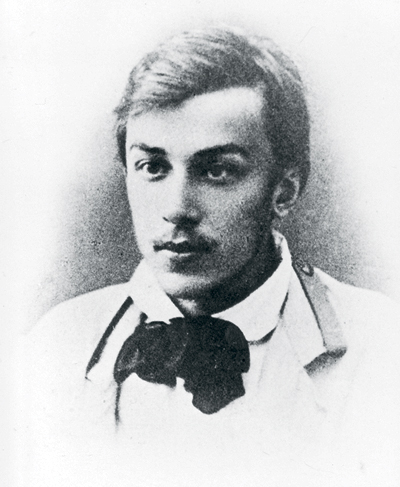 |
| Anatoly Zhuranovsky, priest and poet, participant in the Kyiv religious and philosophical society, 1915 |
This animal contempt for human life, mixed with perverted religiosity, is very characteristic of the mental state of the masses of the era of the Russian revolution. Against such a distortion of faith, the professor of moral theology, Vasily Ilyich of the Corporal and other older friends of Anatoly Zhurakovsky (following this, for the Slavophiles and other participants in the Russian religious revival of the beginning of the 20th century), opposed the faith. With an aggressive manifestation of such hypocrisy on behalf of the Church, they had to encounter every day in their educational activities. In this modern Pharisee, they saw the main danger to the fate of Orthodoxy in Russia. During the years of the revolution, baptized people not only killed each other, they pulled in themselves and their like the slightest hint of a person in the name of the letter of various laws and ideologies. So the animal beginning captured the folk soul.
Anatoly Zhurakovsky even under the hetman wrote: “We called our people a“ God -bearer ”, believed in its special religiosity; It seemed to us that as soon as this people get the opportunity to freely and independently build their social and state life, they would begin this construction on the basis of religious, divine, not human, truth. But the revolution came. The folk soul indulged in utopias, dreams, dreams and plans of building a new life. One ideology was replaced by another in the national consciousness - but a characteristic feature of all these ideologies was their irreligiosity. Maybe somewhere subconsciously these ideologies were fertilized by a religious beginning, but in the field of consciousness they reigned as non-religious, anti-Christian. ”
In the same article: “Undoubtedly - silence, long, centuries -old silence of those who could and should have said, here is one of the reasons for the religious wildness of the people. Our sermon was lifeless, literature on religious issues is scholastic, dry and even deprived of the shadow of inspiration. Now, having paid so expensive for our mistakes, we must finally realize them. It is necessary to start a great work of enlightenment of the people ... "
Check in the city ...
The situation and the air itself in the city since December 1918, when the Directory detachments entered, are becoming more unbearable. Anatoly left his parental family early, but what his relatives experienced at that time reflects those trials that fell upon him. His future daughter -in -law recalled:
“In Kyiv, 16 authorities changed during the civil war, often on the same street there were two armies hostile to each other, and under bullets, having lost all fear, it was necessary to live and study ... Under the shells and bullets, the readers of the reading room and were consultations and exams even for the apartment to professors.”
“And again there is no rest,” she recalled. - All the time gangs, gangs - rob, kill, take everything in their hands. And the school either works, then closes. Children [in fidels] come to school, coldly in classes, the manager puts the stove made of iron (the central heating did not work), the children bring “churochki” - pieces of wood, and immediately heat the class. Ink freezes. Not all the teachers in the field. Many fled who got into the army, who went from hunger into priests and psalmers, who took up all kinds of small crafts to sew, knit, and then sell - change to food ... when they received a salary, they were in a hurry to sell everything right there, if only they did not disappear, they bought food, and when it was not, all sorts of things that could be exchanged.
Gradually, the clothing and appearance of the townspeople fell off, turning them into a rack. But the general impoverishment was still ahead: by the spring of 1919.
On February 5, the Red Army entered the city for the second time. Searches were followed, the sustainers of soldiers in private apartments, a stomillion indemnity was put on the city, which was soon doubled. The Cheka moved on Sadovaya, the arrests of hostages, torture and executions began. The executions became more intense at the next approximation of the enemy troops.
In the area of aristocratic Lypers, a whole quarter of mansions - on the streets of Sadovaya, Institutskaya, Catherine and Elizabeth - was given to the divisions of the Cheka. Here, in numerous basements, garage, luxurious helicopters, day and night, the red “angels of hell” committed mass killings of innocent citizens. "These houses, surrounded by gardens, and the whole quarter around them, turned under the rule of the Bolsheviks into the kingdom of horror and death." The system of violence threw its black network throughout the city. “The headquarters of the regiments, district committees, police, each individual Soviet institution represented a branch of the Extraordinary Commission. Each of them arrested and killed. People were grabbed throughout the city. ”
“In May 1919,” Nikolai Poletik recalled, “when Ataman Grigoryev and his rebellious troops (they made up part of the Red Army) began to threaten Kyiv, another outbreak of“ class terror ”occurred. The authorities for someone found members of the "Club of Nationalists" were arrested by several dozen people. They were accused of organizing a conspiracy to overthrow the Soviet regime. Among the arrested were Russian merchants, homeowners, professors, including the head. Department of History of the Slavs of Kyiv University Professor T.D. Florinsky. All of them were shot.
| ***** On the case of Bailis, see the New Times No. 35 of October 28, 2013 |
Among the executed were the heroine of the process of Bailis Vera Cheberyak *****. About the execution of Vera Cheberyak ... no one spared. But the execution of Professor T.D. Florinsky and other old people ... made an oppressive impression on the Kyiv intelligentsia. " 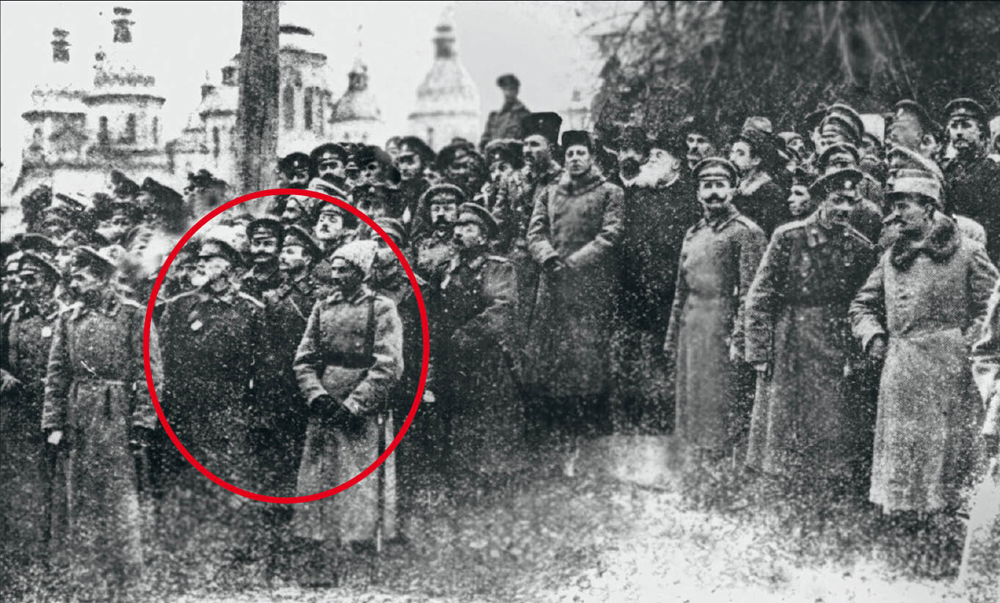
From the cage
That summer - according to a number of historical sources - the Bolsheviks shot from three to five thousand people. Among them are an outstanding Ukrainian enlightener, teacher and public figure V.P. Naumenko. Under the royal regime, he discussed with the same imperial patriot Florinsky, but stood for close cooperation with Russian culture. Already at the end of the reign, hetman took the post of Minister of Education ...
All the arrested were brought to the dungeons of the Cheka, and there they found their last rest. A month after the flight of the Bolsheviks, the journalist who visited the death quarter arranged by them noted: “On Sadovaya, on Institutskaya, on Levashovskaya ... You can’t get away from the cadaverous smell of decomposed ... victims.”
The Kiev woman, who survived the revolution and civil war in his hometown, in his old age, recalled that universal bitterness, which seemed to have covered the once a complacent and well -fed land. The reason for this, she considered the energy of hatred that took possession of the masses. “The whole country woke up, tore the shackles. For the most part, the masses of the people are not able to fully understand what happened and immediately join in peaceful creative work. In addition, in the entire being of the former borrower people, a thirst for revenge for centuries of slavery and humiliation of human dignity was in full swing. The uncontrollable physical force broke out of the iron cage and attacked everything and everyone. To understand what was happening and the masses were simply unable to discipline themselves - revenge and thirst for freedom swept them. "
Universal bitterness seemed to have covered the once a complacent and well -fed land. The energy of hatred has mastered the masses
"Taking advantage of the fact that the standards of life were not yet established, the criminal element united in entire regiments under the guidance of their leaders. They raided, searches, took everything that fell into their hands, often just robbed and killed. Especially many such gangs were in Ukraine. Here the Petliurians, Makhnovtsy, and Older Angel and the gang. Robbery and robberies of internal war existed in Kiev, which included mainly socialists of moderate shades and just smart experienced managers Of these, it was not aimed at hearing their needs, to rely on their proposals and aspirations. All authorities, to one degree or another, have trampled the will and mood of the inhabitants of this place consecrated by an ancient history. 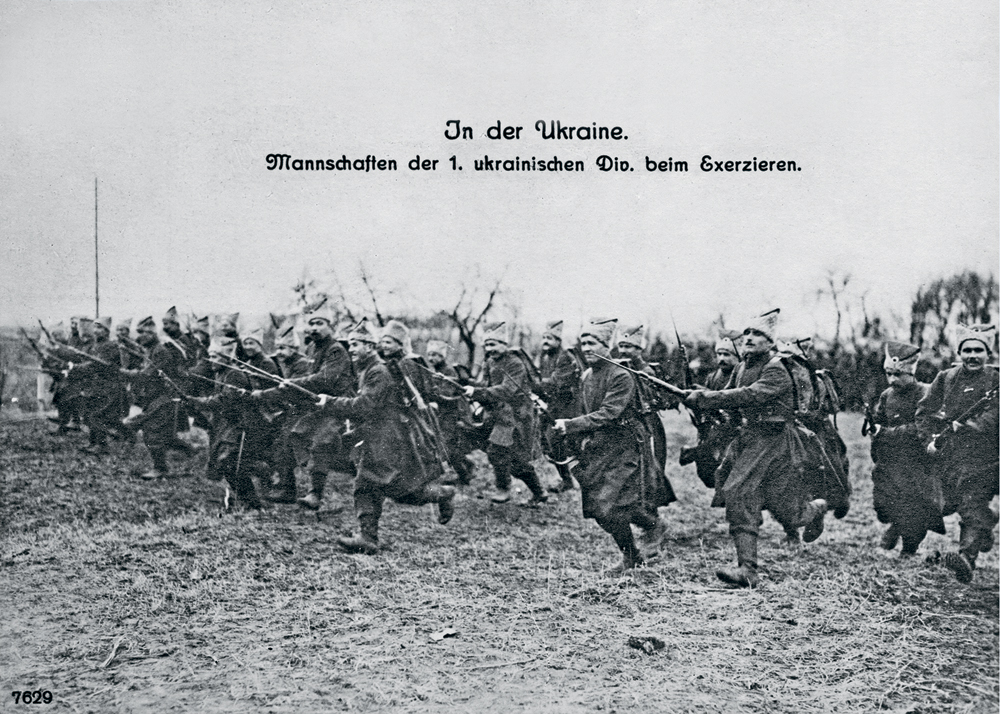
Morok of anti -Semitism
In September, after the flight of the Bolsheviks, with the exposure of the mass crimes of the Cheka, many experienced mental relief. It seemed that the army of Denikin would return the all -Russian life in the direction of culture and legality.
The appearance on the pages of the revived Kyiv press of those days of the whole galaxy of young talented authors, emphasizing their religious attitude to the problems of reality, speaks of a strong spiritual field, which influenced the mood of the city cultural community, and the entire free south of Russia. The hopes of Orthodox intellectuals for the implementation of the Christian project of Russia flashed again. It seemed that the hot belief expressed only a year ago on the pages of one of the local newspapers by the librarian of Kyiv University Alexander Sagarda about the Christian roots of the Ukrainian people, eager to identify their “national“ I ”in Orthodoxy, answers reality. Then this patron that escaped from Petrograd expressed confidence that the mentor of religious intelligentsia himself Vladimir Solovyov would be the first to “give all his fiery religious will and all the love of his heart for the truly Christian work of the free, happy Ukraine.”
But the next case clarifies the actual condition of the city inhabitants, white soldiers and their leaders. When Kyiv’s release from the Bolsheviks, as indicated by numerous memoirists, in the crowds of the people one main idea hung: “In everything that has happened to us recently, the Jews are guilty!” The military command, and many representatives of the bureaucracy, and journalists such as the famous Vasily Shulgin were solidarized with her. The musician Nikolai Slonimsky recalled: “After the occupation of Kyiv by the White, terrible Jewish pogroms were organized ... The pages of Kyiv thought were occupied by mourning ads with the names of entire families, with children, brutally killed in their own apartments. I remember the feuilleton of the former member of the Schulgin State Duma, entitled “Torture by fear”, in which he conducted the idea that the pogroms were a revenge of the Jews for the defeat of Russia under the leadership of Trotsky. ” ... At the end of October, the Kiev religious and philosophical society addressed the fellow citizens with an appeal to change his mind, stop destroying their souls with unworthy affairs and turning to repentance. “The Christian brothers,” wrote the figures of the KRFO, “is an evil and terrible thing for Christian conscience, the great covenants of Christ are forgotten about love and the world ... Jewish pogroms are pouring around the cities, villages and villages of our bloody wave. They rob, burn, ruin, spill blood like water, laugh at tears and hate. Who is robbing? Who kills? Who is brutalized? It is scary to say: the animal deeds are committed by Christians ... The bloody world war gave birth to Bolshevism. The bloody fog of Bolshevism created Jewish pogroms. The bloody stream of pogroms carries anarchy and the devastation of our lives. But we are so tired! We need a healthy bright life so ... enough blood! Pretty pogroms! To peaceful work! To the great construction of the homeland! ”
The terrible winter of 1920
Soon, military luck turned away from Denikin. The whites retreated, in December again giving Kyiv to the Bolsheviks. An eyewitness to those days recalled:
“The White Guards for a while lingered in Kyiv. I remember how I left school on a large basement. Suddenly there was a machine gun queue. I leaned against the wall of the house. The whole detachment of the Red Army rushed along the street and persecuted the White Guards who rushed to run away along the lanes leading to the boulevard. I stopped, in front of me lay piles of the dead, they fell like sheaves, dotting the bridge. "
In the winter of 1920, the city was depopulated. Kyivians, this is not so long ago a melting, optimistic tribe, died out on an unprecedented scale. In such an atmosphere of constant stress, murderer, the absence of any life prospects, one could only die, exhausted to dust. Overcoming fatigue captured everyone.
Photo: from the author’s personal archive, private collection