
Translated material
What to download this week?
"At the age of Ellen".
Director Pia Mare
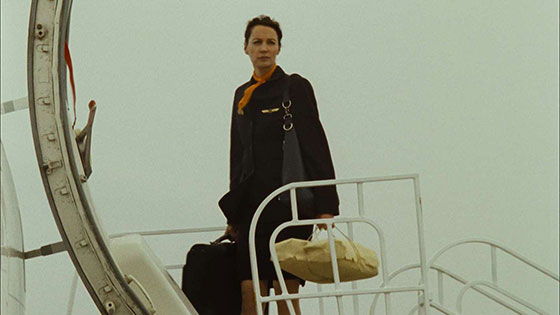 Frame from the movie "Age Ellen"
The somewhat lost stewardess of Luftanza Ellen (the beautiful Jeanne Balibar) is experiencing a middle-aged crisis-a tired boyfriend began to meet with another and is already waiting for a child, medical tests indicate something terrible, on an airplane, Ellen throws into trembling. Unable to withstand stress, the flight attendant jumps out of the plane into the landing strip of some African airfield, to where the mystical, the cheetah had just been in these places. Soon, dismissed, she is nailed to the group of radical vegans and, without regaining consciousness, begins to travel with them to promotions and ridiculous operations to release chickens and laboratory mice. White helpless animals, absurdly scattering in the night asphalt, seem only a new stage in the bad sleep of the heroine. But it seems that she managed to get used to the fact that life is a dream, and is ready for the most unexpected turns of his plot.
One of the final films of the so-called Berlin school, which over the past four years seemed to have disappeared in the mainstream (the campaign of Christian Petzold (Barbara) and Thomas Arslan (Gold) to the territory of genre cinema ended with something small), “at the age of Ellen, it seems like an anthology of techniques, developed by the new autistic cinema of Germany (however, many films The "Berlin school" is similar to each other as brothers). A surreal, detached look at the world - and at the same time photographic accuracy of details: gestures abandoned casually phrases. Atomized, interpreting heroes. Loneliness, crisis, existential void. The illusory order of institutions and the illusory freedom of the anarchy. With all this, Mare is a very witty director, and “at the age of Ellen” looks more like a satire than another harsh sentence of a violated Europe (the area of real experiences and adventures was carried out in the film into through invented Africa). The director’s sympathies are more than clearly on the side of monkeys and cheetahs; We hope not a single actor was injured during the filming.
"Wolf Yama 2" ("Wolf Creek 2")
Director Greg Maklin
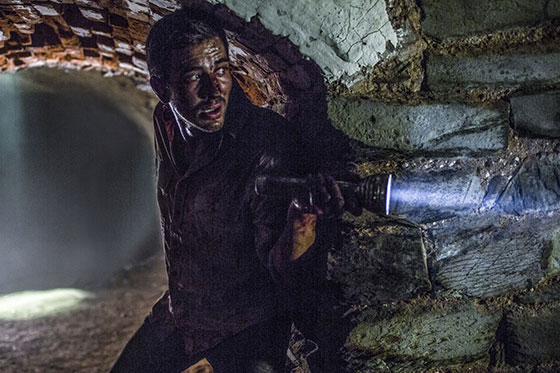 Frame from the film "Wolf Yama 2"
"Welcome to Australia, Vocousses!" What does the Australia of the viewer of the “wolf pit 2” meet, this sequel of the forgotten Yernic Horror-Hita of the middle of the zero? Demolished a well -aimed shot in the third minute with a skull. Dismemberment of a corpse with witty comments. Kangaroo, which turn into bloody scraps under the wheels of a long -range truck. Violence here is naturalistic to the insensibility characteristic of the caricature, and is flavored with a charming chauvinist mater (whom we will no longer hear in the official releases of films). Director Greg Maklin does not set the task of scaring someone: from the terrible to ridiculous here, not only a step-a couple of millimeters. But in the opposite direction - also: “Wolf Yama 2” - from those horror films that the most terrible operation is done not in the frame, but with the consciousness of the viewer. Various bacpeks' tourists who decided to visit the continent’s heart and got into the habitat of the main local predator, Bushman Mick Taylor, lose their human appearance, turning into grunting “pigs” intended for slaughter, and thereby almost instantly depriving the viewer to experience empathy. This insensibility at a long one and a half hour distance is doomed at some point to replace gloating when the next victim falls into the hands of Taylor-and be sure that Maclin will let the viewer understand and feel the whole terrifying subtext of this seemingly random, fleeting feeling.
"Fores for strangers".
Director Tom Bernings
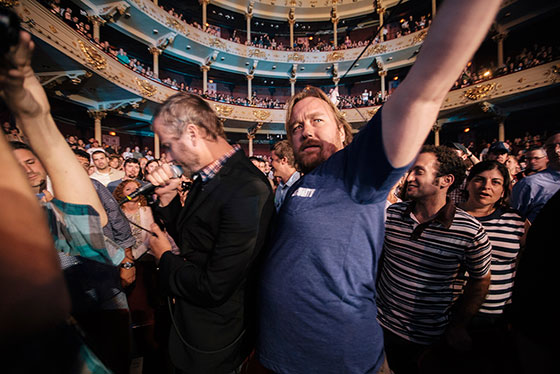 Frame from the film "Adopted for strangers"
Tom Beringer, a puffy thirty-year-old louse from Cincinnati, has a famous brother-the vocalist of the sufferers from Indi Rock The National Matt. Matt, out of pity, hires Tom with a technician on a world tour-he tunes up for a year of Katezh and rock and roll and takes a camera with him, telling each meeting about plans to remove the documentary about the group. The National will turn out to be shy and absolutely non-irony quietly, the film will not be given in any way-the funniest here is his ridiculous attempts to take interviews from the group of the group, as in “adult” musical documentaries; Moreover, direct work responsibilities will be unbearable - for example, to monitor the presence of food in the dressing room and the presence of Werner Herzog in the list of guests of Aftepati. After a few miserable months, the grief-director will be sent home to Cincinnati. There, he still mounts his film-and this is not a dull concert chronicle, but a spectacular, ridiculous and sad story of Ivanushki-Durachka to a more successful brother.
The key to the modern film-non-fictional issue of authorship in the Beringer’s film is posed by an edge and is not uttered aloud: who is this funny fat man? Manipulator, in search of at least some conflict in the life of The National directing the camera at himself? Or the instrument in the hands of someone in the lamb, realistic answer to Mr. Mozgrav from the “exit through the souvenir shop” Banksy? Neither one nor the other - as the name hints, will be a mistake to take the Berringer brothers for strangers: Matt is the film producer, his wife Karin helped him to mount it, without their kicks, he would hardly finish the movie, and without the approval of the group - could not release. No revelation in the spirit of the film “I am not here” is supposed to be here - as, apparently, the continuation of the Berryngeeic film career. But he manages to tell what the songs of the songs National cannot be recognized. It turns out that the comforting nature of the group’s music is a direct derivative of their angelic patience, which allows for years to endure the guys like Tom.
"Piano at the factory" ("Gang de Qin")
Director Zhang Men
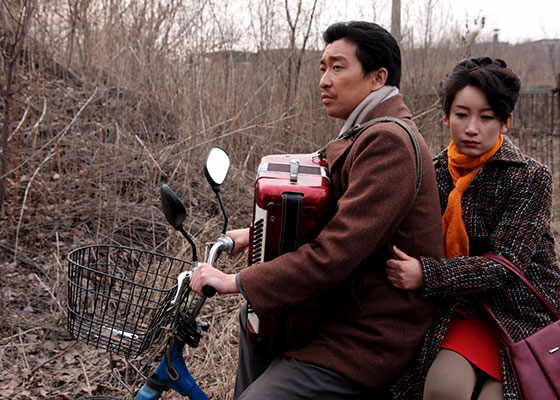 Frame from the movie "Piano at the Factory"
Suddenly, Russian in spirit, the Chinese film - Russian starting with depressively dirty industrial landscapes and interiors (in such decorations, the “load 200” could well have been played out) and ending with quite “Leningrad” wind and just the Lube group on the soundtrack. History is also quite congenial to the Russian context - a decadent, once industrial north, all factories are closed (production went south), former workers are busy with what. The protagonist, named after the city of Guilin, for example, leads the funeral and gender orchestra and plays it in it on the accordion. His daughter learns to play the piano, but there is no money to put the instrument at home, and Guilin decides on an unthinkable adventure - to cast an entire -metal piano at a mothballed plant. Former workers abandon their civilian affairs and again mobilize for a collective jerk to the bright future of a little girl. A bet on new collectivism, sentimental melancholy, which is not turning into longing, a tendency to aesthetizing decline and not based on anything that everything will be fine, Twian Manya is distinguished with Russian directors like Anna Melikyan, Vera Storozheva or Taisiya Igumentseva. The remaining doubts regarding the related piano relations are removed in the frame.
"New World" ("Sin-E-Gae")
Director Pak Hong Jong
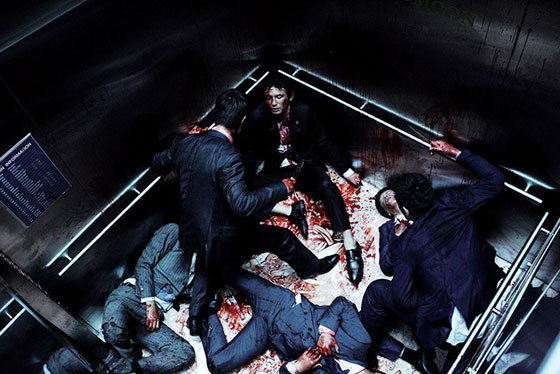 Frame from the movie "New World"
Deception, manipulations, false identities are not only the main motives of the “New World”, but also the main, and win -win, techniques that his director Pak Hong Zhon uses. Starting his corporate-gangster epic from concrete, flooded in a throat, and a suspicious car accident in which the local godfather dies, Pak thereby distracts the viewer’s attention from the array of information important for the development of the plot, which dumps into him in the first five minutes-so it is easier to drive the audience by the nose. Ultranasilia here is rapidly replaced by the frost of cabinet intrigues (modern gangsters are of little fragmented from the clerks and fight for the most part at the meetings of shareholders), and clearly reminiscent of the “double castling” structure (the main character is also a police mole, a servant of two gentlemen, of which it is not clear how worse) is suddenly a chaos, in which the unfortunate viewer risks and risks and risks and risks and is choke. Here it is, the new world - in which in equally inflamed position there are police, and bandits, and the audience waiting for the Sasse, and receiving an existential nightmare.
"Yozgat Blues")
Director Makhmut Fazil Joshkun
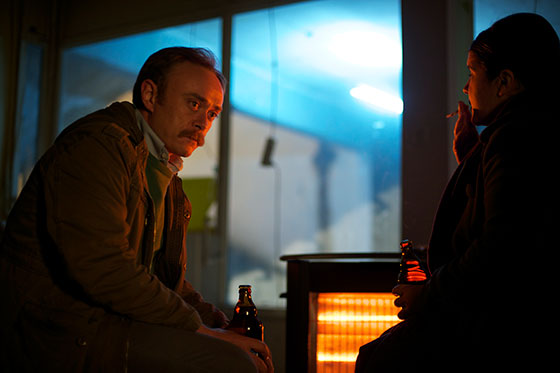 Frame from the movie "Yozgat-Blood"
Turkish realism - but not as mournful as Ali Aydin’s, and not as angry as Jaylan's. The sad drama from the life of a mustachioed provincial intelligentsia and service workers (in fact, in this wilderness the social status of Labukha from the restaurant is approximately equal to the status of a hairdresser). Under the quiet surface of a leisurely story, a serious melodramatic tear is hidden: the singer Javuz (Erjan Kesal, the Jaylanovsky “three monkeys” and “once in Anatolia”), which entered the final peak of his restaurant career), is settled to work out the season in Anatolian Yozgat; The main hit of his program is the re -trial Joe Dassen. He takes his partners in his partners, a terrible saleswoman from the meat department, who had never been in public before. In a deaf, not spoiled stage of the province, the lady immediately blooms: gives an interview to the only journalist throughout the city, sings to the only poet, meets a lonely, looking for a hairdresser and makes a beautiful styling. Yavuz with more and more tenderness looks at the good no, but does not give a look. The director himself, clearly related to his heroes with a mixture of tenderness and irony, does not show. Poor little people on the screen do their ridiculous small things with the doomed dignity of the characters of the films of Aki Kaurisma, as if everything around - and the hairdressing, and modest restaurants, and the recitation of the verses of long -dead poets in front of three listeners - are real life. True, you yourself completely forget about this Snobsky "as if" to the finale of the "Yozgat-Blood".