
Translated material
Ligger for Ukraine
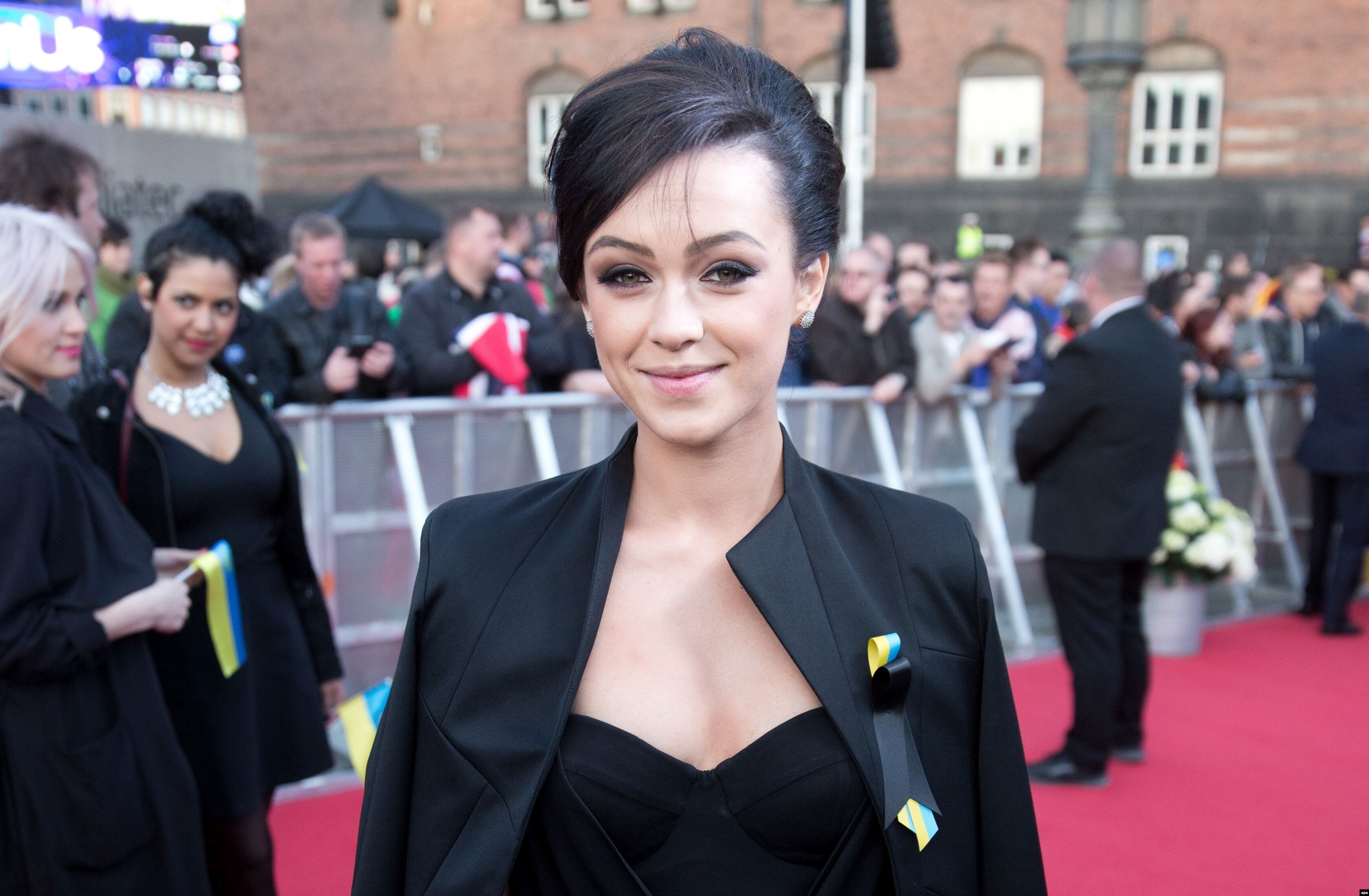
Eurovision through the eyes of the Ukrainian singer Maria Yaremchuk
“Eurovision” - outside politics, the organizers of the music contest insist, but its very device, when the performers compete as representatives of their countries, gives the entertainment television show a thick political shade. Eurovision 2014 opens in Copenhagen against the backdrop of the Ukrainian crisis and a sharp cooling of relations between Russia and the Western world.
All this naturally draws attention to the contestants from Russia and Ukraine, which fell out already in the first semifinals of Eurovision - this is the Russian duo of the sisters of Maria and Anastasia Tolmachev and Ukrainian singer Maria Yaremchuk.
The winners of the children's "Eurovision", now the 17-year-old sisters of the Tolmachevs come up with the song Shine, which has already caused a violent polemic. In one of the lines of the song, a hint of the annexation of Crimea Russia is seen: Living on the Edge, Closer to the Crime, Cross the Line a Step at a Time ("Living on the edge, closer to the crime, go on the line ...") - the English word CRIME (crime) Crimea (Crimea).
The British expert and a great fan of Eurovision Paul Jordan speaks of discontent among the European public not only by the actions of Russia against Ukraine, but also by the legislation recently adopted in Russia, discriminated against the LGBT community (this competition is popular among gays in Europe). From this point of view, Jordan believes, the nomination of the Tolmachev sisters from Russia is a cunning solution: "Now there is a discussion among European fans, can people boast of two teenage girls singing a very sweet song. Was it a deliberate decision of Russia? Definitely, they knew what they did."
For Ukraine, “Eurovision” and politics were connected quite often, for example, we can recall the scandal around Andrei Danilko’s speech under the pseudonym Verka Serdyuchka in 2007, which was considered anti-Russian, and note that the winner of Eurovision-2004, Ukrainian singer Ruslan, is now one of the most noticeable Maidan activists. The current representative of Ukraine, the 21-year-old singer Maria Yaremchuk, however, performs the Tick Tock love song, completely devoid of political context.
However, Yaremchuk, the daughter of the Folk-singer, popular in the past, Nazariy Yaremchuk-said in an interview with Radio Liberty that it was saddened by events in Ukraine, especially with a tragedy in Odessa (the interview was recorded the day after the clashes that led to the deaths of dozens):
-Naturally, we are experiencing the whole team. Of course, it is sometimes difficult to concentrate only at rehearsals and at work, since we are now the soul and heart of the house. But I will not say that it interferes. This, on the contrary, makes you be stronger. And now, as never before, it is probably relevant to prove to ourselves and Europe that we are a strong nation. In principle, everyone should do what does better. I believe that I am a happy person because I got here. Eurovision is a competition that unites people. He, as a loudspeaker through which you can speak with all over Europe. Now the Ukrainian delegation is especially high. We are primarily here for Ukraine and in the name of Ukraine.- Your father has strong motives in the songs. There are no national motives in the song with which you perform at Eurovision, although often at this competition, performers use something national. Is folk Ukrainian music important for you?
- Of course, I grew up on this. I grew up on my father's music. Thanks to him, I sing. Naturally, I love and sing in Ukrainian and our Ukrainian folk songs. They are incredibly beautiful. But Ukraine is a European country. We tried to do something European. There is no specific technology of successful performances at Eurovision, what the song should be. It can be a song with a national motive, or maybe without.
- How did you choose?
- I wrote this song together with the wonderful Swedish singer Sandra Bierman. It so happened that we coincided with each other, so to speak, she is my friend to my liking. The first time we managed to cooperate with her. Again, there are no specific rules and technologies here why this is what happened. There are things that just happen. I did not look for any moves or something strategically in order to conquer Eurovision. There was a song that hooked me.
- Let's talk about Eurovision. Do you follow this competition?
46 million Ukrainians will stand behind me
- Undoubtedly. From childhood, how Ruslan defeated, it was the main event in music. Naturally, she followed and was ill for each Ukrainian participant. I really like the concept of the competition, what you represent the country. You fight not only for yourself, for your personal ambitions, for promoting your music, and you fight for all the people of your country. I will stand on the Eurovision stage not alone, 46 million Ukrainians will stand behind me. This makes the blood boil. Eurovision has a special atmosphere, since so many people from different countries are collected here. This reminds me of a big pioneer camp: a friendly atmosphere, so many acquaintances, so many new friends and experience.
- "Eurovision" is so arranged that you cannot vote for your country. Usually you voted for?
- I always listen to my heart. It seems to me that the main part of the audience always draws conclusions only on the basis of whether it liked or not. Naturally, one can approach this differently and assume that this is a politicized competition. But for some reason, a song that clings the most. The main thing is music. The fact that countries are fighting makes a process very interesting, voting, but first of all it is music. And I hope that it will be so.
- Do you think that this can interfere, say, Ukrainians vote for the Russian performer, and the Russians vote for you?
“I cannot speak on behalf of all people.” Each has its own vision of this competition. Everyone thinks in their own way. I am trying to abstract from the situation, because it is not subject to me. I can’t control this process. The only thing I can control is my emotion, my presentation on stage. All I will do is try to invest myself in three minutes - for people. The rest is decided by fate, some circumstances. We singers must sing.
- How self -sufficient Ukrainian popular music is. It doesn’t work that the Russian show business attracts all any successful Ukrainian performers?
- You can’t generalize. Each has its own radius of action. We all understand each other. We know that there are a lot of Ukrainian performers who sing exclusively in Ukrainian, and they are popular in Russia, such as the "Ocean of Elsa", "Boombox", "Vypoplyasov's Writes". I think that there is a share of business in all this, but the personality wins. If we take Vakarchuk ( the leader of the Elsa Ocean. - RS ), then he is understandable, even if you do not know the Ukrainian language, you understand what he sings about what he wants to say.
- You studied political science, which is unexpected. Is this an accident? Or are you interested in politics?
- I'm still learning. I am graduating from two universities: the Kiev Municipal Academy of circus art, the squad of pop vocals, and the Chernivtsi National University, the faculty of history, political science and international relations. I went there at the age of 16. What I like in my second education is history and languages. This is a way to self -develop and understand more, but this is not a profession. Still, I make a bet that I love more, which I have been attached to since childhood-singing. But languages and history do not bother me, on the contrary, complement. I feel gratitude to my family that she raised me and accustomed me to languages. This helps me at the international competition. But I do not plan and do not think about a political career if you meant this. At this age, so accurately.
-Do you have any favorite historical periods? What are most interested in?
- Naturally, I am interested in the history of Ukraine, Kievan Rus. I admire the Roman Empire. Much has been preserved from it, which is relevant to this day, on the basis of which modern nations are being built.
- You say that you will act on Eurovision as a representative of Ukraine, that behind your back 46 million Ukrainians. But now there is a polemic, which is the national community of Ukraine, how people perceive themselves. You have grown in Chernivtsi, this is Western Ukraine. Do you feel like a Ukrainian or a Western Ukrainian?
Ukraine is now fighting for understanding the simple truth that Ukraine is indivisible
- There is just a concept - Ukrainian, and it is indivisible. In principle, Ukraine is now fighting for an understanding of this simple truth that Ukraine is indivisible, that there are simply Ukrainians. I am Ukrainian. Mom and dad are my pure Ukrainians. I grew up on Ukrainian values.
- You said that Eurovision is a loudspeaker for Europe. Are you going to somehow mention the current events in Ukraine?
- It makes no sense to mention the current events in Ukraine, because everyone knows about it. I can only mention that Ukrainians are strong and the music is strong. These two points together are the main motivating things for me, ”said Maria Yaremchuk in an interview with Radio Radio.
According to the rules, the inhabitants of each country cannot vote at the competition for their representative, so they traditionally support contestants from neighboring or friendly countries. To fight this, a jury was introduced at Eurovision, which complements the "popular" vote.
Paul Jordan notes that in 2005, immediately after the "Orange Revolution", Ukraine received only two points from Russia, while a year earlier - the maximum 12. How will the current Ukrainian crisis be affected? Representatives of the competition gave clarifications according to which the votes of the inhabitants of Crimea will be considered as the votes received from Ukraine (if only on the peninsula until then there will be no change of telephone operators from Ukrainian to Russian).
Paul Jordan, who considers the favorite at the competition of a representative of Greece, and not Russia or Ukraine, remarks: "It is understood that this is a television show, entertainment. But in reality, existing problems in Europe are manifested through" Eurovision ", especially when voting. This competition is in their essence political, or not the organizers like it or not."