
Translated material
Bolotnaya: two years later

The opposition reminds the Society for the Events on Bolotnaya, from the moment of which two years have passed
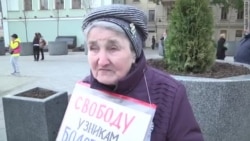
In Moscow in Bolotnaya Square , the police detained 13 people who deployed banners and banners on the Luzhkovo bridge with the words "Russia - not a prison" and "freedom of political prisoners." Among the detainees are 12 activists and a journalist of the Italian publication "Russian Riviera".On the "people's gathering", organized by the opposition, several hundred people came on Tuesday evening:
A folk gathering on #Bolotnaya . Hundreds of two or three, if you subtract the journalists. pic.twitter.com/wncjlwzx47
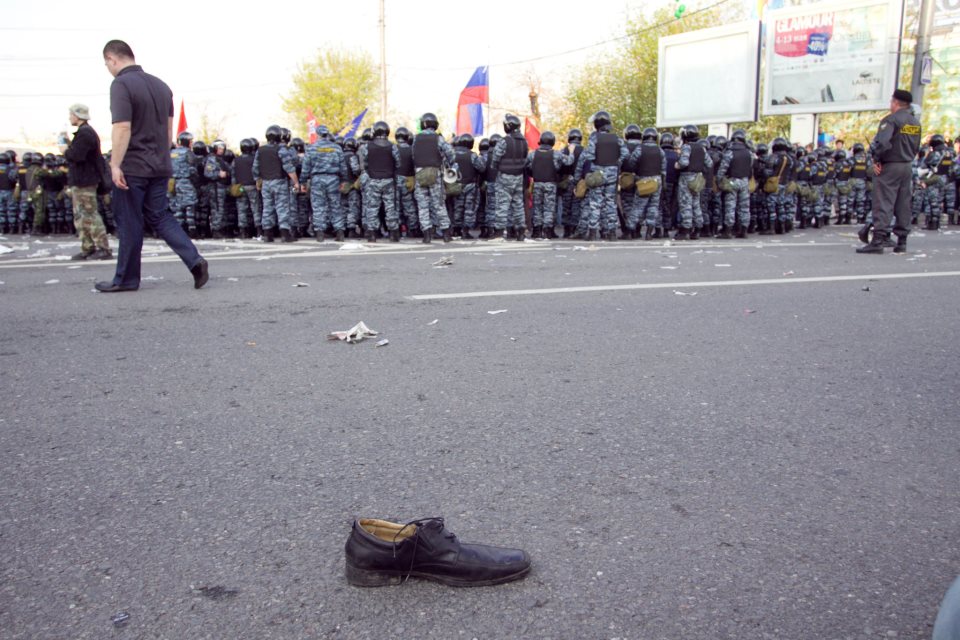
- Jüri Maloverjan (@maloverjanbbc) May 6, 2014The inconsistent action was timed to the second anniversary of the multi -thousandth demonstration on Bolotnaya Square on May 6, 2012. Then, after a clash of demonstrators with the police agreed with the city of the city, more than four hundred people were detained. Twenty -eight people in the framework of this case ended up in the dock. Now, two years later, eleven of them have already been convicted, the same amount is amnestied, six more are waiting for the sentence. On the second anniversary of the events, representatives of the opposition planned to hold a protest in the Bolotnaya Square, but they were refused the Moscow City Hall.

The opposition reminds the Society for the Events on Bolotnaya, from the moment of which two years have passed
The text of the copyWidth PX Height PX
The url has been copied to your clipboard
No Media Source Currently Available
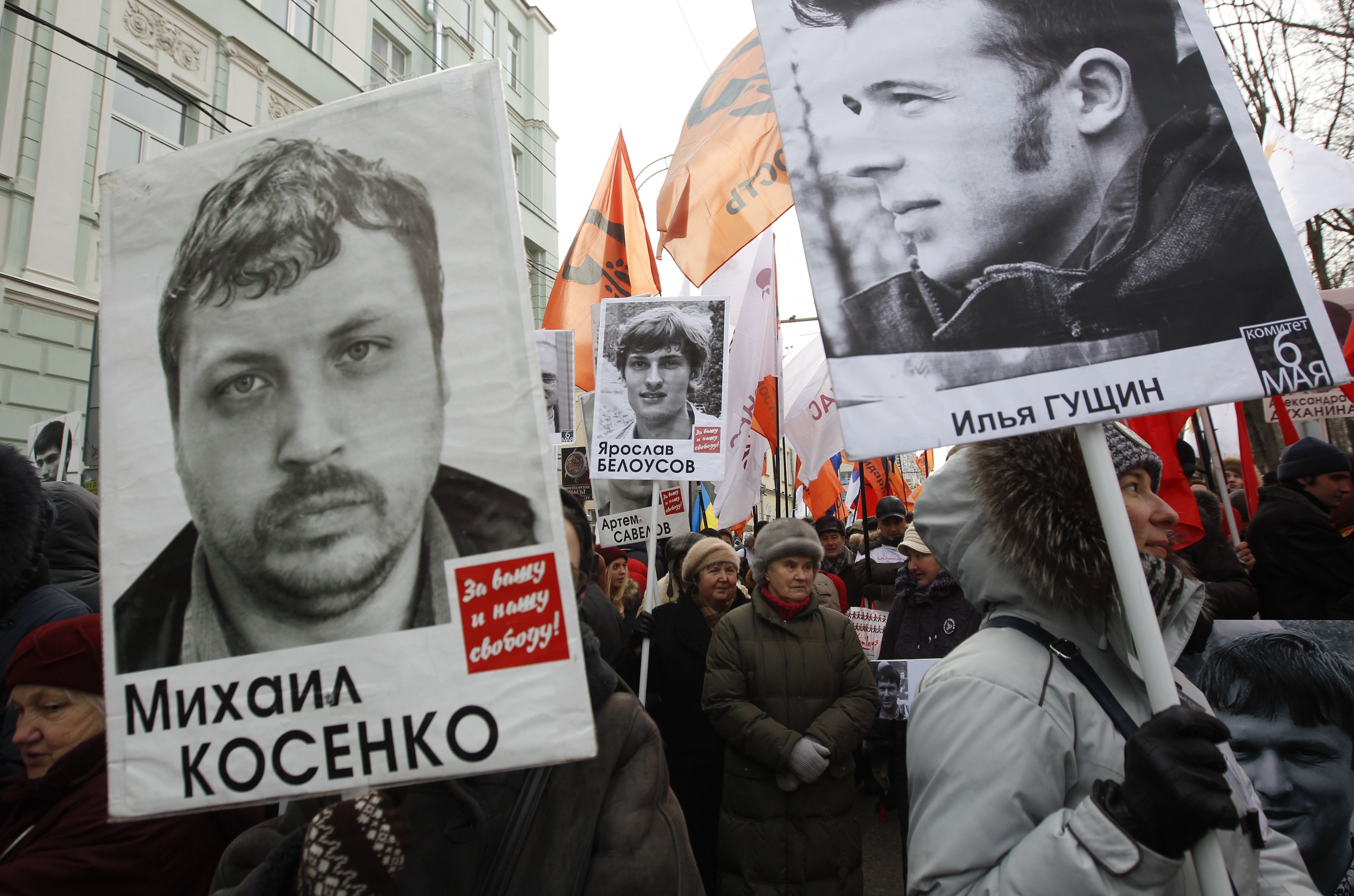
0:00 0:02:26 Download the media fileLike two years ago, on May 6, representatives of the opposition’s protest actions committee intended to conduct a march along Big Yakimanka and a rally on Bolotnaya Square. The Moscow City Hall did not agree with this option: the procession was refused almost immediately, and the rally was proposed to transfer to Sakharov Avenue. The metropolitan authorities referred to the fact that Bolotnaya Square would be occupied by cars involved in the parade on May 9. The opposition refused to rally on Sakharov Avenue, explaining this by the fact that for many it is important for many to go to Bolotnaya Square on May 6. On April 30, it was announced that it was not possible to reach agreements with the Moscow Mayoria. The organizers did not call people to go out into the street, but they themselves gathered on this day in Bolotnaya Square to support the defendants in the "swamp business". Here is what one of its initiators said on the eve of the action, activist of the Solidarity movement Petr Tsarkov :
- In your opinion, why failed to agree with the mayor?
- Now it is quite obvious that there is a tendency in every way to prevent the opposition. The authorities do not want the protest to develop so that it be visible, so that people can openly express their position different from the "general line", so there is nothing surprising for us. We believe that we will continue to deal with serious difficulties when agreeing on shares, it will be difficult to take events even at the sites that we used to coordinate, for example, to Sakharov.
- Do you share the point of view that the authorities began to act like that, including because you felt passivity from civil society?
We believe that we will continue to deal with serious difficulties when agreeing on a promotion, it will be difficult to take measures even at the sites that we used to be coordinated, for example, on Sakharov
- Indeed, some people note that civil society shows fatigue, but I think this is due to the fact that, despite the protests, the political situation in Russia is developing for the worse. People see that the economic situation is worsening, that Russia's foreign policy is very aggressive, that there is a violation of all possible international obligations. Probably, the protest will increase, - suggests Peter Tsarkov.
A year ago, representatives of the opposition held a coordinated rally on Bolotnaya Square , which, according to the organizers, gathered more than 25 thousand people, that many observers and political scientists called success.
The action on May 6, 2012 , held under the slogans of honest elections, was one of the most massive opposition protests of the winter of the winter 2011-spring 2012. The organizers said that at least 60 thousand people took part in it, someone announced a hundred thousand, the metropolitan police, however, estimated the number more modestly: according to the Ministry of Internal Affairs, two years ago there were only 8 thousand people on Bolotnaya Square. Twenty -eight of them became the defendants in the criminal case. The investigation, and then the court came to the conclusion that the clashes of the demonstrators with the police were riots.
Nine people have already been sentenced to real terms of imprisonment for participating in the riots and for the application of force in relation to police officers. They received from 2.5 to 4.5 years in a colony. The only convicted conditionally for three years is Alexander Dukhanin. The accused under the same articles Mikhail Kosenko was recognized as insane and sent for unlimited forced treatment to a psychiatric hospital. 11 defendants in this case at the end of last year fell under an amnesty, things were closed in their regard.
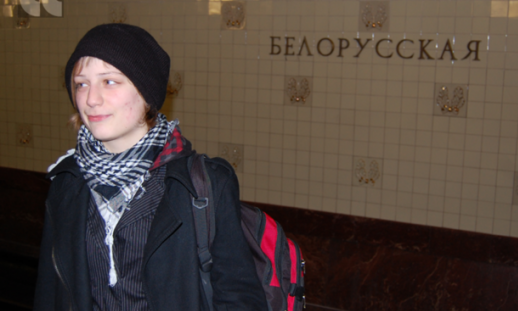
-It is necessary to remind society not so much about the date of May 6, but about the fact that still a lot of people remain in prisons. This is Alexei Gaskarov, and Sergey Udaltsov, and a few more guys who are currently on the process. While they are not free, it makes sense to go to stocks in their support. Even if the action was not agreed, there are still many forms of how to remind of the fate of these people.
Nothing special happened on Bolotnaya Square. This could happen and happened on any other action when the police went to confrontation. There were promotions repeatedly when the police tried to detain people, and people
There were promotions repeatedly when the police tried to detain people, and people defended themselves. There is no violence in thisdefended. There is no violence in this. But this time it was planned that the police would create a crush, and this provoked people. The authorities wanted to falsify and demonstrate this story that there was supposedly violence and something illegal. But this is not true. The authorities had a desire to scare people who had previously repeatedly entered the rally. There are a number of factors that now affect the political agenda of Russia. This is not only a “swamp business”, which partly intimidated people, but also events in Ukraine. The situation there was even more angry with power and somewhat split the Russian opposition. Those people who defended human rights, including when I got a question about Ukraine, were divided: those who continue to defend, including the rights of people in Ukraine, and those who saw in this a geopolitical dispute between the European Union, NATO and Russia. Now we are in a very difficult situation, and that is why the authorities are not coordinating the action on May 6: and the opposition is now not in the most combat-ready state, and the authorities are very angry due to what is happening in Ukraine.
- You left after the events in Bolotnaya Square and watching in Russia from the outside. Do you have any feeling of disappointment from everything that happens to the Russian opposition and society?

-Political scientists express the opinion that the theme of the "prisoners of the Bolotnaya" has faded into the background, including because of events in Ukraine. How can this affect the further development of this case in relation to those who are still waiting for the sentence? Are new detention of suspects possible?
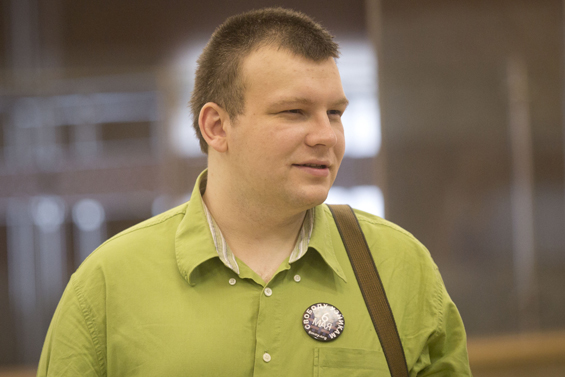
- We see that the protest movement develops in waves. I think it will pass for some time, and the opposition will be mobilized again. Elections are coming to the Moscow City Duma, I am going to run for them and raise the issue of "prisoners of Bolotnaya" during the election campaign. In general, we are now observing in the behavior of the authorities a kind of reactionary leap, and the "Swamp business" became its starting point. This ultimately can lead to a rigid dictatorship by the type of Latin American dictatorships of the second half of the twentieth century. She can strangle all the initiatives of civil society.
Now in the courts of Moscow two cases are considered in relation to the participants of the action on May 6, 2012 in Bolotnaya Square. On May 14, the Zamoskvoretsky court, as expected, will begin to interrogate witnesses to the prosecution in the so -called "case of four" . On the bench of the defendants, Alexei Gaskarov, Alexander Margolin, Ilya Gushchin and Elena Kokhtareva, who are accused of participating in unrest and the use of violence in relation to the police. In the Moscow City Court, the prosecution is completed to submit evidence in the so -called “case of the organizers” , within the framework of which the accusations of organizing riots on May 6 in Bolotnaya Square in Moscow and in an attempt to organize riots in other cities of Russia were presented to the leaders of the “Left Front” by Sergei Udaltsov and Leonid Razvoszhaev. Civil activists themselves and Russian human rights activists consider the “swamp business” politically motivated and believe that the clashes of demonstrators with the police were provoked by the authorities.