
Translated material
NATO can create permanent bases in Eastern Europe
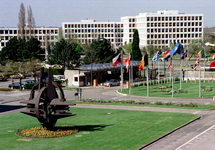
Due to the crisis in Ukraine, NATO can reconsider its policy approved after the Cold War and create permanent military bases in Eastern Europe. This was stated by the Commander of the NATO troops in Europe, General Philip Bridlav, RIA Novosti reports.
“I think this is a question that we must consider, and we will put it on the discussion between the leaders of our states, and we will see what happens,” Bridlav said. “We should evaluate our ability to react, or the willingness to respond, and then discuss the placement of our forces in order to be able to respond to a new paradigm that Crimea demonstrated to us and demonstrates the current situation on the eastern borders of Ukraine.”
“We must take measures that will be very understandable, but which will be defenseless in nature. They must give confidence to our allies, but not provoke Russia. We are in contact on this issue at various levels,” the general said.
Russia will take all the necessary measures to “adequate opposition” by the constant deployment of NATO troops in Eastern Europe, said Franz Klintsevich, deputy chairman of the State Duma Committee on Defense, RIA Novosti. He emphasized that Moscow cannot forbid the leadership of the Eastern European countries to give permission to do this, but will place modern weapons in Belarus and in Belarus.
“Naturally, we will explain, including through diplomatic funds, to the leadership of these countries that these countries are automatically put on the territory of NATO on their territory. A serious object on the territory of Lithuania, any modern nuclear ammunition is not Lithuania. And this must be understood that for the country and its country's politicians, this is a serious problem,” said Uniteds.
On May 2, the Deputy Secretary General of NATO, Alexander Vershbou, said that after two decades of attempts to build partnerships with Russia, NATO considers it necessary to start considering Moscow as an opponent . According to him, the occupation by Russia of Crimea and its obvious manipulation of unrest in the east of Ukraine radically changed relations between NATO and Russia. "It is obvious that the Russians declared NATO an enemy, so we should begin to consider Russia no longer as a partner, but rather as an enemy than a partner," he said.
Vershbou said that the North Atlantic Alliance, created 65 years ago as a stronghold against the former Soviet Union, was considering new defensive measures aimed at restraining Russia from any aggression of its borders against NATO members - such as the Baltic countries that were part of the USSR. He clarified that among the possible actions of NATO - the deployment of a larger number of union combat forces in Eastern Europe, either constantly or on the basis of rotation.
On April 1, the NATO Council, at the level of foreign ministers, decided tosuspend cooperation with Russia both in the military and in the civilian sphere. The Foreign Minister of the Alliance countries refused to recognize the legal referendum in the Crimea and condemned the military intervention of Russia in Ukraine. In the statement, the Council called on Russia to take immediate steps to restore international law and obligations.