
Translated material
What does Moscow achieve from Crimean Tatars
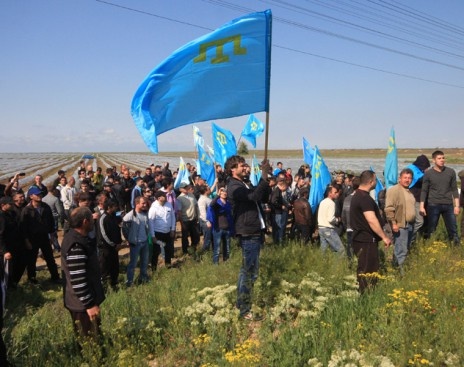
The Crimean authorities want to forbid the Crimean Tatar Majlis for trying to force Mustafa Dzhemilev across the border of the peninsula. The leader of the Crimean Tatars was again denied the entrance to the Crimea, several thousand compatriots came to the rescue, and the first shots since the end of March sounded on the peninsula. Into the air.
The Crimean prosecutor’s office issues warnings and starts criminal cases, the speakers of the new government are postponing threatening tweets. In previous years, any pressure only added points to the unofficial ethnic government, but the peculiarity of today's moment is that a new variable appeared in the old equation.
Rube as a premonition
This has already happened - four years ago. In the spring of 2010, after Yanukovych’s victory in the presidential election, the newly-naked Crimean Prime Minister Vasily Jarta decided to restore the Majlis Peninsula, which was not controlled by the authorities. Then they cleaned the Crimean Tatars Council under the President - eight left out of thirty supporters of Dzhemilev, and the rest of the places were given to the opposition. I remember very well how Majlis in chorus predicted an imminent death, ostracism and oblivion. I also remember how opposition Tatar politicians swore the fidelity of the Party of Regions and came up with their trust ratings. Mustafa's song is sung - read between the lines in all the comments. Finished off. Atu him!
Four years later, everything is repeated according to the same scheme. Moreover, the time for the war with Majlis was already chosen too symbolic: any pressure on the Crimean Tatars on the eve of the seventh anniversary of their deportation from the peninsula is perceived as a symbolic gesture. And even the conversations of Crimean officials that, they say, there are “bad Medzhlis” and “good Crimean Tatars” are still like shooting in milk: you can’t fight with its carriers in the space of a historical myth. Perhaps the new Crimean Prime Minister Sergei Aksenov decided that Russian citizenship of the peninsula is a sufficient condition for an effective leap in the rake. And perhaps we observe nothing more than a cardinal screening of the former matrix.
And we were stronger
The gods of alphabet truths had to wave their hand for a long time and go in search of another flock - the Crimean authorities show themselves negligent darlows. All past years, any attempts to merge the Mejlis or weaken Dzhemilev only benefited him. The external threat brings together - the unspoken status of “victims of the regime” or “wrestlers for folk happiness” was an excellent mobilizing factor. After that, any reproaches to the Majlis regarding commercial self -seizures, historical speculation or inaction in the issue of the arrangement of repatriates immediately went into the background. Moreover, only the pro -Russian authorities of the peninsula were decided to directly put pressure on Medzhlis, the counterpart of which was official Kyiv. Now there is no counterweight to the Crimean Tatars.
Moscow and Majlis are the same in each other. The rule of the first impression remains unchanged: checking the testicula for stiffness in full swing. There are no other political entities in Russia except the state: either you are in the system, or you are out of the game. Majlis is used to being something like a gray cardinal-we do not bring direct responsibility, we control financial flows, we retain administrative quotas in the authorities, but we are not submitted to the legal field.
In Kyiv, they put up with this - in exchange for the support of pro -Ukrainian forces in the parliamentary elections. But Moscow does not threaten the electoral costs of friendship or enmity with Majlis - parliamentary scales are firmly brewed in the right position. The costs can only be image: articles in the Western press, indignation of human rights activists or international organizations. Given the latest trends, all this is unlikely to concern anyone in Russia.
New marginals
It is now important for Moscow to understand what can contrast it with the unofficial government of the Crimean Tatars. They will not suffer a separate subject of national self-government, and therefore either get rid of the Mejlis or enter into the official vertical, assigning some beautiful court status. The story with Dzhemilev - a check for strength: revision of diplomatic arsenals, inventory of protest potential, roll call of personnel. If it turns out that the muscles are weakened, then they will pass and go further. If the process is fraught with gastric disorders, then maybe it will be slowed down. Or maybe not.
You can accelerate on cars and go on the forehead, checking who has stronger nerves. But this is only if one of the parties did not choose a tank as a means of transportation. Unlike Majlis, Moscow has nothing to lose. Against the background of the shock pace of construction of a new iron curtain, another brick in this wall is not so important. Yes, prohibit Mustafa Dzhemilev by entering the peninsula. Yes, do this on the eve of the 70th anniversary of deportation. Yes, to start criminal cases on his supporters. Yes, create an unpleasant historical analogy. And Cho?
After Crimea, Moscow believed in the effectiveness of simple solutions. Who is stronger is right; If not, but I want, then you can. Gordians chop the nodes, divide by zero. Majlis either with us or against us - one cannot be on the sidelines when the country wages the war for the right to make mistakes! In general, join Mr. Baron. They say that in the east they respect power. The only question is who is more to the “east” - the Kremlin or the Crimean Tatars.