
Translated material
"We must create our own Russian, comic"
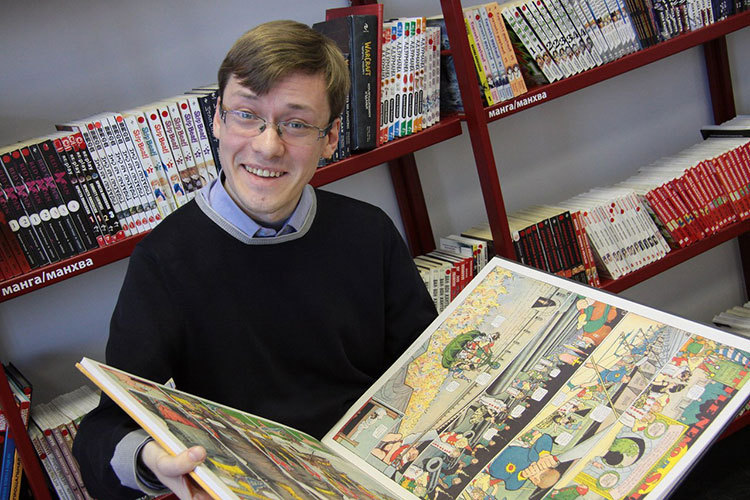
The International Festival "Commission" was first held in Moscow in 2002 at the initiative of the commander Hikhus and curator Natalia Monastyreva. The goal of the "Commission" is the promotion and development of the art of a comic book in Russia. Alexander Kunin is the coordinator of the Commission festival, which is held this year on May 2-3 and 10-11, the head of the first comic book and visual culture center in Russia, created in 2010 on the basis of the Russian State Library for Youth in Moscow, and the compiler of the announced base of comic sites of Runet and the world.
-“Commission” this year is held for the 13th time. What has changed over the years?
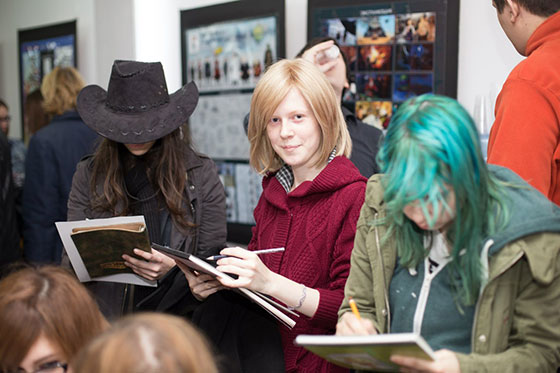
- There were several stages in the history of the festival. The first is in 2001-2002. Then people came to Moscow from all over the country, to the "barn" of the Zverevsky Center for Contemporary Art, simply because they wanted to see each other. Previously, they talked only through the website of the Comicolet comics network and on the forums, no longer. The second stage is to gain your place. For a long time, the main at the festival was the idea of foreign authors. Exhibitions of foreign artists were very popular, because our people wanted to know what it is, how it looks, how to draw it. Now the next stage is coming, when the Russian comic book already has a mainstream - whatever it is, there is an author's comic book, a commercial comic, different directions and styles. Now the "Commission" should become the main professional forum.
 © Photos provided by Alexander Kunin Festival "Commission"
-I heard that in the fall in Russia another comic book festival is planned - Comic-con .
- Yes, in October, in the framework of the Igomir exhibition. The decision of the game of the Igomir to launch a new festival is understandable: almost all the artistic universes existing around computer and board games, or began to form from comics, or served as the creation of religious comics.
- Is this a competitor for the Commission?
- We will actively help in the organization. And there can be no talk of any competition here. On the contrary, the coexistence of two such festivals is very important. Comic- Con Russia and "Commission" are two fundamentally different formats. “Commission” is a professional forum, a workshop of domestic painted stories, and the “world of heroes” is a mass show with stars - for all comic book fans. It can collect 150-200 thousand visitors, and the "Commission" - 10-20 thousand. The main thing here is the creators, who over time will become stars themselves. It is important for the future author of comics or already an already held professional to get acquainted with other authors who can learn something new, find out the secrets of skill, get a competent assessment of their works-which we offer at the "Commission".
The comic exists between a book illustration and caricature, not being either one or the other.
- Are work from all over Russia on the “Commission”?
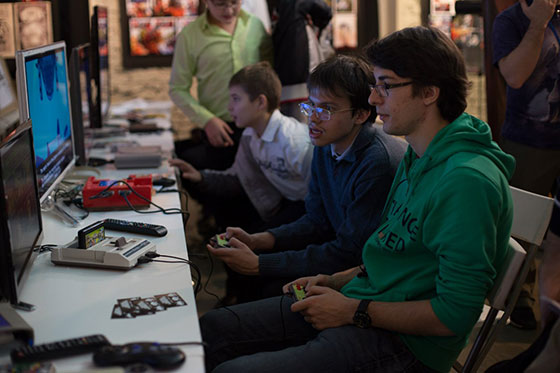
- Of course, everyone can participate in the competition - both pros and amateurs. Key centers except Moscow and St. Petersburg - Samara, Yekaterinburg, Novosibirsk, Krasnoyarsk. This culture is developed there, there is a huge fandom. We constantly get work from there, the guys themselves come, and then you can see how they grow up and work somewhere in advertising, for magazines, create their comics. But the Commission does not plan to be a closed event for its own. With the presentation of Hihus, we tested a new festival format for ourselves for three years: “Day of the open worlds” (house). This is a festival where representatives of different subcultures can tell about themselves, the space where we break psychological barriers between generations. The first three years, the “Commission” and the house were held at different times of the year, now they decided to unite them. So the current spring session of "Commission" is the last. Its final part will be held on May 10-11 in the library for youth. Since the fall of 2014, we finally switch to the format “House. Commission ". This option seems perfect to us: there is a professional party, we show, on the one hand, high samples, and on the other, we work for an audience. In this sense, a guide for us is an open Russian festival of animated cinema in Suzdal, with which we are friends - this year we arranged for their section on the connection of comics and animations.
 © Photos provided by Alexander Kunin Festival "Commission"
- Can we state that the comic book in Russia now firmly took its place?
- Comics in Russia for a long time were in marginal condition. Previously, we could not break through with them, everything was done on pure enthusiasm. Hihus tried to prove that the comic book is an art, in the first years of the festival there was an emphasis on this. In a related animation for the post -Soviet twenty years, a normal industry has developed with all attributes, which is ready to offer the world an original quality product. The same Suzdal festival enjoys state support, this year the Minister of Culture himself came there, and even the city did not help at the beginning of the “Commission”.
- But the festival usually took place at noticeable Moscow sites and had a great resonance.
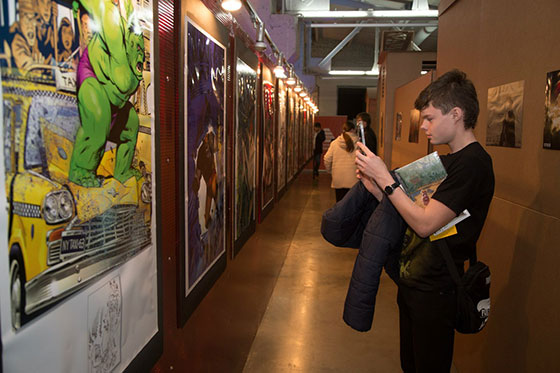
- Yes, both in the Gallery of M'ars, and in the cultural centers "Vinzavod" and Artplay . We were supported by very serious commercial organizations. Famous artists came to us - Enki Bilal (based on his comics, the film “Immortal: the War of the Worlds” was shot, where he acted as a screenwriter and director), Benois Sokal (the author of the computer game “Siberia”), Mebius (worked on the films “Fifth Element”, “Duhn”, “Running Blade”, “Throne”, “Throne”, “Throne,” "Stranger"). All these years, the festival demonstrated that the comics "grew up", that this is an all -pervasive art. Today we no longer need to prove it, everyone understands this. In the last decade, we have appeared in our country comic book libraries, professional publishers, and a lot of original authors, and a lot of sites.
We do not need Superman, we need a hero with our face.
- Can we say that the comic book industry arose in Russia? What is such an industry from?
- First of all, there should be a filled counter. Another point is publishers who are directly involved in the release of comics. And points of implementation. If 10 years ago we had a huge number of Russian authors with their pronounced style and they began to actively publish, it would not end in anything. There was nowhere to sell them and nobody.
“But now there are shops.”
- Only in Moscow there are four offline comics stores. Four! “Chuk and GIK”, “Pin comic”, “frame” and “Bizarr Buk”, which is literally opening now on “Cherkizovskaya”. This is very cool, given that there were practically no one 10 years ago. A huge number of comic book stores are scattered through the regions. Throughout the country, in every city there is someone who sells comics. There is not a single federal center - regional, regional, republican, where there are no comic book stores - and two, three each.
-They create some local enthusiasts?
- Yes, and many regional comics stores begin with the Internet, with social networks, and the VKontakte group. So, for example, a store in Penza appeared. The boy bought comics, singles that he needed through eBay . Then he accumulated a lot of them, the second copies appeared, he announced that he was ready to send them to those who wanted to send them. Now he is already thinking of opening offline in his city. This is such an informal network, people just know about each other. If, for example, the “Octoral Torir” show somewhere-such a book is curious-and the whole party found out that there was such a book, it can be ordered. If you say comics to the comics in Ryazan: “I want this book” - it will not be difficult for him to get it in a week.
- The industry arises from communities where everything is built on personal connections?
- Partly yes, this was formed, for example, an alternative distribution system in America, they began with such a semi -endigont space.
 © Photos provided by Alexander Kunin Festival "Commission"
- How do you feel about the publishing project of Artyom Gabrelyanov, who flooded our shelves?
- When his Bubble magazine appeared, it was a hell of a trash - it was clear that people did not understand the language of comics. The comic exists between a book illustration and caricature, not being either one or the other. When people come to a comic book from a book carication, it turns out just a detailed caricature, but not a comic. As I understand it, it was difficult to get out of this, because stories were short. In one magazine-several pages of one series, several pages of another, some separate strips. The author did not have time to sign. When the first issues of four episodes that they launched (“Major Thunder”, “Red Furia”, “Moral” and “Besoba”) came out, everyone perceived this with a big skepticism. We decided that we would not call them for the "Commission". However, the path that Gabrelyanov chose was true. Although, of course, not all of the episodes launched by him became successful.
- And which, by the way, is the most successful?
- Comic "Major Thunder." The most popular, best sold.
- Operation of Soviet aesthetics?
- Yes, she works. We should have our own path, we must touch our own history. We do not need Superman, we need a hero with our face. Even if it is a Russian Knight or a specific historical figure, it is better than something abstract. And it is important that different poles form. The pole, where the comic book is an art, may have already developed. Now we need the opposite pole - a mass comic book. What Artem Gabrelyanov does is, in principle, close to this. Now we look at him as a person who does a big deal. His magazine has a very wide audience. When our comixists have their own language, when they can clearly represent who they work for, then we will have our own comic.
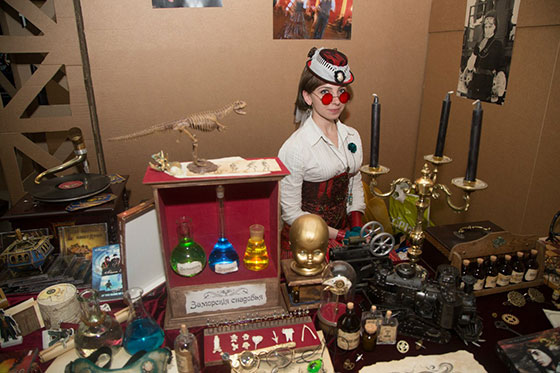 © Photos provided by Alexander Kunin Festival "Commission"
- Our culture will digest a borrowed tradition, make it its own?
- I do not see another way. The massacre of manga ended with us that many authors who started as anime, eventually switched to completely Russian plots. We must create our own Russian comic. And the “Commission” should now concentrate on the development of a full, competitive Russian comic book that could stand on a par with European drawn stories, Japanese manga and other world styles in this art.
- Do we have comics that are dedicated, for example, the experience of the Gulag, camps, political vessels?
- Euphrosynia Kersnovskaya made drawn stories, but I do not think that it will be popular with us. There is Vika Lomasco, who makes graphic reports.
“But she is an artist.”
- She balances on the border of the genres, her graphic report is very close to the comic book. You can also recall what Alexei Jorsh does - he will perform with us with a story about the underground comic book; For example, his work dedicated to the history of Moscow art activism, with which he was nominated for the Kandinsky Prize.
- You mentioned Alexei Jorsh. With someone else from the first-prospectors, does your festival maintain relations?
-with some Komovites (participants of the comic Studio Com, founded in 1988. - Ed. ). Askold Akishin, Mikhail Zaslavsky, Alim Velitov, Alexey Kapninsky, Ilya Savchenkov, Ilya Voronin - they are still working, this school is alive. Yes, some have left, but you can exist in the Russian cultural space and being abroad. Here Andrei Arinushkin will perform with us with a free master class. When in 2011 we decided to pull him out here, we were afraid that he would refuse, and he was delighted that he might be interesting here. And even more - when I saw this army of fans and fans who lined up for an autograph.
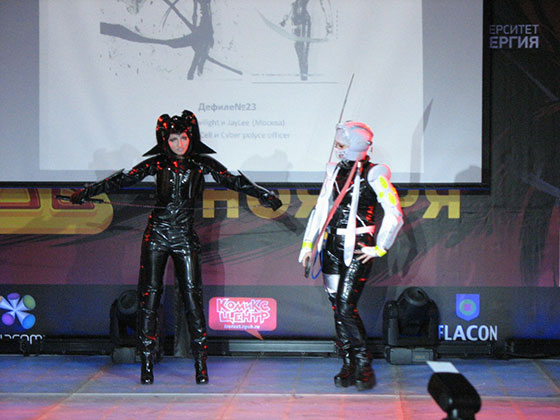 © Photos provided by Alexander Kunin Festival "Commission"
- What are the prospects of the Russian festival of comics in the current political atmosphere?
- The atmosphere, of course, is complicated. Previously, we simply showed foreign authors, and now the circumstances are forcing us to go to a slightly different regime. The embassies refuse to bring the authors here, refuse to sponsor the cultural program. We have friends in the Angulus (France), where the festival takes place and is the center of drawn stories, we are constantly cooperating with them. Last year, the director of the library from this center came to us. The same Benois Sokal came to the expense of the French cultural center. Now the French have reduced the budget for everything - neither modern ballet, nor cinema, nor literature, nor comics are now represented here.
- Your own site, “Chredrika chronicles” , was thinking, as I understand it, how is the chronicle of what is happening with the Russian comic book? Do you manage to support it?
- With very great difficulty, since the site of the Center for the Comics of the Library for Youth appeared and I began to participate in the organization of the festival more actively. But I do not want to throw the project. I understand that the “Chredrika chronicles” should be devoted to just such an annals, although I do not really imagine what will happen in our country in a month.