
Translated material
Ilya Karpyuk: Mosgorpramimmeriz
Ilya Karpyuk 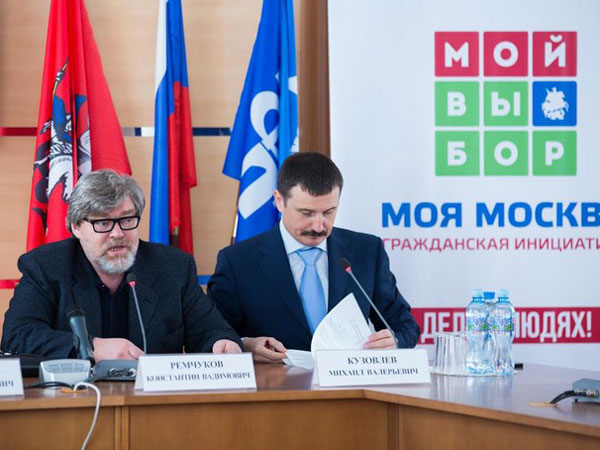 Konstantin Remchukov and Mikhail Kuzovlev Photo: Moscow 2014.rf
 Maria Gaidar
 Sergey Sobyanin
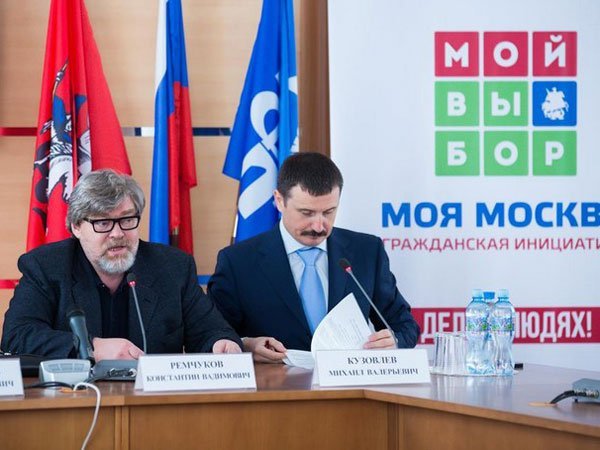 Konstantin Remchukov and Mikhail Kuzovlev Photo: Moscow 2014.rf
Already almost 600 people were registered to participate in the “preliminary selection of candidates for deputies of the Moscow City Duma” as part of the “My Moscow” initiative - in other words in the “primaries”, which is formally conducted by a public organization, but clearly not without the support of the city authorities. Registration is not finished yet, it will continue until May 15.
Pre -voting was announced on March 24 to the intention to hold before the elections to the Moscow City Duma. The application for the creation of the MOST MOSCOW was signed, among other things, the editor of “Independent Gazeta” Konstantin Remchukov, director of the Research Institute of Emergency Pediatric Surgery and Traumatology Leonid Roshal , musician Valery Syutkin, head of the Moscow Public Chamber Mikhail Kuzovlev and other public figures. Among the organizers of the “primaries” are the State Duma deputy Lyudmila Shvetsova, ex-vice-mayor of the city, previously oversaw the Moscow branch of United Russia.
The vote is scheduled for June 8 and should in the form is not much different from the present - polling stations, commissions, cabins, observers. An important difference is that not all Muscovites can vote, but only previously registered electors. However, any citizen who has the right to participate in the September elections can become the elector. Another difference is that the result has no law force, that is, it does not affect the formal status of candidates.
Despite the fact that the organizers of the initiatives in every possible way emphasize its social nature, mass advertising “primaries”, including hung in budgetary institutions of the city - hospitals, polyclinics, multifunctional centers, interns, etc. - hints that the mayor's office unequivocally supports the preliminary vote.
The action itself to classic primaries has a distant relationship - although many call it that way. The primaries are the election of a candidate for any post within one batch, and the organizers of the MOSCOW Movement initially stated that they were ready to provide a platform for any politicians who are going to participate in parliamentary elections.
As a result, now, among the registered candidates, more than half of the composition of the current Moscow City Duma (20 deputies), including speaker Vladimir Platonov, Kirill Shchitov, Alexey Ryabinin and Ivan Novitsky. The candidates also registered the representative of the Moscow City Duma in the Council of the Federation Zinaida Dragunkin and the chairman of the Moscow Council of Municipalities Alexei Shaposhnikov.
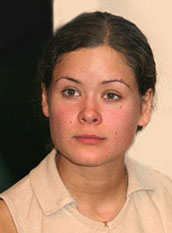
Maria Gaidar“New People” registered with candidates. Among them is the head of the Social Assistance and Support Fund “Social Request” Maria Gaidar, who openly declared distrust of what was happening, but decided to take advantage of additional opportunities to communicate with her voters.
However, despite the fact that the composition of the candidates is somewhat diluted with relatively independent personalities, in general, people who are ideal for the city hall will be presented on the lists - either acting deputies or ready to contact the administration by public figures, or numerous representatives of budgetary institutions (chief doctors, school principals ...), for which this does not create problems.
The headquarters of the Moscow administration on candidates who are formally in no way related to United Russia is clear. The party of power in the capital has been discredited for a long time and, it seems, for a long time. A suspiciously high result of the EP in the 2011 elections was a direct catalyst for thousands of demonstrations in the winter of 2011-2012.
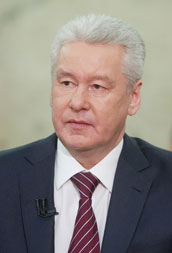
Sergey SobyaninSergei Sobyanin in the mayor’s mayorally formally independent candidate, although he is a member of the party since 2001, is part of its Higher Council, and from March 2011 to December 2012 he headed the Moscow branch of United Russia. As a result, the mayor received 51.37% of the vote with 32% of voters that are quite noticeable for regional elections - and won in the first round. However, at the end of the election campaign, even at the mayor’s headquarters, doubts arose in such a slight victory - the result was on the verge.
In order to get rid of the need to advertise Muscovites “United Russia”, the elections in the metropolitan parliament were decided to hold a majority scheme - the vote would not be followed by the citywide party list, but for candidates in 45 separate electoral districts. If, during the party vote, United Russia had good chances to lose the majority, then in the elections in single -mandate districts the probability of victory among the candidates from power is quite large. In addition, the Moscow City Electoral Commission cut the city in such a way that more “opposition” areas were in the same districts with “pro -government” ones, so the relative number of supporters among independent candidates is not so great.
However, it cannot be said that the Moscow administration pushes exclusively Elinosov into the city parliament - in fact, we are talking, if not about the creation of a new party, then about the testing of a model of “life after United Russia”. Since Muscovites are unlikely to give the majority of their votes to United Russia in the elections, one of two strategies can be used to preserve their majority in parliament.
The first is the total falsification of the elections. This is a rather difficult matter in modern conditions: in almost every election commission that was formed last spring for a five -year term, there are independent members, about half of the chairmen and secretaries of the precinct commissions - beginners in this matter and simply cannot easily and at ease to draw elections results, exhibit unnecessary observers and other ways to violate the law.
The second is to create a coalition that will appeal to Muscovites. This strategy does not cancel the possibility of using a “weak” administrative resource - municipal media to advertise the right candidates, a “accidental” resemblance to the MGIK advertising posters and candidates who will nominate on the results of the “surrender” on June 8, finally, the selection of completely uncomfortable people who have good chances of victory. At the same time, it is important to understand who Muscovites want to see in the ballots and for whom they will want to cast their votes.
If the city hall went along the second path, then the use of the “My Moscow” initiative to identify the preferences of Muscovites can come out sideways - all the same, “preliminary” will vote mainly employees of the budget sphere, it is the easiest to recruit them to such events. However, the initiative can also be used as a platform for advertising selected candidates.
The September elections will show whether the metropolitan city hall has chosen a successful strategy and will be able to rely on the authorities in other regions on her experience - and even throughout the country.
See also:Peter the Great will participate in the primaries in the Moscow City Duma Mosgordum introduced a new scheme of single -mandate election districts by singer Babkin is registered by the candidate before the primaries in the Moscow City Duma