
Translated material
An hour and a half with a clothespin on the nose
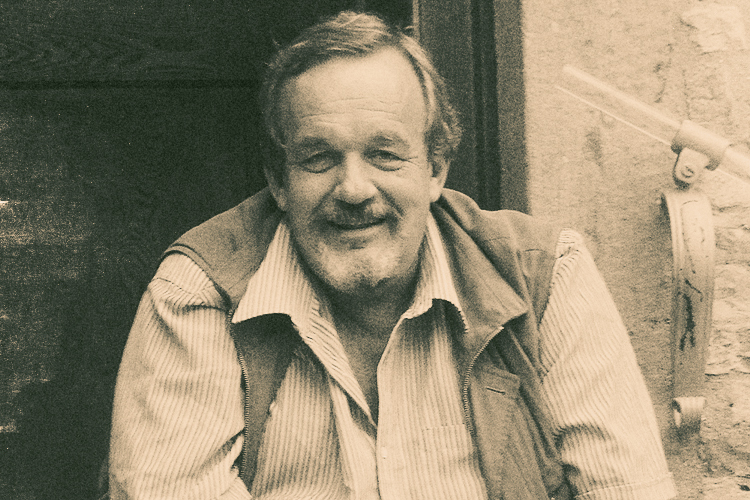
His voice for many became a symbol of the illegal video of the 90s. It was in the translations of Andrei Gavrilov that many spectators first saw “criminal reading”, “main instinct”, “jaw”, “terminator” and all the cinema that simply could not appear in our country in Soviet times. We talked with a famous translator about the emergence of illegal video, the first shocks and a new movie.
-Today, many recall the stream of foreign cinema, illegal transfers on cassettes, video recorders, “pink salmon” that fell upon us in the 90s. And what about the movie of the 90s for you?
- Well, this is rather not a movie, but a movie way. But you know, somehow this stream was not very different from the movie of the 80s. For me, the line is more likely not a decade, but the appearance of video equipment in our country-offhand is the beginning of the 80s. That was the border. At first, of course, it was a toy for the elect. No wonder it was about collective views at home. In those days, tape recorders with a mechanical emission of the cassette were especially appreciated. Because how the video appeared, the authorities immediately began to fight him - it is impossible for the people to have uncertain information. Although to try to understand the logic of the authorities why the normal person could not watch “Emmanuel”, for example, I can still, but why a normal person could not watch “star wars”, for me a mystery. And, I know, there were cases when people gathered at someone’s home and those who follow public morality took and turned off the electricity in the entrance. If you had a tape recorder with an electronic emission system of the cassette, then the cassette remained in it, and when the police entered the apartment, she saw that a tape recorder with a cassette, then there was an underground viewing. And if you had a tape recorder, from which, despite the fact that there is no electricity, you could pull out the cassette and hide somewhere, then you could get a break.
- And what was the incentive for you to translate illegal video if it was so dangerous?
-The thing is that the translator, in general, threatened, if we consider his activities from the point of view of the legislation that existed then. That is, the maximum that they could try to sew is participation in the spread of something forbidden. But since I never did porn, and the anti-Soviet came across extremely rarely-self-censorship began to me, and no one brought these films-in general, there was nothing to cling to.
- I was not going to ask about it, but now your voice does not sound at all like in a cult translation on the cassettes. Alive, emotionally.
-Firstly, I myself do not always recognize my voice. I had cases when I take to watch some old cinema-and it takes about ten minutes before I understand that, it turns out, I translated it myself, but forgot. Secondly, you know, I am against the translator have too many emotions. It is not necessary to be completely detached, and it is not necessary, because you still involuntarily always drown out the actor a little bit and must convey at least what intonation he speaks. But play for the actors? Well, it's funny.
- And all these stories about distortion of the voice, so as not to recognize the translator?
- I never had to do this, and, I think, this is such a beautiful legend that, of course, it is a pity to destroy it. But even in her beauty it is clear that this is a legend. I can hardly imagine a person who can sit for an hour and a half with a clothespin on the nose, well, think for yourself. After fifteen minutes, you are absorbing. I think the reason is simply the imperfection of sound technique. But the legend, of course, is beautiful.
I myself do not always recognize my voice. I had cases when I take to watch some old cinema-and it takes about ten minutes before I understand that, it turns out, I translated it myself.
- And how did the recording of the translation on the video even take place?
-Usually in someone's apartment. That is, there were several people with whom I worked. Everyone had their own conditions. But usually I came to the people who were engaged in this, they had some kind of equipment, everyone had a different one, and an act of translation took place. At first, as far as I remember, everything was recorded on the reel audio-magneton, and then some craftsmen of the tape, that is, the sound of the translation, was applied to the video cassette. It was possible to transfer right away to the cassette right, but it was dangerous, because if he agreed or sneezed, then nothing can be fixed. But, honestly, I was never interested in the technical side. I had only one requirement - to the headphones, how everything should sound there, and how they disposed of this further ...
- That is, you watched the video that you put on the cassette, and translated on the move?
“I am the enemy of translating on the move.” I have been doing this all my life and came to a deep conviction that even if you are supergenies (and I am not supergenies), any translation without prior viewing is a sign of unprofessionalism of the situation. Someone, perhaps, will translate very well-thank God. But in the film there can be anything: an anecdote, a poem, a quote from the Bible. We must prepare for this. Therefore, I came, sat down, took the headphones and watched the film. As a rule, once it was enough, especially since if you didn’t hear something, you could twist, listen again. Then he sat down and translated.
- But what about sound insulation? After all, there can be a lot of things in the apartment, and the neighbors can suddenly start repairs.
- Well, what to do. Once, I remember, I translated something, and outside the window went a wedding for a walk with button accordion. Until they left, it was impossible to work. I had to translate again. And there was such a case: summer, hot, the windows are closed, because the noise, only the door to the room is open so that at least some draft is, everyone is sitting in shorts. And suddenly a call at the door. The owner - also in his underpants, naturally, opens. There are two policemen. The door to the room is open, the translator sits in the headphones in the palm of his hand. In short, when the police left, each under his arm took a video recorder, and then one of them, having confidently leaning towards the owner, said: “Old man, but we didn’t go after that. I’m just helping the district police officer to make a list of voters. ”
When the film is bad, the heroes carry some complete nonsense and you can see how the actors suffer themselves and speak with such artificial phrases, you feel how you are raping yourself, trying to repeat all this crap.
-There was a moment when they started to translate the video that some film became a shock?
- You know, now I will say, maybe not a very modest phrase, but I will camouflage it. When the level of translation led to the fact that they began to call me for views, for example, to the cinema house-and there were pretty good films-and you began to gradually get acquainted with a good movie, this, of course, changes a little ... such that I was an idiot, and then watched some kind of film and wiser, not. Although there are things that were remembered-and not just remembered, but crashed right, cut into memory-but I attribute it more to age. For example, I was 26 years old - but it was Soviet 26 years old, I was more innocent than modern people - when I watched the "Empire of feelings" of Nagisa Osima. I was shocked how the film can be made, where about fifty an hour on the screen, naked bodies make love, and so not in advance, but “really” served, and you come out-and it feels like you looked at the whole story of Romeo and Juliet. Damn, how can you make a film about love like that? And I remember how I was scared once. I translated the film "Oh, lucky!" Lindsay Anderson, of course, did not know the plot. There is a scene when the main character runs from some institution where they conduct experiments on people, and wants to take his friend with him. He lies on a bunk, our hero pulls off his sheet, and instead of the body - the body of a pig. It was so unexpected that, I remember, I cried out.
- But there was no reaction when they looked at all this stream and thought: what horror?
- You know, there was an old joke on this score, how Hitchcock watched the film of the Dovzhenko film studio and said: “My God, what a horror!” Probably, Soviet cinema struck me more than Western. It was killed and still kills me why in our films - although not everyone, fortunately, is such an unnatural sound of dialogs. If you take Soviet cinema, then in most films dialogs sound like people do not say. You immediately understand that the actors voiced the film, standing in front of the microphone, and the naturalness of the intonations remained only among the great actors, and in most cases you quietly faint. As if robots are talking.
- You translated the Terminator. Any emotions caused a large amount of violence and blood, for example?
- You know how a Soviet man I watched so many films about the war that I perfectly understood that all this blood - in the worst case raspberry juice or what they replace it there. It happens that some scenes can be unpleasant, but, you know, it is much worse for me to translate films, where an unnatural English dialogue. And this happens often enough. When the film is bad, the heroes carry some complete nonsense and you can see how the actors suffer themselves and speak with such artificial phrases, you feel how you are raping yourself, trying to repeat all this crap.
When Tarantino has two hundred and sixty-five times, that is, every twenty seconds, the word Fuck is used, well, will someone be shocked by this?
- You have repeatedly said that the translator should know the language layers and realities. But if we have never seen films about blacks, we did not hear a jargon - how to translate? It happened that they did not understand what it was about?
- Yes, sure. Firstly, the realities are incomprehensible, and secondly, the words are incomprehensible, because their jargon develops much faster than ours, and, thirdly, it is not clear how to convey it. For example, I refused to translate one of the first films about lesbian love, I don’t remember what it was called, because I realized that I did not know the terms in Russian. Not medical, not “official”, but as in these cases, in these scenes women speak with each other. I had no one to call and ask, there were no dictionaries, the Internet too. It’s stupid to come up with, because there will always be part of the audience who knows what it is about, and she will be the first to watch this film. And if I still guessed that it was this English word incomprehensible to me that it could mean that it is more or less jargon and in theory you should choose something like this, then, even kill, I did not know that it could be in Russian. And so, since we translate, having previously looked, if there are some obscure scenes, you can work with them. But what does it mean to translate the film? The biggest mistake, which is made by 90 percent of the people who translate the cinema-they hear the English text and say, as it seems to them, the same in Russian. The task of the translator is to make our Soviet, Russian viewer, sitting in the hall or in front of the screen of the house, felt the same and experienced the same reaction, which, according to the director, was supposed to experience a French, American or English viewer. This is not always possible to convey completely, but nevertheless.
-And what were guided by when the “terminator” was translated as a “cyborg-killer”?
- At that time there was no word "terminator." In English, Terminate is to “kill”, and in Russian the “Terminator” is nothing. Therefore, we proceed from the fact that when the native speaker sees the word “terminator”, he - at least in the root of the word - understands what is at stake. That is, the word Terminator in English was even before the film, only the killer had nothing to do with the cyborg. And then English was too far away, it was useless. It would be necessary to quickly enter some explanation into the text of the film. Imagine that we will have a film called "Killer", and in English they will write Ubivets . In the way, people, of course, will understand what it is about, but they will not understand the name. In general, a good option is to translate the word “terminator” as “killer”. It’s a pity, it never occurred to anyone. Imagine, it would be stuck to Schwarzenegger - "Killer"! And then "Kilitsa-2"-and so on.
- In the “criminal reading” you did not use profanity at all, although it sounds in the original. Why?
“I can be very mistaken, but this is my vision of what the director wanted to say.” You probably know the film "Silence of the lamb." Remember how the heroine played by Jody Foster meets Hannibal Lecter. She is sent to a psychiatric hospital for criminals, since her authorities have the hope that he will tell how the serial killer thinks. She goes along the cameras where these crazy people sit, and one screams to her obscenity. Such vile and frank, without options. When she approaches a cage with Anthony Hopkins, Hannibal, he asks her what she was told. And she, without blinking with an eye, repeats the same disgusting obscenity. If she began to show or select synonyms, they would not have any contact. The translator is placed, from my point of view, in the same hopeless position. He must say what is. This is a shock for her, nothing prepares us in the film for what will be said. Therefore, if you want, you don’t want to - say it as it is. But when Tarantino has two hundred and sixty-five times, that is, every twenty seconds, the word Fuck is used, well, will someone be shocked by this? No. And then, it is impossible to say in Russian. Just because our language is longer, the word does not change in English, it can be both in dialect and verb, but we still have the laws of the language, suffixes, and here it will begin to strangle laughter, it's ridiculous.
We still did not have a language of love, and instead of a conversation between lovers - especially if it is a conversation between lovers in bed - it turns out or, forgive the Lord, a goblin, or a textbook of gynecology.
- Did you feel that they should create a special language or aesthetics that were not there before?
-No, still the movie is transient. My favorite example: we now have two translations “over the abyss in rye”. One became an act of Russian culture, the old translation, wonderful, Wright Kovaleva, but, in general, quite distant from the original. The other is more accurate, but it will never become an act of Russian culture, because it is not very good, to put it mildly. But he is much more accurate and more complete. When the conditional Wright Kovalev, like any written translator, makes a translation, she, in principle, can sit over one phrase for a year. But no one will wait if the translator in the cinema for more than a second or two thinks about what the hero said. So the book and cinema, when people watched and forgot, are different things.
- But one way or another thought about what language, when only the stylistically not very diverse language of Soviet cinema is known, to convey the free dialogues of Western films?
-Well, I had cases when I was told that I allowed myself too much liberties in the language, there was a case when I was removed from the translation at the festival of some film that I really wanted to translate. Just because, it seemed, I am too voluntarily translating something. But I never dared to say that these words are not like that ... I remember that once I got into a disassembly at the Soviet Film Festival, when some young lady-the wife, probably, the party boss-was offended during the translation of the film that it came from the speakers: "I would go to the toilet." I, by that time, were already almost a veteran of festivals, joyfully asked how I relate to this. I said that the translator must be driven, that the young lady is absolutely right. Because no normal man will say that, he will say: "I’ll go to the toilet." Of course, we defended the translator of that, we didn’t drive him out anywhere, just this case can serve as an example that sometimes spectators can consider the norm of the language not at all what the filmmaker, screenwriter and - in the end - translator. Yes, there was no mat. Especially when translating on views. It was unacceptable. You should have been absolutely sure of the audience to say the word “ass”, not like “m*duck”. And so ... Any language gives such a scope for maneuvers! And why only you say “stylistically not very diverse language of Soviet cinema”? This is nonsense. We have a stylistically not very diverse language of Soviet life! We still did not have a language of love, and instead of a conversation between lovers - especially if it is a conversation between lovers in bed - it turns out or, forgive the Lord, a goblin, or a textbook of gynecology. But this is some kind of nightmare.
“Now the most popular meme, which has developed from your translations, fits into a 30-second video from a film called“ Blood and Concrete: Love Story ”. Remember this?
- No, I don't remember.
-Exactly 30 seconds of canonical for the video of the 90s of the stream of curses. Let's see?
- No need!
- Do not like to review your work?
- Well, probably it was, I don’t remember. At least something I gave the Russian audience. But all this happens absolutely spontaneously. I do not sit and do not decide whether the word "garbage" can be said. It simply is already in a every minute language on the street. I am not saying that this is the best word in Russian. I'm not sure that in kindergarten the teacher should sang songs about this songs. But in the usual language of people on the street this word is already present. Now it will be perceived normally and without shock. If I translate the film in the Convent, I will probably pick up other words. Хотя надо еще внимательно посмотреть на монашек.
— Для вас перевод фильмов — это было что?
- Bliss.
— Или просто работа?
— Да ну что вы. Это такой кайф.
— Не чувствовали, что этими нелегальными видеопереводами открываете мир для людей?
— Вы знаете, меня, конечно, радовало, что появился очередной источник информации. Но так, неосознанно, на философствование не было ни времени, ни возраста. Это я сейчас могу предаваться каким-то размышлениям. А тогда — жеребячье ржание, что появилось какое-то кино. Всегда было приятно посмотреть что-то новое. А потом, дело еще в том, что я никогда не видел такого потока абсолютного кинематографического дерьма, как после появления видео. Потому что любой кинофестиваль подбирал что-то более-менее приличное. Да, в прокат у нас иногда выходило полное говно. Волосы дыбом вставали от того, что показывали. Но такого количества фуфла, как в 90-е, мы не видели. Конечно, очень хотелось бы сказать, что вот открылись ворота — и к нам хлынули фильмы Вуди Аллена или хотя бы Фрэнсиса Копполы, но черта с два.
— Есть понимание, зачем нужно было российскому зрителю посмотреть весь этот поток некачественного и разного?
— Я считаю, что любая группа людей, любое общество должны пройти через стадию искушения дерьмом. Вот то, что в советское время нам это дерьмо не показывали, не было плюсом. Поэтому мы с такой готовностью потом на него и набросились. Наверное, нужно, чтобы оно всегда было в культуре общества, чтобы выросло то поколение — не зря Моисей столько водил по пустыне, — которое не будет смотреть это, которое не будет читать Донцову, например, хоть ты тресни, даже в электричке.
— Выросло?
- Don't know. Думаю, что пока еще нет. Но я надеюсь, что вырастет. А может, оно и не должно вырастать. Может быть, оно и должно всегда быть такое для того, чтобы были те один, два или пять процентов, для которых будут работать настоящие художники.